OD6 maps deeper fluorspar potential across Nevada project

OD6 Metals has identified interpreted fluorspar extensions beneath cover and at depth at its Quinn project in Nevada, including a potential Mammoth target extending more than 500 metres below surface. The results sharpen the company’s drill targets ahead of a proposed early-2027 maiden campaign, but remain indirect geophysical evidence requiring confirmation.
- 16.8 line-kilometre CSAMT survey completed across nine lines at Quinn
- Mammoth resistive body interpreted to extend more than 500 metres below surface
- Horseshoe horizon may continue for roughly 500 metres with a feeder structure beyond 200 metres
- Saw Mill Thrust emerges as a target corridor linking Horseshoe, North Horseshoe Canyon and Big Jim
- Drilling and bulk sampling remain subject to permitting and geological verification
 Add us as a preferred source on Google
Mammoth target reaches beyond 500 metres
OD6 Metals Limited (ASX:OD6) has used a deep-imaging survey to outline a potentially much larger fluorspar system at its Quinn project in Nevada, with the most substantial target sitting beneath the Mammoth deposit. The company says modelling of a highly resistive body indicates that the steeply dipping breccia zone exposed at surface may continue more than 500 metres vertically.
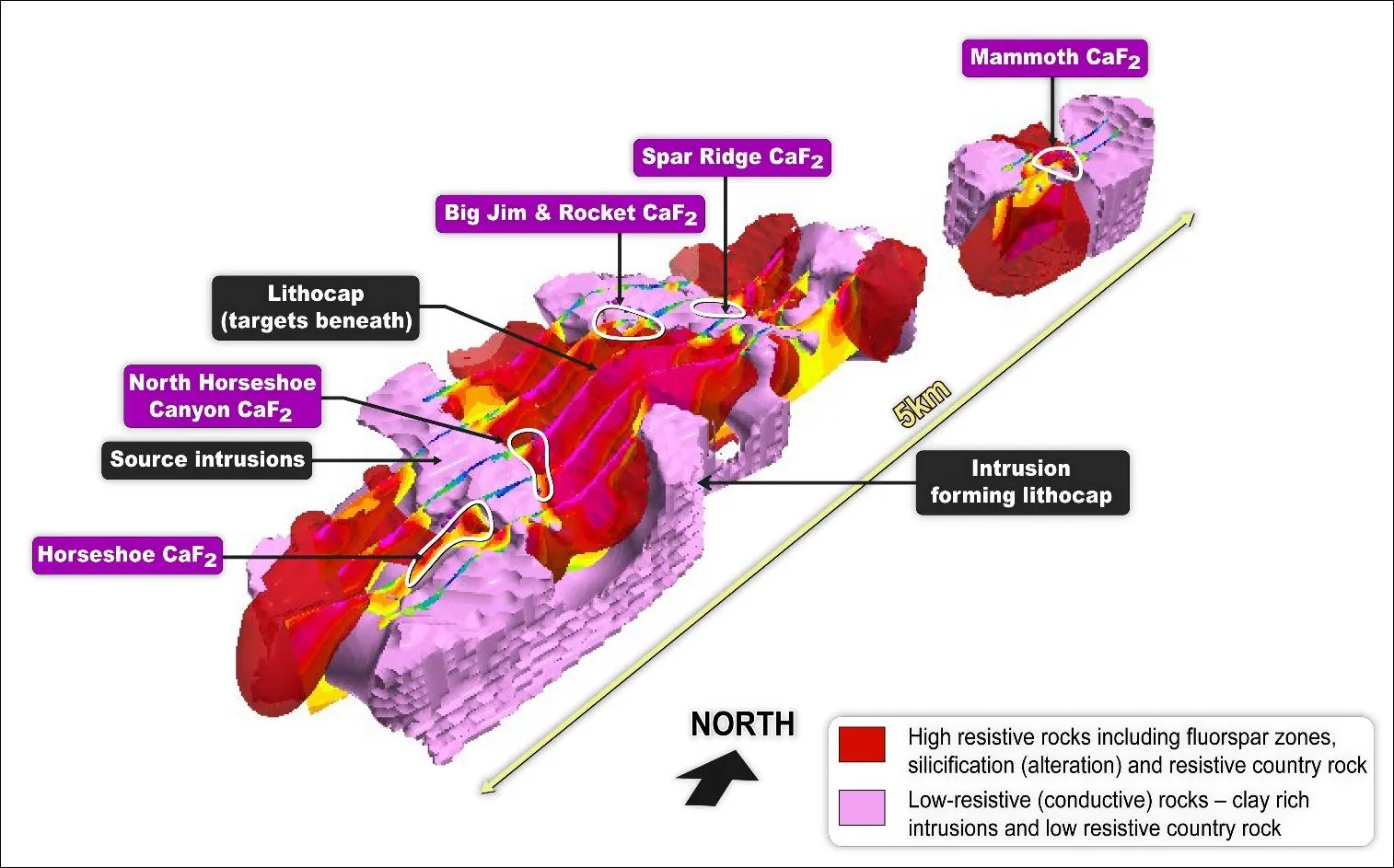
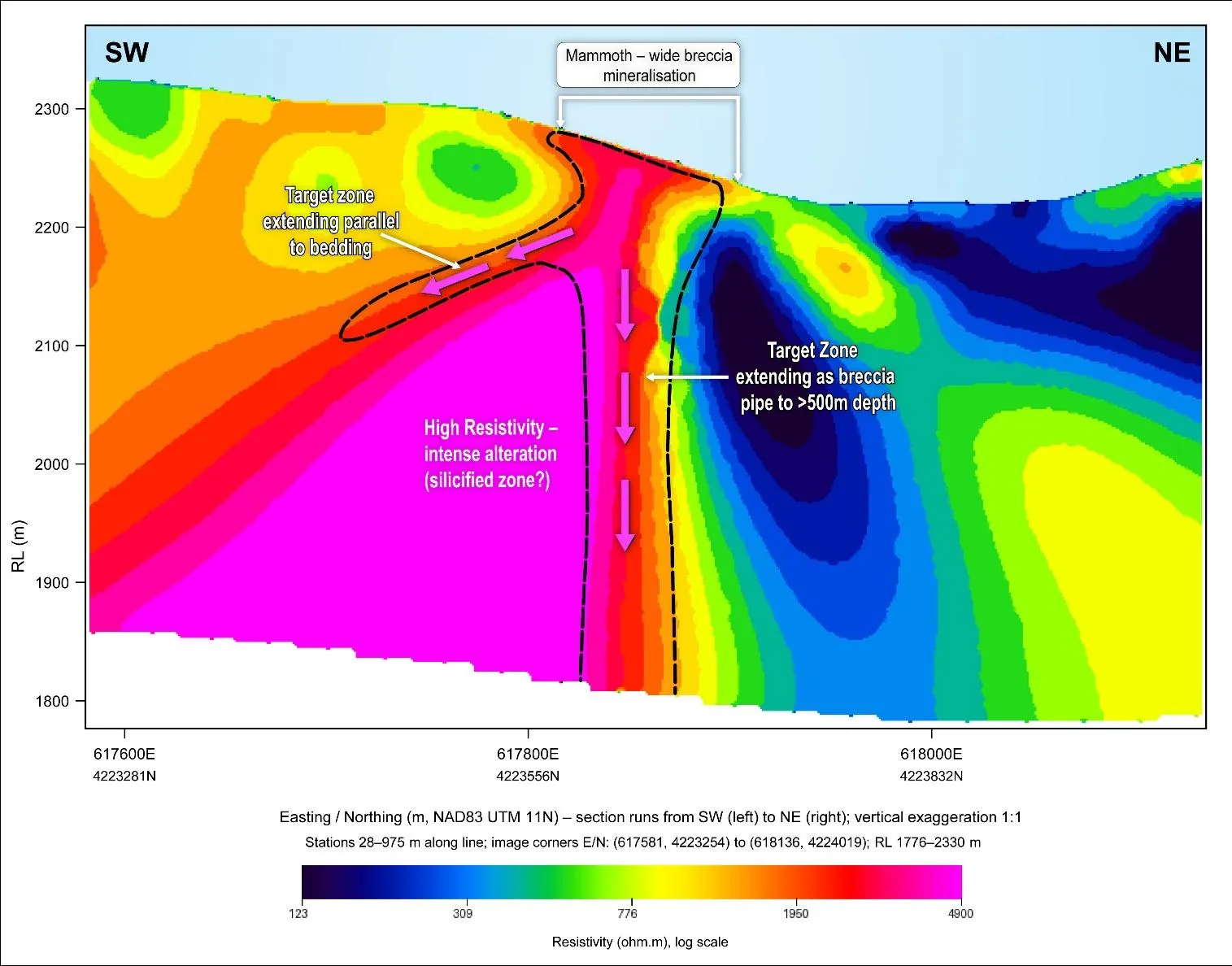
The result comes from 16.8 line kilometres of Controlled Source Audio Magneto-Tellurics, or CSAMT, collected across nine lines and 344 stations. The work was independently inverted by KLM Geoscience and Wright Geophysics, with the latter providing confidence in the models to about 500 metres depth. Mammoth’s known surface mineralisation has previously returned grades of 20% to 40% calcium fluoride, or CaF2, but this announcement reports no new assays or resource estimate.
Horseshoe horizon extends beneath cover
At Horseshoe, the survey traced a shallow-dipping resistive zone beneath talus cover for about 300 metres, implying potential up-dip and down-dip continuity across roughly 500 metres with an interpreted thickness of 20 to 40 metres. A separate steeply dipping resistive feature beneath the northern part of the pit is interpreted as a possible feeder structure passing through the Saw Mill Thrust to more than 200 metres depth.
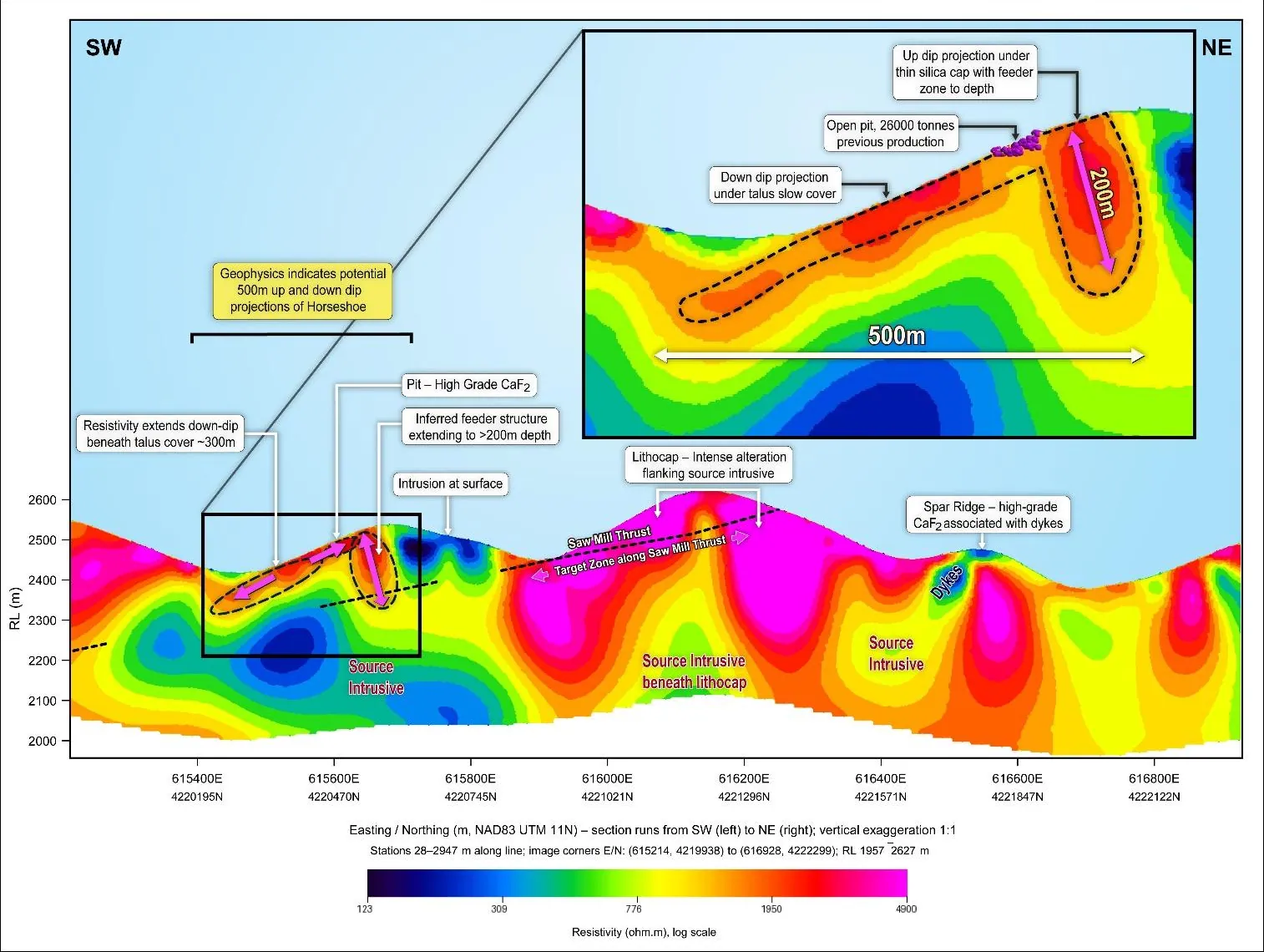
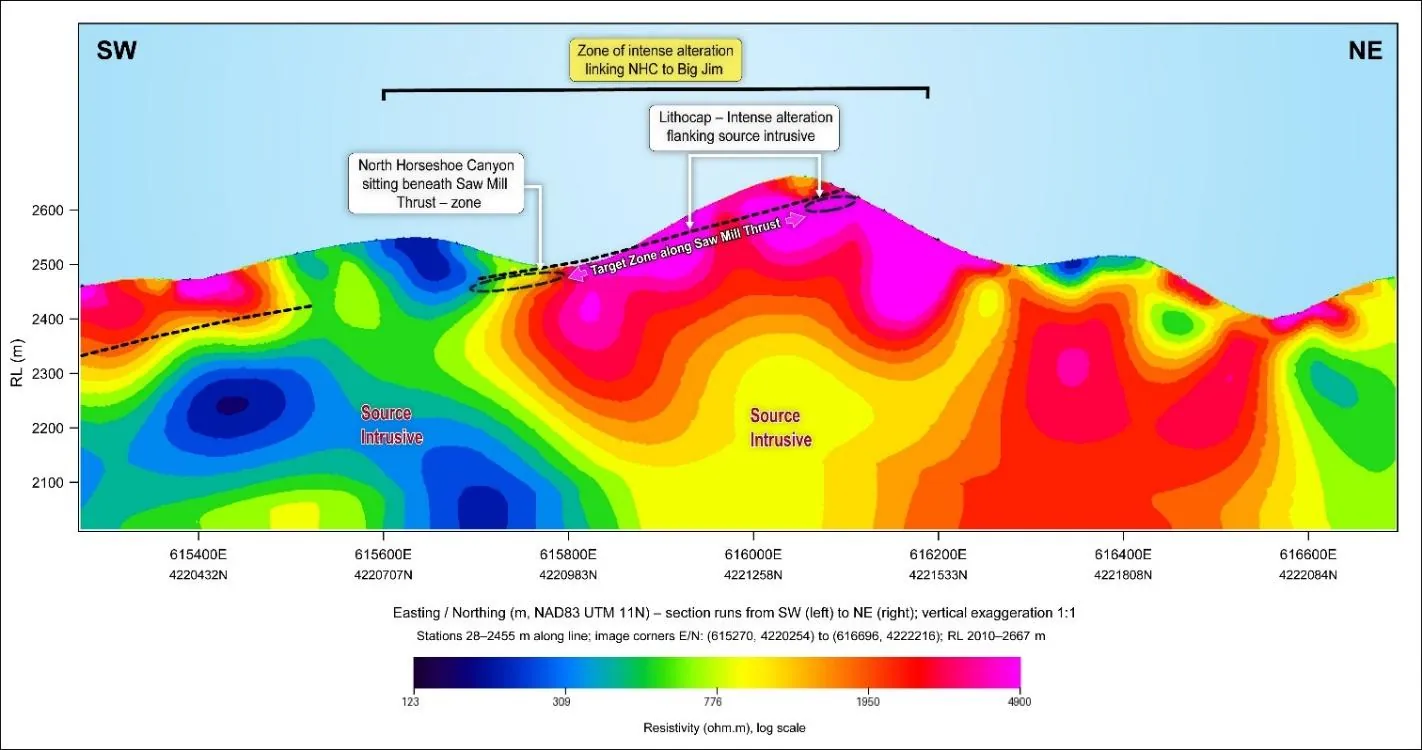
That interpretation gives the company a clearer structural target between several known occurrences. The Saw Mill Thrust was imaged beneath the altered Lithocap and is presented as the prospective horizon linking Horseshoe, North Horseshoe Canyon and Big Jim. A previous link is not applicable; instead, OD6’s proposed 10,000-metre drill plan had already outlined a maiden drilling and bulk-sampling campaign at Quinn, making the new survey relevant chiefly because it can help refine where those holes are placed.
Geophysics adds concealed targets
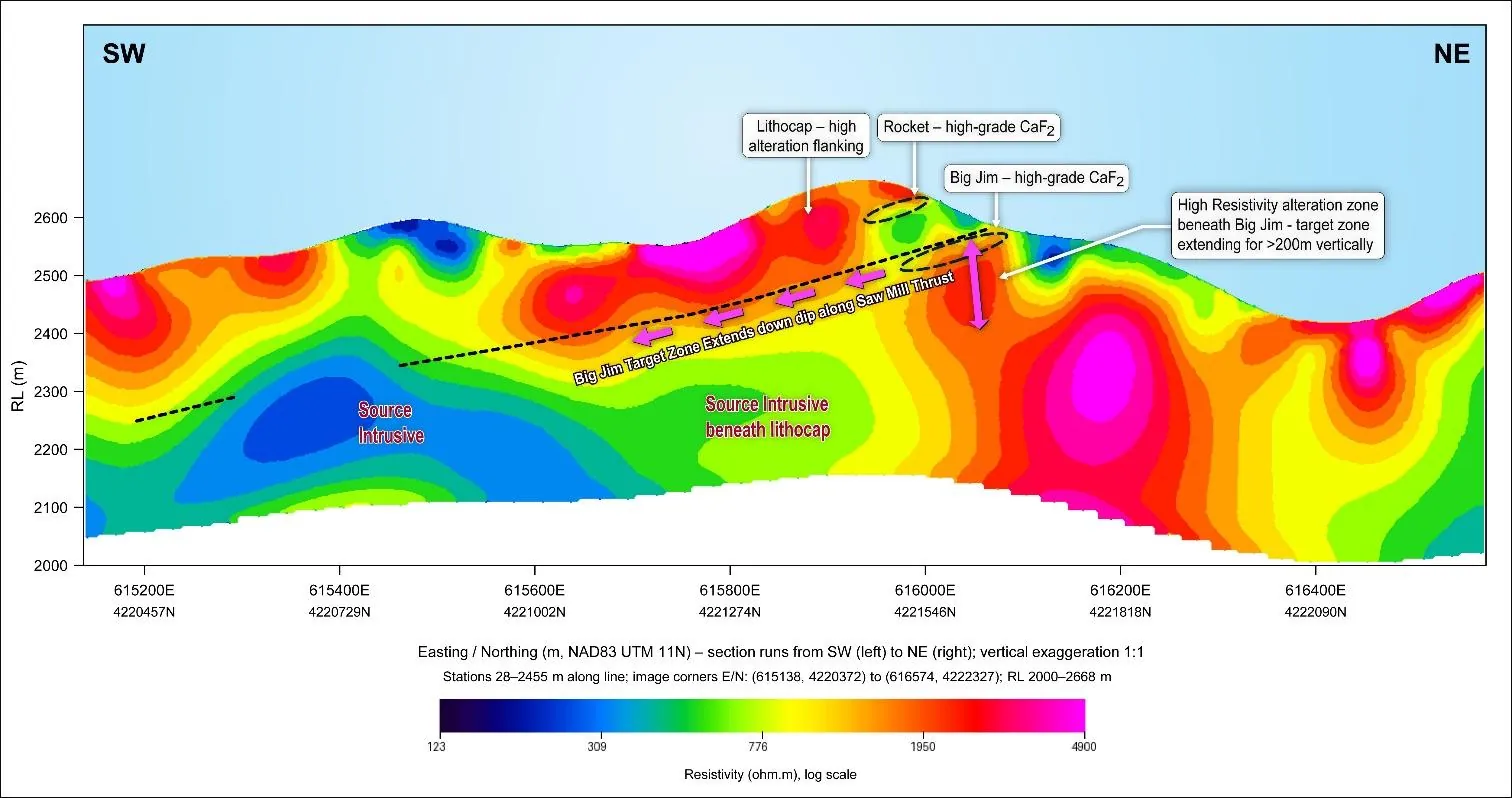
At Big Jim, a strong resistive alteration zone more than 200 metres high lies beneath the high-grade surface occurrence and is inferred to relate to calcium-fluoride-bearing footwall breccias. The survey also maps source intrusive rocks beneath the Lithocap, with their contacts providing additional targets between North Horseshoe Canyon and Big Jim. Fluorspar occurrences appear to cluster within resistive volumes or along resistivity gradients, according to OD6’s interpretation.
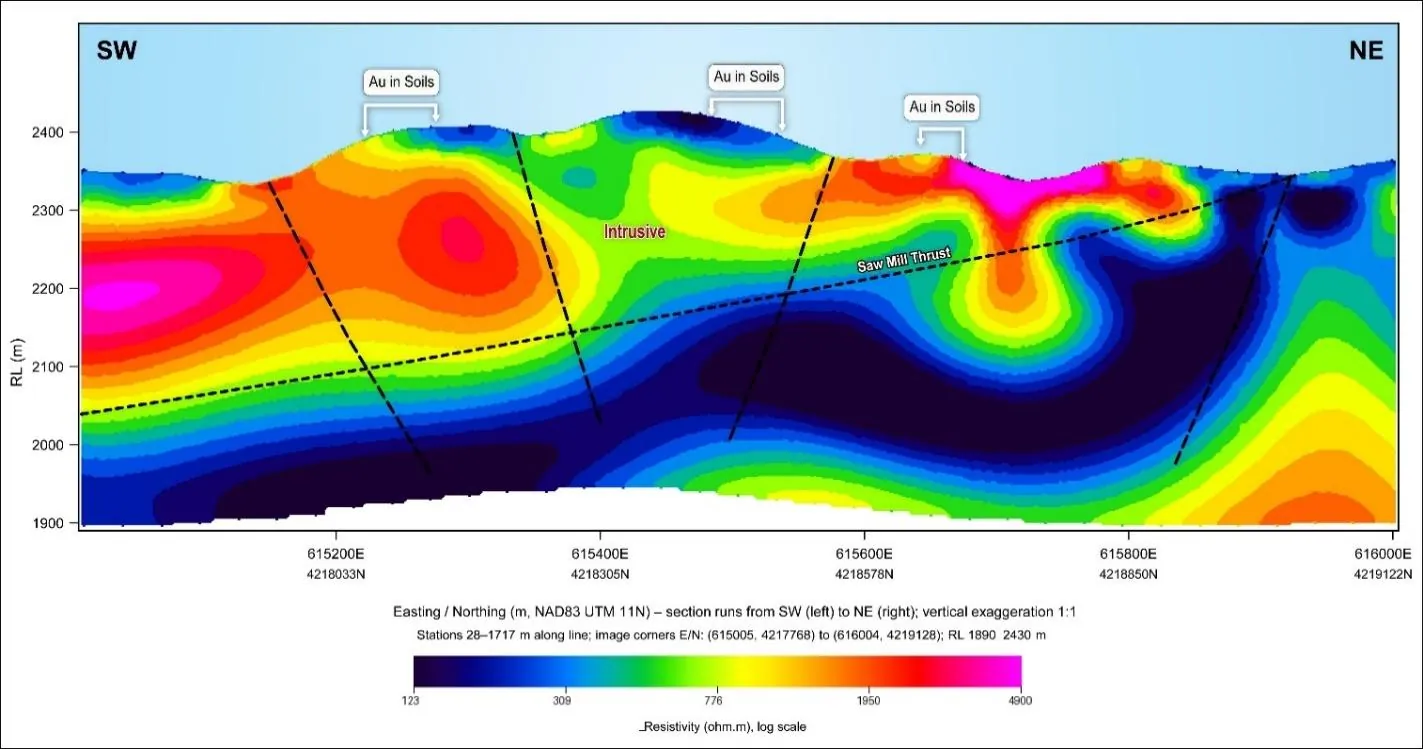
The Dress Circle area adds a separate exploration angle. CSAMT identified both highly resistive and non-resistive zones in an area where soil sampling had indicated gold, gold-pathfinder and some fluorine anomalism. OD6 says the combination may support the presence of intrusive or epithermal gold-related features, although those targets also require field investigation.
Drilling remains the decisive test
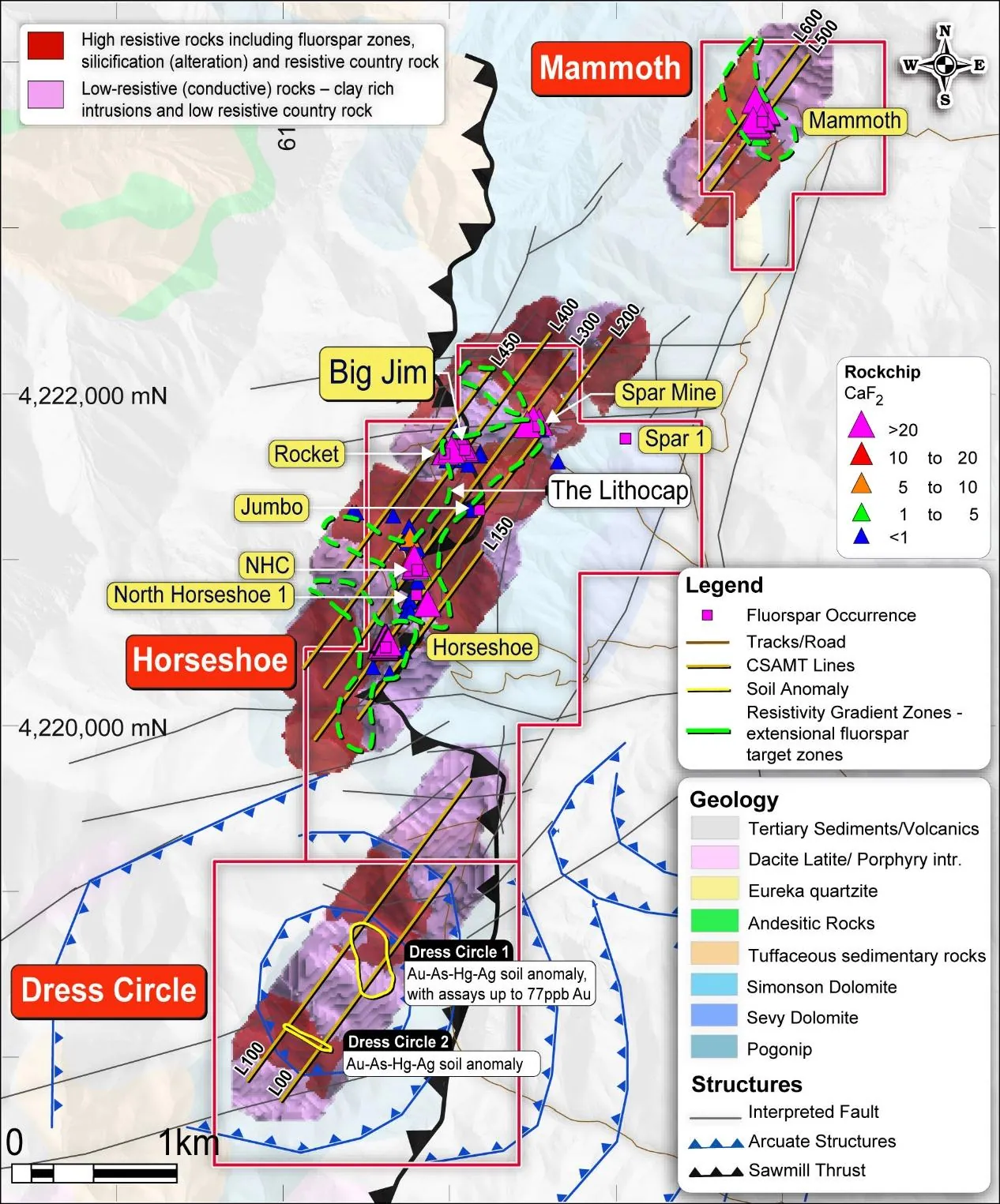
CSAMT measures electrical resistivity rather than fluorspar directly. Resistive signatures may reflect fluorspar, silicification or altered limestone, while conductive zones may relate to clay alteration or intrusive rocks. The company explicitly says the interpretations require geological verification and drilling, and notes that the data are not sufficient for mineral resource estimation.
OD6 plans to integrate the survey with mapping, surface sampling and structural interpretation before prioritising targets. It is also continuing United States Forest Service permitting and operational preparations for proposed early-2027 drilling and bulk sampling at Horseshoe and Mammoth. The timing therefore leaves a clear gap between an encouraging subsurface model and evidence of economic mineralisation: the next campaign must show whether the large resistive bodies contain continuous, mineable fluorspar rather than merely the rocks that can accompany it.
Bottom Line?
The survey expands Quinn’s geological story, but drilling and permitting now matter more than the size of the resistive anomalies.
Questions in the middle?
- Will early-2027 drilling confirm fluorspar within the deep Mammoth body and the concealed Saw Mill Thrust corridor?
- How much of the interpreted 500-metre Horseshoe horizon represents continuous mineralisation rather than alteration or silicification?
- Can OD6 secure the required permitting and translate the new targets into a coherent resource definition program?
Sources
1-
GEOPHYSICS REVEALS EXTENSION POTENTIAL (opens in a new tab)Verified company source. Od6 Metals Limited · 28 Oct 2026 · od6metals.com.au