OzAurum records 95% heap leach recovery at Mulgabbie North

OzAurum Resources has recorded 95% gold recovery in an independent heap leach column test on paleochannel material at Mulgabbie North. The result strengthens the case for a lower-capital processing route, but fresh rock testing remains the crucial next test because it contains most of the project’s resource ounces.
- 95% recovery from paleochannel material at a -12mm crush size
- More than 90% recovery achieved within 65 days
- Cyanide consumption of approximately 0.26 kg/t
- Fresh material represents 71% of the 260,000-ounce resource
- Further fresh-material testwork now underway
 Add us as a preferred source on Google
Mulgabbie North column test reaches 95% recovery
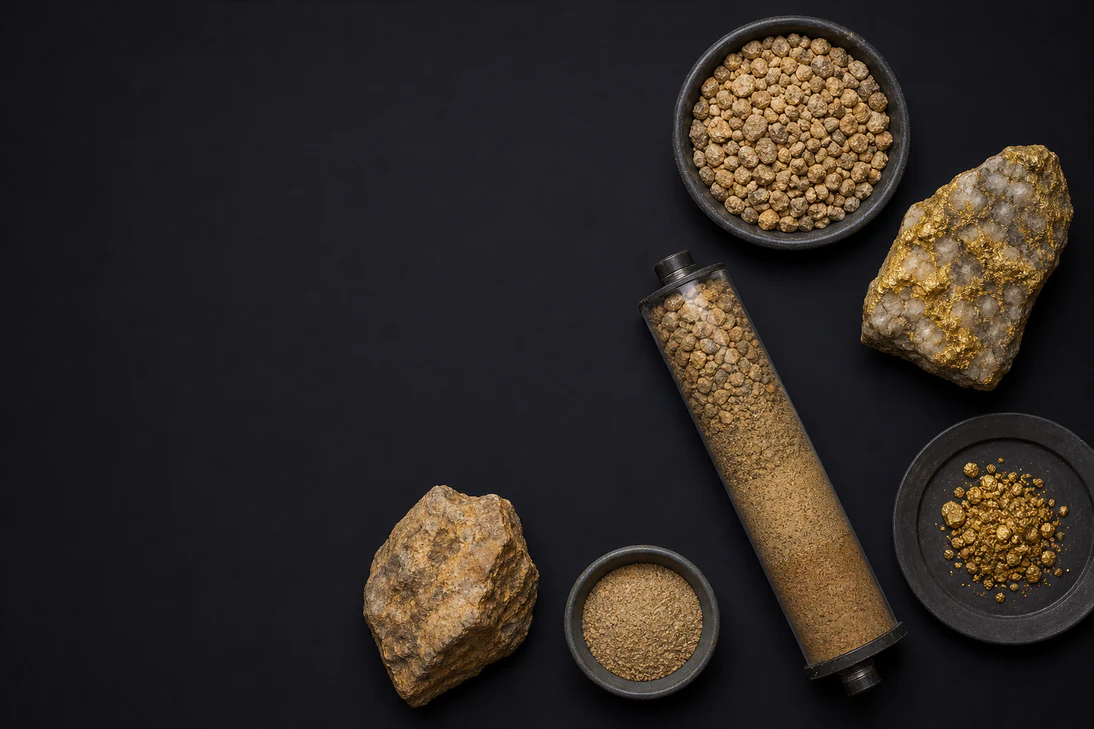
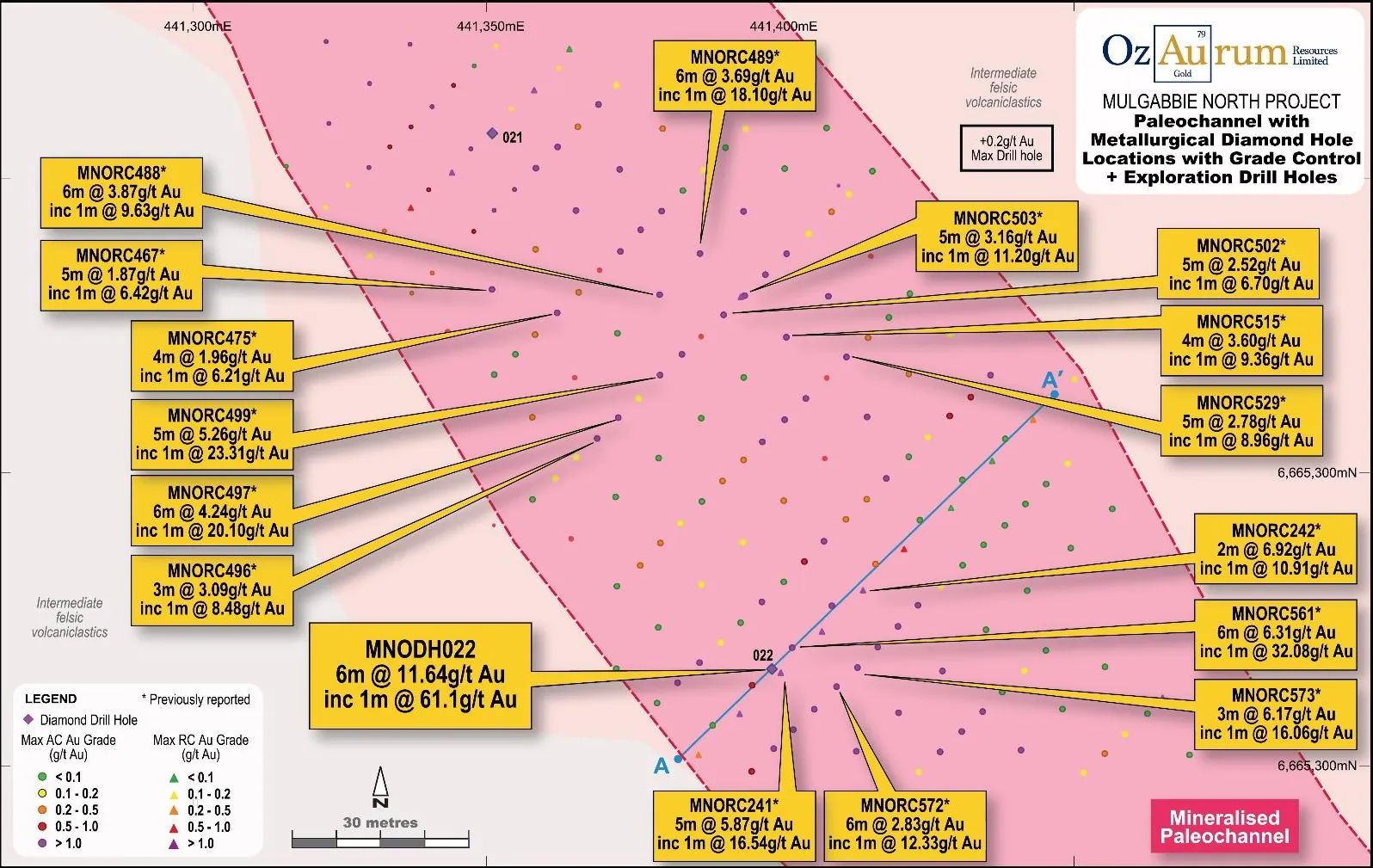
OzAurum Resources Ltd (ASX:OZM) has produced a strong metallurgical result from its Mulgabbie North Gold Project in Western Australia, with an independent column test recovering 95% of the gold from paleochannel material. The sample, taken from diamond hole MNODH 022, had a head grade of 2.58 g/t gold and was crushed to a relatively coarse -12mm size.
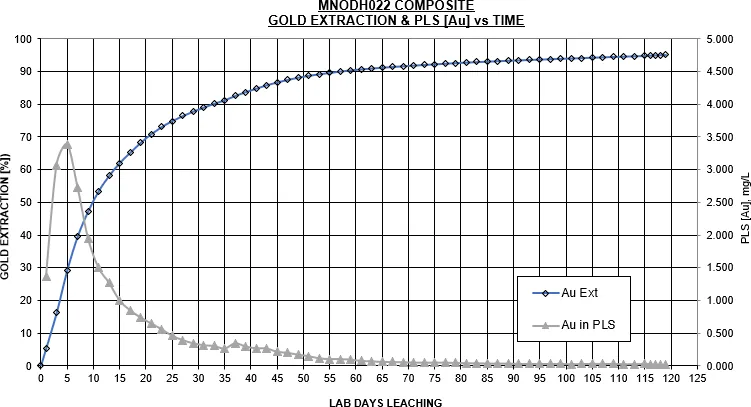
The leach was also fast. More than 60% of the gold was recovered within 15 days, more than 80% within 35 days and more than 90% within 65 days. Cyanide consumption was approximately 0.26 kg per tonne, which OzAurum described as potentially below the roughly 0.5 kg/t level it regards as normal. The testing was completed by ALS Balcatta under the supervision of Kappes Cassiday & Associates Australia.
Low-capital heap leach case gains technical support
The result adds weight to OzAurum’s proposed heap leach route, which the company says could require less capital than a conventional carbon-in-leach plant. It also builds on the earlier 82% recovery tests reported at Mulgabbie North, although the results come from laboratory conditions and should not be treated as a forecast of commercial-scale recovery.
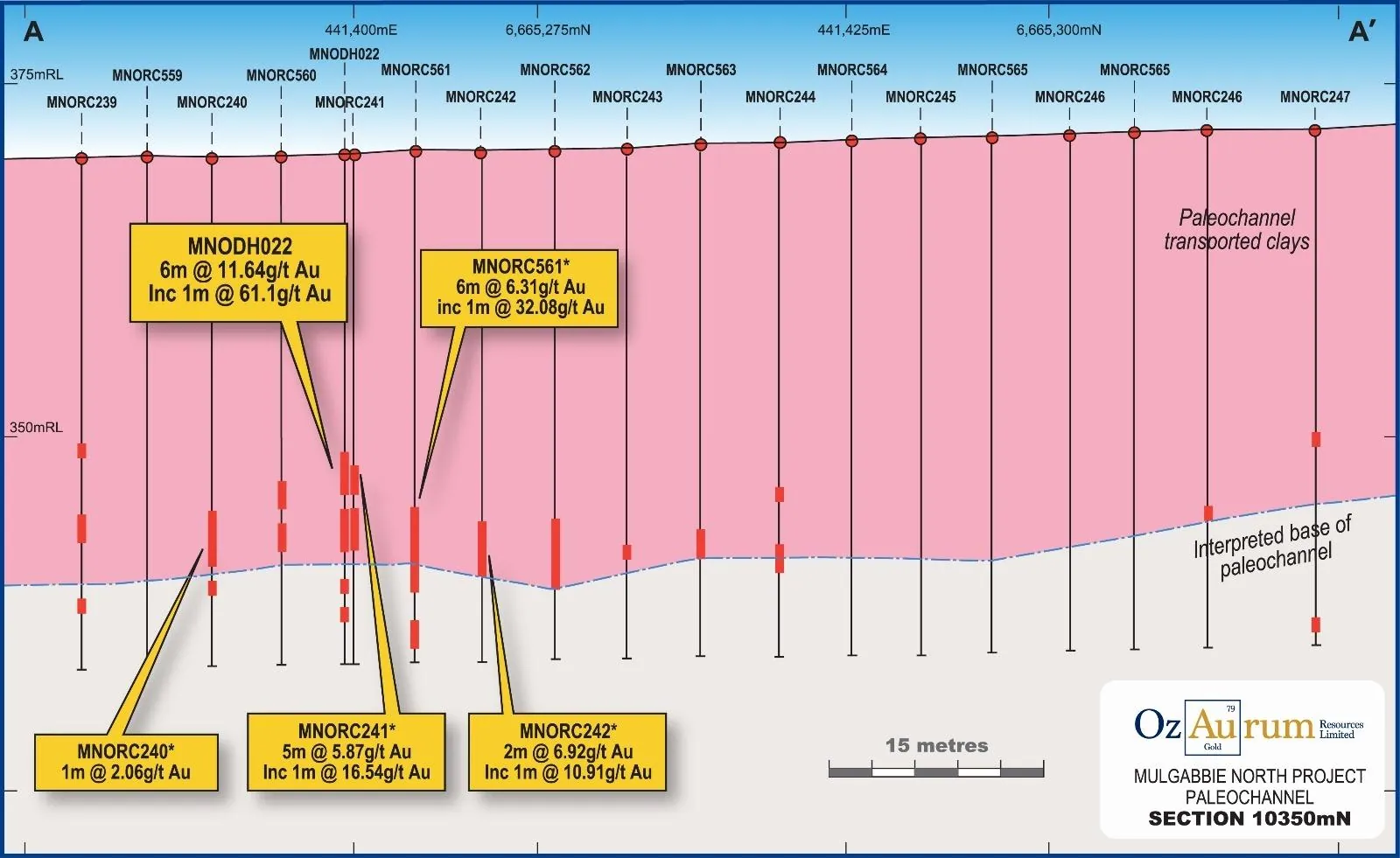
The latest test covers paleochannel material from a high-grade interval of 6 metres at 11.64 g/t gold, including 1 metre at 61.10 g/t from 22 metres downhole. OzAurum said column work across three ore types had returned excellent heap leach recoveries, supporting its Stage 1 development concept and potential later expansion along the 8km Relief Shear corridor.
Fresh rock remains the decisive development test
The strongest qualification sits in the resource mix. Fresh material accounts for 184,000 ounces of Mulgabbie North’s 260,000-ounce Mineral Resource Estimate, or 71% of contained ounces. OzAurum now plans to test that material, with successful results potentially allowing fresh rock to be included in later development stages.
That work matters because the current 95% result applies to paleochannel material, not the bulk of the stated resource. The company points to the Binduli heap leach operation near Kalgoorlie and Saturn Metals’ Apollo Hill project as examples of fresh-rock heap leaching, while acknowledging that those operations do not establish what Mulgabbie North will achieve.
Laboratory recovery still needs to become an operating case
For now, the announcement improves the technical evidence behind OzAurum’s processing strategy rather than establishing a production outcome. The next meaningful datapoint is fresh-material metallurgy, followed by the capital, operating-cost, mine-plan and permitting work needed to determine whether the laboratory performance can support a viable open-pit heap leach operation.
Get ASX:OZM news the moment it breaks
 iPhone & iPad
 Android
Bottom Line?
The paleochannel result is encouraging, but the project’s economic case still turns on whether fresh rock can deliver comparable recovery at operating scale.
Questions in the middle?
- Will fresh-material columns match the 95% recovery achieved from paleochannel material?
- What capital and operating costs will emerge once the broader ore mix is tested?
- How will laboratory recovery translate into recoveries and leach cycles on a commercial heap?
Sources
1-
95% Gold Recovery from Heap Leach Column Testwork (opens in a new tab)Verified source. Ozaurum Resources Limited · 28 Oct 2026