Strata's Zelica magnetics point to new gold targets beyond resource

Strata Minerals has identified multiple untested structural trends across its Zelica Gold Project after interpreting high-resolution airborne magnetic data. The targets extend beyond a maiden 42,000-ounce resource, but still require geochemistry and drilling to determine whether they host additional gold.
- Multiple untested magnetic-low structural trends around the Zelica resource
- A further 1.5km prospective extension identified at West Nest
- Murphy Well prospects coincide with an interpreted dilational jog
- Less than 15% of the 9.5km gold corridor has been systematically tested
- Surface geochemistry, mapping and potential drilling are next steps

 Add us as a preferred source on Google
Magnetic survey expands Zelica's exploration target pipeline
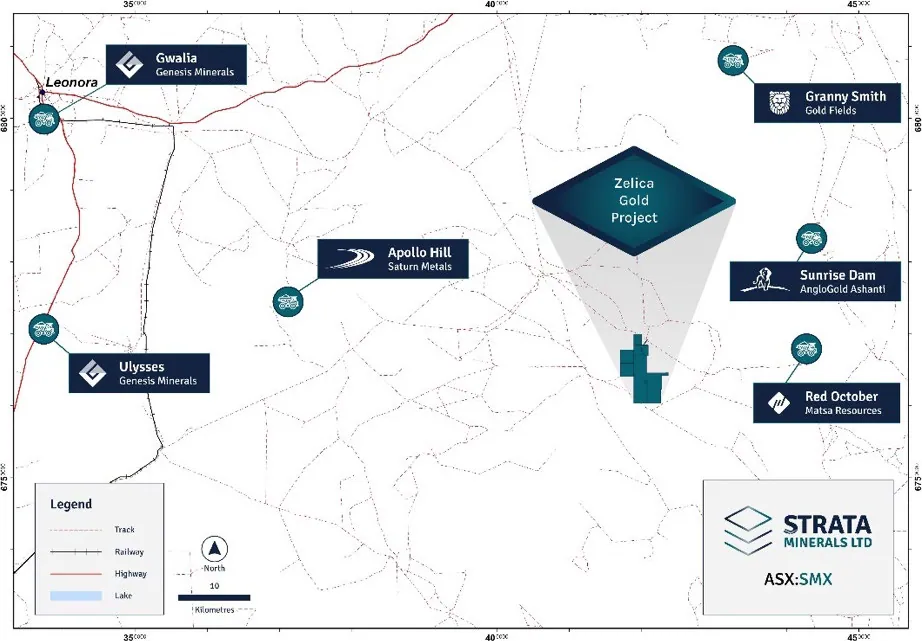
Strata Minerals Limited (ASX:SMX) has identified a series of new gold exploration targets across its Zelica Gold Project in Western Australia, with the strongest early signal coming from structural trends that resemble the setting of the known Zelica mineralisation. The interpretation follows a 27.8km², high-resolution airborne magnetic survey, a programme previously described as a way to sharpen targeting across the expanded project area in the company's July aeromagnetic survey plan.
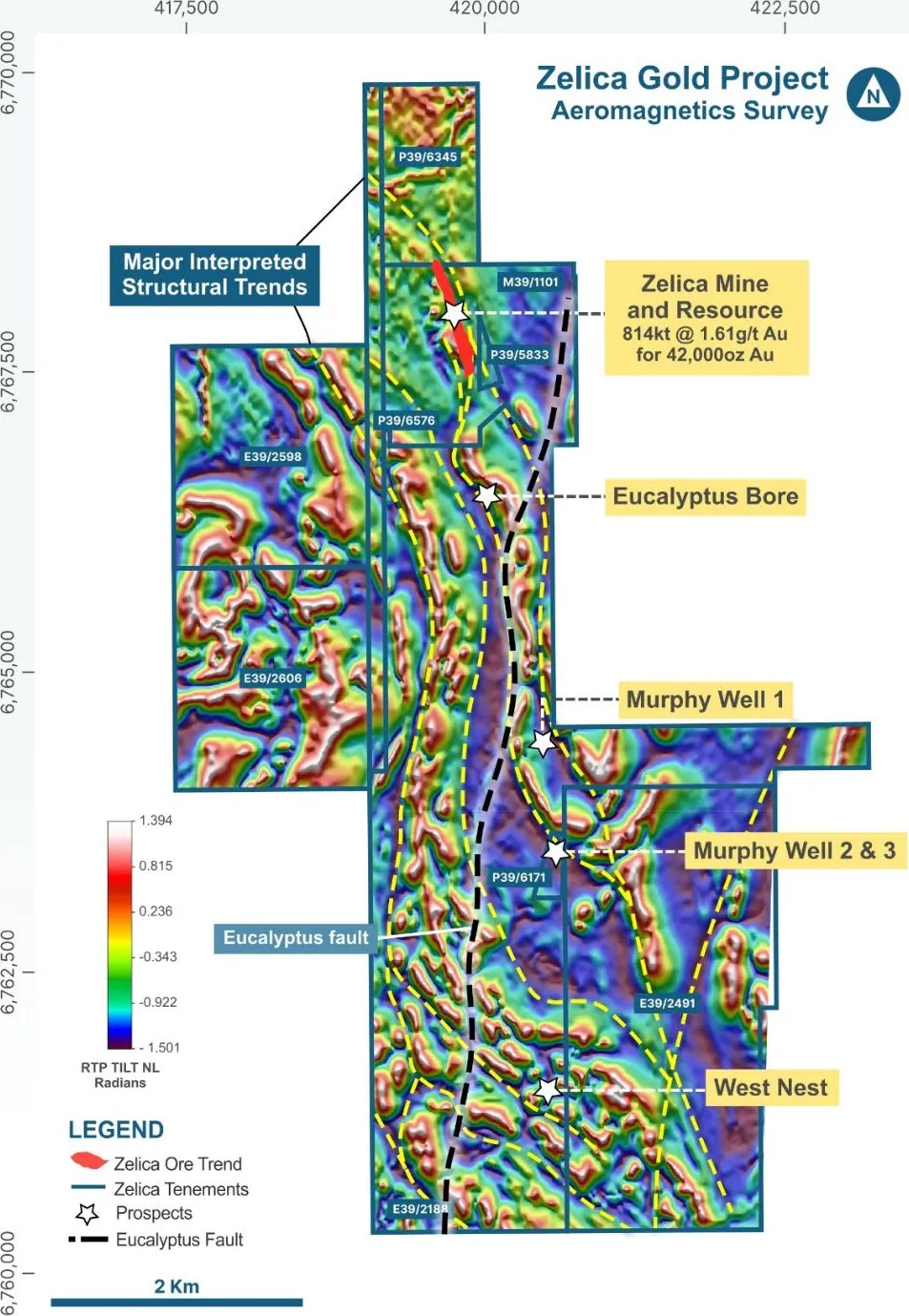
The results arrive soon after Strata reported a maiden JORC 2012 Mineral Resource of 814,000 tonnes at 1.61 grams per tonne gold for 42,000 ounces at the Zelica Mine site. That resource remains open at depth and along strike, while the new interpretation points to possible repetitions of the geological and structural environment beyond the defined deposit. No new drilling, assays or mineral resource estimate were reported in this announcement.
Untested magnetic-low corridors flank the known deposit
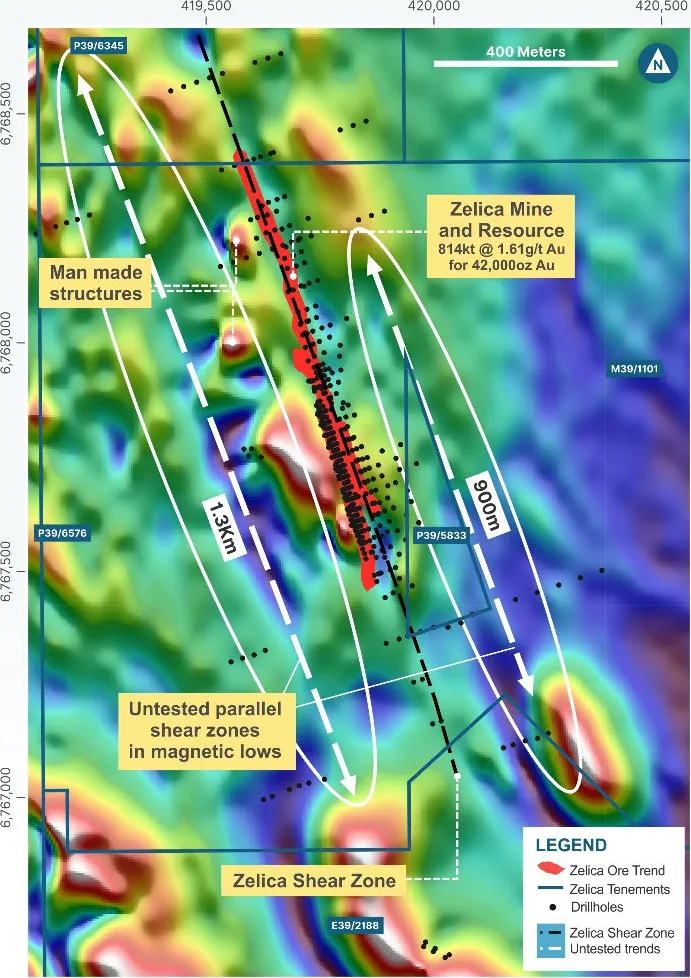
Strata says the known mineralisation sits within a magnetic-low corridor associated with quartz-veined and sheared metasedimentary rocks along a basalt contact. Several sub-parallel magnetic-low trends have now been interpreted on either side of the resource area, including ground that has not been tested by drilling or surface geochemical sampling.
Transported cover and historical mining disturbance have limited the effectiveness of conventional surface exploration in parts of the area. The company is therefore treating the magnetic patterns as targets for further evaluation, rather than as evidence of confirmed mineralisation. Less than 15% of the 9.5km Zelica gold corridor has been systematically tested, according to Strata, leaving a sizeable exploration programme within the existing project footprint.
West Nest and Murphy Well emerge as priority areas
At West Nest, earlier mapping and surface sampling identified gold-bearing quartz-vein systems and a surface gold anomaly extending for about 550 metres. The magnetic interpretation now supports a prospective corridor continuing for approximately another 1.5km into ground that has not yet been tested by soil geochemistry or drilling. Targeted surface sampling is planned before any decision on potential drill testing.
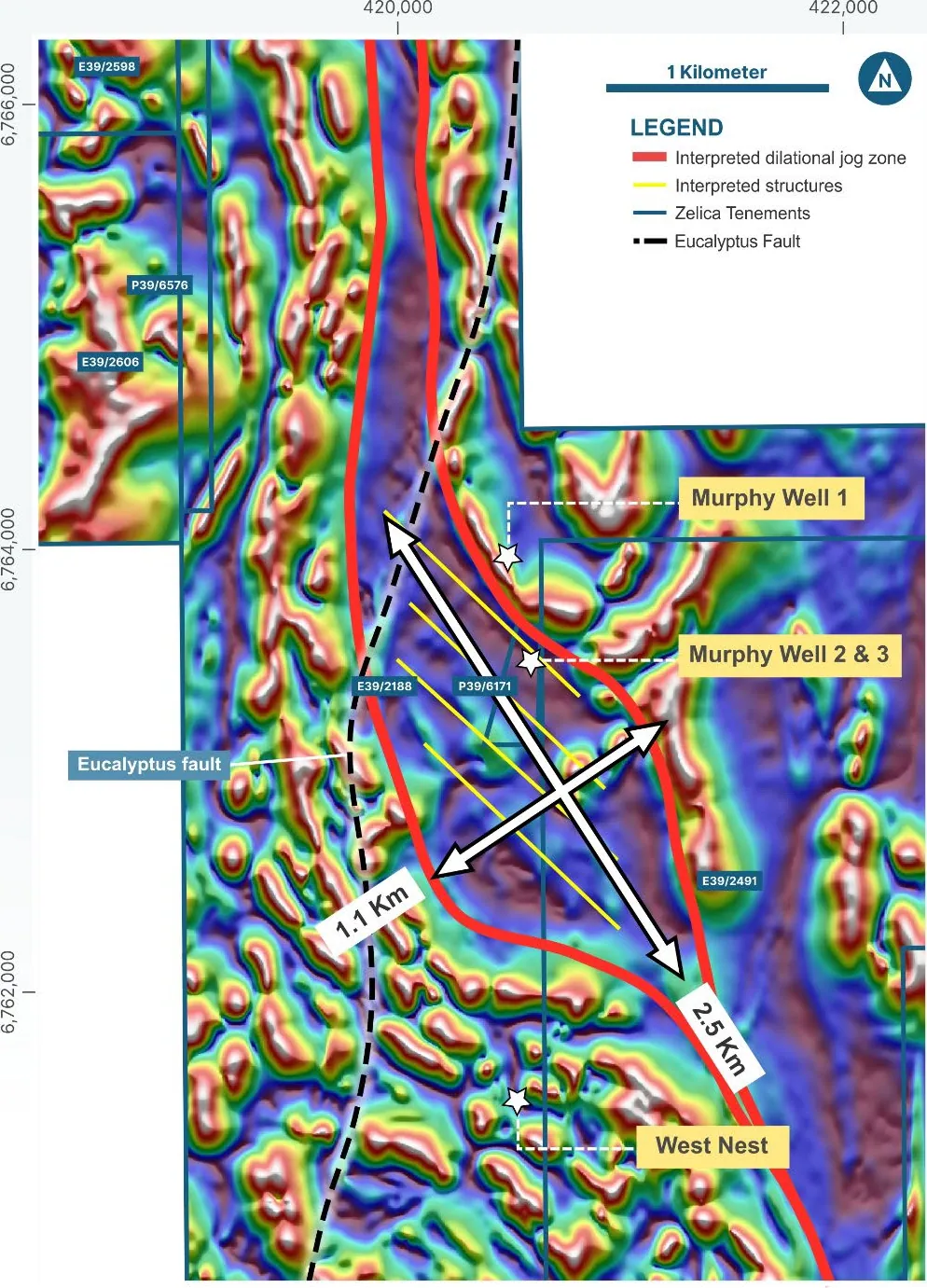
The survey has also highlighted a large-scale dilational jog associated with the Eucalyptus Fault in the Murphy Well area. Murphy Well prospects 1, 2 and 3 coincide with this interpreted structural setting and have previously returned indications of gold from historic workings, mapping and surface sampling. Strata plans to combine those existing observations with new geophysical interpretation to rank follow-up work.
Geochemistry comes before any new drilling
The immediate task is less glamorous than the target maps: infill and extensional soil sampling, geological mapping and integration of the magnetic, drilling and geochemical datasets. Strata says priority areas could then progress to aircore or reverse circulation drilling, while an initial grade control drilling programme is also planned at the Zelica Mine site.
Pre-development work is continuing in parallel with BML Ventures. The commercial attraction of the targets is clear, but the geological case remains preliminary: the magnetic anomalies are interpreted features, not discoveries, and the next round of fieldwork will determine whether they carry the same mineralising system as Zelica.
Get ASX:SMX news the moment it breaks
 iPhone & iPad
 Android
Bottom Line?
The next value-bearing step is validation: surface geochemistry and drilling must turn magnetic signatures into mineralised intersections or leave the targets as geological possibilities.
Questions in the middle?
- Will the untested magnetic-low trends return gold anomalism comparable with the known Zelica system?
- Can the 1.5km West Nest extension deliver drill-ready targets beyond the existing 550m surface anomaly?
- How will exploration priorities be balanced against grade control drilling and Zelica pre-development work?
Sources
1-
New Gold Targets Identified from High-Resolution Magnetics (opens in a new tab)Verified source. Strata Minerals Limited · 28 Oct 2026