Vault’s record year sets the stage for a bigger gold producer

Vault Minerals delivered record FY2026 earnings, generated A$887.9 million in operating cash flow and ended the year debt-free before agreeing to combine with Genesis Minerals. The company now enters FY2027 fully exposed to spot gold prices, with its Leonora expansion and merger vote setting the next major tests.
- 336,540 ounces produced at A$2,924 per ounce AISC
- A$953.3 million underlying EBITDA, up 54%
- A$841.6 million in cash and bullion with no debt
- King of the Hills expansion on track for September commissioning
- Genesis merger remains conditional on shareholder and other approvals

 Add us as a preferred source on Google
Record earnings meet a transformational merger
Vault Minerals Limited (ASX:VAU) enters FY2027 with an unusually large strategic question attached to an unusually strong set of numbers. The gold producer reported record FY2026 revenue of A$1.93 billion, underlying EBITDA of A$953.3 million and statutory net profit of A$278.4 million, while agreeing to combine with Genesis Minerals to create a larger Australian gold producer.
Gold production reached 336,540 ounces at an all-in sustaining cost of A$2,924 an ounce. Sales of 334,904 ounces generated an average realised price of A$5,557 an ounce, helping lift underlying EBITDA 54% from FY2025. Operating cash flow rose to A$887.9 million, although the company also spent heavily on growth, hedging and shareholder returns.
The balance sheet remains the filing’s cleanest number: Vault finished with A$825.8 million in cash, or A$841.6 million including bullion, and no debt. It used that financial capacity to fund A$203.9 million of gold hedge close-outs, pay a maiden 7-cent-per-share dividend and buy back A$53.9 million of stock. The report contains differing descriptions of total shareholder returns, with the chairman citing A$126.8 million and the Directors’ Report recording A$72.9 million for the year.
Genesis transaction puts a new owner around the growth story
The proposed Genesis transaction is the strategic centrepiece. Under the scheme, Vault shareholders would receive 0.7629 Genesis shares plus A$0.475 in cash for each Vault share, with Genesis shareholders owning about 59.8% of the combined group and Vault shareholders holding the balance. Completion was targeted for the December 2026 quarter and remains subject to conditions including shareholder approval. The deal would create a producer targeting roughly 600,000 to 700,000 ounces a year, with 34 million ounces of Mineral Resources and 9 million ounces of Ore Reserves, according to Vault.
The transaction has since moved into its decisive shareholder phase, after the Genesis merger shareholder vote was scheduled for 11 November. That later procedural progress does not change the annual report’s central caveat: the merger was not complete at reporting date and could still fail if its conditions are not satisfied.
King of the Hills carries the near-term operating burden
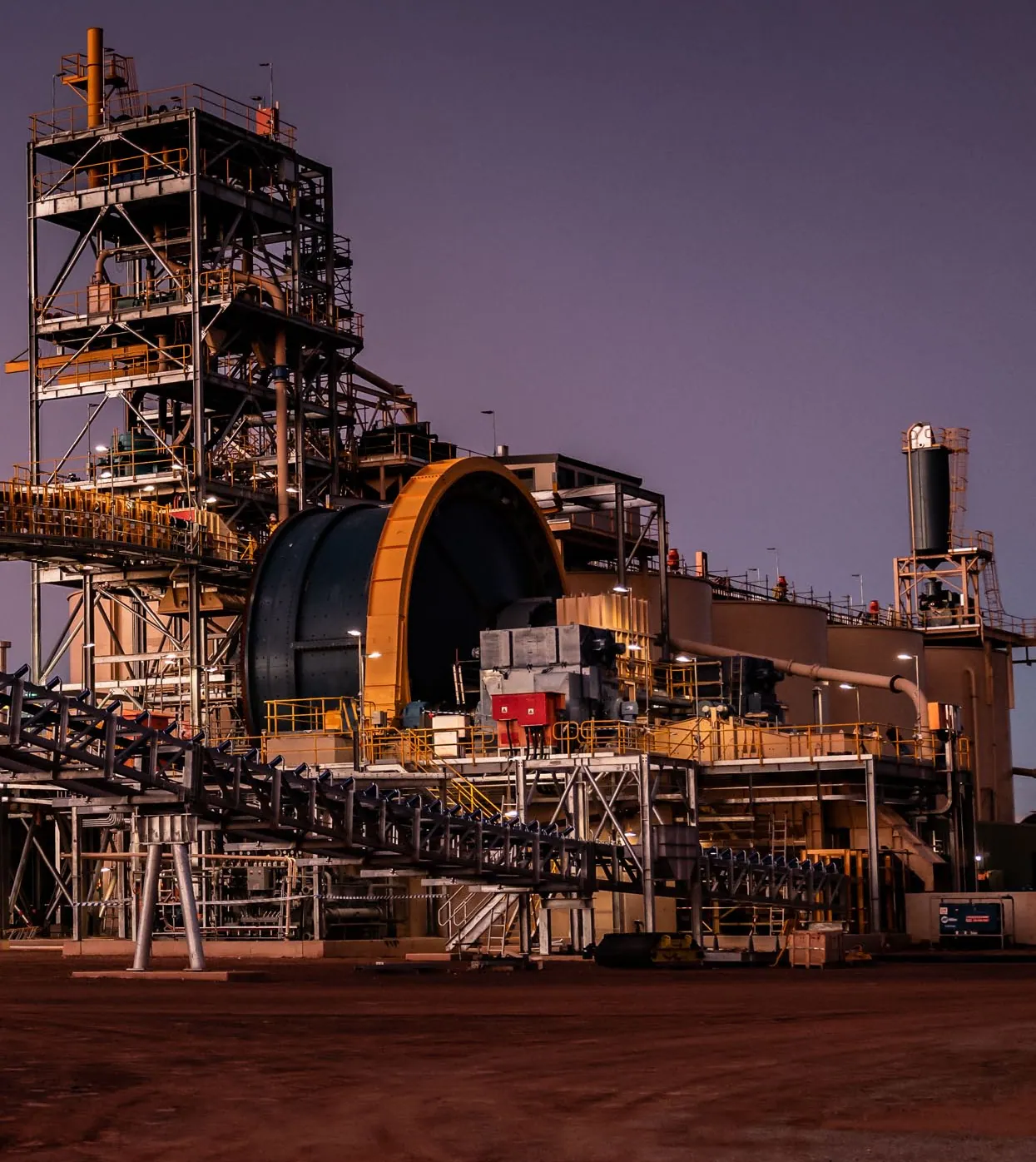
Vault’s most immediate operational catalyst is the A$172 million King of the Hills processing expansion. Stage 1 was completed on schedule and within budget in March 2026, while Stage 2 was 85% complete at the end of July and was tracking ahead of schedule for commissioning in September. The project is intended to lift processing capacity by about 50% to 7.5 million tonnes a year and support a 34% increase in Leonora production.
The Leonora operation generated A$539.3 million of underlying EBITDA, well ahead of Mount Monger at A$188.0 million and Deflector at A$285.3 million. Vault will also move King of the Hills open-pit load-and-haul work to an owner-operator model from January 2027, while Deflector has already transitioned underground mining to owner operation. Sugar Zone, meanwhile, received key approvals and restarted underground development on 1 July, with processing restart planned for early FY2028.
Unhedged exposure raises both the upside and the risk
Vault’s decision to close all remaining gold forwards is now complete. The contracts covered 57,542 ounces at an average price of A$2,797 an ounce and were settled from cash reserves without issuing shares. From FY2027, the company is therefore fully exposed to spot gold prices: a straightforward benefit if prices remain supportive, but with no hedge book to cushion a fall.
Management guided to FY2027 production of 355,000 to 375,000 ounces at an AISC of A$3,150 to A$3,350 an ounce. That guidance implies higher costs than FY2026, even as production is expected to rise. The company’s Ore Reserves stood at 3.91 million ounces after depletion, while Mineral Resources totalled 12.08 million ounces; the resource and reserve base remains substantial, but converting it into consistent production will depend on execution at Leonora, Deflector and Sugar Zone.
Climate costs remain a longer-dated financial variable
Vault’s first mandatory AASB S2 climate report identified carbon exposure at King of the Hills and reduced rainfall and water availability across its Western Australian operations as the climate risks reasonably expected to affect the business. KoTH emissions remained below its Safeguard Mechanism baseline in FY2026, so no carbon compliance liability arose during the year.
That position may become less comfortable as the baseline declines and the processing expansion increases operational scale. Scenario modelling, which the company stresses is not a forecast, estimated annual carbon compliance costs of roughly A$2.2 million to A$4 million in 2028, A$10.1 million in 2030 and A$11.3 million to A$36.5 million in 2050. The figures are highly assumption-dependent, but they point to a cost that could become more material as Vault’s flagship operation grows.
Bottom Line?
Vault has the cash, assets and production pipeline to support a larger gold business, but the next chapter depends on merger approval, King of the Hills execution and the economics of going fully unhedged.
Questions in the middle?
- Will Vault shareholders approve the Genesis scheme, and will all remaining conditions be satisfied in the December 2026 quarter?
- Can the King of the Hills expansion and owner-operator transition lift production without pushing AISC beyond FY2027 guidance?
- How quickly will declining Safeguard Mechanism baselines turn KoTH’s currently manageable carbon exposure into a recurring cash cost?