Andromeda begins Japanese customer testing with 99.9989% HPA

3 min read
8:35am on Thursday 29th of October, 2026 AEDT ~8am, 29th Oct, 26
Andromeda Metals has lifted independently verified high-purity alumina output to 99.9989% at its continuous pilot plant and sent its first commercial sample to a potential Japanese customer. The result strengthens the technical case for its HPA project, but customer qualification and commercial-scale production remain ahead.
- EAG Eurofins confirms HPA purity of up to 99.9989%
- First commercial sample sent to a potential high-tech customer in Japan
- Further amorphous and crystalline alpha-HPA samples planned during Q4 2026
- Pilot plant data will feed process optimisation and the planned Pre-Feasibility Study
- More conservative purity calculation produced results of up to 99.9966%
 Add us as a preferred source on Google
Independent testing lifts HPA purity result
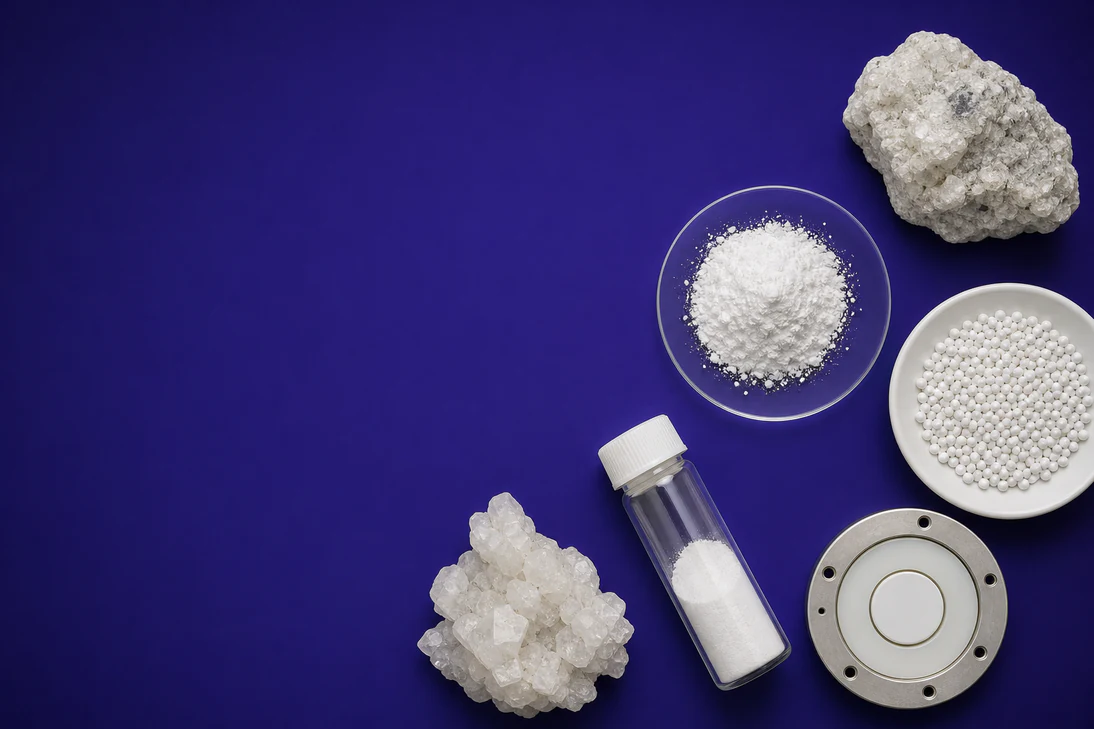
Andromeda Metals Limited (ASX:ADN) has moved its high-purity alumina project from laboratory validation towards customer testing, with independent analysis confirming purity of up to 99.9989% from its continuous pilot plant.
EAG Eurofins tested three samples produced from the pilot program. Two returned 99.9989% purity under the industry-standard calculation based on measured impurities, while the third recorded 99.9986%. A more conservative method that assigns reporting-limit values to elements below detection produced purity results of up to 99.9966%, with the third sample at 99.9964%.
The latest result extends the technical milestone reported in the earlier 99.9986% HPA milestone, while keeping the important qualification intact: production remains at continuous pilot scale, rather than a commercial plant.
First Japanese customer sample leaves pilot program
Andromeda has sent its inaugural commercial HPA sample to Japan for evaluation by a potential customer involved in high-tech manufacturing. The recipient has not been named, and the announcement does not represent a binding sale, offtake agreement or completed customer qualification.
Further samples are expected to be prepared and shipped during the remainder of Q4 2026. The company plans to provide both amorphous HPA and crystalline alpha-HPA for prospective customers to assess against their own requirements.
Pilot data feeds planned feasibility study
Beyond making product samples, the continuous pilot plant is generating engineering, design and operating data for process optimisation, scale-up assessment and Andromeda’s planned HPA Pre-Feasibility Study. The program is also examining whether amorphous silica produced as a by-product could become a co-product, with material submitted for analysis of its physical and chemical characteristics.
Andromeda says its patented process can be adapted to customer specifications and end-use applications. That customer engagement strategy is also linked to the Traxys US supply pathway, which previously involved a strategic, non-binding Heads of Agreement for potential HPA supply into the United States.
Commercial proof still depends on qualification and scale
The company’s 2025 scoping study outlined a staged HPA development of up to 10,000 tonnes per annum, with an estimated pre-tax NPV10 of about A$1.48 billion and average annual EBITDA of approximately A$247 million. Those figures remain study estimates, not operating results, and the current announcement does not provide a final investment decision, project funding package or commercial production timetable.
The next evidence will come from the pilot plant’s continued performance, customer feedback and qualification outcomes. Until those steps are complete, 99.9989% purity is a strong product result, but not yet proof that Andromeda can turn the process into a bankable, revenue-generating HPA business.
Get ASX:ADN news the moment it breaks
 iPhone & iPad
 Android
Bottom Line?
The technical hurdle is moving in Andromeda’s favour; the commercial hurdle now rests on customer qualification, repeatable scale-up and the planned Pre-Feasibility Study.
Questions in the middle?
- Will the potential Japanese customer progress from sample evaluation to formal qualification or a binding commercial arrangement?
- Can the continuous pilot plant maintain the reported purity across larger and sustained production campaigns?
- What capital, operating assumptions and co-product value will emerge in the planned HPA Pre-Feasibility Study?
Sources
1-
ADN Produces 99.9989% HPA and Sends First Sample to Japan (opens in a new tab)Verified company source. Andromeda Metals Limited · 29 Oct 2026 · andromet.com.au