Blaze Minerals finds exceptional tungsten grades at Bahati as funding lands

Blaze Minerals has reported exceptionally high-grade tungsten channel samples from its Bahati Project in Uganda, while completing the $2.06 million second tranche of a larger placement after quarter end. The September quarter closed with just $184,000 in cash and an estimated 0.38 quarters of funding before that financing was received.
- Bahati channel samples returned up to 20.78% and 20.22% WO3
- Two interpreted mineralised corridors extend for about 600 metres
- $2.059 million second placement tranche completed on 26 October
- Quarter-end cash was $184,000, equal to 0.38 quarters of funding
- 20:1 capital consolidation approved by shareholders
 Add us as a preferred source on Google
Bahati sampling points to high-grade tungsten potential
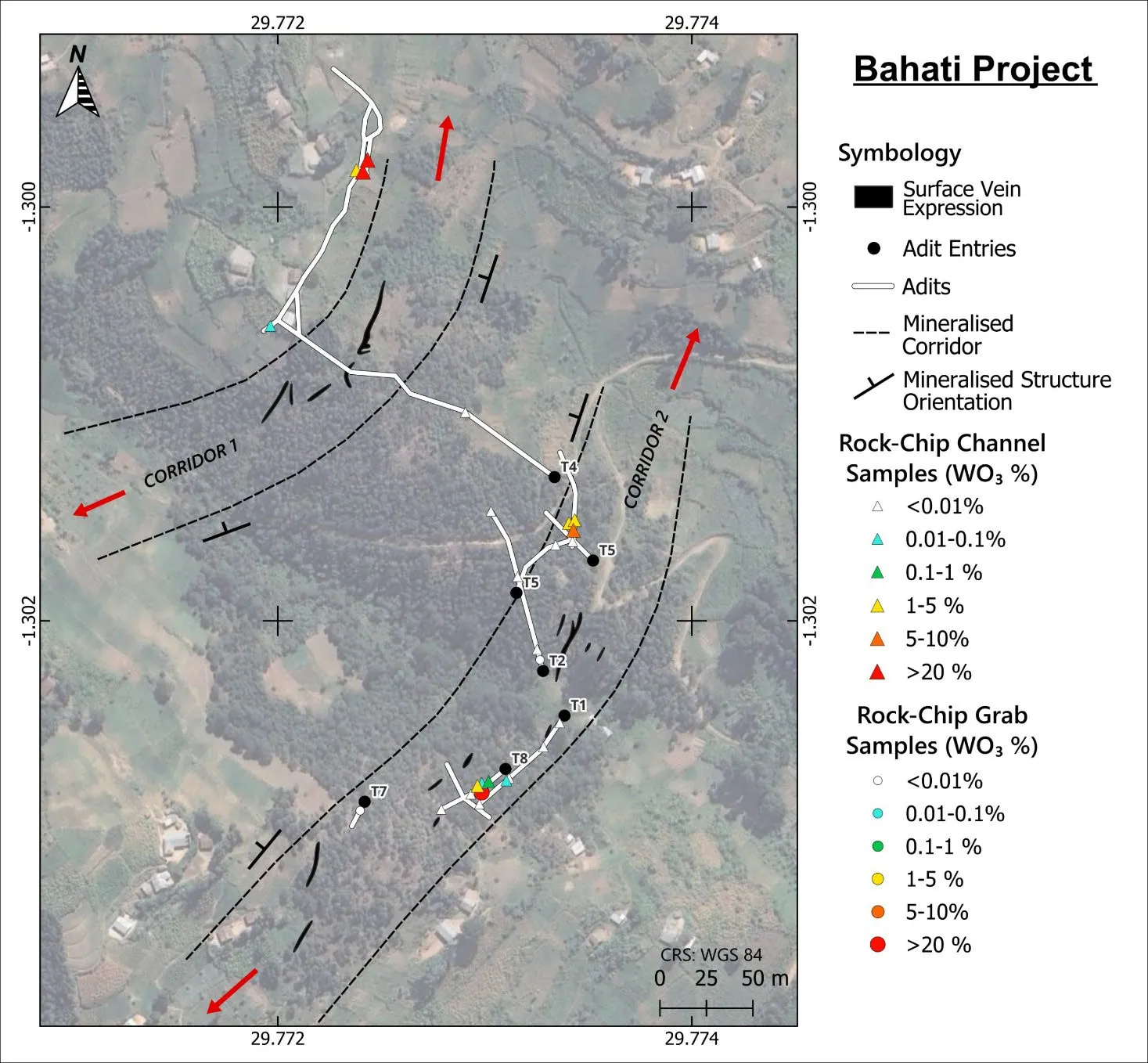
Blaze Minerals Limited (ASX:BLZ) has put its Ugandan tungsten assets at the centre of its September quarter report, with fieldwork at the historical Bahati mine returning channel samples of 1 metre at 20.78% WO3 and 0.8 metres at 20.22% WO3. Other channel samples included 2 metres at 3.03% WO3, 1 metre at 6.79% WO3 and 1 metre at 2.27% WO3, alongside a grab sample grading 56.23% WO3.
The strongest results were taken from accessible historical workings, and the company cautions that channel widths and locations were sometimes constrained by underground access and adit geometry. Blaze identified two interpreted mineralised corridors with a combined strike length of about 600 metres, open in both directions. The results add weight to the geological interest around Bahati, but they do not yet establish a resource or define the scale of an economic deposit.
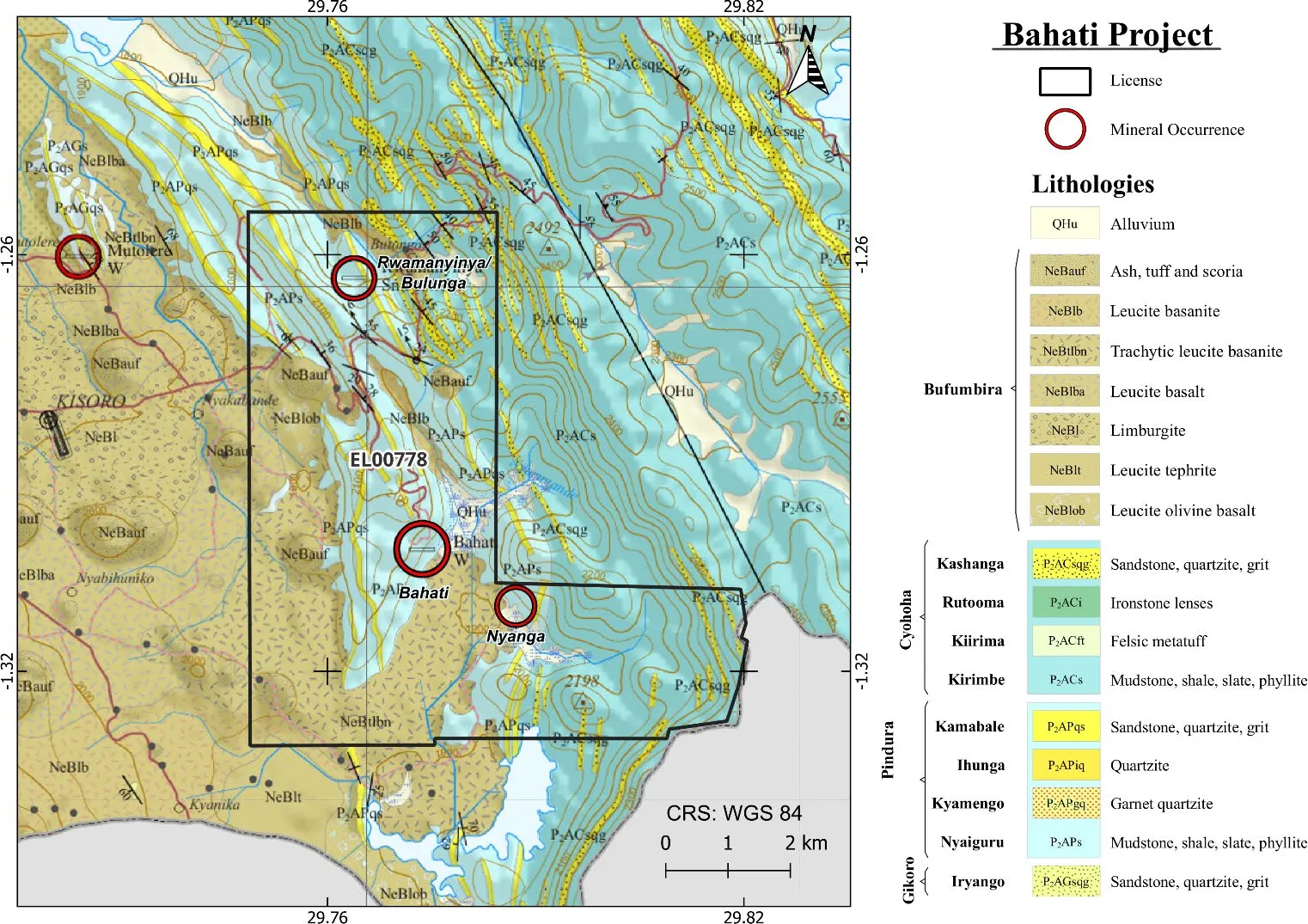
The project sits within Uganda’s Karagwe-Ankole tin-tungsten belt and includes the historical Bahati, Nyanga and Bulunga mines. The company’s placeholder
Blaze subsequently carried out drone-based terrain modelling, digitised historical maps and high-resolution LiDAR scanning of the underground workings. It also received approval for its Terms of Reference and Scoping Report from Uganda’s National Environmental Management Agency after the quarter. Those activities are aimed at improving the understanding of the old mine, while the proposed acquisition of up to 90% of the Bahati and Buyaga projects remained recorded at 0% beneficial interest in the quarter-end tenement schedule pending completion of the transaction.
Capital raising repairs an extremely short cash runway
The financial position was the less glamorous, but equally material, part of the report. Blaze ended September with $184,000 in cash after $355,000 of operating outflows and $144,000 of investing outflows. Exploration expenditure reported under the listing rules totalled $278,000, while related-party payments were $93,000 for director fees, superannuation and administration or consulting services.
On the Appendix 5B calculation, those resources represented just 0.38 quarters of funding based on relevant quarterly outgoings of $486,000. The company said it expected to maintain its current level of net operating cash flow, and pointed to the post-quarter completion of the $2.059 million second tranche of its placement as the funding step supporting continued operations. That financing followed shareholder approval of the broader $2.25 million placement, as well as director subscriptions of up to a further $537,500 on the same terms.
The funding came with a substantial capital-structure reset. Shareholders approved a 20:1 consolidation on 21 October, with the post-consolidation structure still to be finalised. Before consolidation, Blaze reported 7.425 billion ordinary shares, alongside 555.2 million quoted options and 400 million unquoted options. The placement therefore improves immediate liquidity, but dilution and the eventual post-consolidation share count remain important details for shareholders.
Dinokwe sampling continues while other projects pause
In Botswana, Blaze continued first-pass geochemical work at its Dinokwe Project, collecting nine stream sediment samples and 1,604 soil samples across prospecting licence PL0350. The soil programme is testing priority areas identified from regional geophysics. The work sits alongside the company’s earlier Krokodil exploration campaign, which had reported copper, lead and zinc mineralisation from trenching and rock-chip sampling.
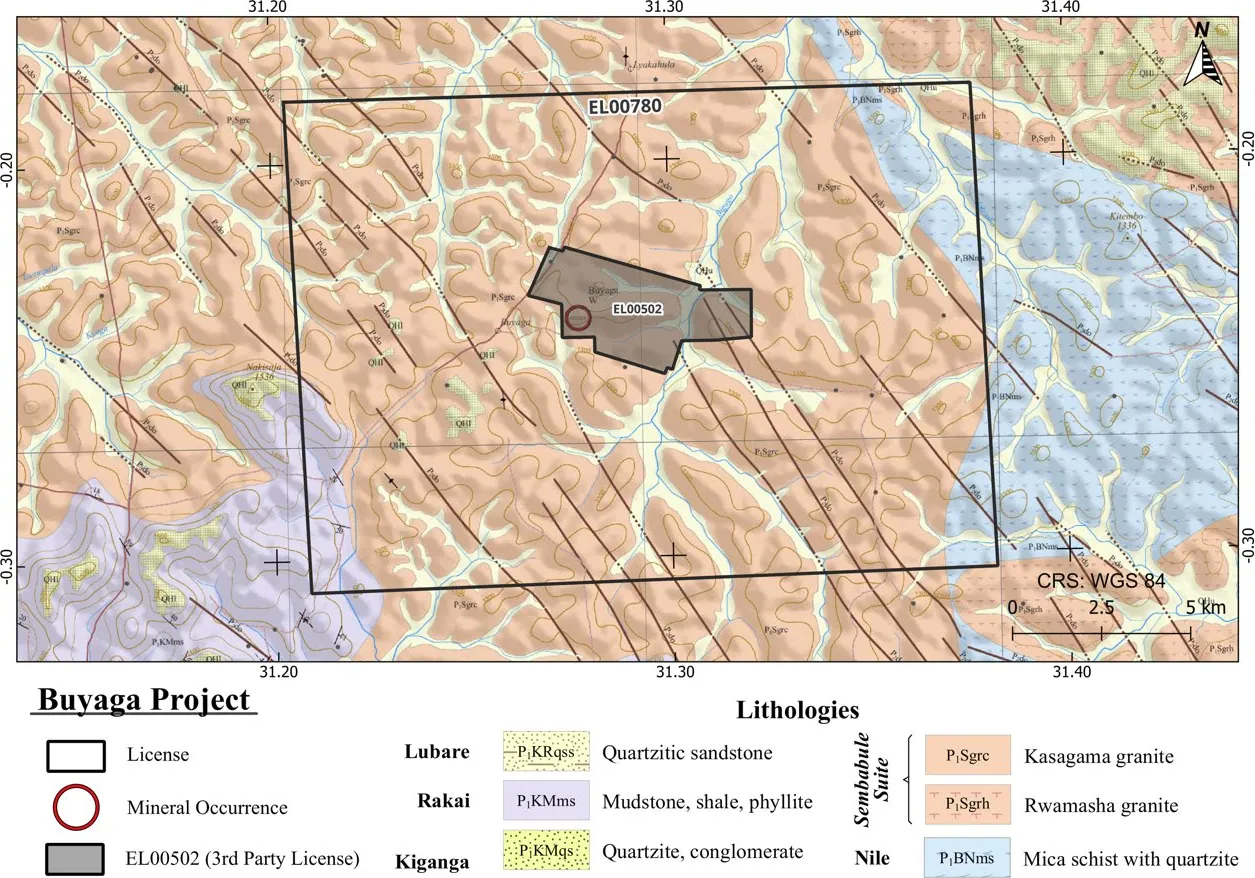
There was no exploration during the quarter at the Ntungamo or Mityana projects in Uganda, while no work was reported at the Kalahari or Molopo projects in Botswana. Blaze said earlier drilling at Ntungamo had confirmed a gallium and rubidium discovery, whereas assays from three Mityana diamond holes returned no significant results. Buyaga, a 250-square-kilometre landholding surrounding a historical tungsten mine, has never been subject to modern exploration or drilling, leaving it as a longer-dated exploration proposition rather than a current source of results.
Get ASX:BLZ news the moment it breaks
 iPhone & iPad
 Android
Bottom Line?
The Bahati grades are attention-grabbing, but the next test is whether mapping, surveying and follow-up exploration can turn isolated high-grade samples into a coherent target before the refreshed cash balance is spent.
Questions in the middle?
- Can Blaze convert the Bahati channel results into a defined exploration target or resource?
- How much of the post-placement cash will be directed to Bahati and Buyaga compared with Botswana programmes and corporate costs?
- What will the final share count and option structure look like after the 20:1 consolidation and any additional director subscriptions?
Sources
1-
Quarterly Activities/Appendix 5B Cash Flow Report (opens in a new tab)Verified source. Blaze Minerals Limited · 28 Oct 2026