FireFly reveals scale of Green Bay copper development opportunity

FireFly Metals has outlined a 4.6Mtpa Green Bay development case with an after-tax NPV of A$3.0 billion, while lifting resource confidence and ending the quarter with A$337.1 million in cash. The next test is whether the preliminary study can survive feasibility work, permitting and project financing.
- A$3.0 billion after-tax NPV for the 4.6Mtpa scenario
- Up to approximately 106kt of annual copper equivalent production
- Green Bay resource reaches 60.2Mt at 2.4% CuEq in Measured and Indicated categories
- A$185 million raised during the quarter
- Feasibility study and maiden Ore Reserve targeted for Q1 2027

 Add us as a preferred source on Google
Green Bay study sets out two production scales
FireFly Metals Ltd (ASX:FFM, TSX:FFM) has put a sizeable development proposition around its Green Bay Copper-Gold Project, with a preliminary economic assessment pointing to an after-tax NPV of A$3.0 billion and an IRR of 39% for a 4.6 million tonne per annum case. That scenario forecasts average steady-state production of about 90kt of copper equivalent a year, including six years at roughly 100kt, with a peak of approximately 106kt.
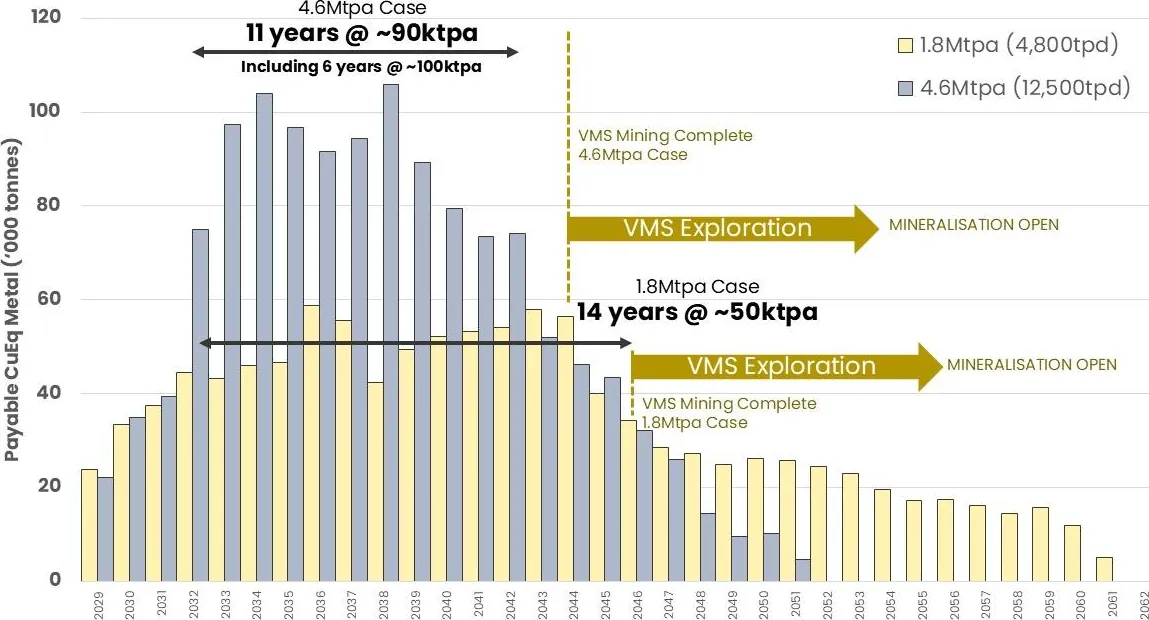
The smaller 1.8Mtpa case is less ambitious but carries a longer initial mine life of about 32 years. It produces an after-tax NPV of A$2.2 billion, a 41% IRR and average steady-state production of about 50kt of copper equivalent for 14 years. Its estimated initial capital cost is A$516 million net of potential refundable Canadian tax credits, compared with A$566 million for the larger case. The 4.6Mtpa option also carries A$484 million of expansion capital, which FireFly expects to fund substantially from cash flow generated by the base case.
The economics are based on PEA assumptions of US$5.00 per pound copper, US$3,500 an ounce gold and US$44 an ounce silver, rather than the higher spot prices also modelled in the announcement. At those spot prices, the company’s sensitivity case rises to an after-tax NPV of A$5.0 billion for the 4.6Mtpa option, but that is not the study’s base economic case.
Resource upgrade strengthens the Ming mine foundation
Green Bay’s combined resource now stands at 60.2 million tonnes grading 2.4% copper equivalent in Measured and Indicated resources, plus 23.5Mt at 2.5% CuEq in Inferred resources. The increase is concentrated at Ming, where 164 underground holes covering 69,539 metres helped lift the Measured and Indicated resource by 21% from the November 2025 estimate and increase its CuEq grade by 22%.
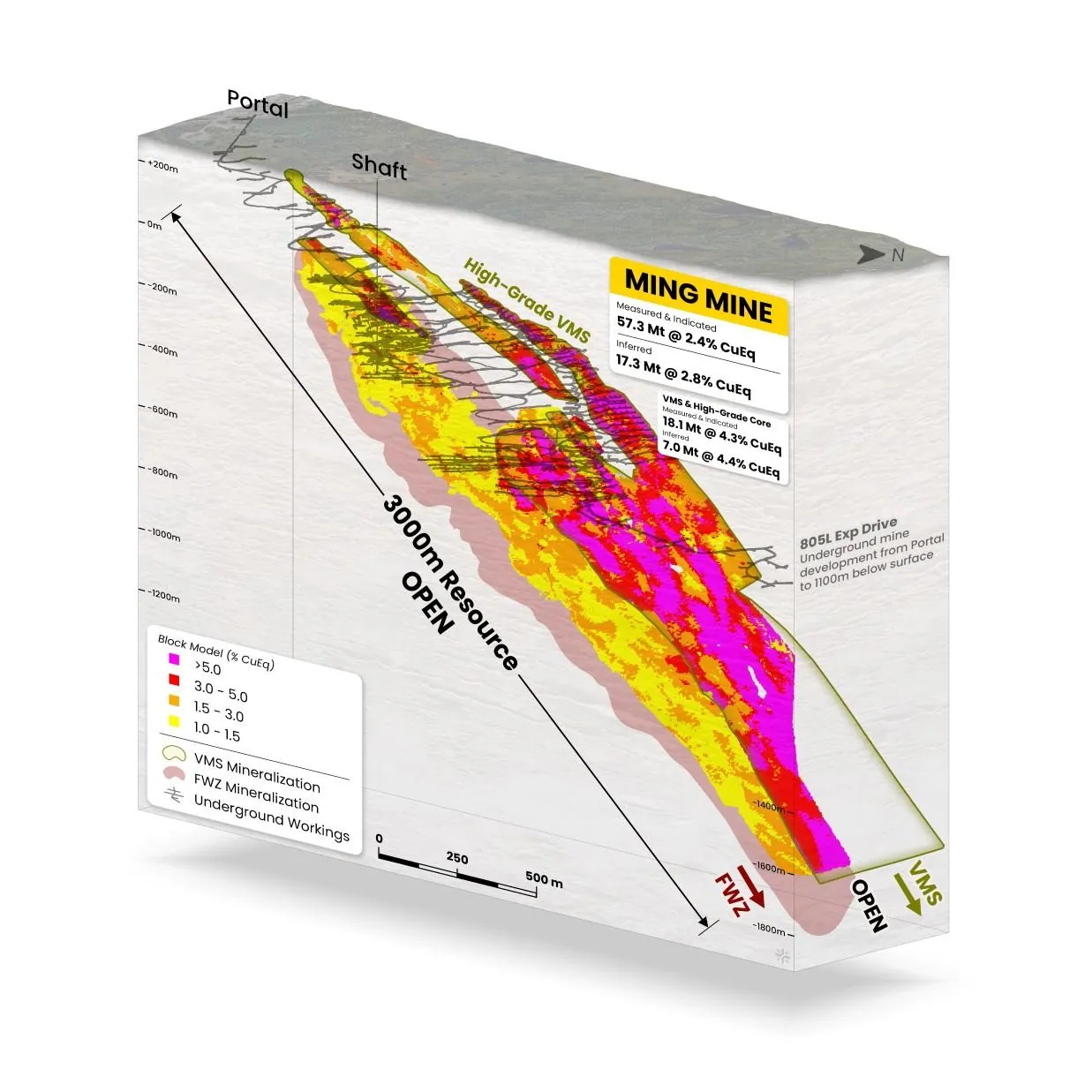
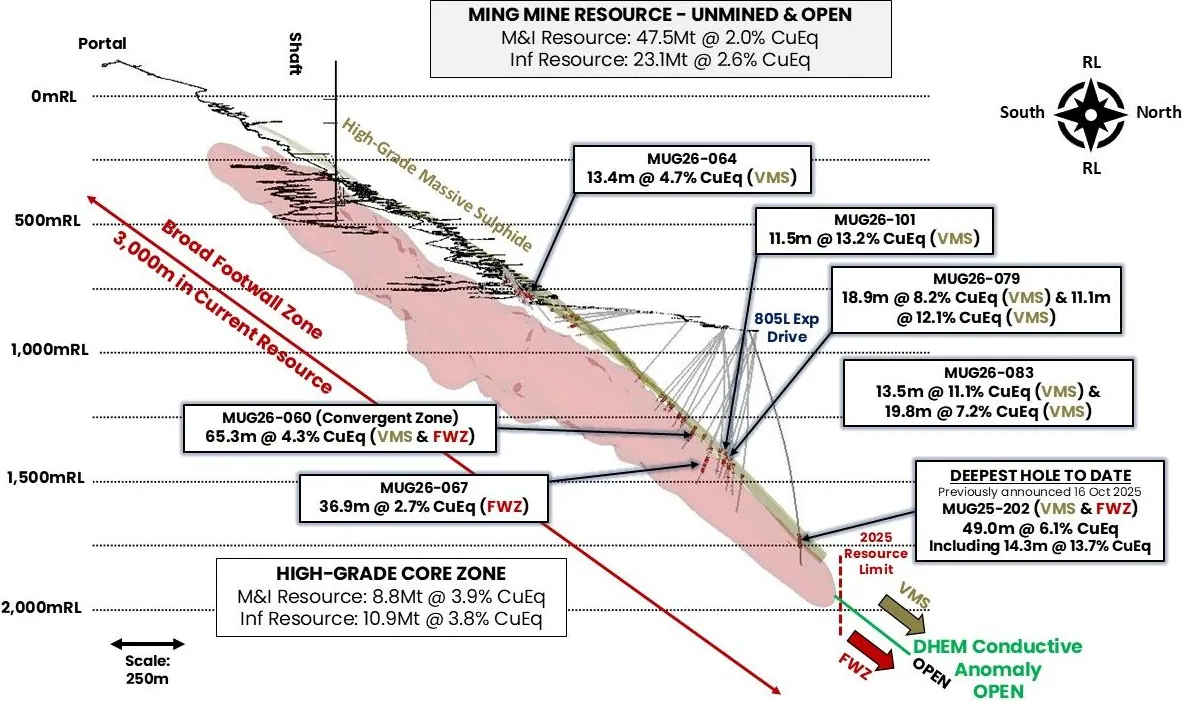
The high-grade Core Zone now contains 18.1Mt at 4.3% CuEq in Measured and Indicated resources, with a further 7.0Mt at 4.4% CuEq inferred. That zone is expected to supply the higher-production years in the mine schedule, although the resource remains a mineral inventory rather than a declared Ore Reserve. FireFly says its PEA was based solely on the Ming Mine resource and excluded Little Deer and a range of regional targets.
The resource conversion follows a period of aggressive drilling that had already been linked to the August Green Bay resource update. FireFly now has six underground rigs operating at Ming and three surface rigs exploring regional targets, including areas around historic VMS mines.
Mount Joy adds exploration upside near existing infrastructure
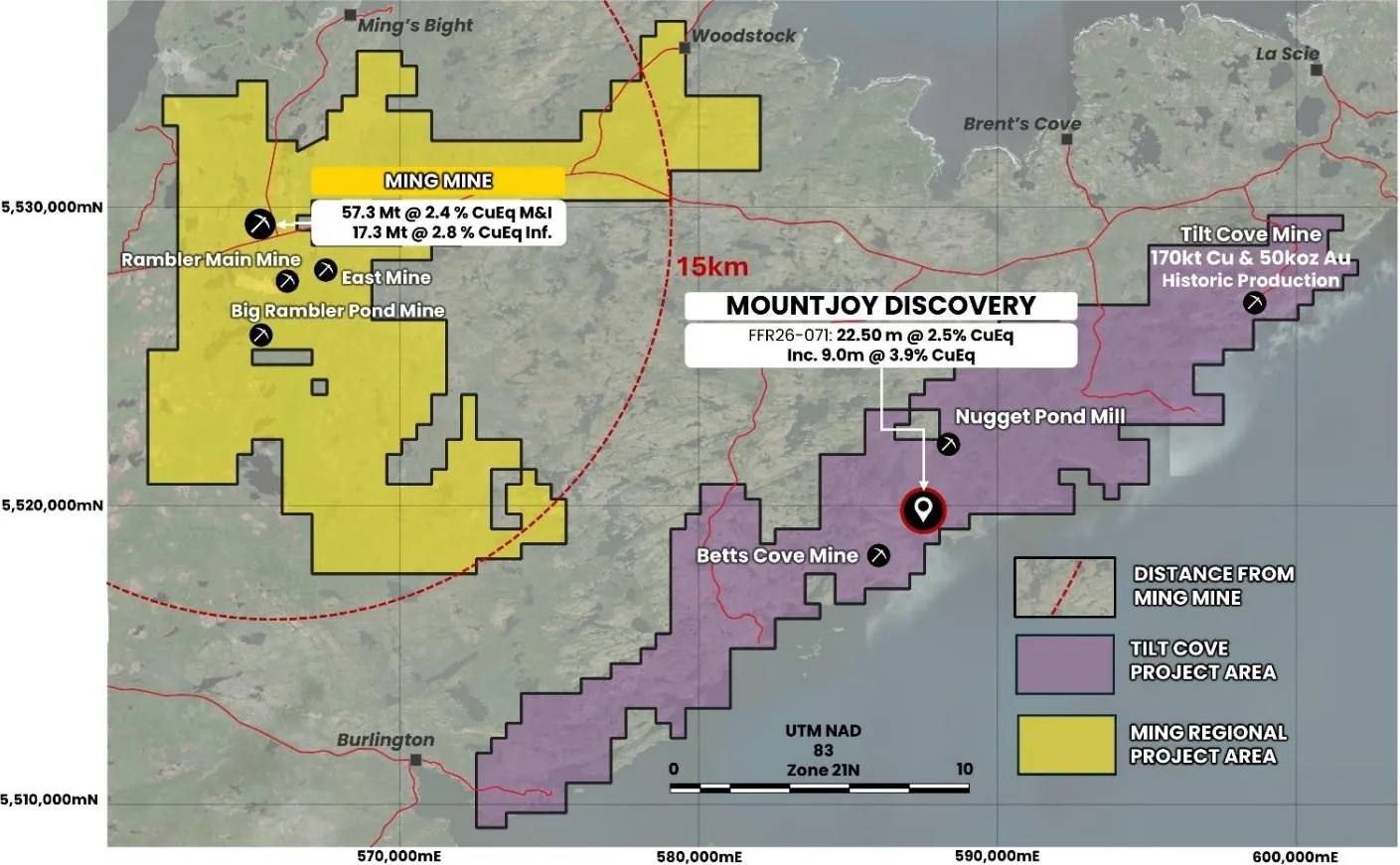
Exploration has also produced a second thread to the Green Bay story. FireFly reported a copper-gold-rich VMS system at Mount Joy, about 35km east of Ming and 2.6km from its Nugget Pond processing facility, which is currently on care and maintenance. The company says the discovery could provide further resource and production growth, although it has not yet been incorporated into the PEA mine plan.
The discovery followed the Mount Joy VMS discovery, where earlier drilling included a 22.5-metre intersection grading 2.5% CuEq and a second hole with about 40 metres of semi-massive sulphides awaiting assays. FireFly says the VMS zone remains open, as do parts of the Ming deposit, but the eventual scale and economic contribution of these targets remain unresolved.
Funding covers the next development phase
FireFly raised approximately A$180 million through an ASX institutional placement and Canadian bought deal during the quarter, then added A$4.975 million through its Share Purchase Plan. The capital raising issued 103.9 million new shares in total and generated net financing inflows of A$175.8 million after transaction costs.
Cash and cash equivalents stood at A$337.1 million at 30 September 2026, after A$20.6 million of investing outflows, mainly for underground development, drilling and project studies. The announcement separately refers to approximately A$349.7 million in cash and liquid investments, while the Appendix 5B reports the lower cash and cash equivalents figure. FireFly said the funds would support early works, resource drilling, feasibility studies and project financing activities.
Feasibility and financing remain the decisive hurdles
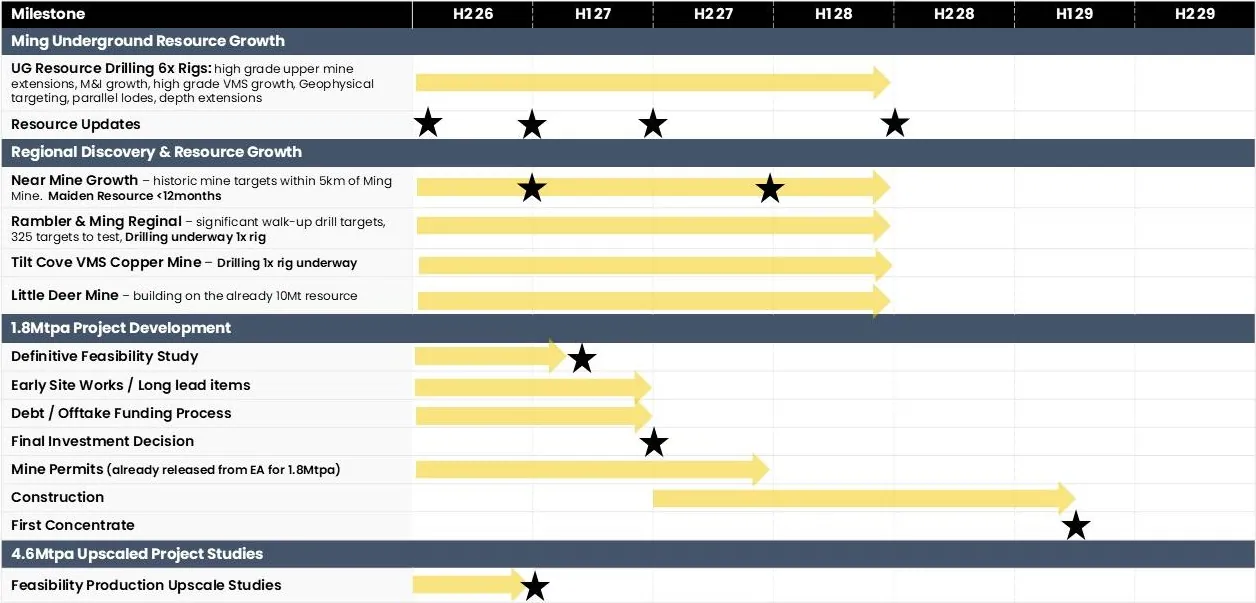
FireFly is targeting a definitive feasibility study, maiden Ore Reserve and next resource update in the first quarter of 2027, followed by a final investment decision in mid-2027. The company is also progressing construction permit applications and discussions around project-level debt, offtake and other financing arrangements.
That timetable matters because the PEA is not a feasibility study, and its production targets, capital costs, operating costs, tax credits and financial projections remain subject to technical, permitting, funding and execution risks. The larger production case requires a 7.6-metre haulage shaft, while the potential tax credits included in the capital estimates are not guaranteed. The next resource update and feasibility numbers will show whether Green Bay’s attractive paper economics can be translated into a financeable construction plan.
Get ASX:FFM news the moment it breaks
 iPhone & iPad
 Android
Bottom Line?
The PEA gives FireFly a powerful development benchmark, but the Q1 2027 feasibility study and maiden Ore Reserve will determine how much of the A$3.0 billion case survives contact with detailed engineering and financing.
Questions in the middle?
- Will the Q1 2027 feasibility study retain the PEA’s production rates and capital assumptions?
- How much additional resource or mine life can Mount Joy and the near-mine VMS targets contribute?
- Can FireFly secure debt, offtake and other project funding without materially increasing shareholder dilution?
Sources
1-
Quarterly Activities/Appendix 5B Cash Flow Report (opens in a new tab)Verified source. Firefly Metals Ltd · 29 Oct 2026 · wcsecure.weblink.com.au