QMines Finds Broad Copper-Gold Zone Beneath Mt Chalmers Pit

5 min read
9:27am on Thursday 29th of October, 2026 AEDT ~9am, 29th Oct, 26
Popular on LinkedIn
QMines has delivered its strongest pontoon copper intersection so far beneath the flooded Mt Chalmers pit, with mineralisation beginning immediately below the historical floor. The results may add weight to a resource update and feasibility study, while stockpile potential remains unquantified.
- 30.47m at 1.24% copper, 0.87g/t gold, 12.2g/t silver and 1.11% zinc
- 9.47m high-grade core at 2.36% copper and 2.14g/t gold
- 8.6m at 1.11% copper ended in mineralisation, including 1m at 6.02% copper
- Historical stockpiles carry copper, gold, silver and zinc but lack defined volume or recoveries
- Further assays, drilling and a resource update will feed the Mt Chalmers DFS
 Add us as a preferred source on Google
Strongest Pontoon Intersection Starts Beneath Pit Floor
QMines Limited (ASX:QML) has produced its best pontoon copper result yet beneath the flooded Mt Chalmers pit, with hole 26MCDD053 returning 30.47 metres at 1.24% copper, 0.87g/t gold, 12.2g/t silver and 1.11% zinc from 42.53 metres. The standout 9.47-metre section graded 2.36% copper and 2.14g/t gold.
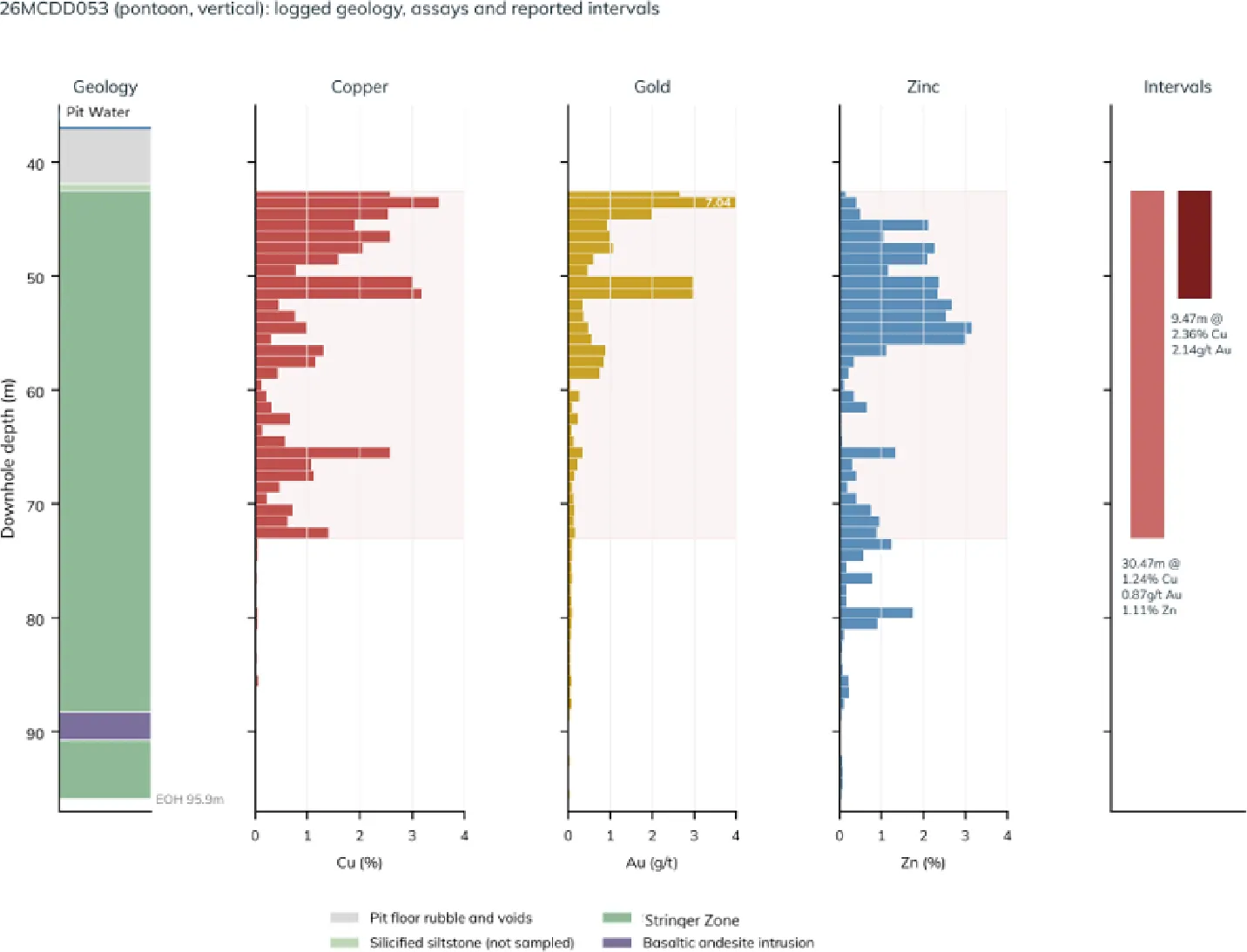
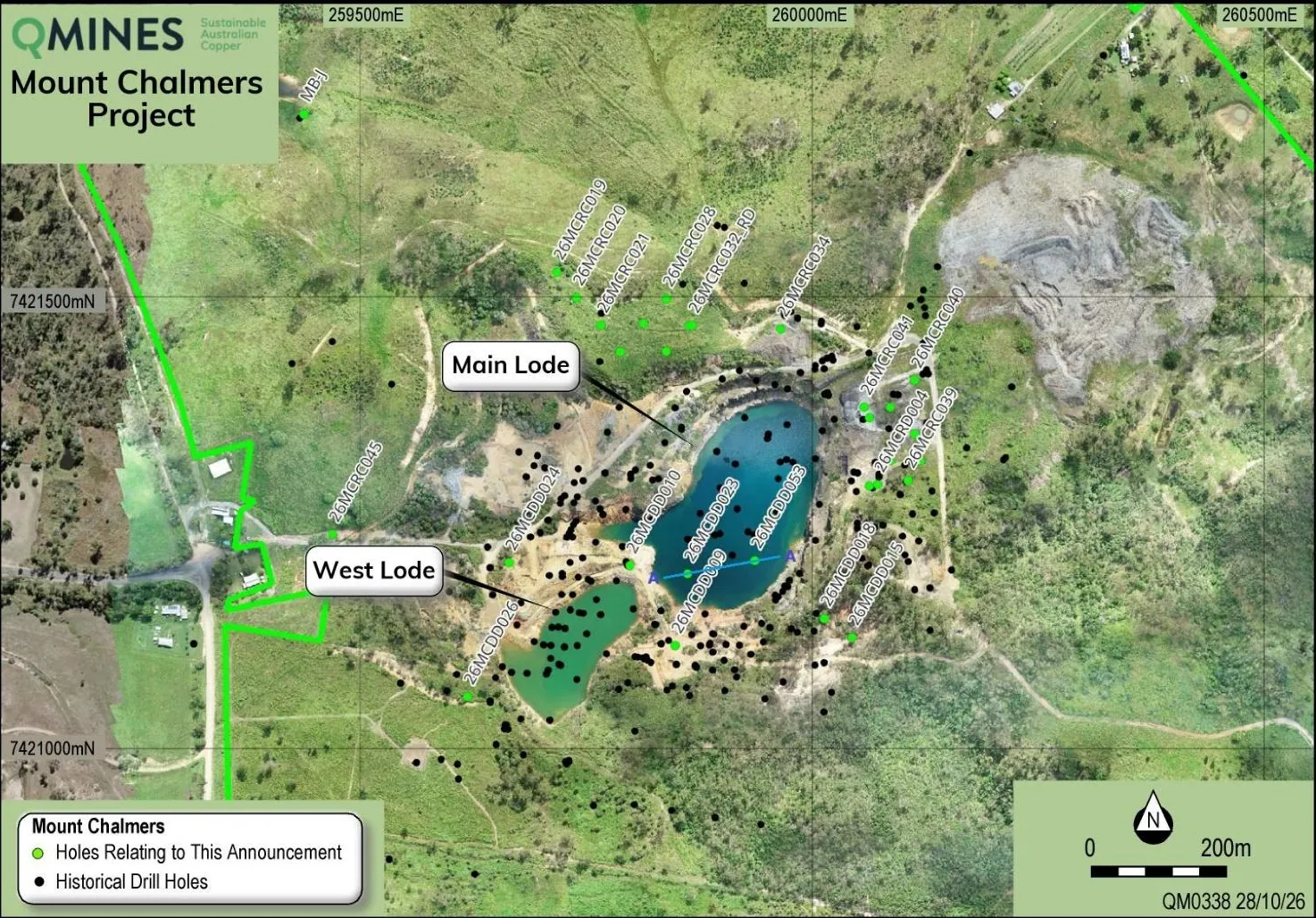
The location matters as much as the grade. After drilling through 37 metres of water and 4.9 metres of rubble and voids, the hole entered bedrock and encountered mineralisation in the first sample below the historical pit floor. QMines says the intersection is broader than nearby pontoon holes and the strongest on a drill width multiplied by copper grade basis in the pontoon program.
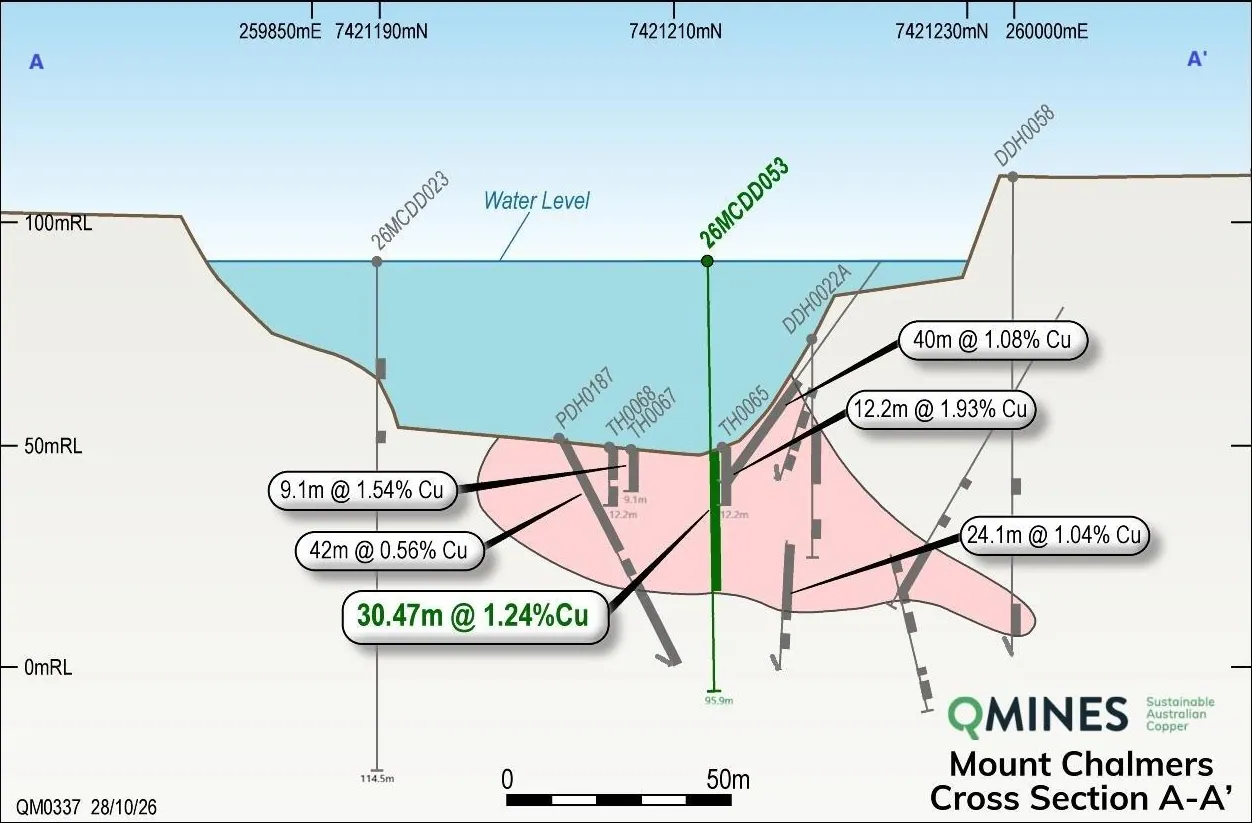
The result extends a run of encouraging work beneath the flooded pit, including the earlier pontoon drilling results reported by QMines in October. In this announcement, the company says 26MCDD053 is also the fourth strongest copper intersection of its 2026 program, although true widths of the in-situ mineralisation have not been established.
Copper Zone Remains Open at Hole End
A second result adds a different kind of interest. Diamond hole 26MCRD004 returned 8.6 metres at 1.11% copper from 133 metres, including one metre at 6.02% copper, between two of the program’s strongest previously reported holes. The hole was abandoned at 141.6 metres after the rods became stuck, with the final sample still returning 0.59% copper.
That leaves the full thickness of mineralisation below the hole untested. QMines has stressed that the interval is narrower than those in the neighbouring holes and that the result does not establish continuity beyond the end of drilling. Additional results included 15 metres at 0.49% copper in 26MCDD018 and a four-metre polymetallic zone in 26MCDD009 grading 5.03% zinc and 3.28% lead, including one metre at 13.1% zinc and 8.11% lead in massive sulphide.
Stockpiles Show Metal Content but Not Yet an Ore Opportunity
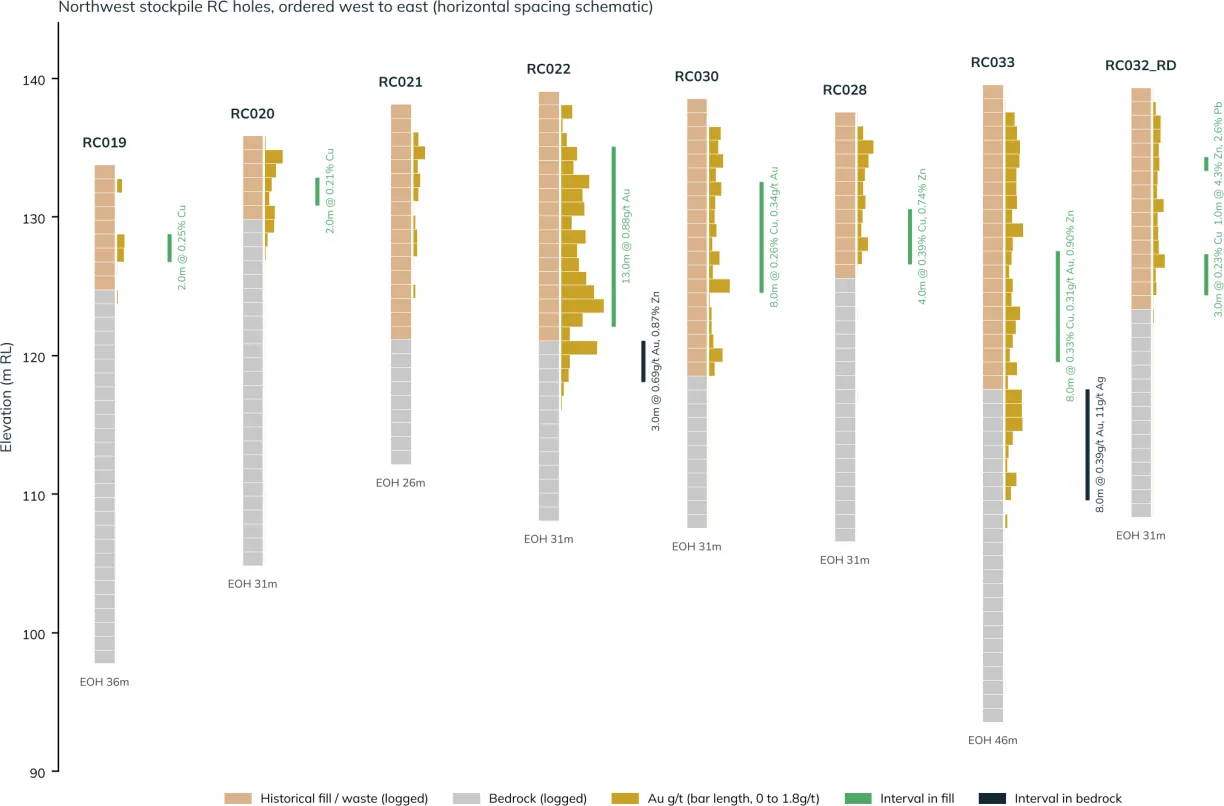
QMines also reported copper, gold, silver and zinc in historical fill across the northwest stockpiles, including eight metres at 0.33% copper, 0.31g/t gold, 8.1g/t silver and 0.90% zinc in hole 26MCRC033. The drilling also intersected potentially mineralised bedrock beneath two stockpile holes, though the company says reverse-circulation drilling can carry material down the hole and the bedrock results require confirmation.
The stockpiles sit outside the existing Mineral Resource and Ore Reserve, but the announcement stops well short of treating them as a defined mining opportunity. Drilling was wide-spaced through heterogeneous historical material, sample recovery was variable, and no stockpile volume, tonnage, representative grade or recovery estimate exists. QMines plans volume surveys, bulk-density measurements and metallurgical testwork before assessing whether the material could provide additional processing feed.
Resource Update Becomes the Next Test
The company is now assessing the new intersections against the Mt Chalmers geological model, with outstanding assays from the 2026 campaign to be incorporated into an updated Mineral Resource. That work is intended to support the Definitive Feasibility Study, alongside continued pontoon and regional drilling. The expanded Mt Chalmers campaign previously covered by Middle.News had been aimed at building the assay pipeline and advancing the DFS.
The positive drilling signal is therefore clear, but its project-level consequence is not. The key questions are how the new mineralisation fits within the resource domains, whether the 26MCRD004 zone continues at depth, and whether stockpile material can survive metallurgical and economic scrutiny. Several assays remain pending, while some gold quality-control results require re-assay and final assessment.
Get ASX:QML news the moment it breaks
 iPhone & iPad
 Android
Bottom Line?
The drilling has strengthened the case for resource growth beneath Mt Chalmers, but the next resource model and metallurgical work must convert impressive intersections into mineable tonnes.
Questions in the middle?
- How much of the broad mineralisation in 26MCDD053 represents true geological width rather than downhole width?
- Will follow-up drilling confirm continuity below and between the strongest Mt Chalmers intersections?
- Can the northwest stockpiles provide economically recoverable feed once their volume, density and metallurgy are established?
Sources
1-
Outstanding High-Grade Copper-Gold Results Beneath Pit (opens in a new tab)Verified source. Qmines Limited · 29 Oct 2026