Carnegie’s CETO actuator is ready for November deployment in Spain

Carnegie Clean Energy has completed fabrication of the main CETO buoyant actuator ahead of a staged deployment in Spain, bringing its wave-energy prototype closer to offshore testing. The progress comes alongside a fully drawn A$3.5 million loan facility and quarterly operating cash outflow of A$916,000.
- Buoyant Actuator fabrication completed ahead of November deployment at BiMEP
- Full grid connection targeted for spring 2027 after PTO testing
- US$194,000 TEAMER aquaculture project begins in November
- Ballamena loan facility increased to A$3.5 million at 15% interest
- Quarter-end cash stood at A$2.475 million, equivalent to 2.7 quarters of funding

 Add us as a preferred source on Google
CETO structure reaches deployment stage
Carnegie Clean Energy Limited (ASX:CCE) has finished fabricating the buoyant actuator for its CETO wave-energy system in Spain, clearing a major physical milestone before the first stage of offshore deployment begins in November. The three-piece structure is due to be reassembled at the Port of Bilbao, outfitted and towed to the Biscay Marine Energy Platform, or BiMEP, where Carnegie plans to test its stability, towing method and offshore logistics.
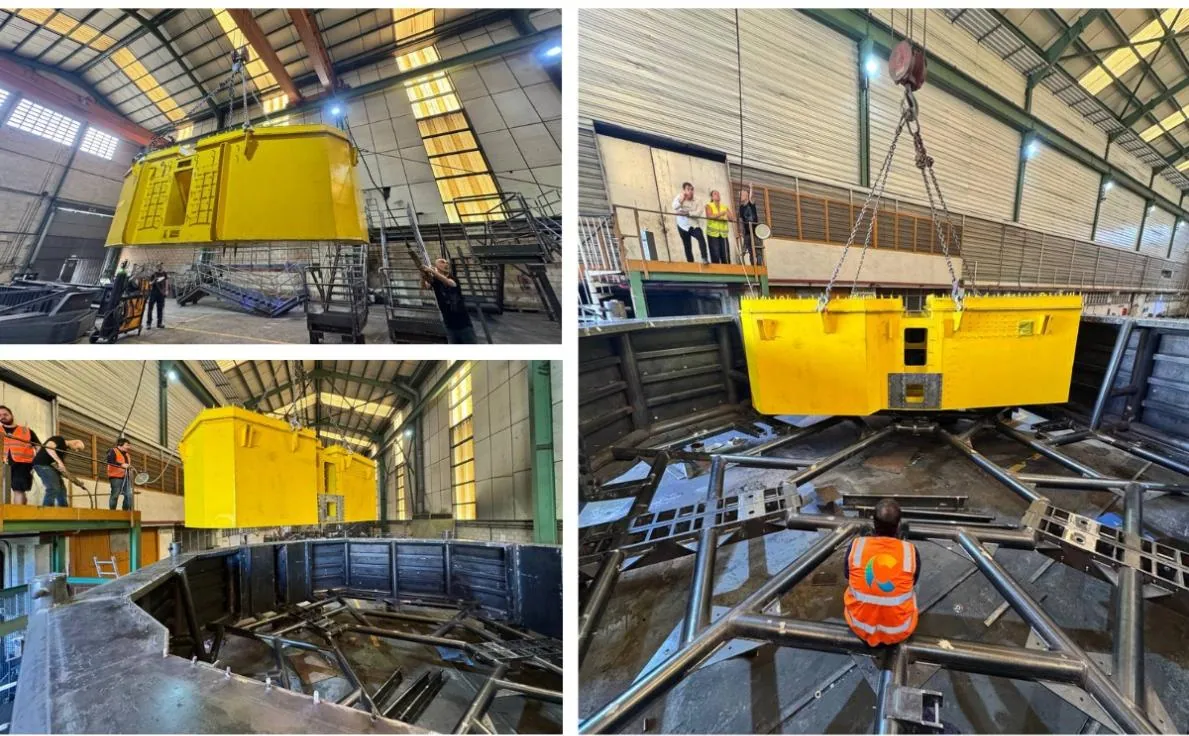
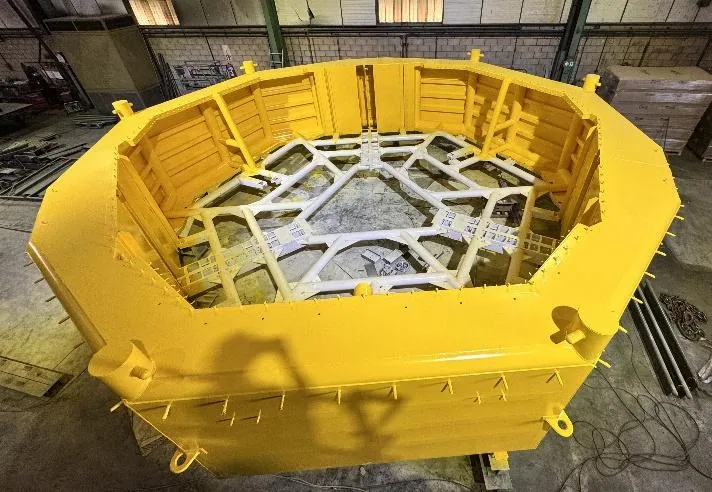
The milestone advances the same ACHIEVE programme that featured in the company’s October CETO deployment plans, but this quarter’s update is more tangible: the actuator has moved from design and fabrication into physical deployment preparation. Carnegie said fit-checks between the actuator and power take-off components were completed successfully, with the modular design intended to allow quicker removal, reinstallation or replacement during maintenance.
Power system waits for second deployment stage
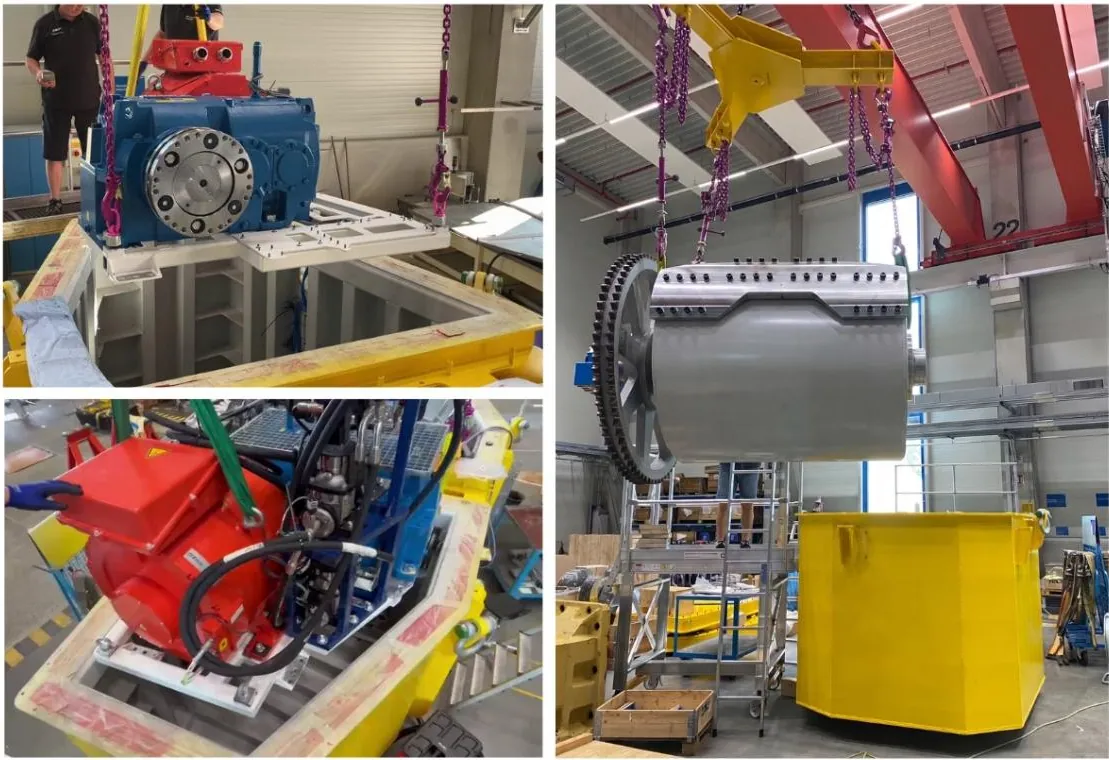
The progress is not yet a full power-generation result. Mechanical assembly of the power take-off system is continuing with SKF, after which the PTO and electrical module are scheduled for controlled onshore testing. Those components are then expected to be integrated into the buoyant actuator for a second deployment stage and full grid connection targeted for spring 2027.
That sequencing is deliberate, according to CEO Jonathan Fiévez. Carnegie plans to use the initial offshore phase to build marine operations experience before adding the more complex subsea power systems. The approach may reduce the technical and logistical load of the first offshore campaign, although the filing leaves the performance data from the eventual grid-connected system still to be delivered.
Aquaculture project adds a funded commercial pathway
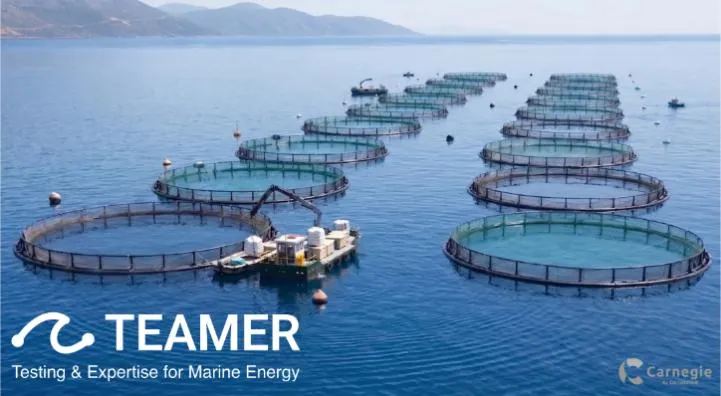
Carnegie also has a smaller US pathway opening up. Its Test Plan was approved for a US Department of Energy-backed TEAMER project focused on integrating distributed wave-energy converters into flexible offshore fish-pen arrays and dynamic mooring grids. The project is valued at US$194,000, or A$270,000, with technical work due to begin on 1 November and run for nine months.
Funding is awarded directly to project partner Kelson Marine, while Carnegie acts as the technical support recipient. The company said the arrangement lets it contribute to aquaculture product development with minimal capital outlay, using high-fidelity simulations to assess structural dynamics and power capture rather than committing immediately to another offshore hardware deployment.
Loan support rises as cash remains limited
Carnegie’s balance sheet remains the less comfortable part of the report. Cash and cash equivalents stood at A$2.475 million at 30 September, after A$916,000 of operating cash outflow and A$814,000 of investing outflow during the quarter. The company reported 2.7 quarters of funding on its ASX cash-flow calculation, with no unused borrowing capacity included because the A$3.5 million loan facility was fully drawn.
The Ballamena facility was increased by A$1 million during the quarter to A$3.5 million and carries interest at 15% a year, with final repayment due on 30 June 2027. The company had previously reported the June loan maturity extension; the latest variation also requires Carnegie to issue five million options to the lender, exercisable at A$0.27 and expiring in July 2029. Against that financing support, the near-term test is whether November’s staged deployment and the later grid connection can progress without requiring another cash injection before project or grant receipts arrive.
Get ASX:CCE news the moment it breaks
 iPhone & iPad
 Android
Bottom Line?
November’s deployment should provide the next operational proof point, but the fully drawn loan and 2.7-quarter cash estimate leave limited room for schedule slippage before the 2027 grid-connection target.
Questions in the middle?
- Will the November offshore campaign validate towing, mooring and installation logistics at BiMEP without material delays or extra funding needs?
- When will Carnegie report results from onshore PTO testing and confirm the timetable for full grid connection in spring 2027?
- Can grant reimbursements, project milestones and the US aquaculture work improve funding resilience before the Ballamena loan matures?
Sources
1-
Quarterly Activities/Appendix 4C Cash Flow Report (opens in a new tab)Verified company source. Carnegie Clean Energy Limited · 30 Oct 2026 · investors.carnegiece.com