Critical Resources expands Suriname gold strategy to 228 km²

5 min read
8:08am on Friday 30th of October, 2026 AEDT ~8am, 30th Oct, 26
Critical Resources has expanded its Suriname gold strategy to three projects covering about 228 km² under exclusivity, while advancing exploration in New Zealand and Canada and laboratory-stage battery technology. The company ended September with A$1.58 million in cash and an estimated 1.87 quarters of funding based on reported outgoings.
- Exclusivity over three Suriname gold projects covering approximately 228 km²
- Proposed 90% interests remain subject to due diligence, approvals and binding agreements
- GexplOre structural targeting results expected by mid-November 2026
- DSD pouch cell retained approximately 75% capacity after 65 cycles
- A$1.58 million cash balance equates to 1.87 quarters of estimated funding
 Add us as a preferred source on Google
Suriname portfolio reaches 228 km² under exclusivity
Critical Resources Limited (ASX:CRR) has made Suriname the defining feature of its latest quarter, securing exclusivity over three gold projects covering approximately 228 km². The proposed transactions would give the company 90% interests in Gonini, Greenstars and Gadu Manda, but none has yet become a completed acquisition.
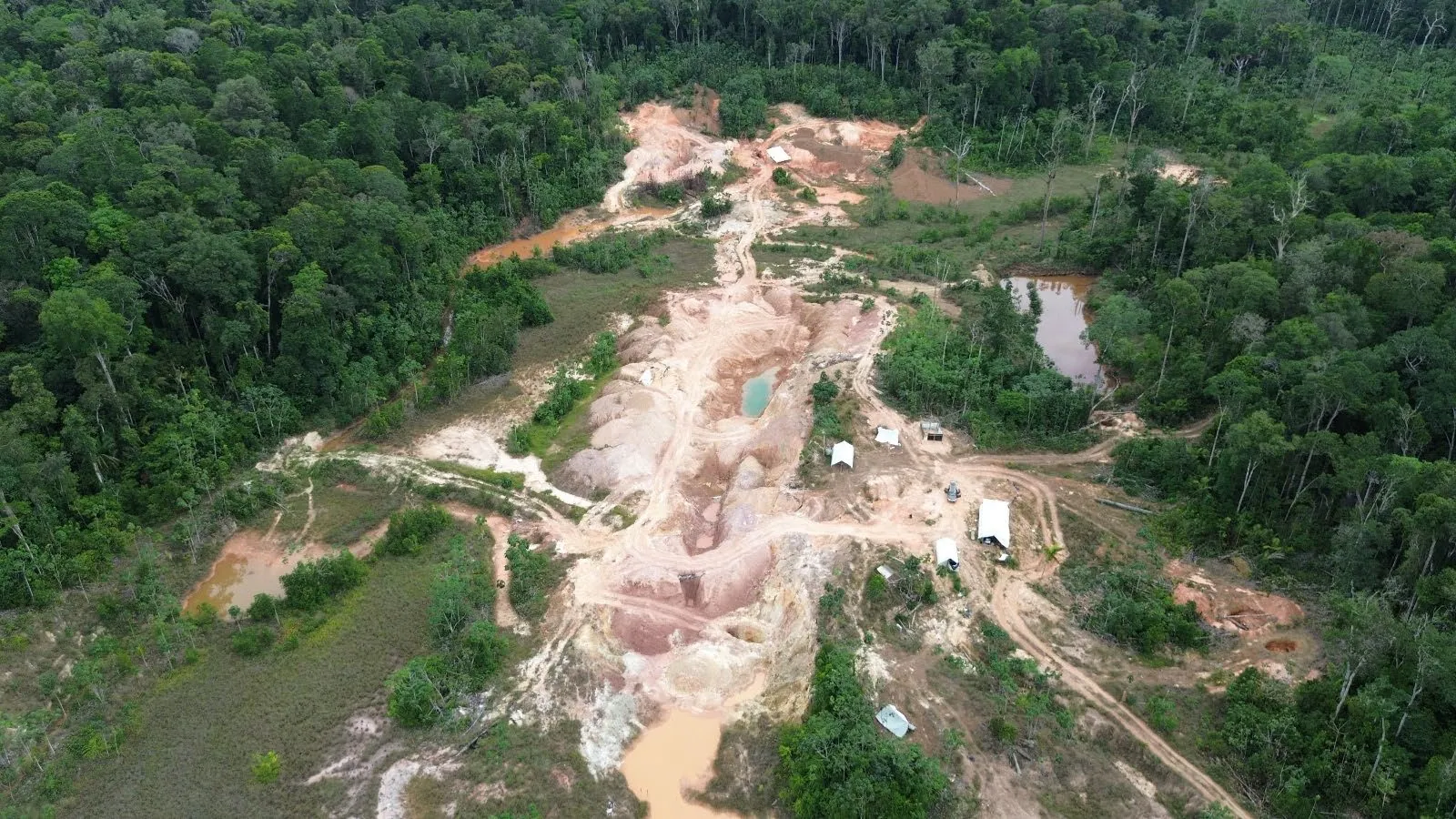
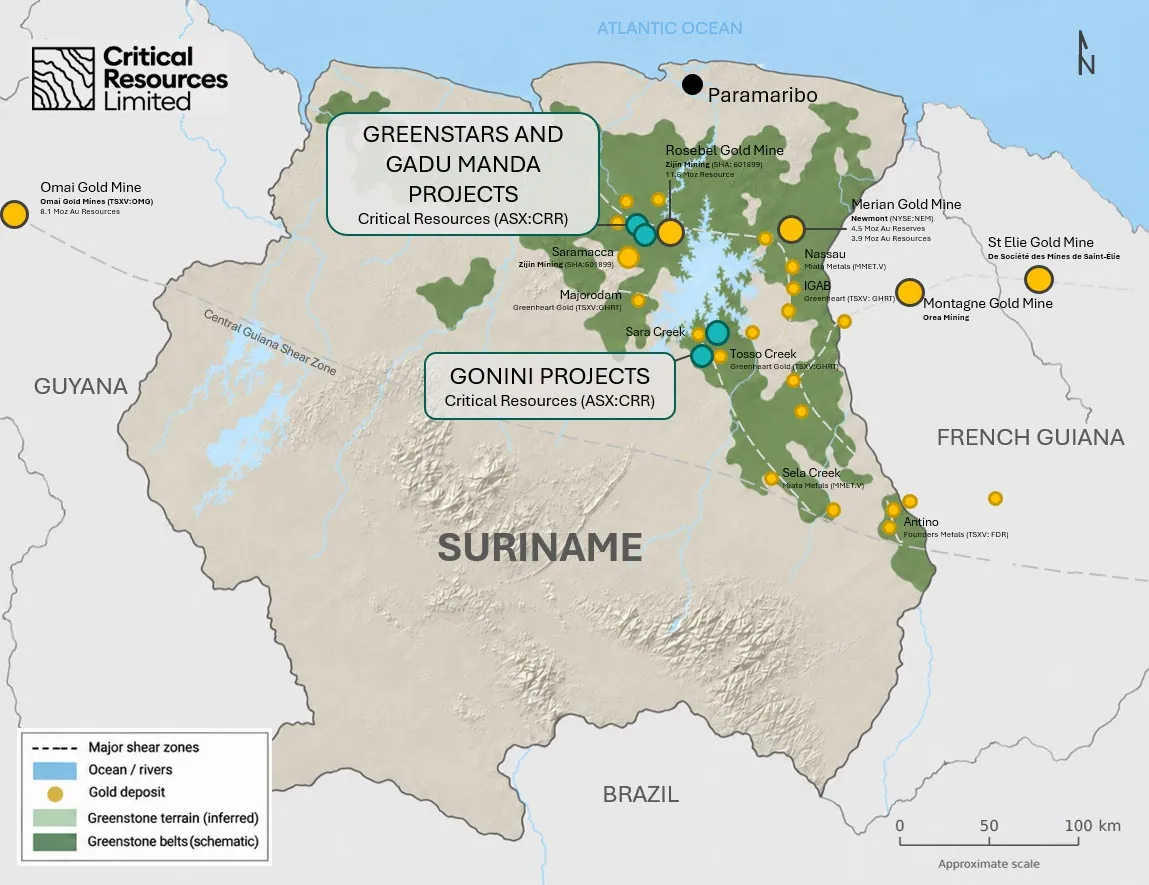
The third addition, Gadu Manda, sits about 4 km from Zijin Mining’s Rosebel open pits and was announced after the reporting period. It brings the portfolio alongside the two larger positions secured during the quarter: Gonini, covering about 164 km², and Greenstars, covering about 35 km². The company has also engaged Guiana Shield structural specialists GexplOre, with initial results expected by mid-November 2026, to help identify prospective structures before field programs begin.
That land position is the strategic appeal. Suriname is an established gold-producing jurisdiction, but Critical Resources’ own projects remain greenfield exploration assets: the company has reported no exploration results, exploration targets, mineral resources or ore reserves for them. Completion remains conditional on due diligence, regulatory approvals, binding agreements and other conditions precedent. The earlier third Suriname project was described as a 29 km² position near Rosebel with no reported resources or exploration results.
New Zealand targets advance without a drill-ready result
Critical Resources’ New Zealand portfolio produced more conventional exploration progress. At the Stony Creek target within Lammerlaw, 143 soil samples outlined arsenic, antimony and tungsten anomalies across about 3.2 km, including a peak portable XRF reading of 238 parts per million arsenic. The company cautions that these readings are qualitative and are not laboratory assays or evidence of gold grade.
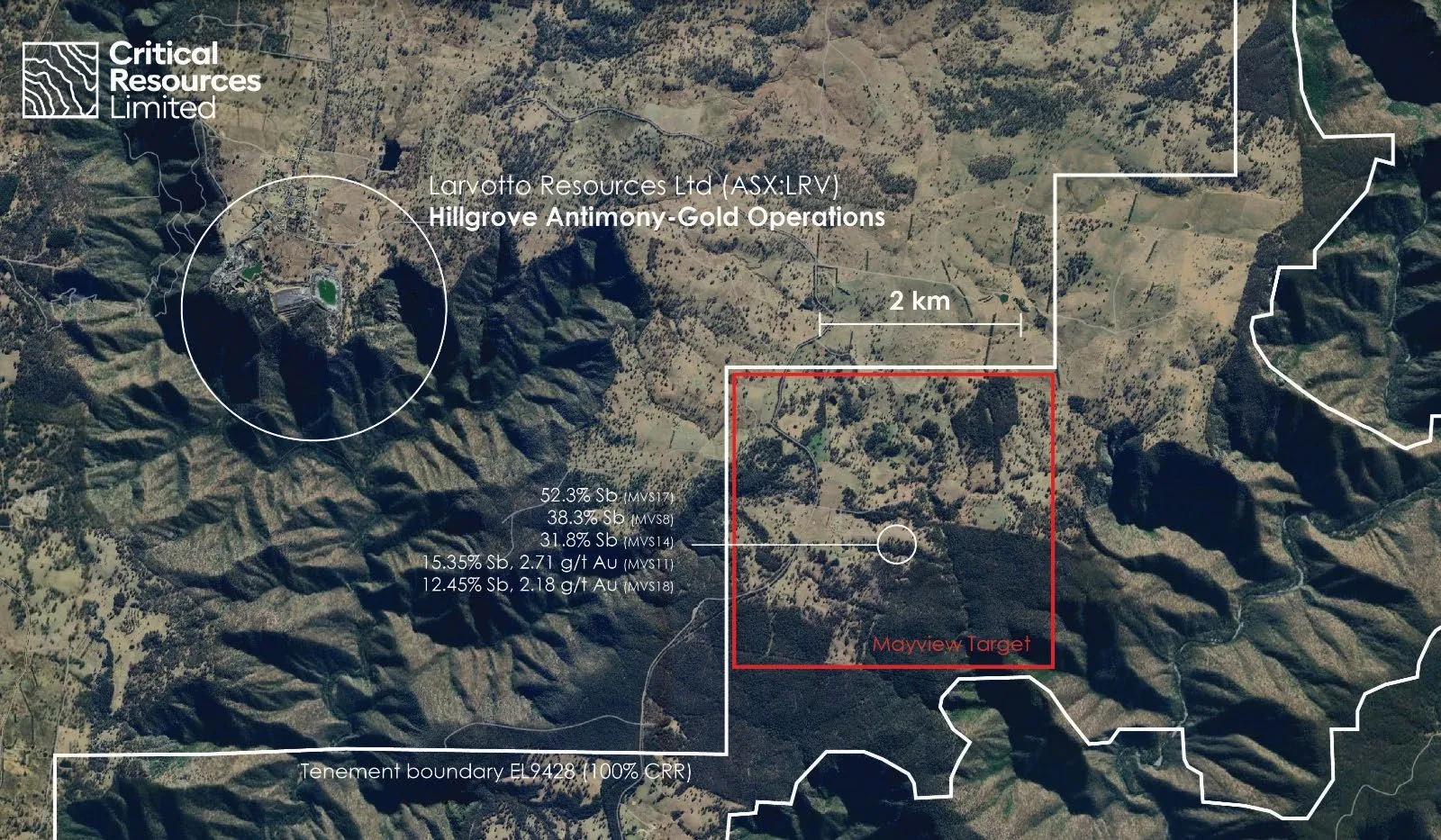
At Silver Peaks, a review of more than 1,250 historical soil and stream-sediment records identified three targets for field verification. Cap Burn drilling remains in planning, while Mayview access negotiations in New South Wales continue to hold up a low-impact soil and mapping program around an antimony-gold prospect.
Battery program moves from coin cells to engineering questions
The company’s technology portfolio also produced measurable laboratory milestones. Peer-reviewed work on the dry supersonic deposition cathode process reported approximately 154 mAh/g, about 85% capacity retention over 500 cycles at 1C and coulombic efficiency above 99.5% in coin cells using a liquid-electrolyte reference.
A full-format hand-assembled pouch cell using the DSD LFP/LLZO cathode matrix then completed more than 780 hours, or 65 cycles, at 0.2C, retaining about 75% of its initial capacity. The earlier full-format pouch testing provided the same laboratory baseline, but the company’s proprietary amorphous solid-state electrolyte has not yet been integrated into a complete cell. CSIRO’s Kick-Start collaboration is now applying digital-twin modelling to process optimisation and scale-up planning.
Cash runway leaves little room for execution delays
The financial constraint is harder to ignore than the breadth of the project list. Critical Resources reported A$1.58 million in cash and cash equivalents at 30 September, after A$568,000 of operating cash outflows and A$258,000 of investing outflows during the quarter. On the company’s calculation, that represents 1.87 quarters of funding at the reported rate of relevant expenditure.
The placement raised A$1.125 million in cash during the quarter, while a further A$475,000 director tranche remains subject to shareholder approval. The company said it would adjust operating and exploration expenditure as required and continues to assess funding options. Its latest A$1.6 million placement was intended to support exploration and technology programs, but the current cash position means the next funding decision may arrive before the Suriname work has generated meaningful exploration evidence.
Get ASX:CRR news the moment it breaks
 iPhone & iPad
 Android
Bottom Line?
The next value test is execution: completing the Suriname transactions, converting structural targets into field results and securing enough funding to keep several early-stage programs moving.
Questions in the middle?
- Will due diligence and approvals convert all three Suriname exclusivity arrangements into binding 90% acquisitions?
- Can GexplOre’s structural work produce targets that justify systematic sampling and drilling before the company needs more capital?
- How quickly can the DSD program integrate the proprietary solid-state electrolyte into a complete cell with commercially relevant cycle performance?
Sources
1-
Quarterly Activities/Appendix 5B Cash Flow Report (opens in a new tab)Verified company source. Critical Resources Limited · 30 Oct 2026 · criticalresources.com.au