Jupiter's cash drops as weaker manganese prices hit Tshipi earnings

Jupiter Mines delivered Tshipi production and sales ahead of plan in the September quarter, but weaker manganese prices, higher freight and lower sales volumes sharply reduced earnings. Attributable cash fell to A$52.7 million after dividends and working capital outflows.
- High-grade ore production up 21% year on year to 790,130 tonnes
- Sales rose 1% year on year but fell 10% from the June quarter
- Tshipi EBITDA declined 34% quarter on quarter to A$22.5 million
- Average CIF manganese price fell 10% quarter on quarter to US$4.44/dmtu
- Attributable cash fell from A$73.9 million to A$52.7 million
 Add us as a preferred source on Google
Manganese prices overwhelm solid Tshipi production
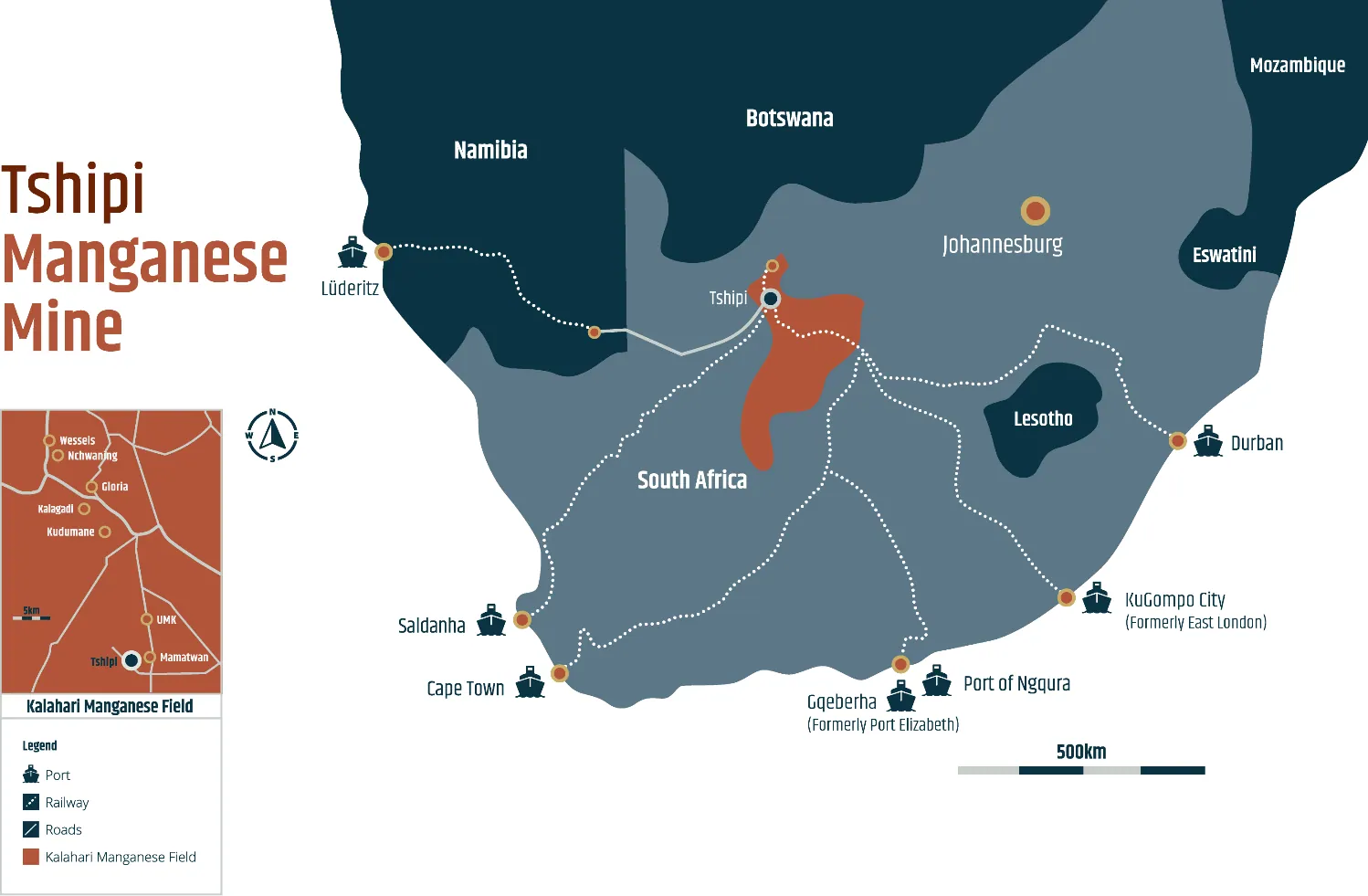
Jupiter Mines Limited (ASX:JMS) produced the kind of operating quarter it wanted, but not the earnings quarter it needed. Its 49.9%-owned Tshipi manganese mine delivered high-grade production 21% above the prior corresponding period and sales 1% higher, yet quarterly EBITDA fell 34% from the June quarter to A$22.5 million as manganese prices weakened, sales volumes eased and freight costs climbed.
Tshipi produced 823,800 tonnes in the three months to 30 September, including 790,130 tonnes of high-grade ore. Production was 10% below the unusually strong June quarter, but remained ahead of plan for the year. Sales reached 848,566 tonnes, also ahead of plan and slightly above the prior corresponding period, although down from 943,740 tonnes in the previous quarter.
The result marks a sharp reversal from the mine's record Q4 FY2026 sales, when quarterly production reached 966,183 tonnes and sales 943,740 tonnes. Jupiter said low-grade production was deliberately limited because of prevailing market conditions, rather than allowing weaker material to add to volumes.
Lower prices and higher freight squeeze margins
The central problem was price. Tshipi's average realised CIF price fell to US$4.44 per dry metric tonne unit from US$4.95 in the June quarter, a 10% decline. The average FOB price also dropped to US$3.57/dmtu from US$4.05/dmtu, while the FOB cost of production edged up 1% quarter on quarter to US$2.51/dmtu.
Jupiter attributed the EBITDA decline to the weaker manganese price, lower sales volumes and higher shipping costs. Freight from Port Elizabeth to Tianjin rose to US$36.40 a tonne by the end of September from US$33.80 at the start of the quarter, and reached US$37.60 by the end of October. The company linked the increase to pressure from higher global oil prices amid renewed Middle East tensions.
The market data offers little immediate relief. The Fastmarkets 37% manganese ore FOB index stood at US$3.20/dmtu at the end of September, only 1.3% below its end-October level, while Chinese port stocks rose 1.26% over the same period to 6.021 million tonnes. Jupiter said weak Chinese demand, elevated inventories and increased South African exports weighed on prices during the quarter.
Cash falls after dividend and working capital demands
Tshipi reported quarterly NPAT of A$15.6 million, down from A$21.4 million in the June quarter and A$17.8 million a year earlier. Its cash balance fell to A$86.2 million from A$129.4 million, partly reflecting a ZAR350 million final FY2026 dividend and increased investment in manganese inventory and pre-stripping.
Jupiter's attributable cash position dropped to A$52.7 million from A$73.9 million. Jupiter received its share of Tshipi's dividend and a distribution from its marketing entity, but then paid A$14.5 million to its own shareholders. The report shows a business still generating operating cash, but with cash conversion exposed to dividends, stockpiles and mine development spending when prices are under pressure.
The market backdrop is becoming less forgiving. Worldsteel has cut its forecast for global steel demand growth in 2027 to 1.7% from 2.2%, citing a deeper-than-expected contraction in Chinese steel demand and energy-market disruptions. Jupiter also said Chinese construction and infrastructure weakness continued to weigh on steel consumption, while its marketing entity recorded EBITDA of A$2.0 million, down from A$2.5 million in the previous quarter.
Interim leadership begins during weaker market
The quarter also began the transition from Managing Director Brad Rogers, who is due to remain until the end of November before providing consultancy support through February 2027. Matthew Jarvis, a mining engineer with 25 years of experience and 16 years in manganese, has served as interim chief executive since 11 September, following the interim CEO appointment announced in September.
For Jupiter, the immediate question is not whether Tshipi can move tonnes. The September quarter demonstrated that it can exceed production and sales plans. The harder test is whether those volumes can generate comparable cash returns while manganese prices remain subdued, freight stays elevated and the company continues funding both shareholder distributions and inventory growth.
Get ASX:JMS news the moment it breaks
 iPhone & iPad
 Android
Bottom Line?
Tshipi is meeting operating targets, but the next quarter will show whether production strength can offset weaker manganese pricing and cash-intensive working capital demands.
Questions in the middle?
- Can manganese prices recover enough to restore Tshipi's recent EBITDA levels?
- Will elevated Chinese port stocks and softer steel demand continue to limit low-grade ore sales?
- How will Jupiter balance shareholder dividends with Tshipi's inventory, stripping and other cash requirements?
Sources
1-
Q1 FY2027 Quarterly Activities Report (opens in a new tab)Verified company source. Jupiter Mines Limited · 30 Oct 2026 · jupitermines.com