Northstone finds Barje high-grade zone where historical model expected a gap

Northstone Resources has completed its Barje infill program in Serbia with results that challenge the historical interpretation of the deposit, including a 36-metre intersection at 5.85 g/t AuEq. The company is now balancing an expanded exploration campaign and development work against $3.7 million of cash and a reported 1.61 quarters of funding at the latest spending rate.
- 36.0m at 5.85 g/t AuEq in Barje’s central zone
- 33 infill holes completed across 3,398 metres
- Approximately 6,604 metres of greenfield drilling underway
- Maiden JORC resource targeted for the December 2026 quarter
- $3.706 million cash at quarter end, with further funding likely required
 Add us as a preferred source on Google
Barje drilling overturns the expected low-grade saddle
The most consequential result in Northstone Resources Limited’s (ASX:NRL) September quarter was not simply another high-grade intercept. It was where the mineralisation appeared: the central part of the Barje deposit, an area the historical model had treated as a low-grade saddle between two stronger zones.
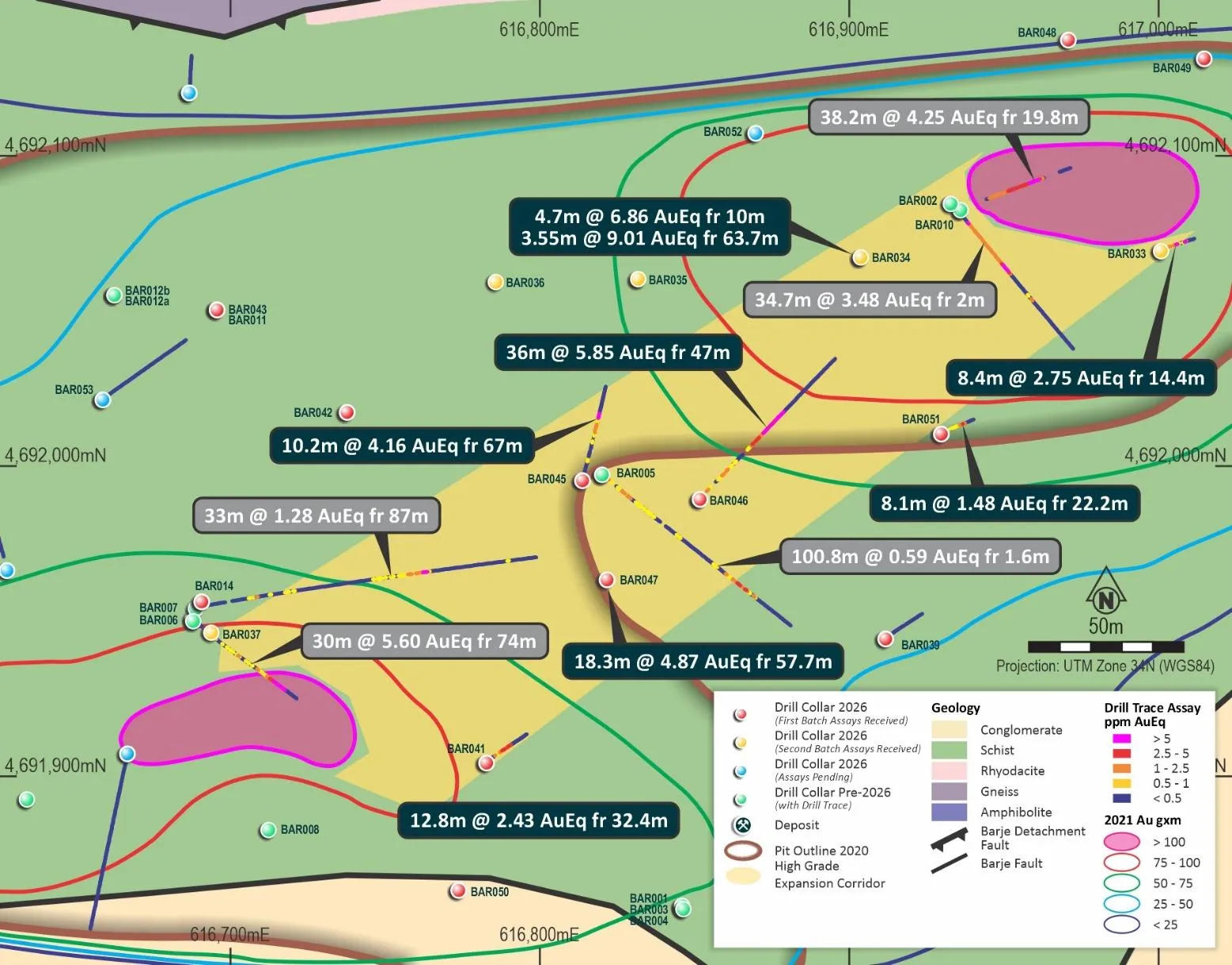
Five of nine central-zone holes returned what the company described as Barje’s widest and highest-grade intersections to date. The standout was BAR046, which cut 36.0 metres at 5.85 g/t gold equivalent from 47 metres, including 14.0 metres at 7.74 g/t and 4.2 metres at 15.67 g/t AuEq. Other notable results included 17.5 metres at 5.22 g/t AuEq in BAR050 and 18.3 metres at 4.87 g/t AuEq in BAR047.
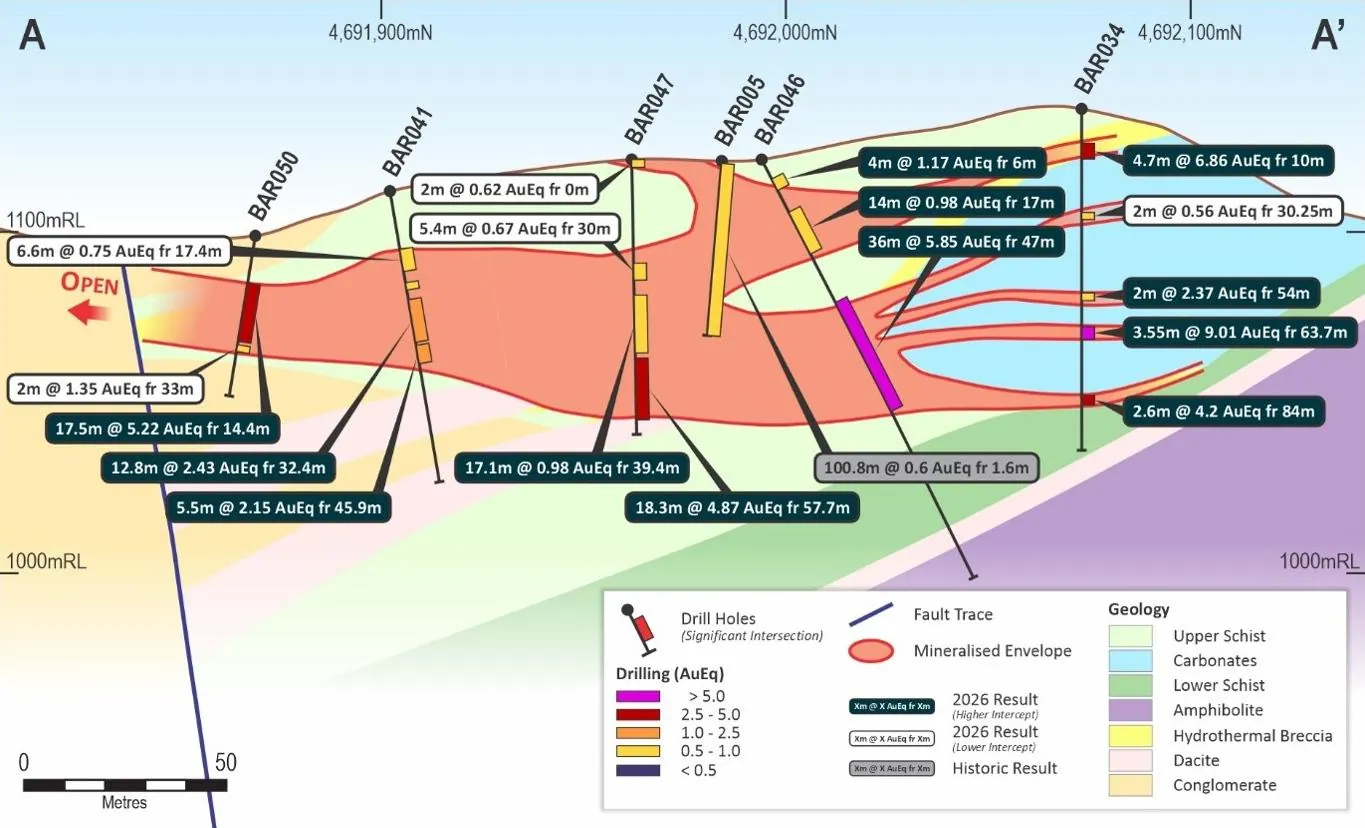
Northstone says the results form a continuous line of thick, high-grade mineralisation across ground previously modelled as low-grade fill. That interpretation remains subject to final assays, further drilling and the company’s forthcoming resource work, but it raises the possibility that Barje’s two high-grade zones are connected rather than separate bodies.
Infill program closes as greenfield drilling expands
The company completed 33 Barje diamond holes for 3,398 metres in roughly three months, describing the program as safe, on schedule and within budget. Earlier results from the north-eastern zone also showed shallow mineralisation, including 10.6 metres at 4.04 g/t AuEq from 37.1 metres in BAR040 and 3.55 metres at 9.01 g/t AuEq from 63.7 metres in BAR034.
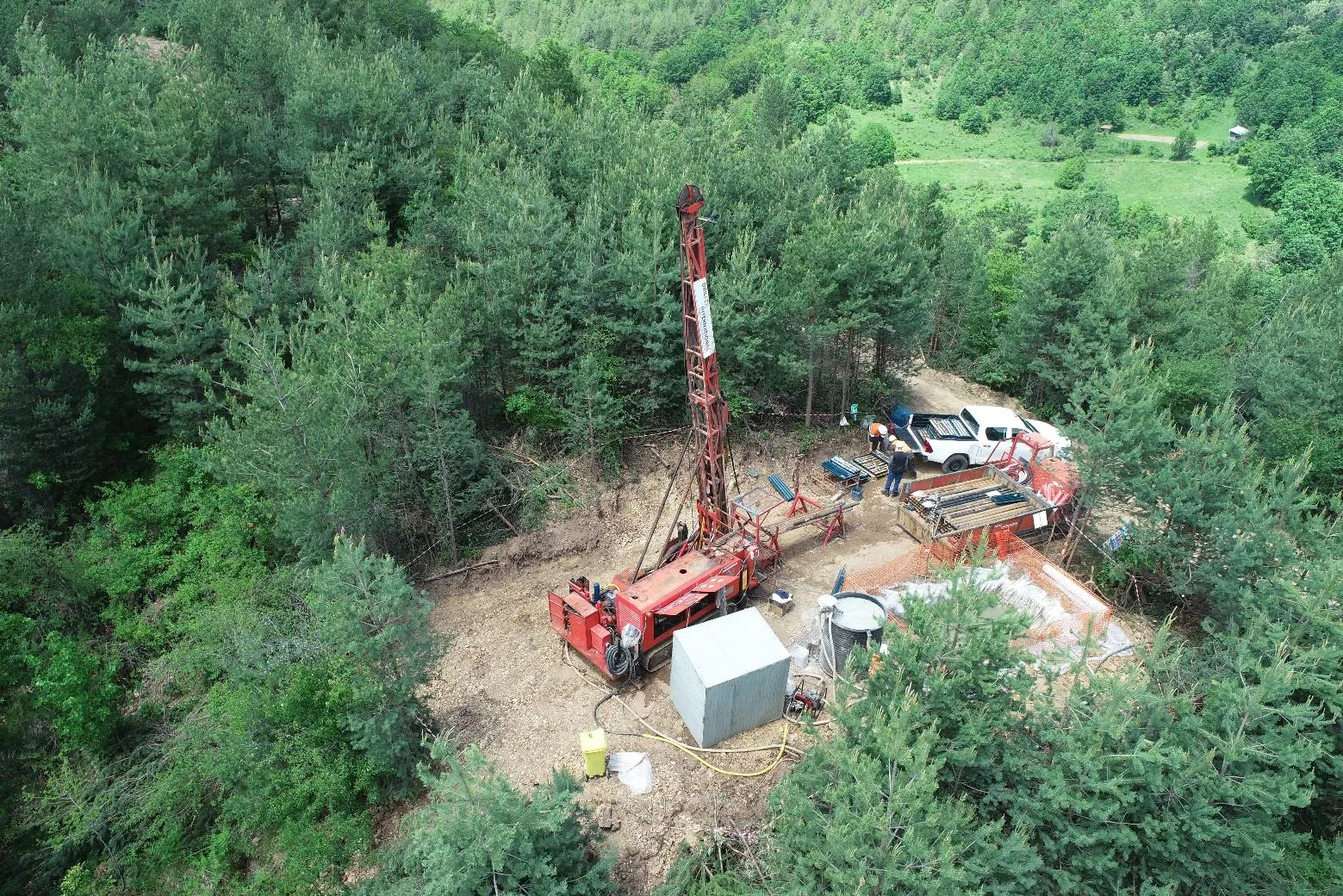
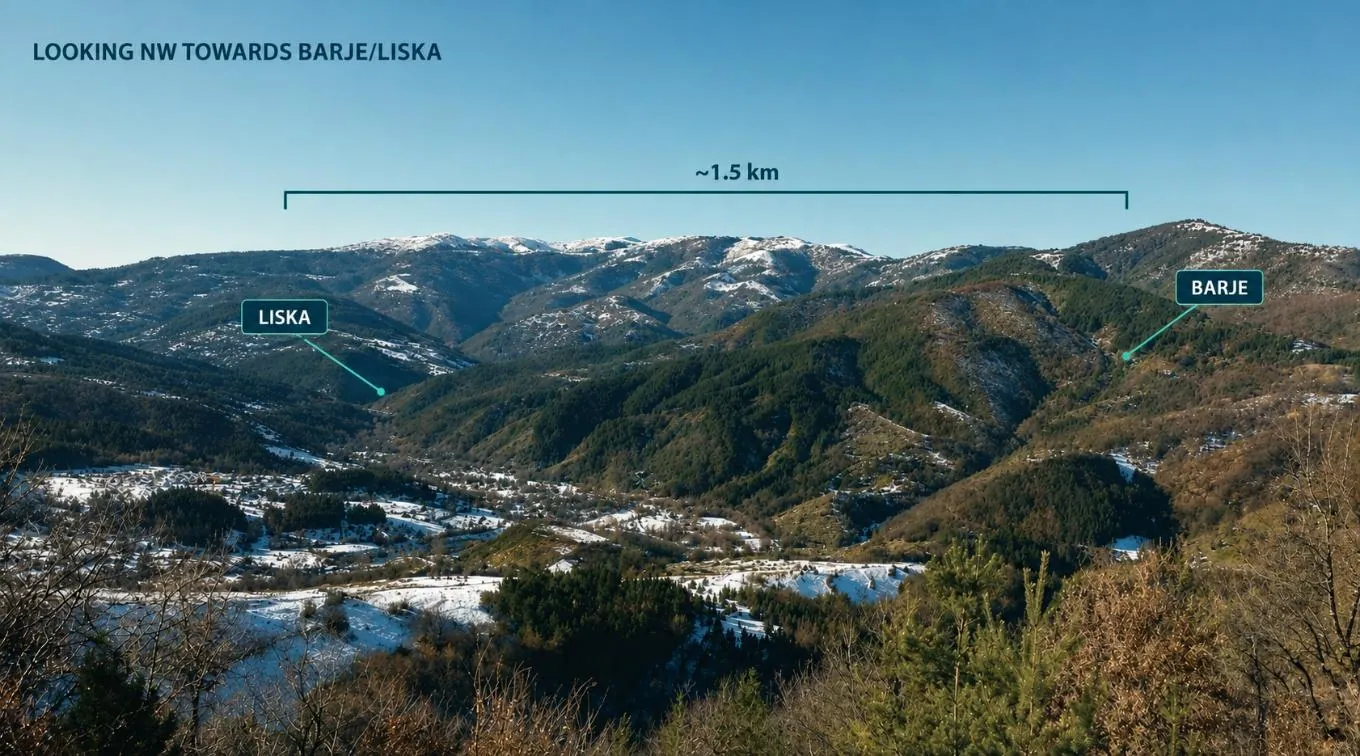
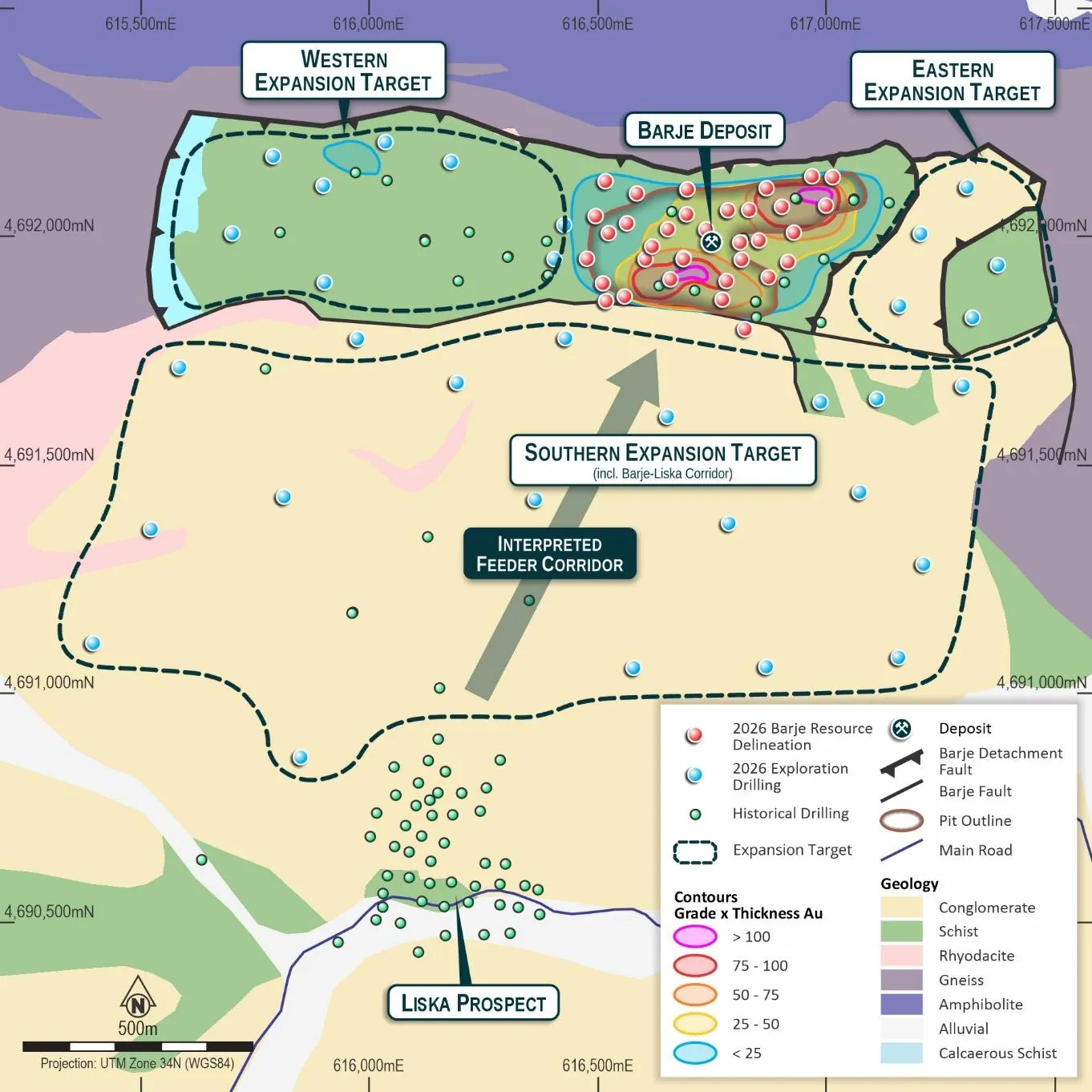
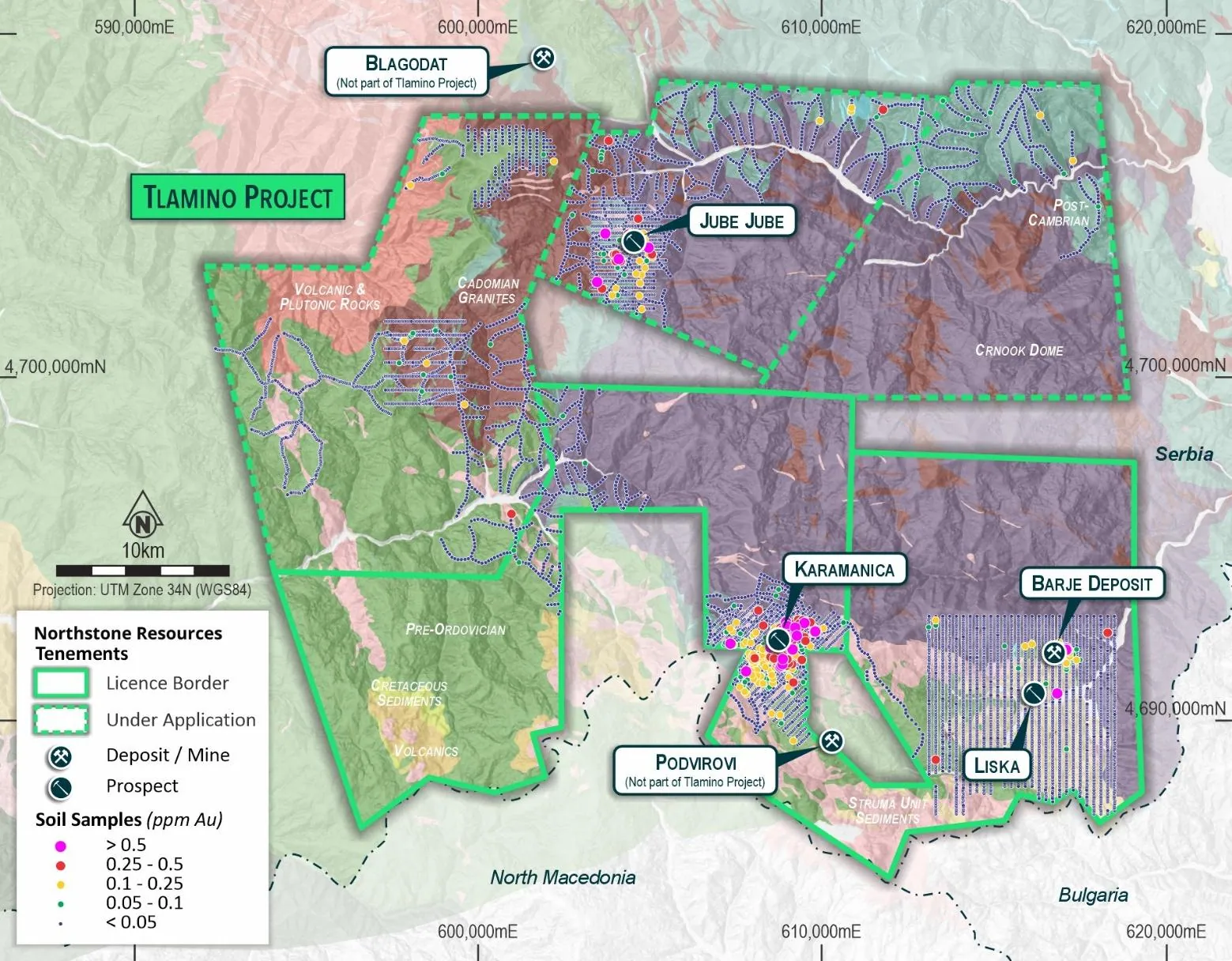
Seven additional infill holes were approved after quarter end to better define and potentially extend the central high-grade breccia. At the same time, Northstone began its first systematic greenfield drilling beyond the outcropping mineralisation at Tlamino. About 6,604 metres are planned across the Western Expansion and Eastern Expansion targets and the previously untested Barje-Liska corridor, which the company believes could link two hydrothermal centres across more than 1.5 kilometres.
Resource, metallurgy and permitting move toward a decision point
Updated geological modelling is underway for a maiden JORC 2012 Mineral Resource Estimate at Barje, targeted for the December 2026 quarter once the remaining assays and additional holes are incorporated. A Scoping Study is expected to begin after the resource estimate, currently anticipated in the March 2027 quarter.
Ausenco has been appointed to lead metallurgical testwork covering comminution, recovery optimisation, reagent and grind-size testing, and concentrate specifications. Northstone also commenced a multi-seasonal Environmental Baseline Study, with the first summer data collection completed and the full program expected to take about 14 months. Those workstreams are important project-development steps, but they do not yet establish project economics or permitting approval.
Cash supports the next phase, but financing remains part of the story
Northstone ended the quarter with $3.706 million in cash after net operating and investing outflows of $2.314 million. The Appendix 5B implies 1.61 quarters of funding at the reported spending rate. The company said the figure was distorted by the largely completed infill drilling program and one-off Serbian and corporate costs, and that exploration spending can be prioritised according to available funding.
Northstone also said it retains placement capacity and expects to secure additional funding when appropriate. That makes the sequence of upcoming catalysts particularly important: remaining Barje assays, the seven extra central-zone holes, early greenfield results and the maiden JORC estimate will arrive while the company still has to fund metallurgy, environmental work and broader exploration.
The company began trading under the Northstone name and NRL code in October, replacing Minrex Resources. The rebrand is less material than the geology, but it marks a shift in emphasis toward the Serbian Tlamino project, where the next resource estimate will determine whether the encouraging drilling translates into a more formal development proposition.
Get ASX:NRL news the moment it breaks
 iPhone & iPad
 Android
Bottom Line?
The drilling has improved the geological story at Barje, but the next test is whether the new continuity survives final assays, resource estimation and the funding required to advance it.
Questions in the middle?
- Will the seven additional central-zone holes confirm a continuous high-grade breccia suitable for inclusion in the maiden JORC estimate?
- How will the maiden JORC resource compare with the existing foreign NI 43-101 estimate of 670,000 ounces AuEq?
- Can Northstone fund greenfield drilling, metallurgy and environmental work without materially interrupting its exploration program?
Sources
1-
Quarterly Activities/Appendix 5B Cash Flow Report (opens in a new tab)Official market announcement. Northstone Resources Limited · 29 Oct 2026 · northstoneresources.com