RMI uncovers new gold and copper targets at Wadi Salamah

Resource Minerals International has identified multiple high-grade gold-silver quartz veins and a large copper-molybdenum-bismuth soil anomaly at Wadi Salamah in Saudi Arabia. The exploration progress comes with drilling and assay results still ahead, while RMI ended the quarter with A$477,000 in cash.
- Rock chips returned up to 7.93 g/t gold and 64.2 g/t silver at Wadi Salamah
- Thirteen Target A samples graded at least 1 g/t gold
- Target C hosts a 1.8 km by 1.2 km copper-molybdenum-bismuth anomaly
- A staged 2,000 metre Mpanda RC drilling program has been completed
- RMI held A$477,000 cash and reported A$5 million in unused funding capacity
 Add us as a preferred source on Google
Wadi Salamah Produces High-Grade Surface Results
Resource Minerals International Ltd (ASX:RMI) has sharpened its Saudi Arabian exploration story with gold assays as high as 7.93 grams per tonne and silver at 64.2 grams per tonne from rock chips at the Wadi Salamah Project. The results came from Target A, where 13 samples returned at least 1 g/t gold and two quartz-vein zones now have a combined strike length of more than 1.4 kilometres.
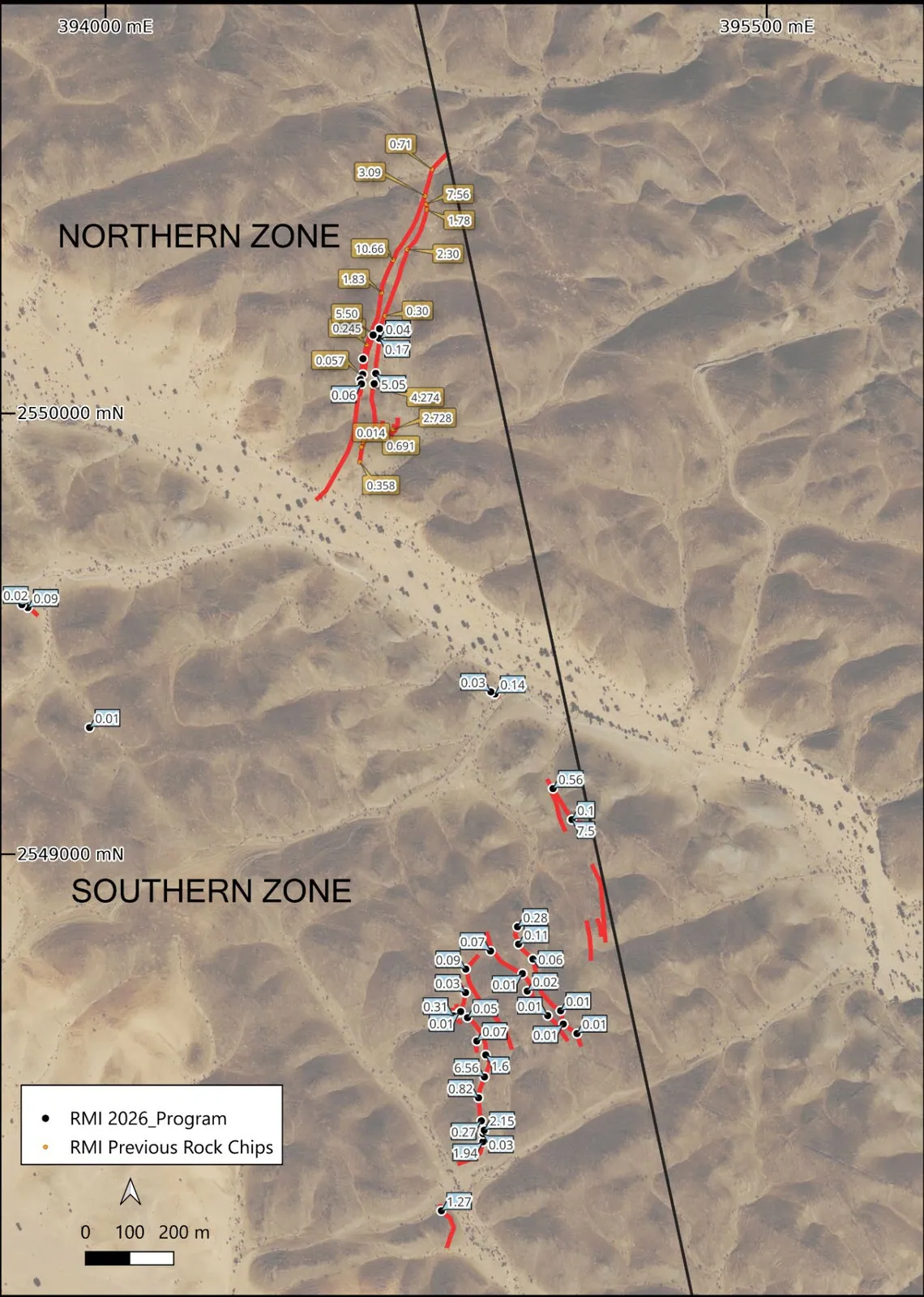
The company collected 1,621 soil samples and 90 rock chips across the 98.7 square kilometre licence during the September quarter. Target A's northern and southern zones contain shallowly east-dipping quartz veins, but RMI says more sampling is required to establish whether the higher-grade mineralisation is continuous between sample points. The results are therefore evidence of mineralisation at surface, not a mineral resource or an estimate of mineable scale.
Target C Points to a Separate Copper System
Target C offers a different geological proposition. A 1.8 km by 1.2 km soil anomaly contains 27 samples with elevated combinations of copper, molybdenum, tungsten and bismuth, while rock chips returned up to 1,665 parts per million copper and 90 ppm molybdenum near the contact with a granitic intrusion.
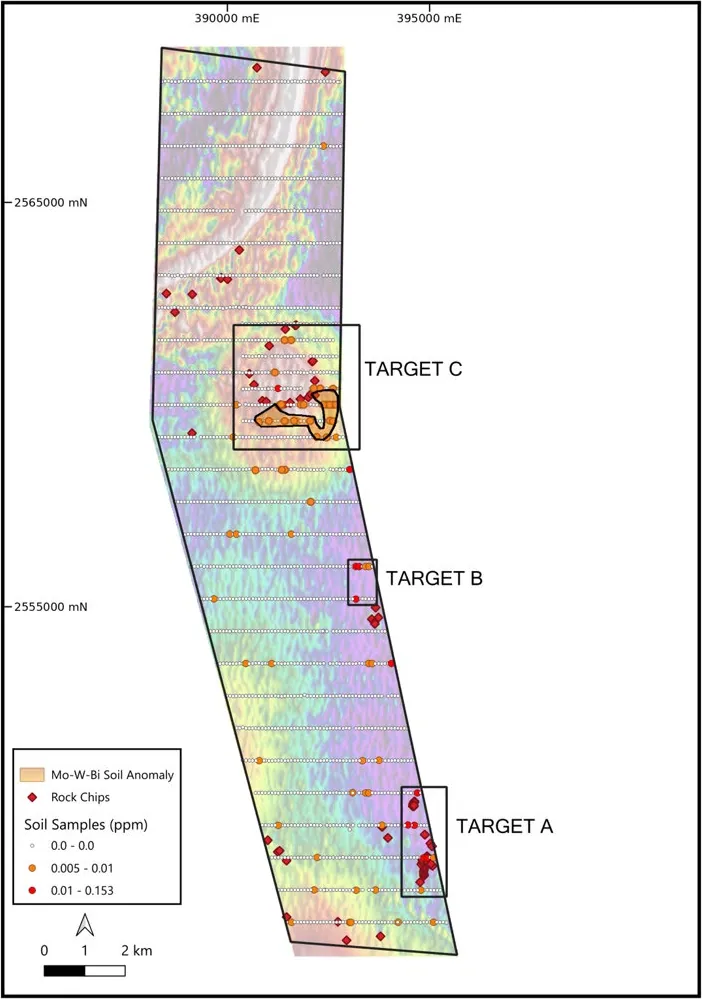
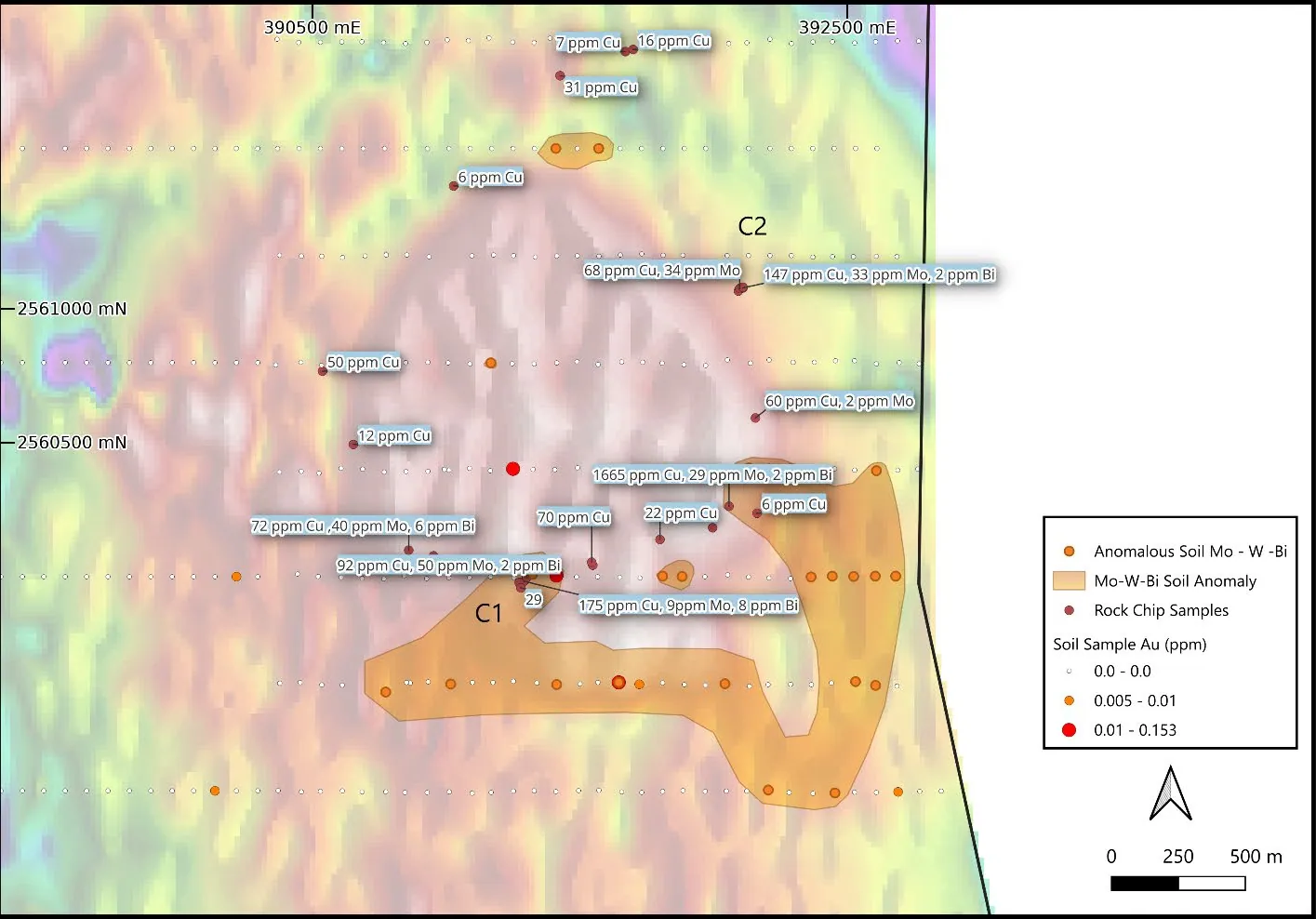
RMI says the pattern most resembles a granite-related copper-molybdenum-bismuth-tungsten system and that it supports earlier Wadi Salamah magnetic survey findings. The company also describes the intrusion as a potential source rock for a Tier-1 porphyry system, although that is an exploration interpretation requiring further fieldwork, infill sampling and drilling. Target C's next steps include re-assaying anomalous soils using four-acid, fusion or XRF methods.
Mpanda Drilling Moves Into the Assay Queue
In Tanzania, RMI has completed a staged 2,000 metre reverse-circulation drilling program at its Mpanda Project. The campaign tested five targets: Stalike, Ibindi, Kabungu, Kabungu North and Kabatini West. At Stalike, drilling covered more than 300 metres of strike, while the remaining targets were designed to test interpreted structural controls and extensions beneath cover or around historic workings.
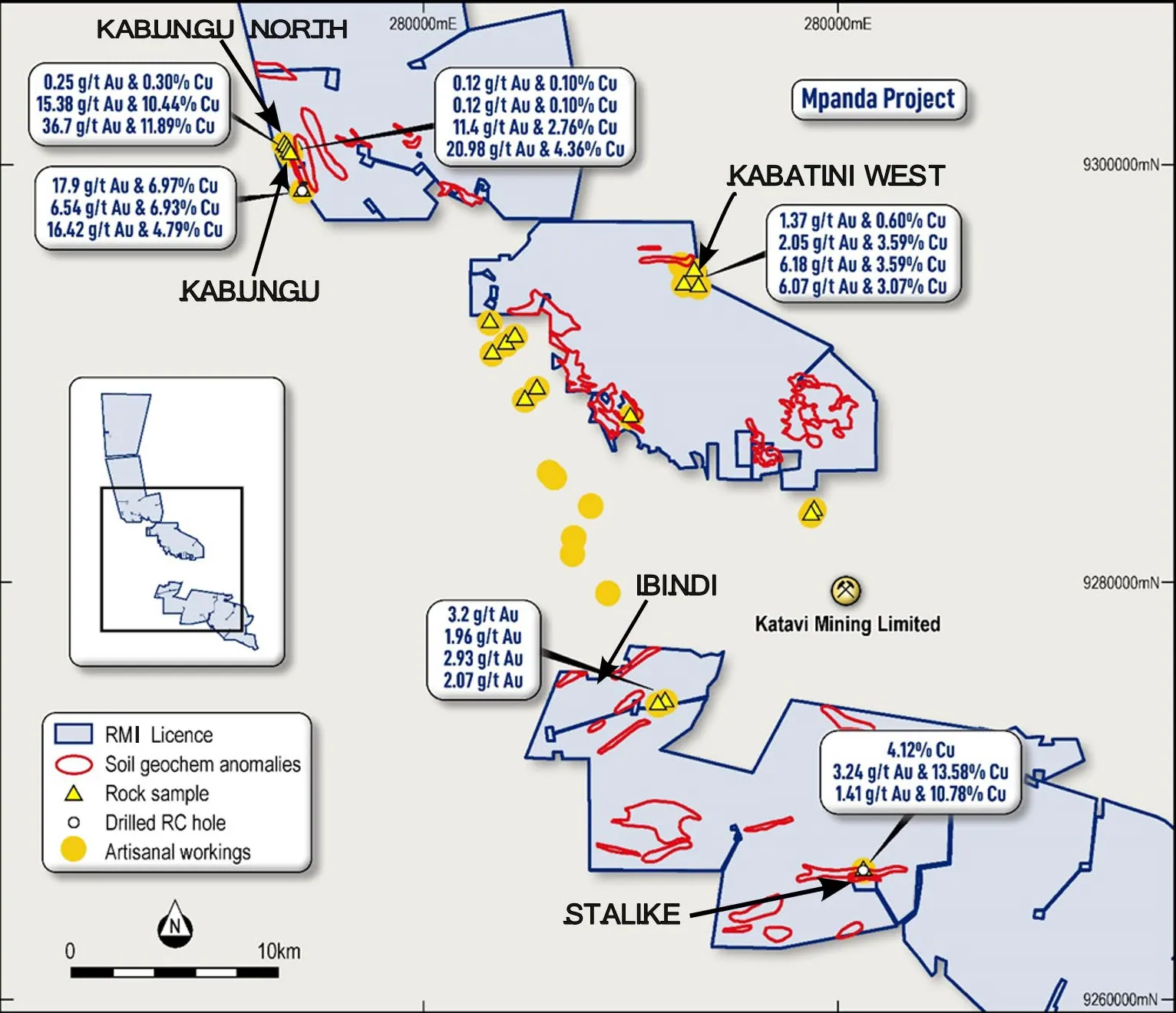
Assay results are pending. The targets carry historical surface indications, including grab samples at Stalike of up to 13.58% copper and 3.24 g/t gold, and rock chips at Kabungu North of up to 36.7 g/t gold and 11.89% copper. Those historical figures help explain the targets selected, but the current campaign's significance will depend on the new drill results.
Exploration Momentum Meets a Thin Cash Buffer
RMI spent A$1.603 million on exploration during the quarter and finished with A$477,000 in cash after a net A$1.635 million reduction in cash during the period. The company reported A$5 million of unused capacity under a three-year convertible funding agreement with RiverFort Global Capital, secured by a first-ranking general security and carrying a fixed 7% cash interest rate payable at maturity. The facility is not the same as cash on hand, and any use of convertible funding could have implications for the capital structure.
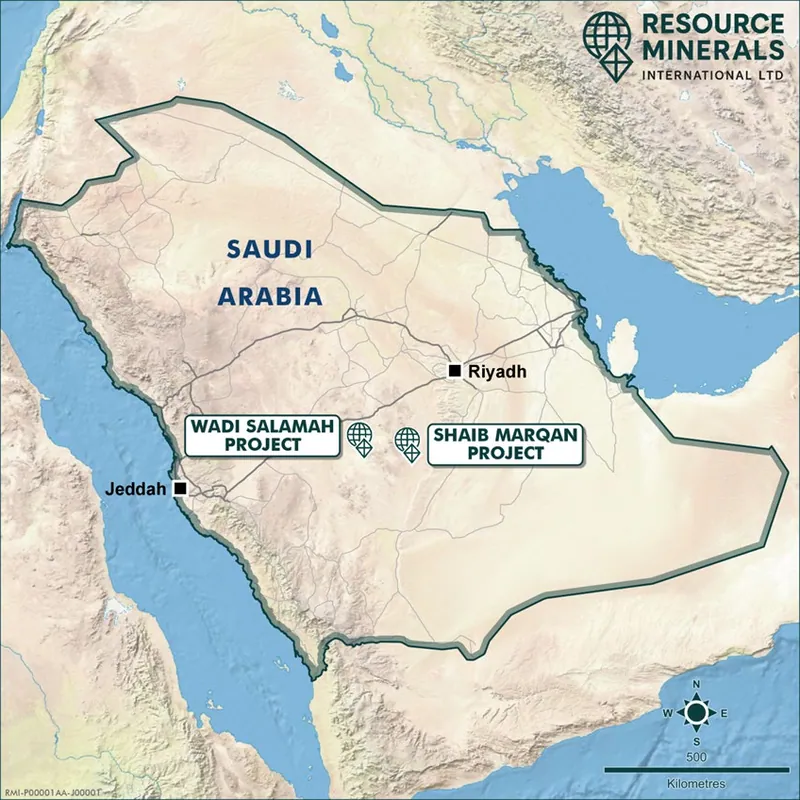
That financing question sits alongside the exploration timetable. RMI expects first-phase drilling at Wadi Salamah in the fourth quarter of 2026 and at Shaib Marqan in the first quarter of 2027, while Shaib Marqan soil and rock-chip results are due in the near term. The company also says drilling at Finland's Köyhäjoki permit remains paused until it finalises an acceptable security instrument with the mining regulator.
Get ASX:RMI news the moment it breaks
 iPhone & iPad
 Android
Bottom Line?
The geological story is becoming more compelling, but the next rerating test is practical: drill continuity, deliver Mpanda assays and fund the Saudi work without stretching the balance sheet.
Questions in the middle?
- Will drilling confirm continuity and meaningful widths beneath the high-grade Wadi Salamah surface veins?
- What grades and widths will the completed Mpanda campaign return across its five priority targets?
- How much of the A$5 million convertible facility will RMI need to draw to fund its 2027 exploration plans?
Sources
1-
Quarterly Activities/Appendix 5B Cash Flow Report (opens in a new tab)Official market announcement. Resource Minerals International Ltd · 30 Oct 2026 · resmin.com.au