Southern Palladium’s chrome gains meet a 30-year Bengwenyama mining right

Southern Palladium has secured a 30-year mining right for its Bengwenyama PGM-Chrome Project, while improved metallurgical test work points to a much larger chrome operation than originally envisaged. The company remains pre-production, with its definitive feasibility study pushed into early 2027 and further approvals and funding still required.
- 30-year Bengwenyama mining right granted after year-end
- Chromite recovery rises to 85.6% from 30% assumed in the earlier study
- Stage 2 chrome concentrate potential increases to approximately 1.05 million tonnes a year
- A$23.88 million held in cash and term deposits at 30 June 2026
- A$10.47 million annual loss includes an A$8.73 million MUM loan impairment
 Add us as a preferred source on Google
Mining Right Moves Bengwenyama Into Development Phase
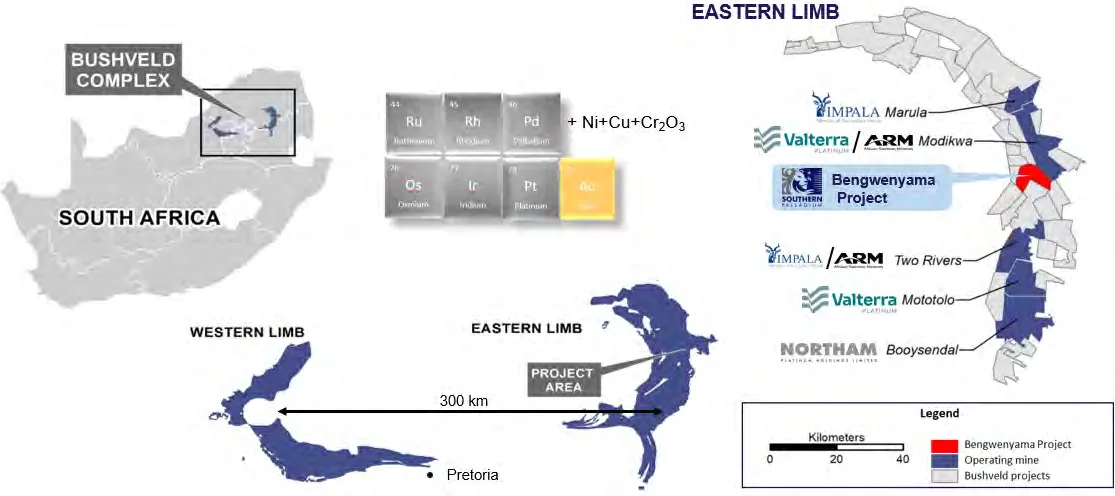
Southern Palladium Limited (ASX:SPD) has cleared one of the largest regulatory hurdles facing its Bengwenyama project, with South Africa’s Department of Mineral and Petroleum Resources granting a mining right for an initial 30-year period on 7 August 2026. The right covers extraction of PGMs, chrome and several other minerals across the project area, although early development remains conditional on outstanding water-use, waste-management and operating approvals.
The approval arrived after the 30 June financial year-end and was therefore recorded as a subsequent event in the annual report. It follows the company’s earlier environmental authorisation and the lodging of an environmental guarantee for future rehabilitation obligations. The report describes the grant as materially reducing regulatory uncertainty, but it does not remove the technical, financing and execution work still between Bengwenyama and commercial production.
Chrome Recovery Recasts the Processing Strategy
The project’s most consequential technical development was not a new resource estimate but a change in what the ore may yield. Metallurgical testing lifted estimated chromite recovery to 85.6%, compared with the 30% assumption used in the earlier pre-feasibility work. PGM recovery also improved to 87.6%, from 85.3%.
Those results could increase chrome concentrate production at the planned Stage 2 processing rate of 2.4 million tonnes a year from roughly 350,000 tonnes annually to about 1.05 million tonnes. Stage 1, based on a 1.2 million tonne annual operation, is expected to produce approximately 500,000 tonnes of chrome concentrate. The figures remain study and test-work estimates rather than operating results, but they explain why the company now presents chrome as a potentially substantial co-product rather than a minor credit. The technical shift was first highlighted in July recovery test work, which reported the same improvement in chromite and PGM recoveries.
Dense Media Separation testing also indicated that about 24% to 31% of run-of-mine material could potentially be rejected before milling and flotation, with reported PGM losses of only about 1.2% to 2.2% in the test work. Southern Palladium says the approach could reduce downstream equipment sizing, power use and tailings volumes. The revised flowsheet and recovery assumptions have extended the DFS timetable to the first quarter of 2027 so they can be incorporated into plant design, capital costs, operating costs and the execution schedule.
Cash Has Improved, But the Project Still Needs Capital
Southern Palladium raised A$20 million through an equity placement during the year and held A$18.88 million in cash plus a A$5 million term deposit at 30 June 2026. Those balances provide funding for the current study and development programme, but the company remains reliant on future capital to move beyond feasibility and into construction.
The financial statements show a net loss of A$10.47 million, more than double the A$4.78 million loss recorded in the prior year. The result included an A$8.73 million impairment against the unsecured loan to Miracle Upon Miracle Investments, which holds the project. Southern Palladium said repayment is uncertain while the project remains in exploration and development and has not yet generated commercial mining cash flow. Operating cash outflow was A$1.99 million, while A$13.47 million was used in investing activities, including A$8.47 million advanced to MUM.
Resource Scale Meets Execution Risk
Bengwenyama’s reported resource remains 40.25 million ounces of combined 7E and 4E PGMs across the UG2 and Merensky reefs. The existing probable reserve comprises 31.72 million tonnes at 6.17 grams per tonne of 6E PGMs, containing 6.29 million ounces. No resource or reserve change was reported during the year; both are due to be reviewed as part of the DFS and its independent assessment.
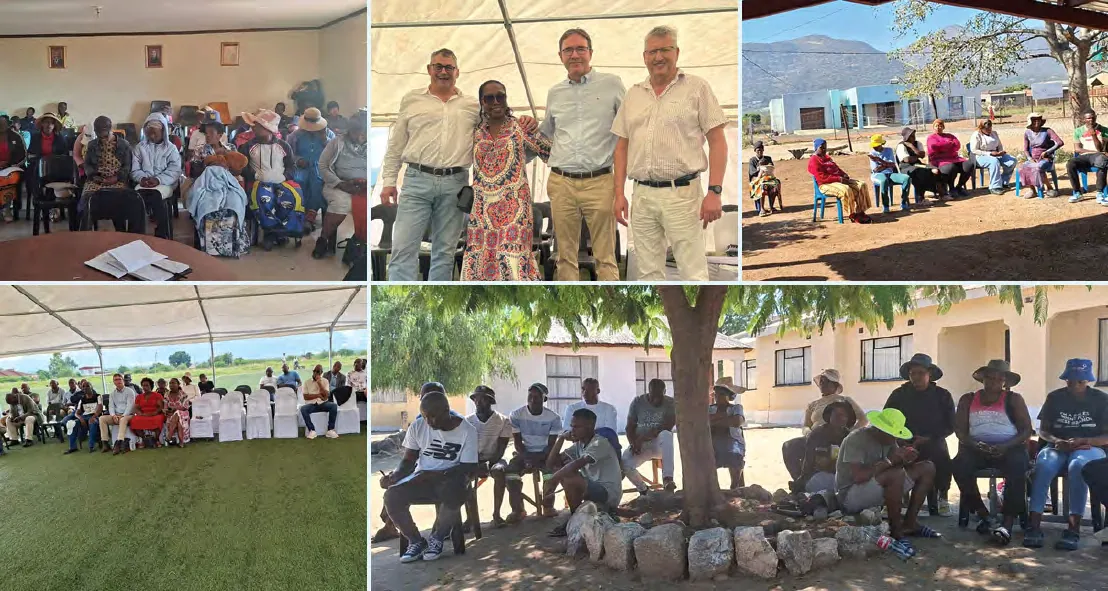
The project is owned through MUM, in which Southern Palladium holds 70% and the Bengwenyama Community holds 30%. The community also has an indirect interest in Southern Palladium, giving it an effective project interest of approximately 34% according to the report. That ownership structure and continued community engagement will become more significant as work shifts from drilling and studies to box-cut and decline construction.
The next test is whether the company can turn the mining right and stronger recovery assumptions into an independently reviewed DFS, a financeable capital plan and the remaining operating approvals. Until then, the 1.05 million-tonne chrome opportunity is a compelling study outcome, not yet a mine output forecast.
Get ASX:SPD news the moment it breaks
 iPhone & iPad
 Android
Bottom Line?
The mining right removes a major regulatory barrier, but the investment case now turns on the 2027 DFS, remaining approvals, funding and whether metallurgical gains survive detailed engineering and construction economics.
Questions in the middle?
- Will the first-quarter 2027 DFS preserve the improved chrome economics after updated capital and operating costs are included?
- How will Southern Palladium fund box-cut, decline and processing development beyond its current cash reserves?
- When will the outstanding water-use, waste-management and operating approvals be secured?
Sources
1-
Annual Report to shareholders (opens in a new tab)Official market announcement. Southern Palladium Limited · 29 Oct 2026 · southernpalladium.com