VR8’s V-Iron economics gain scale as funding work begins

Vanadium Resources has entered the next phase of its V-Iron strategy after a preliminary study outlined a US$842 million post-tax NPV and 36% IRR. The figures are encouraging, but the project now faces its more consequential tests: funding, binding offtake, permitting and a definitive feasibility study.
- US$842 million post-tax NPV10 and 36% IRR in the base case
- Target production of 603,000 tonnes of pig iron and 65,000 tonnes of vanadium-rich slag annually
- U.S. Vanadium discussions remain non-binding
- A$1.0 million placement lifted quarter-end cash to A$1.313 million
- DFS expected to take nine to 12 months once funding is secured
 Add us as a preferred source on Google
Scoping study sets a sizeable economic marker
Vanadium Resources Limited (ASX:VR8) has put a substantial preliminary valuation marker behind its proposed V-Iron Plant, with a post-tax NPV10 of US$842 million and a post-tax IRR of 36% in the base case. The Scoping Study also outlined average annual free cash flow of US$164 million, average annual EBITDA of US$226 million and a 2.4-year payback period on pre-production capital expenditure of US$400 million.
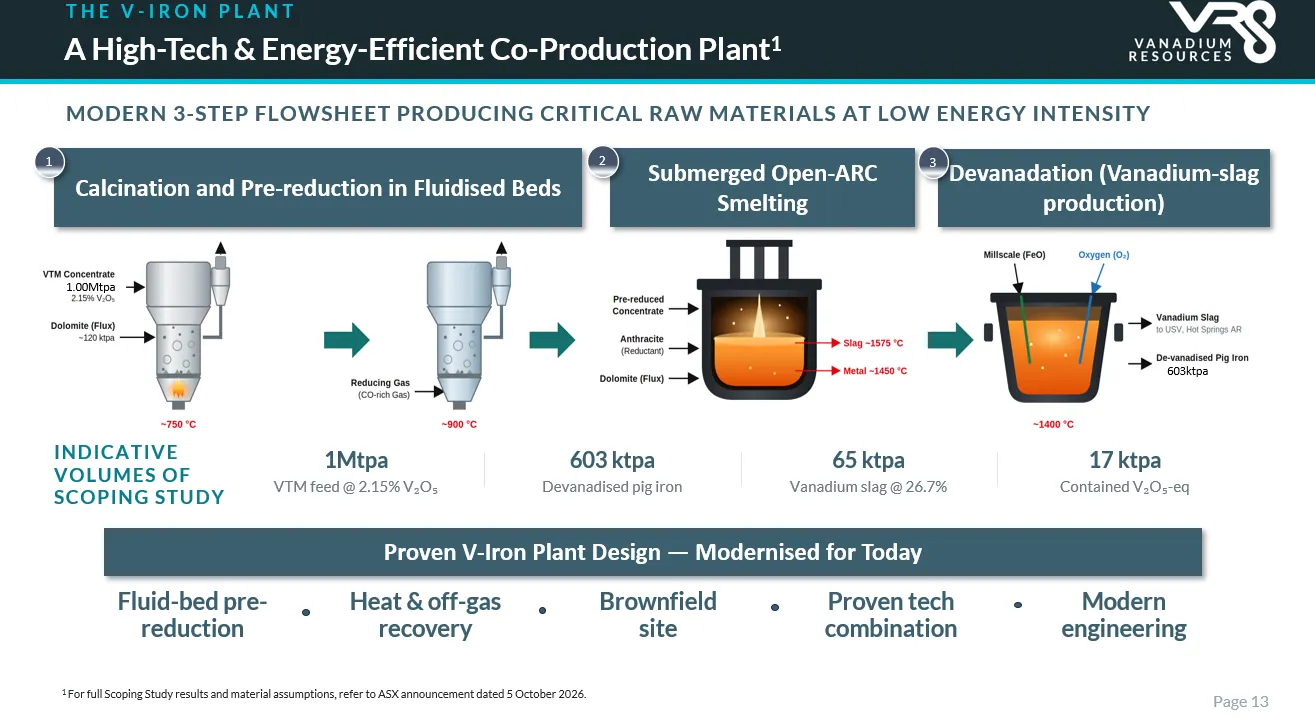
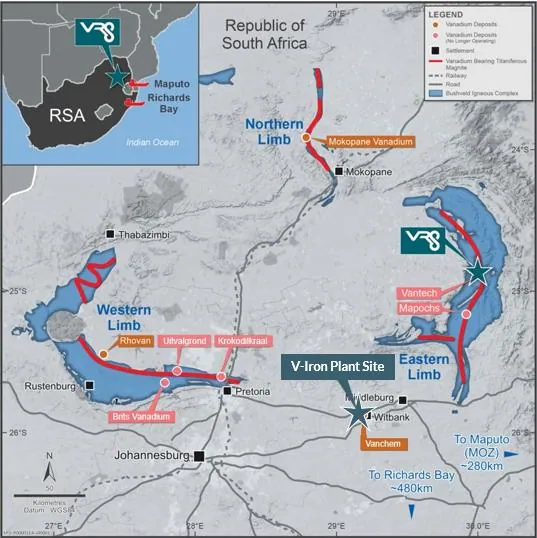
The proposed operation would mine and concentrate ore from the Steelpoortdrift Project in South Africa before processing it at a planned plant at Highveld Industrial Park. Nameplate production is targeted at 603,000 tonnes of pig iron and 65,000 tonnes of vanadium-rich slag a year, with the slag containing about 17,300 tonnes of V₂O₅.
Those numbers remain forecast outcomes from a preliminary technical and economic assessment, not a bankable project case. The study carries estimated accuracy of plus or minus 30%, does not establish an Ore Reserve and depends on assumptions covering commodity prices, recoveries, costs, financing, permitting and infrastructure.
Funding preparation moves to centre stage
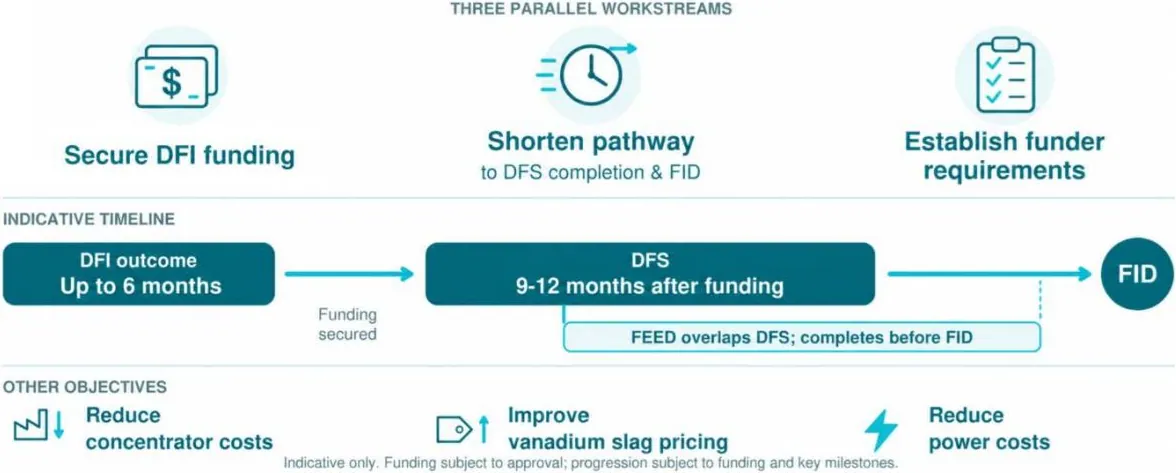
VR8 says it has launched a Preparation Phase aimed at finalising applications to development finance institutions, starting targeted technical work and identifying lender requirements before the DFS and Front-End Engineering Design are completed. The company’s DFI funding preparation is intended to shorten the path from study work to a final investment decision, although funding remains subject to approval and is expected to be released in stages.
VR8 estimates the DFS will take approximately nine to 12 months after funding is secured. In the meantime, it plans to progress bulk sampling, resource and reserve preparation, concentrator studies, infrastructure and environmental work, and the long-lead activities needed for a site-specific development plan.
Commercial agreements remain unfinished
Discussions with U.S. Vanadium are continuing towards a potentially binding definitive offtake agreement for 100% of planned vanadium-bearing slag production. The existing term sheet is still non-binding and the parties intend to negotiate a binding agreement after completion of the DFS. VR8 is also pursuing pig iron offtake opportunities with Southern African steel producers, which form an important part of the study’s base-case revenue assumptions.
The company’s proposed co-production model is designed to draw revenue from both iron and vanadium rather than relying on vanadium prices alone. Its alternative scenarios produced post-tax NPV10 outcomes ranging from US$53 million in the Low Case to US$2.01 billion in the High Case, with the Spot Prices case at US$665 million. These scenarios illustrate the range of possible outcomes, rather than removing the project’s exposure to pricing and execution risk.
Site rights and cash provide time, not certainty
VR8 holds a right of first refusal over portions of Highveld Industrial Park until 31 July 2027, alongside an option to seek up to 12 months of exclusivity while it works on financing and engineering. The initial right does not provide exclusivity or permission to use the property, and the development remains subject to definitive lease and utility agreements.
The quarter included the A$1.0 million share placement, which was described as oversubscribed and issued 31.25 million shares at A$0.032 each. VR8 ended September with A$1.313 million in cash and reported quarterly operating and exploration-related outgoings of A$332,000, equating to an estimated four quarters of funding at that spending rate. That runway is measured against current activity, not the much larger capital requirement of the V-Iron Plant.
The next material evidence will come from the commercial and financing work now being assembled around the study: a binding slag offtake, progress on pig iron sales, DFI decisions, site and utility agreements, and the technical work needed to support a DFS. Until those pieces arrive, the US$842 million NPV is best read as an ambitious starting point for negotiations rather than a project value that has been secured.
Get ASX:VR8 news the moment it breaks
 iPhone & iPad
 Android
Bottom Line?
VR8 has moved beyond concept stage on paper, but the investment case now depends on converting a preliminary study into funded engineering, binding sales agreements and a permitted development.
Questions in the middle?
- Can VR8 secure DFI and other project funding without materially increasing equity dilution?
- Will U.S. Vanadium convert its non-binding term sheet into a binding agreement after the DFS?
- How closely will bulk sampling, concentrator optimisation and utility studies support the Scoping Study assumptions?
Sources
1-
Quarterly Activities/Appendix 5B Cash Flow Report (opens in a new tab)Official market announcement. Vanadium Resources Limited · 30 Oct 2026 · vr8.global