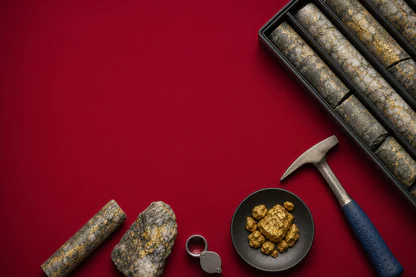
WhiteRock drilling strengthens case for a major Québec lithium resource

WhiteRock Lithium has completed its 19,481-metre Spodumene Mountain drilling campaign, with assays from the first 17 holes confirming thick, high-grade lithium intersections. The ASX-listed explorer is now working towards a maiden Mineral Resource Estimate in the first half of 2027, subject to further assays and geological modelling.
- 65 holes completed for 19,481 metres at Spodumene Mountain
- Known pegmatite strike expanded from 650 metres to 1.4 kilometres
- Assays included 84.0 metres at 1.84% Li₂O and 37.9 metres at 2.47% Li₂O
- C$24.8 million cash at 30 September, equivalent to 3.8 quarters of funding on current outflows
- Maiden Mineral Resource Estimate targeted for H1 2027, subject to further results
 Add us as a preferred source on Google
Drilling confirms scale and grade at Spodumene Mountain
WhiteRock Lithium Corp. (ASX:WLC) has finished the exploration campaign that will determine whether its Spodumene Mountain prospect can move from an encouraging discovery into a defined lithium resource. The company completed 65 diamond holes for 19,481 metres, with pegmatite intersected in every hole, and says the interpreted system now extends about 1.4 kilometres along strike and 500 metres down dip.
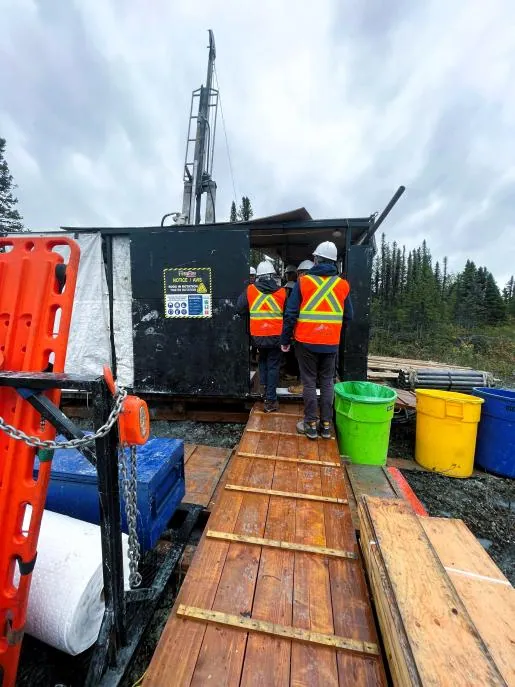
The most consequential evidence is no longer visual logging. Assays from the first 17 holes confirmed several thick, high-grade intersections, including 84.0 metres at 1.84% Li₂O from 8.0 metres in hole BL26-041 and 37.9 metres at 2.47% Li₂O from 152.9 metres in BL26-045. Other notable results included 51.0 metres at 2.24% Li₂O and 38.6 metres at 2.29% Li₂O. The reported lengths are downhole measurements, interpreted by the company to approximate true widths.
Those laboratory results give substance to the earlier first 17-hole assays, which had already pointed to broad mineralisation and a 1.4-kilometre pegmatite footprint. The prospect remains open along strike and at depth, although the remaining holes still need to be processed, assayed, validated and interpreted.
Resource modelling becomes the next test
WhiteRock is targeting a maiden Mineral Resource Estimate for Spodumene Mountain in the first half of 2027, subject to the full drilling dataset. That work will require more than headline intercepts: core processing, quality-control checks, geological interpretation and resource modelling must all be completed before the company can report a Mineral Resource.
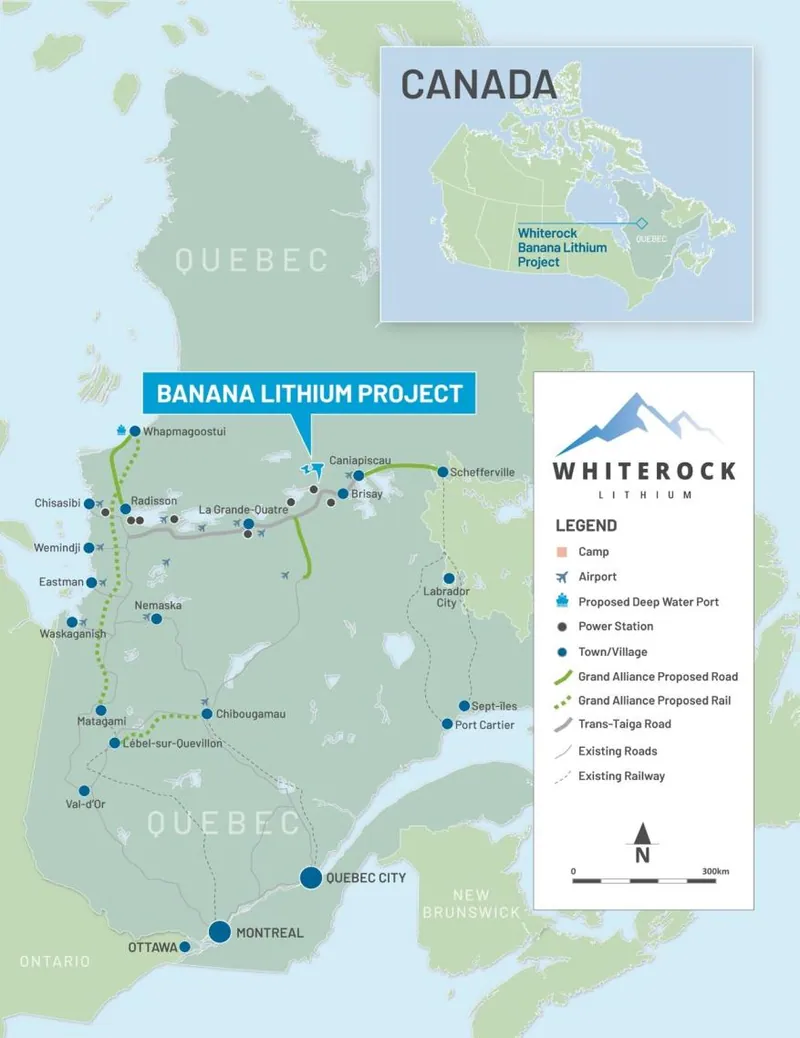
The wider 100%-owned Banana Lithium Project covers about 67,245 hectares across Québec’s Eeyou Istchee James Bay and Nunavik regions. WhiteRock’s existing Exploration Target spans 190 million to 275 million tonnes at 1.2% to 1.6% Li₂O across Spodumene Mountain, Isabella and Marine, with 70 million to 100 million tonnes attributed to Spodumene Mountain. The company stresses that this target is conceptual, is not a Mineral Resource and may not result in one after further exploration.
Cash position supports the next exploration phase
Cash stood at C$24.8 million at 30 September, down from C$25.4 million three months earlier. The quarter included C$4.8 million of exploration and evaluation payments, C$0.2 million for claim renewals and C$1.9 million in administration and corporate costs, including C$1.1 million tied to the IPO and ASX listing.

The cash-flow statement estimates 3.8 quarters of funding based on current relevant outflows, with no financing facilities in place. That measure is a snapshot rather than a project budget: future resource work, environmental approvals, community engagement and any further drilling or development activity could change the rate of expenditure. WhiteRock also disclosed that about C$4.8 million of drilling costs had been incurred but remained unpaid at quarter end.
WhiteRock listed on ASX in August after raising A$6.0 million before costs at A$3.25 per CDI, while warrant exercises added C$695,250 during the quarter. The immediate catalyst is the balance of the assay program; the more demanding question is whether the complete dataset can convert a large, high-grade exploration story into a reportable resource without losing continuity, grade or scale along the way.
Get ASX:WLC news the moment it breaks
 iPhone & iPad
 Android
Bottom Line?
The drilling has cleared an important hurdle, but the H1 2027 resource target now depends on the remaining assays and the quality of the geological model.
Questions in the middle?
- Will the remaining 48 holes maintain the grade and thickness shown by the first 17 assayed holes?
- How much of the 1.4-kilometre strike and 500-metre down-dip footprint can be included in a maiden Mineral Resource Estimate?
- Can the company fund resource definition, environmental work and community engagement without returning to the market before the next major project milestone?
Sources
1-
Quarterly Activities/Appendix 5B Cash Flow Report (opens in a new tab)Verified company source. Whiterock Lithium Corp · 30 Oct 2026 · clients3.weblink.com.au