GoldArc opens a path from high-grade drilling to Mt Stirling development

GoldArc Resources has cleared a key regulatory hurdle for Mt Stirling, completed grade control drilling at Mt Stirling Well and continued to find high-grade gold across its Leonora projects. The company ended September with A$2.831 million in cash and A$2.5 million of unused funding facilities, but a mining start date remains unsettled.
- MDCP approval received for Mt Stirling and Mt Stirling Well
- 28,785m grade control program completed or drilled, with repeated high-grade intercepts
- 6,600m RC discovery program launched along the Ursus Fault
- Blind vein-hosted gold confirmed at Whistler Zone 2
- A$2.831 million cash balance plus A$2.5 million unused funding facilities

 Add us as a preferred source on Google
Mt Stirling clears its main regulatory hurdle
GoldArc Resources Limited (ASX:GA8) has moved its Leonora North project from advanced exploration toward development after receiving approval for the Mining Development and Closure Proposal covering the Mt Stirling and Mt Stirling Well deposits. The company describes the approval as the final regulatory milestone before development under its arrangement with BML Ventures, although mine scheduling, sterilisation drilling, site establishment and other work still need to be completed.
GoldArc retains 100% ownership of both deposits while BML Ventures funds development under a 50/50 net profit share arrangement. The deposits sit roughly 10 kilometres from the King of the Hills mill. The company has not guaranteed a mining commencement date, and its quarterly cash flow report recorded no substantive mining production or development activity.
Grade control delivers repeated high-grade results
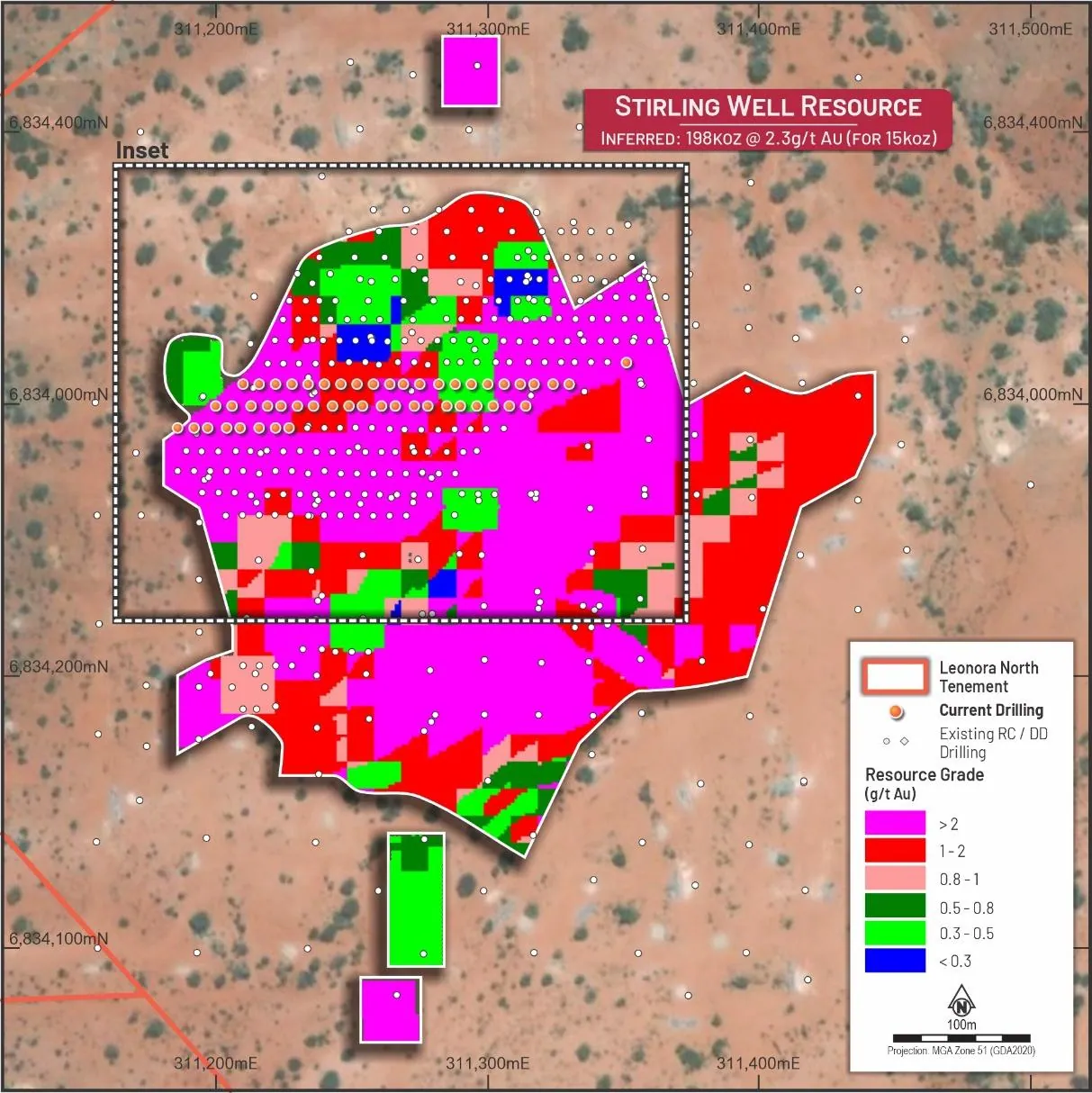
The development case is being shaped by a substantial grade control dataset. Approximately 28,785 metres had been drilled across Mt Stirling and Mt Stirling Well, with coverage at Mt Stirling Well completed during the quarter. The final round included 1 metre at 59.9 grams per tonne gold from 24 metres, while an earlier hole returned 2 metres at 69.7 g/t, including 1 metre at 137.0 g/t.
Those results extend the run of six consecutive rounds returning intercepts above Mt Stirling Well's 2.3 g/t inferred resource grade. GoldArc cautions that the mineralisation is narrow and flat dipping, and that grade control results do not constitute a new Mineral Resource estimate. The latest results therefore support detailed mine planning, but do not by themselves establish a larger or upgraded resource.
The company had previously reported the completion of the Mt Stirling Well program and its 59.9 g/t intercept in the final grade control results. At Mt Stirling, meanwhile, drilling continued to define ore boundaries and shallow benches, including a best result of 2 metres at 8.11 g/t gold from 4 metres in the eighth batch.
Discovery drilling targets the wider Ursus Fault corridor
GoldArc is not treating the existing deposits as the end of the Leonora North story. An 84-hole, 6,600 metre RC program began in late August across eight prospects along the Ursus Fault corridor, including targets near the planned Mt Stirling and Mt Stirling Well operations. Six prospects are within 1.5 kilometres of those deposits, while some have never been drill tested.
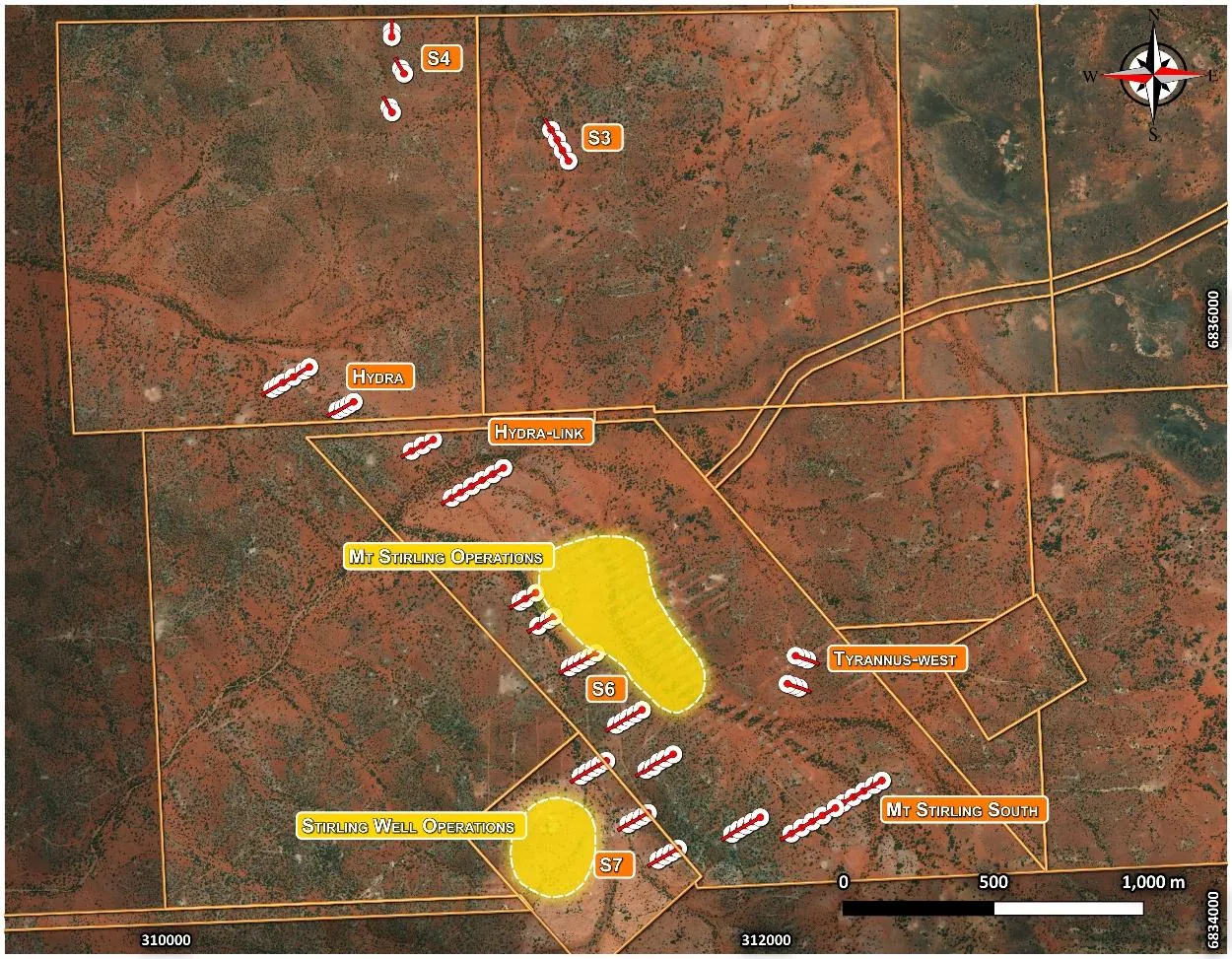
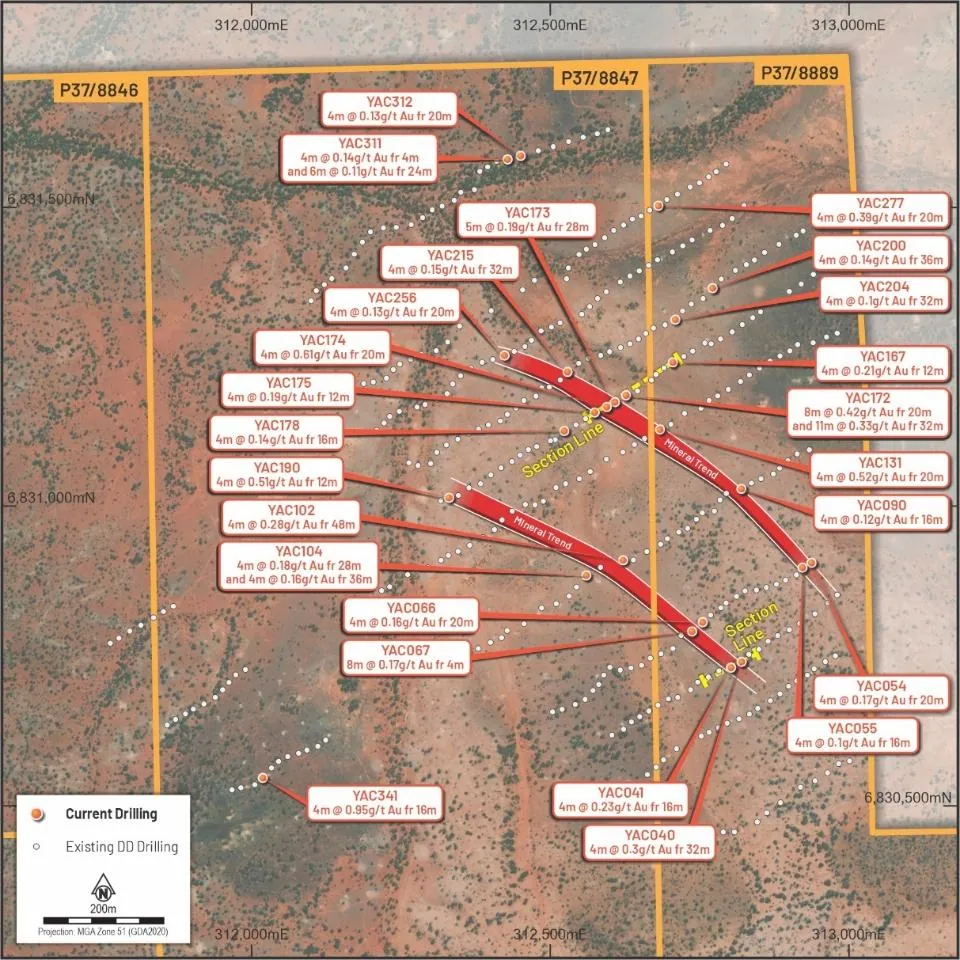
The company also completed 363 aircore holes for 11,010 metres at Yttria, identifying two gold-anomalous trends extending for more than 600 metres and remaining open to the south. The results are first-pass, wide-spaced aircore data rather than resource drilling. Follow-up RC drilling is planned to test for higher-grade zones at depth and along the open southern strike, with first assays from the Ursus Fault program expected from October.
Whistler adds a second Leonora South target
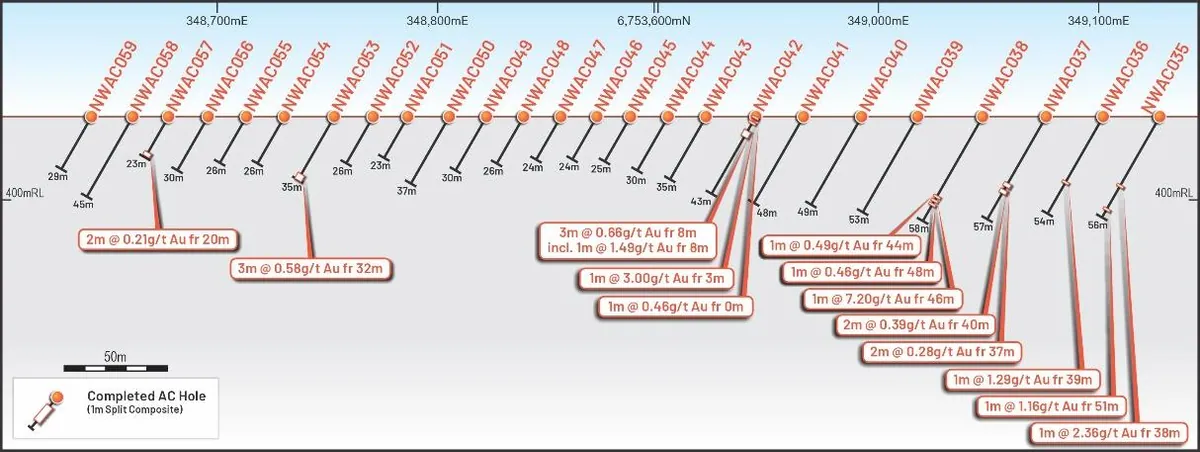
At Whistler in Leonora South, second-round RC drilling confirmed blind, vein-hosted gold beneath an earlier aircore anomaly. Results included 2 metres at 4.12 g/t gold from 70 metres and 2 metres at 2.66 g/t from 63 metres, with silver, bismuth, cerium and tungsten pathfinders accompanying the gold in two holes. Several other holes were non-significant or did not reach target depth, so tighter drilling is planned to determine the extent of Zone 2.
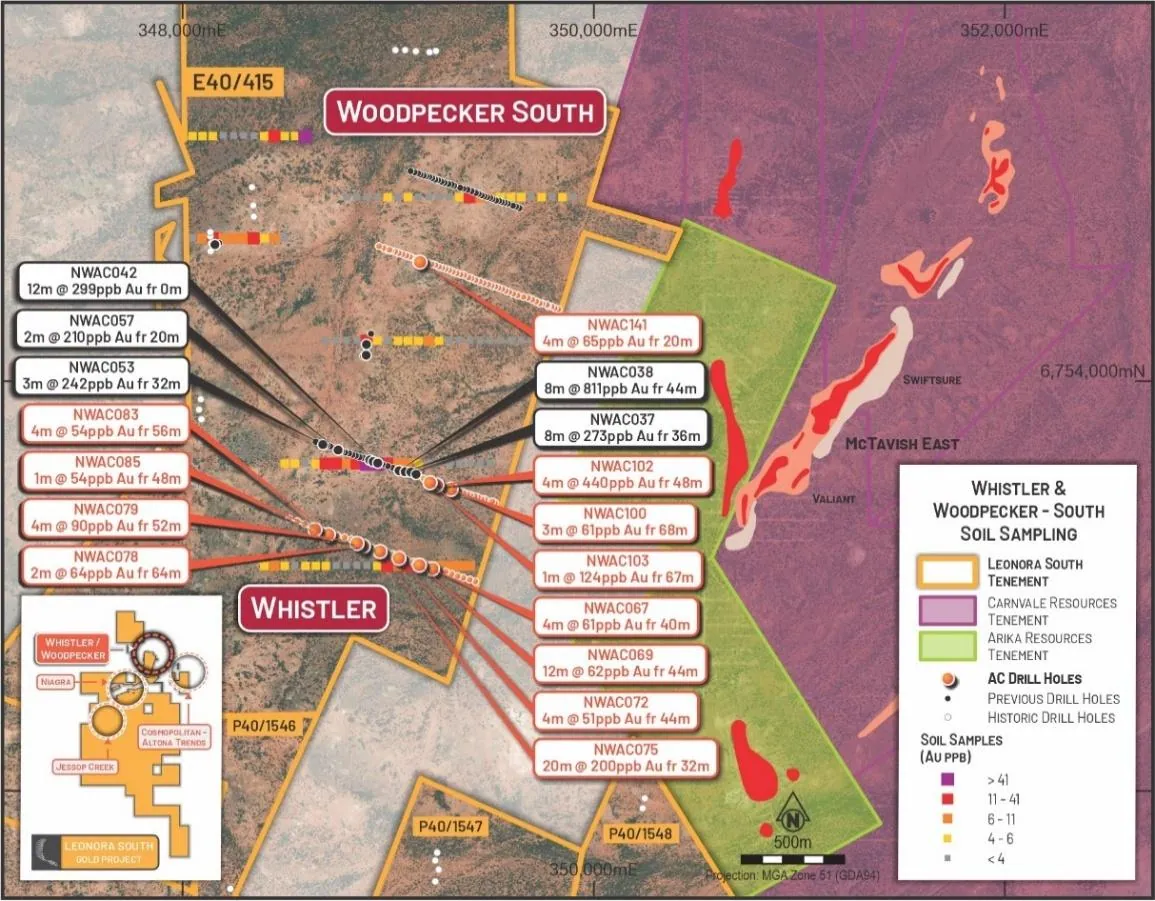
The second aircore campaign also pushed gold anomalism 400 metres south of the first drill fences. GoldArc had earlier reported the Whistler Zone 2 discovery, while a third, closer-spaced aircore program is planned for early 2027. The results add exploration potential, but remain early-stage and do not yet establish a resource.
Niagara acquisition expands the exploration footprint
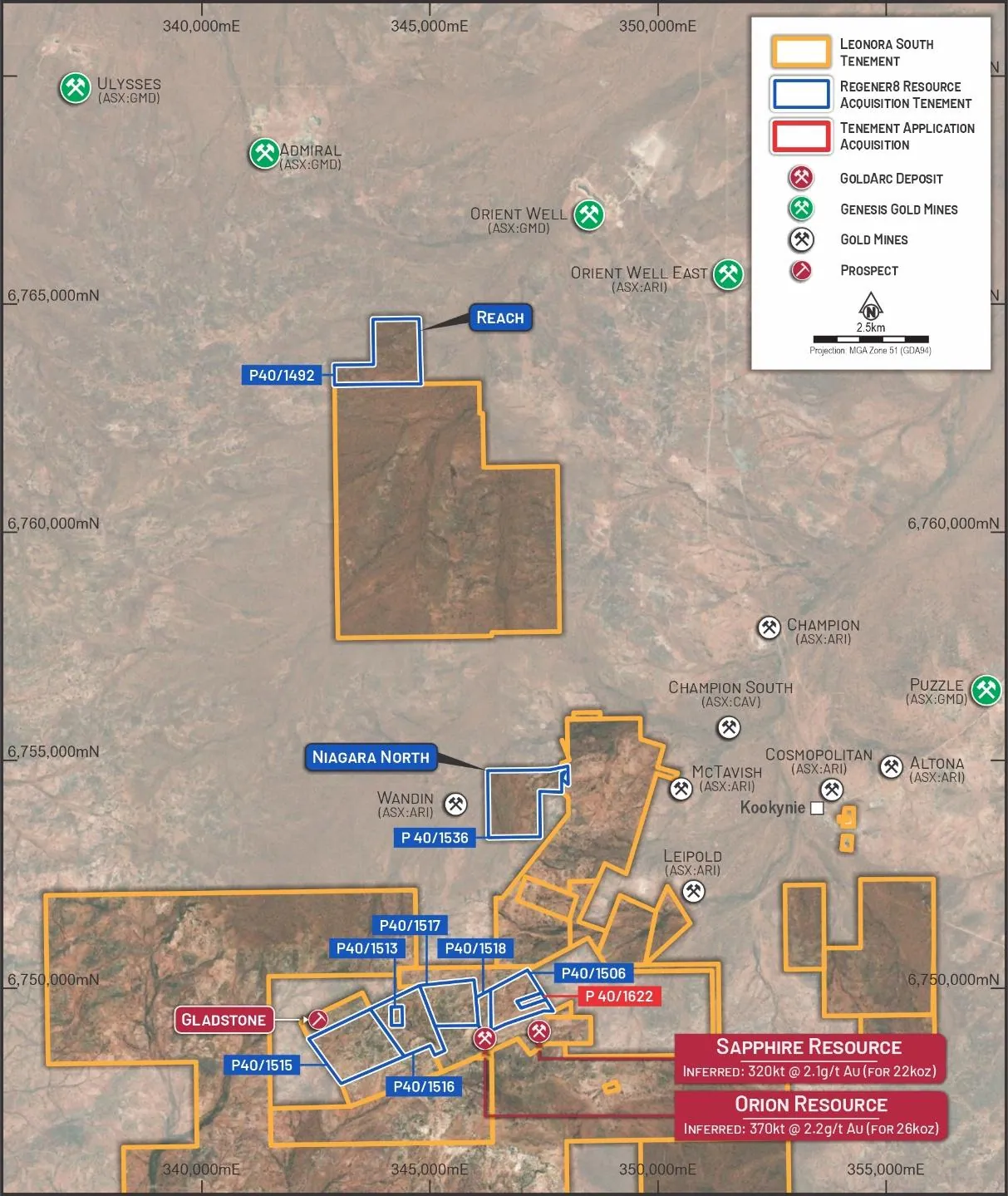
GoldArc agreed during the quarter to acquire seven Niagara West and Niagara North prospecting licences from Regener8 Resources for A$1.5 million in GoldArc shares, with a further A$1 million of contingent consideration tied to future resource milestones. The acquisition completed in October after shareholder approval, meaning the transaction was completed after the reporting period.
The deal adds ground along a parallel trend to the Orion and Sapphire deposits and the Eclipse prospect at Leonora South. It also introduces potential share dilution through the upfront consideration and any future milestone payments, while historical results on the acquired tenements have not been independently validated by GoldArc. The company will need to turn the larger land position into new drilling targets before the acquisition's value can be properly tested.
Cash position leaves development funding as the next test
GoldArc spent A$722,000 on exploration and evaluation during the quarter and reported a net operating cash outflow of A$522,000. Cash declined from A$4.164 million to A$2.831 million, while the company also had A$2.5 million available under an undrawn BML Ventures profit cash advance facility. On the company's calculation, cash plus that unused facility represented 4.28 quarters of funding at the reported rate of outgoings.
That figure is a snapshot, not a development budget. It does not show what future mine establishment or operating requirements may cost, and GoldArc has yet to announce when mining will begin. The next meaningful evidence will come from the detailed mine schedule, site establishment work and assays from the new RC program, rather than from the approval itself.
Get ASX:GA8 news the moment it breaks
 iPhone & iPad
 Android
Bottom Line?
GoldArc now has regulatory approval, encouraging grade control data and additional funding capacity, but the investment case still turns on converting that progress into a defined mine start and measurable development activity.
Questions in the middle?
- When will GoldArc and BML Ventures finalise the detailed mine schedule and announce a commencement date?
- Will the Ursus Fault RC program identify extensions capable of adding meaningful ounces near the planned operations?
- How much additional capital will site establishment and early development require beyond the company's current cash and available facility?
Sources
1-
Quarterly Activities and Cashflow Report (opens in a new tab)Verified source. Goldarc Resources Limited · 30 Oct 2026