Koba reports broad high-grade tin near historic Gilmore mine

Koba Resources has reported a 29-metre tin intersection grading 1.2% near the historic Gilmore Tin Mine in North Queensland, alongside tin mineralisation extending across 2km at Stannex. The company has started another 3,000m drilling program, but held only $1.97 million in cash at quarter-end and expects to seek equity funding.
- 29m at 1.2% tin from 111m near the Gilmore Tin Mine
- 15m at 2.0% tin within the Gilmore intersection
- Stannex drilling identified tin mineralisation over 2km of strike
- 3,000m program underway at Kitchener, Jiminy and Gilmore
- $1.97m cash balance equates to 1.57 quarters of stated funding
 Add us as a preferred source on Google
High-grade tin extends beyond historic Gilmore workings
Koba Resources (ASX:KOB) has found a broad zone of tin mineralisation beside the historic Gilmore Tin Mine, with drill hole MGRC011 returning 29m at 1.2% tin from 111m. The interval included 15m at 2.0% tin and a narrower 2m section at 6.3% tin, alongside copper, tungsten and silver mineralisation.
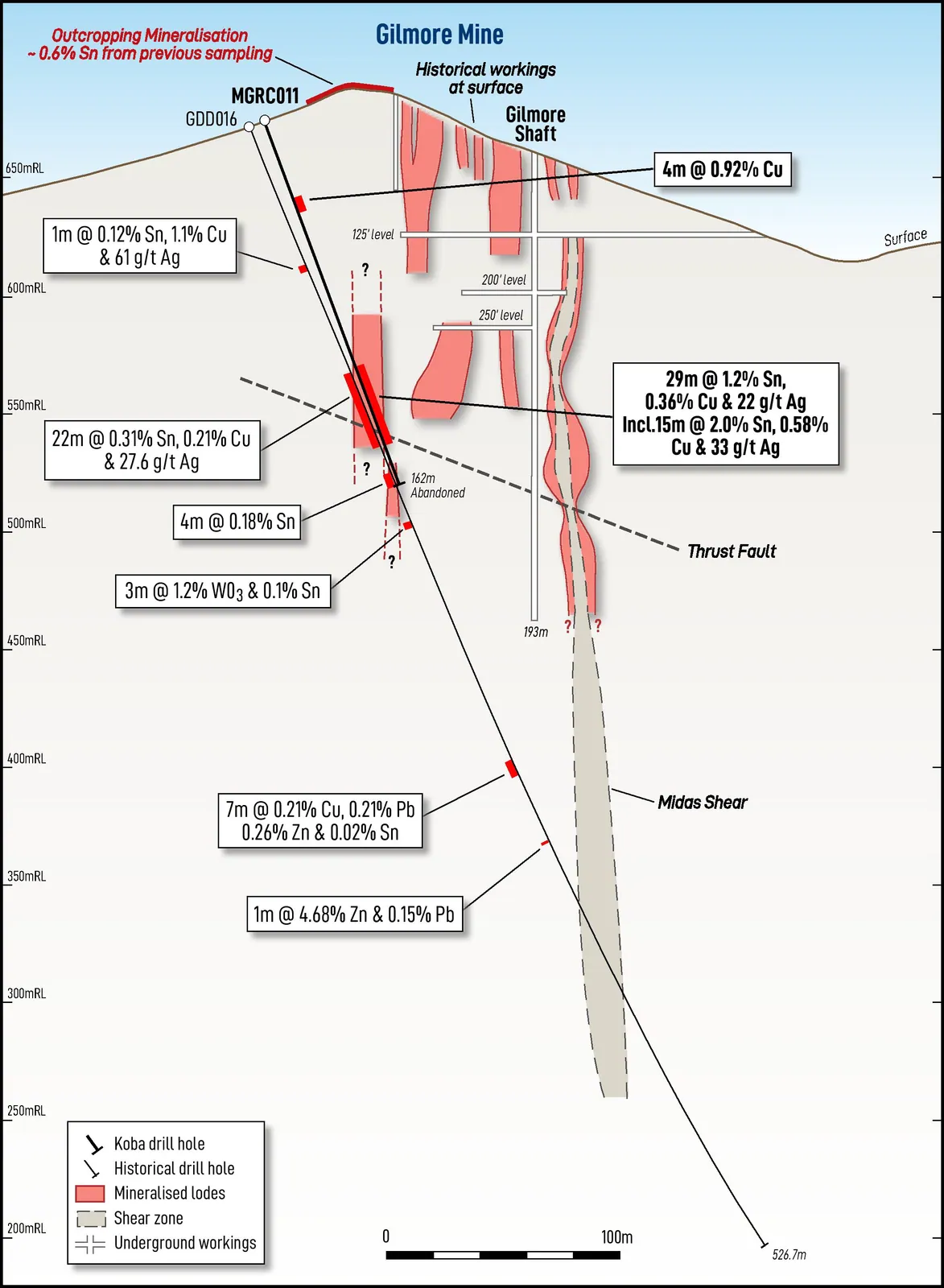
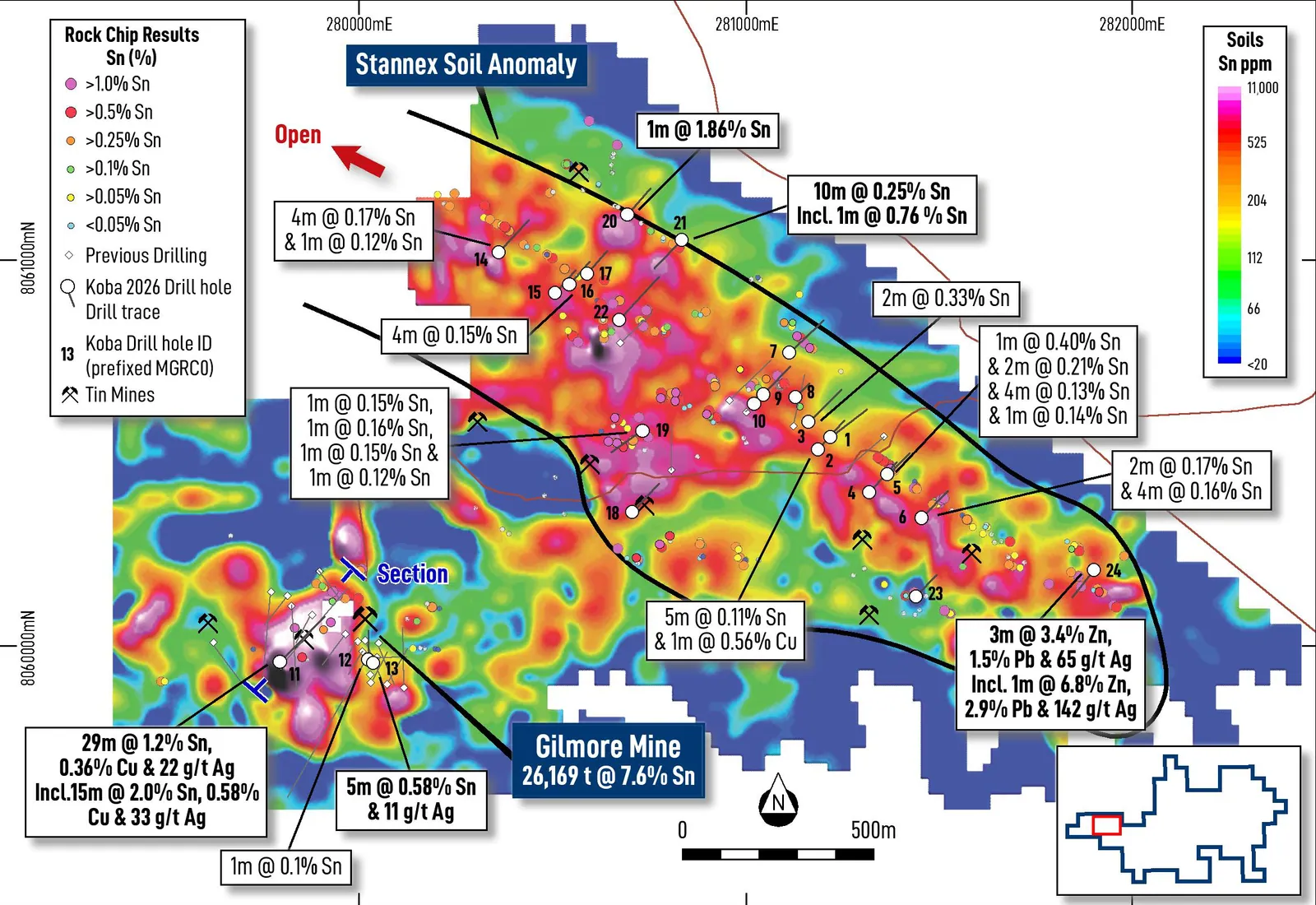
Gilmore produced 26,169 tonnes of ore at a historical grade of 7.6% tin, but the new drilling was the first in the mine’s immediate vicinity for more than 45 years. A second hole, about 230m east of MGRC011, returned 5m at 0.58% tin from 9m, including 2m at 1.2%. Koba says the results indicate that mineralisation remains outside the historically mined area, although the exploration intersections do not establish a mineral resource or economic viability.
Stannex results support a 2km exploration target
The 21-hole Stannex program produced shallower and generally lower-grade tin intersections across a 2km strike length. Results included 3m at 0.67% tin from 5m, including 1m at 1.9%, and 10m at 0.25% from 69m. The prospect had been prioritised after an earlier Stannex IP survey aligned chargeability anomalies with tin-in-soil and rock-chip results.
Stannex also returned anomalous base metals, including 3m at 3.4% zinc, 1.5% lead, 65 grams per tonne silver and 31 grams per tonne indium from 184m. Koba says the relationship between these metals and tin is not yet fully established, leaving geological interpretation and follow-up drilling as the next tests of whether the broader anomaly can be converted into a coherent mineralised system.
Three-target drilling program now underway
Koba has moved the rig to a new 3,000m program across the Kitchener Trend, Jiminy Prospect and Gilmore. Kitchener contains seven historic mines that produced about 120,000 tonnes of ore at an average 2.3% tin over 1.3km, while Jiminy has never been drilled despite a 1.5km by 0.3km tin-in-soil anomaly and rock-chip results as high as 26.1% tin. Gilmore follow-up drilling is planned to test the continuity of the high-grade zone along strike and up and down dip.
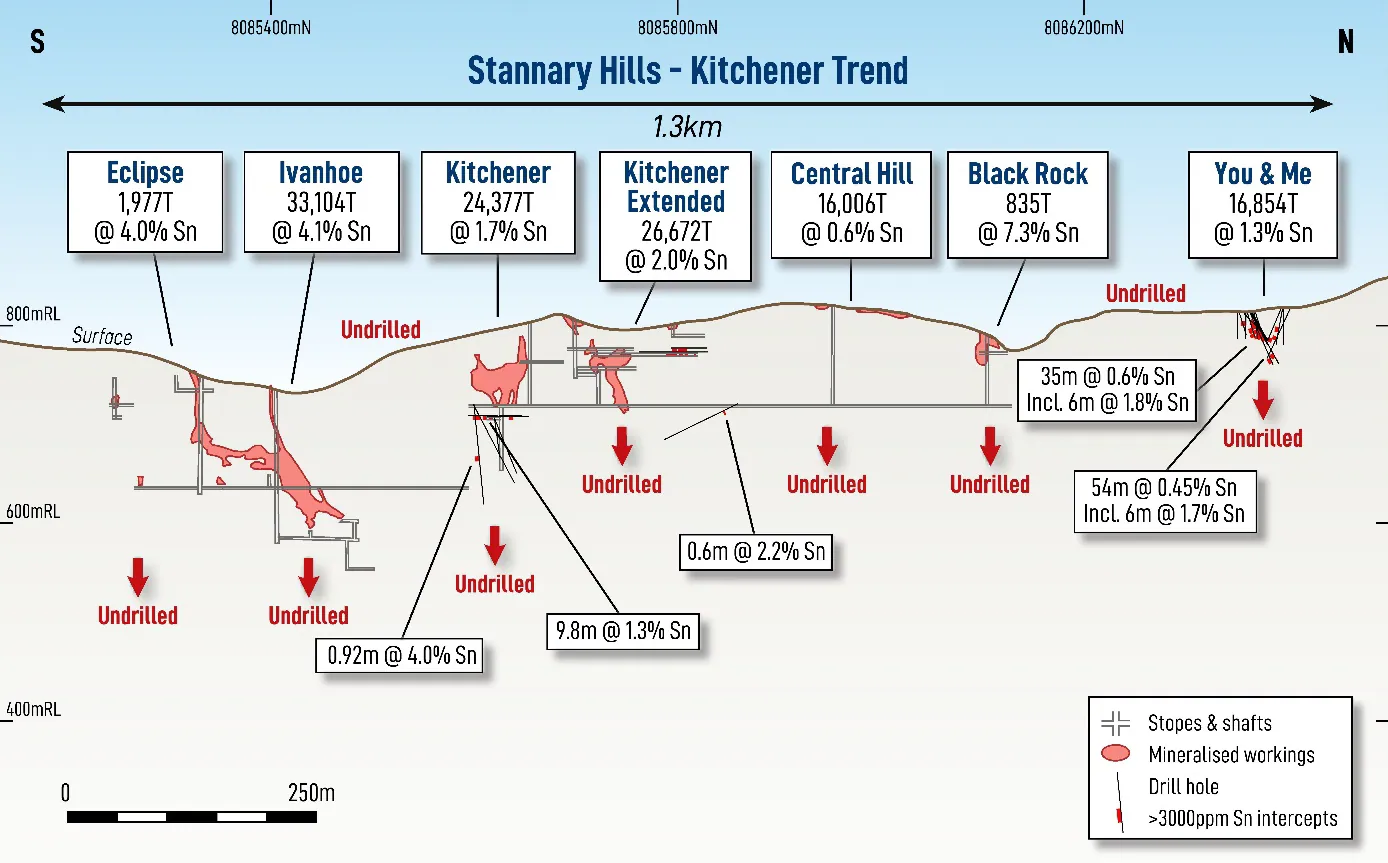
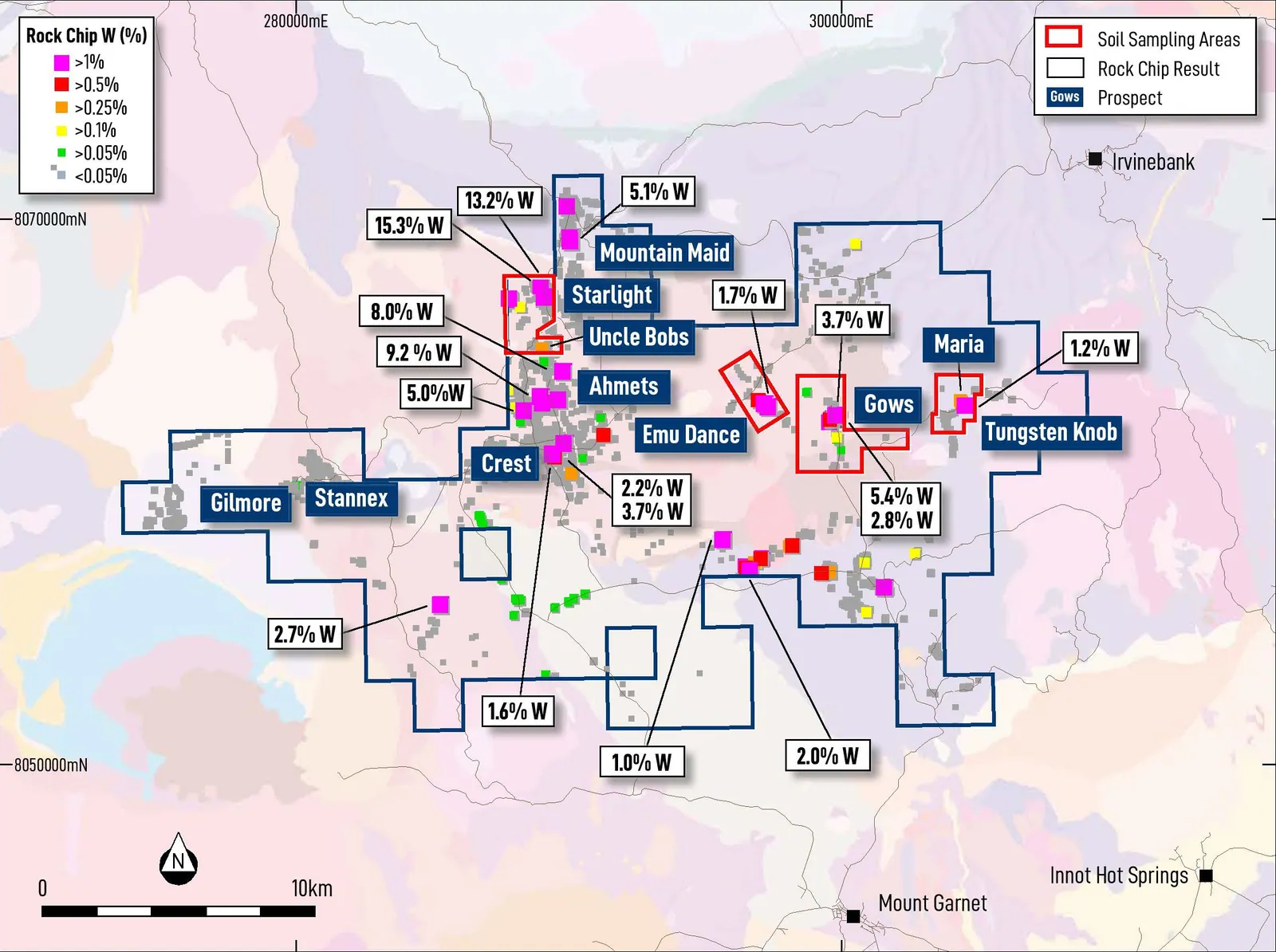
The exploration push follows the maiden Mt Garnet drilling that was completed during the quarter, comprising 24 reverse-circulation holes for 2,937m. Koba also collected 1,166 soil samples across seven tin and tungsten targets, with assays still pending. Those results could determine which additional prospects are advanced to drilling in 2027.
Cash position leaves little room for delay
The operational progress comes with a clear financing constraint. Koba held $1.97 million in cash at 30 September, after spending $1.11 million on exploration and evaluation during the quarter. The Appendix 5B calculation gives the company 1.57 quarters of funding based on reported outgoings, and Koba said it expects similar operating cash flows in the December quarter before seasonal reductions in the March 2027 quarter.
The company expects to fund ongoing work through future equity raisings, but provided no terms or timing for such financing. For now, the immediate geological test is whether the 3,000m campaign can turn Gilmore’s standout intersection and Stannex’s broad anomaly into repeatable mineralisation, while the financial test is whether Koba can reach those results without interrupting the drilling cycle.
Get ASX:KOB news the moment it breaks
 iPhone & iPad
 Android
Bottom Line?
Gilmore has produced the strongest exploration signal in the quarter, but Koba’s next drilling results will arrive alongside a likely equity-funding question.
Questions in the middle?
- Will follow-up drilling confirm continuity and scale around the high-grade Gilmore intersection?
- Can Kitchener and first-ever drilling at Jiminy deliver results that justify expanding the North Queensland program?
- When will Koba raise capital, and on what terms, given the stated 1.57-quarter funding position?
Sources
1-
Quarterly Activities/Appendix 5B Cash Flow Report (opens in a new tab)Verified source. Koba Resources Limited · 30 Oct 2026