Strategic Elements puts EdgeiQ and Energy Ink closer to real-world testing

Strategic Elements has moved its EdgeiQ platform closer to commercial mining pilots while Energy Ink progresses towards a system-level demonstration. The ASX-listed venture developer ended September with $3.918 million in cash and an estimated 4.32 quarters of funding at the quarter’s spending rate.
- EdgeiQ OnSite infrastructure installed at a major global gold producer’s underground mine
- EdgeiQ Portable commercial pilot launched, with onboard AI processing demonstrated in approximately 100 milliseconds
- Energy Ink Moisture Energy Dock advanced to final testing after commercial electronics integration
- September quarter net operating cash outflow of $907,000 and $3.918 million cash balance
- Approximately $650,000 R&D tax rebate expected in the December quarter, subject to processing
 Add us as a preferred source on Google
EdgeiQ reaches first commercial underground deployment
Strategic Elements Ltd (ASX:SOR) is taking its mining automation platform from field testing into commercial validation, with infrastructure installed at an underground mine operated by a major global gold producer. The company said its Stealth Technologies venture completed key computing and networking installation work during the September quarter, connected the system to the mine’s operational network and established communications, sensor connectivity and remote monitoring.
The deployment is not yet a reported revenue-generating rollout across multiple sites. It is a first commercial EdgeiQ OnSite pilot involving expanded engineering, integration, data collection and technical refinement. Strategic Elements said some of the setup and development expenditure should not recur to the same extent in later deployments, although broader commercial deployment remains prospective.
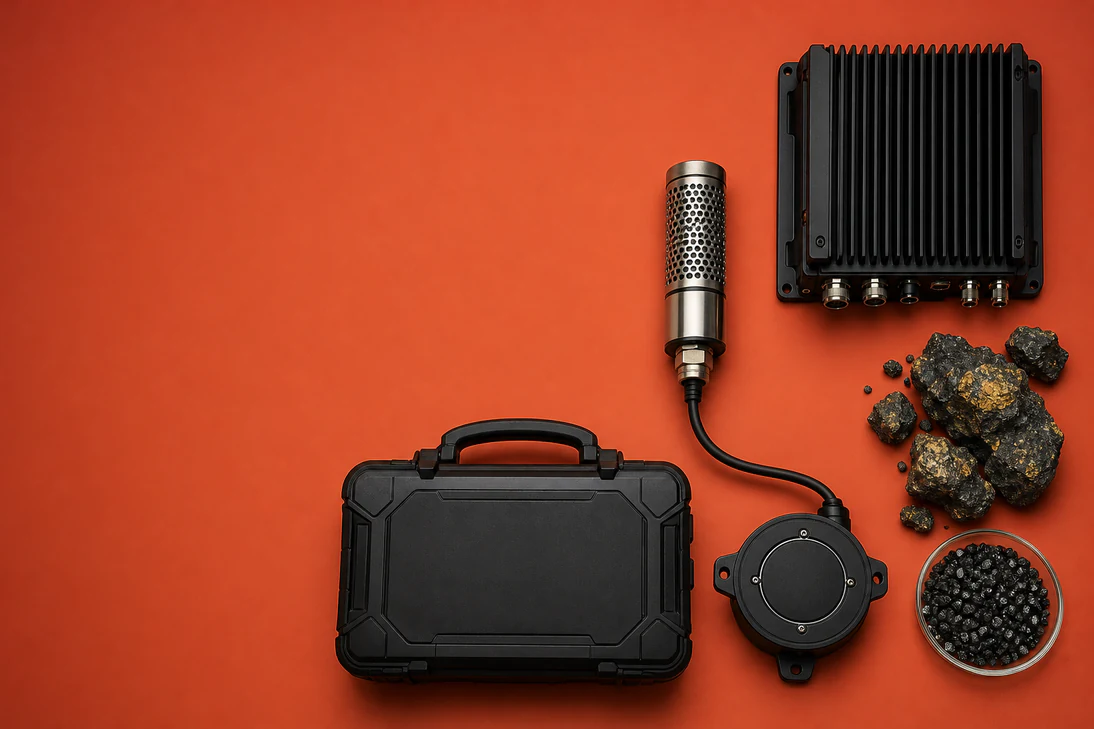
EdgeiQ Portable also advanced towards commercial pilots after five completed underground field trials with a Tier 1 mining company. The handheld system combines LiDAR scanning, 3D mapping, spatial positioning and onboard computing, operating without GPS, internet connectivity or external cloud computing. Its commercial pilot program launched on 29 October, with discussions underway with prospective mining partners. The platform’s common hardware architecture is intended to support several mining applications, potentially creating additional products and revenue streams.
Onboard AI adds a sharper test for EdgeiQ
Stealth has expanded the platform beyond sensing and measurement through a paid research agreement with Curtin University’s Western Australian School of Mines. Initial testing after quarter-end placed an AI model directly onto EdgeiQ Portable hardware, with processing reported at approximately 100 milliseconds per inference without external or cloud computing.
A Tier 1 mining company has approved access to operational mining data, with supply beginning during the December quarter. An underground field trial is targeted for the first quarter of 2027, subject to technical progress and site access. That sequence gives the company a defined set of technical milestones, but it does not yet establish whether the model can deliver reliable operational value in a live mine.
Energy Ink moves from laboratory output towards a device demonstration
Australian Advanced Materials made progress on its separate Energy Ink moisture-energy program, including a Japanese patent granted on 1 July and the first successful integration of prototype cells with commercial power-management electronics supplied by Belgium-based e-peas. The patent adds protection for specified elements of the original technology platform, while the electronics integration demonstrated that Energy Ink output could be captured and managed in a practical circuit. The Japanese intellectual property milestone had been reported earlier through the Japanese Energy Ink patent.
The portable Moisture Energy Dock is now in final testing. Its design combines a custom Energy Ink cell pack, breath-activated moisture management and commercial electronics, with electricity transferred directly into a rechargeable lithium-ion battery. The initial demonstration aims to accumulate enough energy to power a one-minute telephone call on a Nokia feature phone, building on the portable Moisture Energy Dock project reported in July.
Strategic Elements continues to describe Energy Ink as early stage. Materials performance, durability, scalable manufacturing and integration into commercial applications remain unresolved development issues, and the planned Q4 2026 system demonstration is conditional on successful testing.
Cash runway covers more than four quarters at current burn
The company finished September with $3.918 million in cash and used $907,000 in operating cash during the quarter, leaving an estimated 4.32 quarters of funding based on the Appendix 4C calculation. Stealth accounted for $252,000 of expenditure on staff, consultants and development activities, while Australian Advanced Materials spent $116,000 on Energy Ink research, consultants and intellectual property management. The quarter also included $537,000 in corporate and internal costs, and $270,000 in payments to related parties and associates, including executive director remuneration.
The cash position does not include the company’s anticipated approximately $650,000 R&D Tax Incentive rebate, which Strategic Elements expects to receive during the December quarter subject to processing. The immediate financial question is therefore less about a near-term funding shortfall than whether the higher development spending converts into repeatable commercial deployments before the cash runway materially shortens.
Get ASX:SOR news the moment it breaks
 iPhone & iPad
 Android
Bottom Line?
The next evidence points are concrete: EdgeiQ pilot performance and customer conversion, the targeted Q1 2027 AI field trial, and whether Energy Ink can complete its phone-charging demonstration without exposing further scale-up problems.
Questions in the middle?
- Can the EdgeiQ OnSite deployment progress from technical validation to repeatable, revenue-generating mine-site rollouts?
- Will onboard AI maintain useful performance when tested against operational mining data and underground conditions?
- Can Energy Ink move beyond a one-minute phone-call demonstration towards durable, manufacturable commercial applications?
Sources
1-
SOR Quarterly Update and Appendix 4C (opens in a new tab)Verified source. Strategic Elements Limited · 30 Oct 2026