Western Mines’ Mulga Tank resource opens a bigger nickel question

Western Mines Group has completed its latest Mulga Tank drilling campaign and reported a 2,647Mt mineral resource containing 7.2Mt of nickel. The exploration milestone is significant, but the company’s reported cash covers less than half a quarter of recent outgoings.
- 2,647Mt Mulga Tank resource grading 0.27% nickel
- 7.2Mt contained nickel, plus cobalt, copper and PGEs
- Phase 5 drilling returned broad nickel sulphide intersections and up to 2.26% nickel over 1 metre
- Active seismic survey targeting the basal contact is underway
- $1.03m cash at quarter end equated to 0.47 quarters of funding at recent outgoings
 Add us as a preferred source on Google
Mulga Tank resource reaches 7.2Mt of contained nickel
Western Mines Group Ltd (ASX:WMG) has turned a productive drilling quarter into a much larger exploration proposition at Mulga Tank, with a JORC 2012 mineral resource of 2,647 million tonnes grading 0.27% nickel. The estimate contains 7.2 million tonnes of nickel, alongside 347,000 tonnes of cobalt, 205,000 tonnes of copper and 1.6 million ounces of platinum plus palladium.
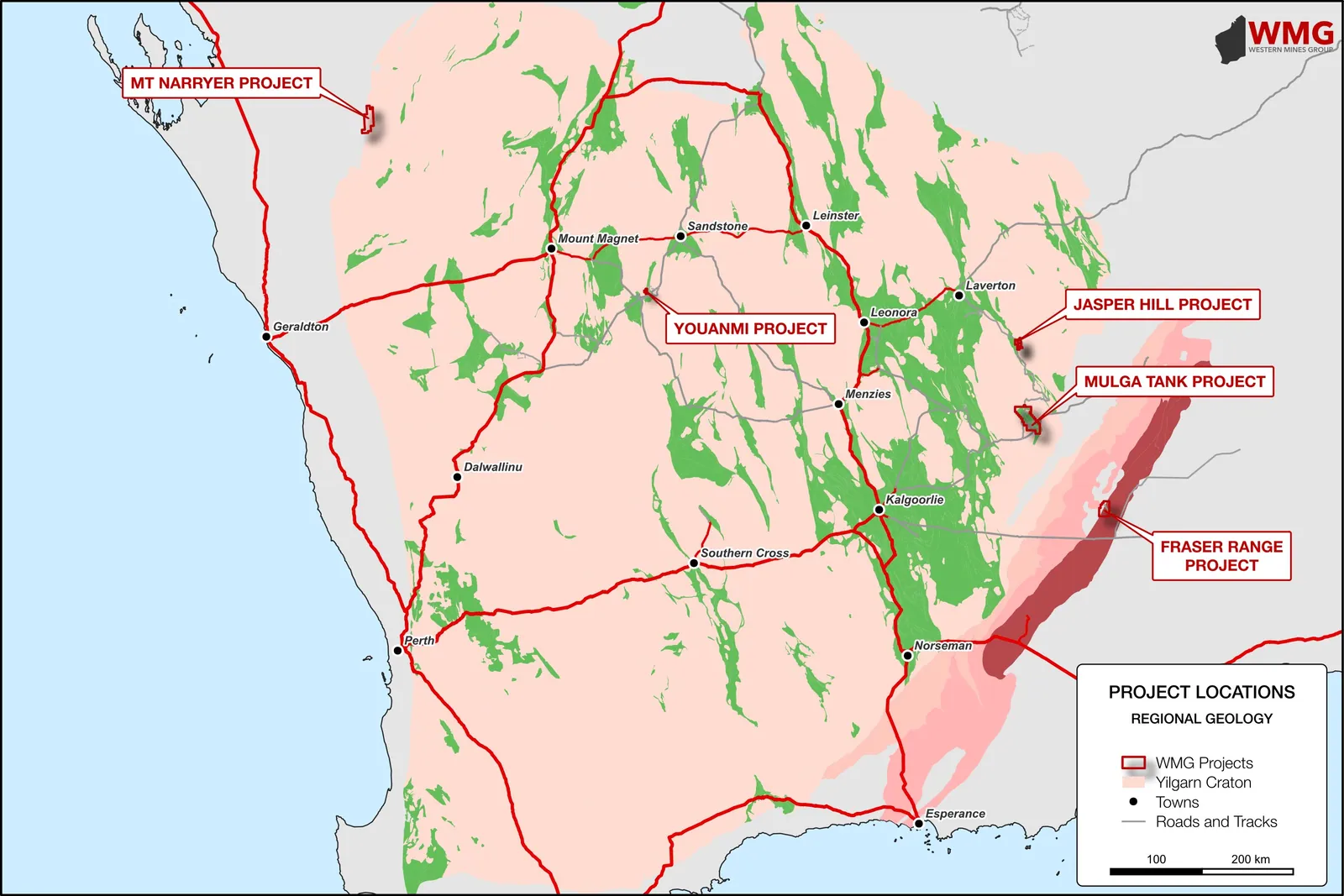
The updated estimate, reviewed by independent consultants ERM, comprises 1,121Mt in the Indicated category and 1,526Mt classified as Inferred, using a 0.20% nickel cut-off. The resource was updated after the quarter ended using results from 32 Phase 4 and Phase 5 holes. The Mulga Tank resource upgrade had already put the scale of the deposit in focus, while the more consequential question remains whether the large, relatively low-grade system can support an economic mining and processing operation.
Phase 5 drilling extends broad nickel sulphide zones
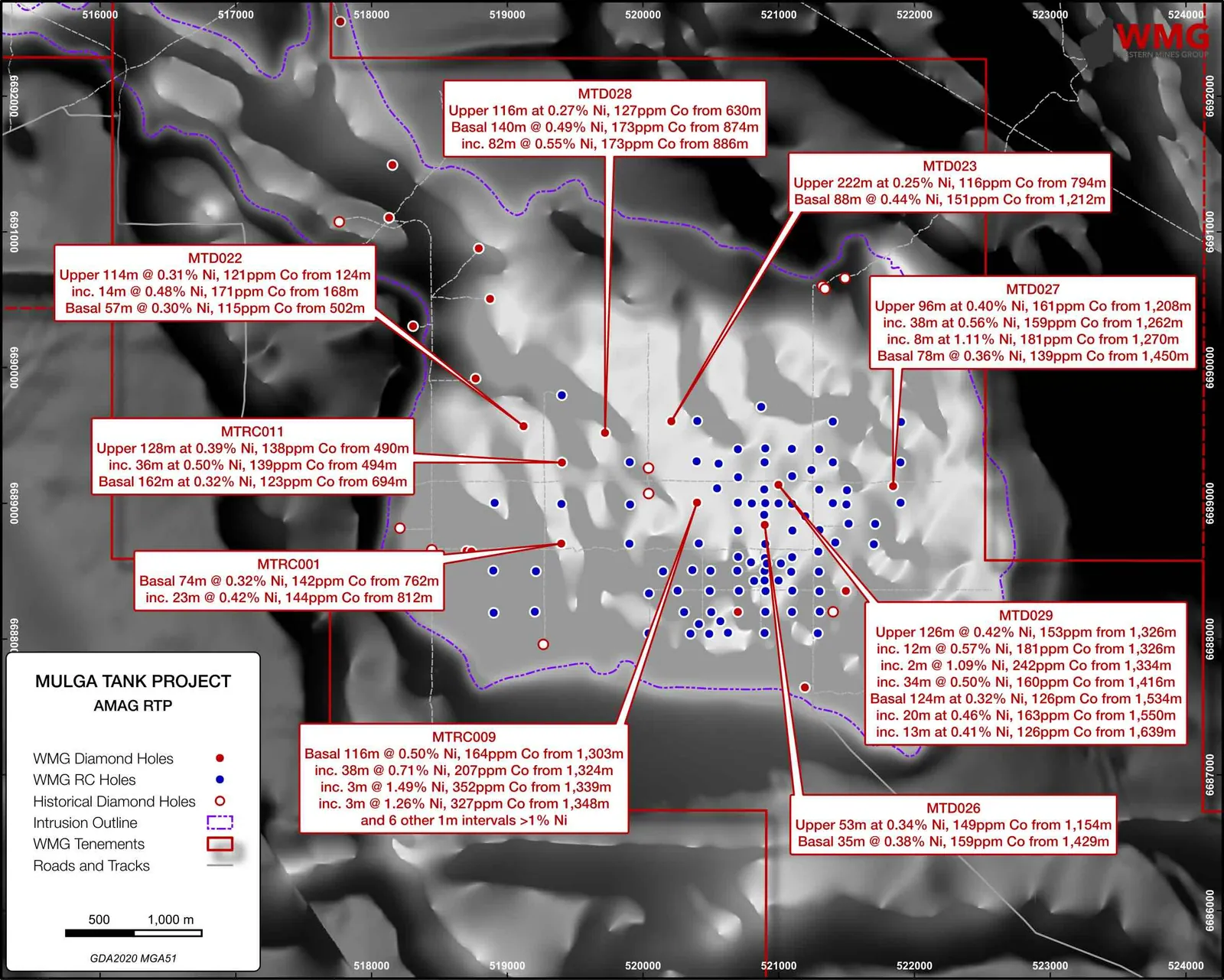
During the quarter, WMG completed Phase 5 drilling and received assays for 19 RC holes and the deep diamond tail of MTRC001. The results repeatedly showed broad disseminated nickel sulphide mineralisation with associated cobalt, copper and platinum-group elements.
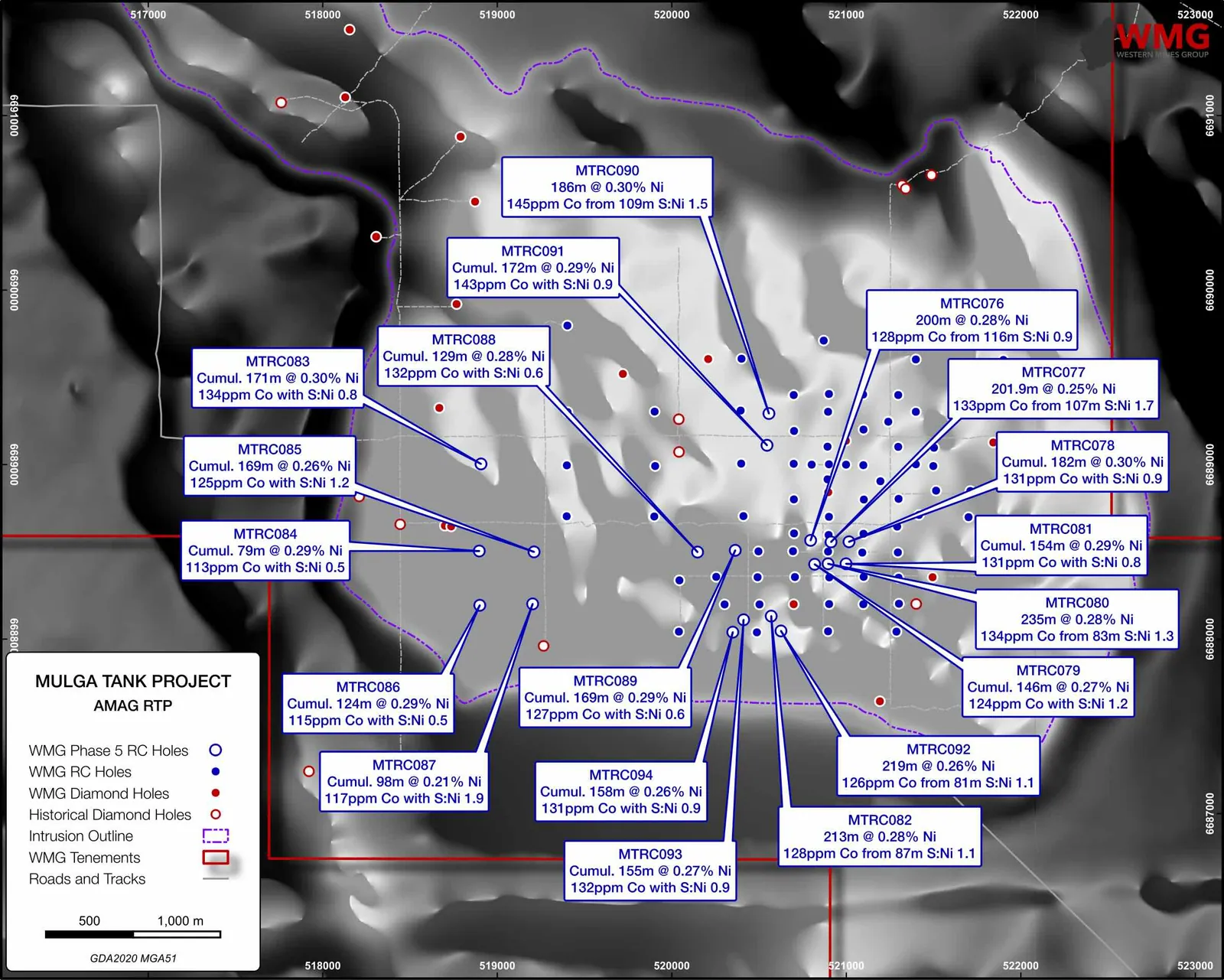
Standout intersections included 235 metres at 0.28% nickel from 83 metres in MTRC080, 213 metres at 0.28% nickel from 87 metres in MTRC082 and 186 metres at 0.30% nickel from 109 metres in MTRC090. Higher-grade intervals were also present, including 4 metres at 0.85% nickel in MTRC078, with a 1-metre section at 2.26% nickel, and 5 metres at 0.77% nickel in MTRC091. These results build on the Phase 5 assay results, which previously confirmed broad mineralisation and multiple higher-grade zones.
Seismic survey targets deeper sulphide potential
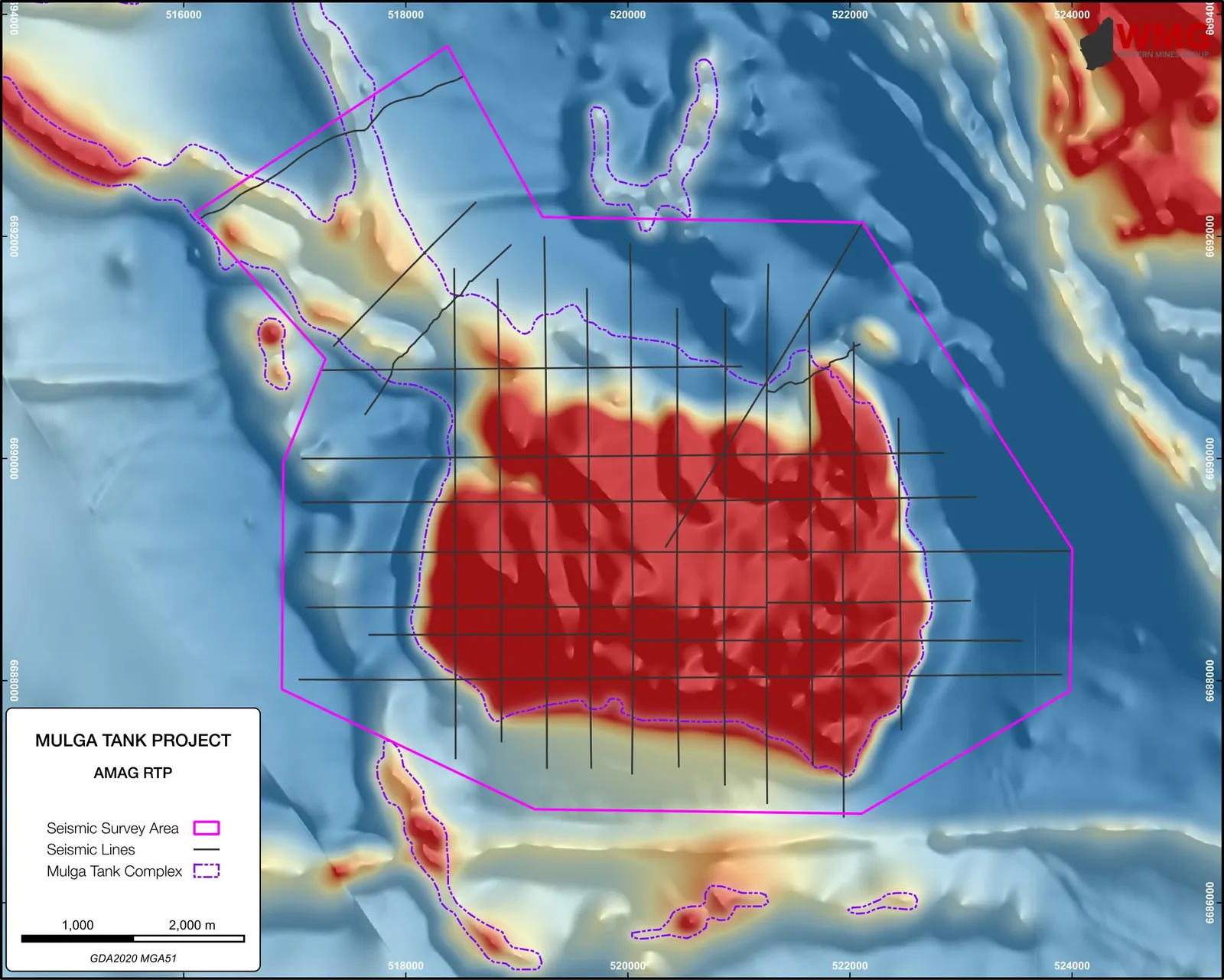
WMG has now begun an active seismic survey over the Mulga Tank Ultramafic Complex after securing a maximum $250,000 co-funding award from Western Australia’s Exploration Incentive Scheme. The planned survey covers about 100 line kilometres across roughly 35 square kilometres and is intended to map the complex’s three-dimensional architecture, including its prospective basal contact and a possible feeder vent.
The company says the survey may also help detect substantial massive sulphide accumulations, based on a Perseverance-style target model. That remains an exploration target rather than an established discovery, and the next significance will rest on what the survey identifies and whether follow-up drilling can convert geophysical features into mineralised intersections.
Capital raise supports work but runway is limited
The quarter also included a $2.74 million capital raise, led by Lowell Resources Fund (ASX:LRT), which became WMG’s largest shareholder with a 10.6% stake. The company said the funds were directed towards Mulga Tank drilling, assays, geophysics and scoping-study work; its Appendix 5B recorded $1.701 million in equity proceeds during the period.
At 30 September, WMG held $1.03 million in cash, with a further $998,000 of listed investments. Exploration and evaluation spending reached $1.799 million during the quarter, while total relevant outgoings were $2.187 million. On that basis, the company reported estimated funding of only 0.47 quarters. WMG said spending should fall after Phase 5 drilling, and pointed to expected EIS and GST receipts of about $200,000, listed investments and the capacity to raise further capital. None of those measures removes the need to fund the next stage of work.
Get ASX:WMG news the moment it breaks
 iPhone & iPad
 Android
Bottom Line?
The geological scale is now clear; the next test is whether seismic targeting, scoping work and disciplined spending can turn that scale into a credible development case before more capital is required.
Questions in the middle?
- Can the seismic survey identify a basal or feeder-zone target that justifies another round of deep drilling?
- What mining, processing and recovery assumptions will the Mulga Tank scoping study apply to a 0.27% nickel resource?
- How quickly will WMG need to raise capital if expenditure remains above the level implied by its current cash balance?
Sources
1-
September 2026 Quarterly Activities & Cash Flow Reports (opens in a new tab)Verified company source. Western Mines Group Ltd · 30 Oct 2026 · investors.westernmines.com.au