Elixir sees stronger Lorelle-3H gas flows after 60-day soak

Elixir Energy has reported materially stronger interim flow performance from Lorelle-3H after a 60-day soak, but a sand, scale and coal obstruction has interrupted the test. The company also received a $12.1 million R&D refund and repaid its debt facility, leaving a net cash inflow of $1.77 million.
- Equivalent 12-hour flow rates up 79% to 4.3 mmscfde
- Stimulation-fluid flowback down 85% to 118 bbl/d
- Sand, scale and coal blockage requires coiled-tubing intervention
- $12.1 million FY26 R&D refund received
- R&D debt repayment leaves $1.77 million net cash inflow
 Add us as a preferred source on Google
Lorelle-3H delivers stronger post-soak flow rates
Elixir Energy Limited (ASX:EXR) has produced a more encouraging second set of flow results from its Lorelle-3H appraisal well in Queensland’s Taroom Trough, with equivalent 12-hour rates reaching an average 4.3 million standard cubic feet of gas equivalent per day, or 5.2 terajoules per day. That represents a 79% improvement on the comparable period in the first phase of testing, at an average flow tubing head pressure of about 3,330 psi.
The result came with a sharp reduction in stimulation-fluid flowback. Rates fell 85% to 118 barrels per day while the well was operating on an 18/64 choke. A separate 24-hour measurement recorded 3.2 mmscfde, or 3.9 TJde, at 2,443 psi on a 22/64 choke, with fluid flowback of 215 bbl/d. Condensate production ranged between 10 and 16 barrels for every million standard cubic feet of gas produced.
Tubing obstruction interrupts the next testing step
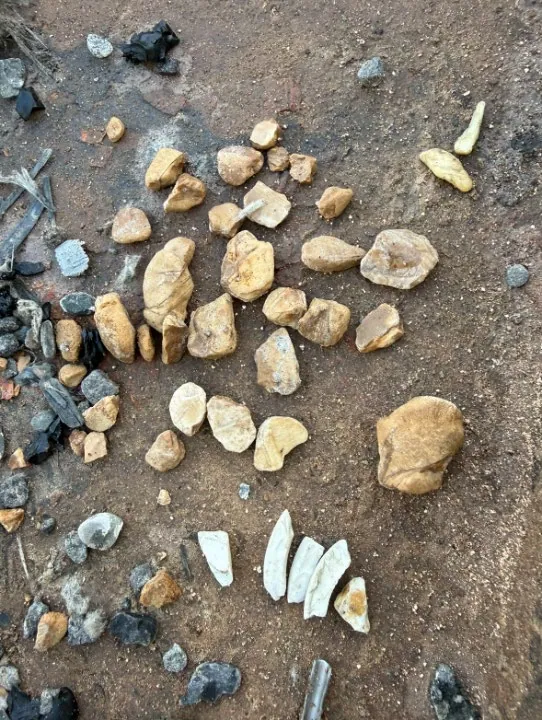
The stronger early performance was not matched by pressure behaviour over the extended flow period. Elixir said pressure communication within the well became impaired, and downhole investigations identified a pack-off of sand, scale and coal above the tailpipe of the 2⅜-inch tubing completion. Attempts to dislodge the material by manipulating the choke recovered some solids at surface but did not restore full communication with the wellbore.
Coiled tubing fitted with a milling assembly has now been mobilised to clear the obstruction and establish a free flow path. Elixir plans a further short flow period after the intervention and suspension of the well, before Lorelle-3H is handed to permit operator Santos and the Santos farm-in and Beach Energy transaction processes advance. The update remains interim: the improved rates are test measurements rather than evidence of sustained commercial production, and further assessment depends on clearing the blockage. The well had entered this phase after a 60-day post-soak testing program, which was intended to provide additional pressure and deliverability data.
R&D refund removes Elixir’s near-term debt draw
Elixir has also received $12,126,876 from the Australian Taxation Office under its FY26 R&D refund process. It used $10,361,425 of that amount to repay its drawn R&D debt facility with Endpoints Capital, producing a net cash inflow of $1,765,452.
The refund supports liquidity at a point when Lorelle-3H still requires further field work, although the announcement does not provide an updated total cash balance. Corelab’s analysis of 18 metres of whole core from the upper Dunk interval and testing of the fracture-stimulation program remain in progress. Elixir’s proposed strategic farm-out to Beach Energy, announced at $25 million in cash plus a $180 million carried work program, is expected to complete in the second half of FY2027, subject to the transaction’s conditions. That earlier $205 million Beach farm-out remains an important funding and operational backdrop, but it does not remove the immediate need to resolve the Lorelle-3H well obstruction.
Get ASX:EXR news the moment it breaks
 iPhone & iPad
 Android
Bottom Line?
The key near-term test is mechanical rather than geological: clearing the tubing and reproducing the improved flow performance without the pressure-communication problem.
Questions in the middle?
- Can coiled-tubing operations restore a clear flow path and allow a clean follow-up test?
- Will the post-soak results support a reserves assessment or a future role in the Warkon Pilot?
- How will the $1.77 million net refund inflow affect Elixir’s funding position before the Beach transaction completes?
Sources
1-
L3H Update & R&D Refund of $12.1m Received (opens in a new tab)Verified source. Elixir Energy Limited · 2 Nov 2026