Jacaranda uncovers new copper trend ahead of Motloutse drilling

Jacaranda Natural Resources has identified a 50-metre copper trend at its Motloutse Project in Botswana, with 12 of 23 selective rock-chip samples returning more than 1% copper. The ASX-listed explorer now plans maiden drilling between December 2026 and February 2027, subject to approvals and completion of work at its Globe Project.
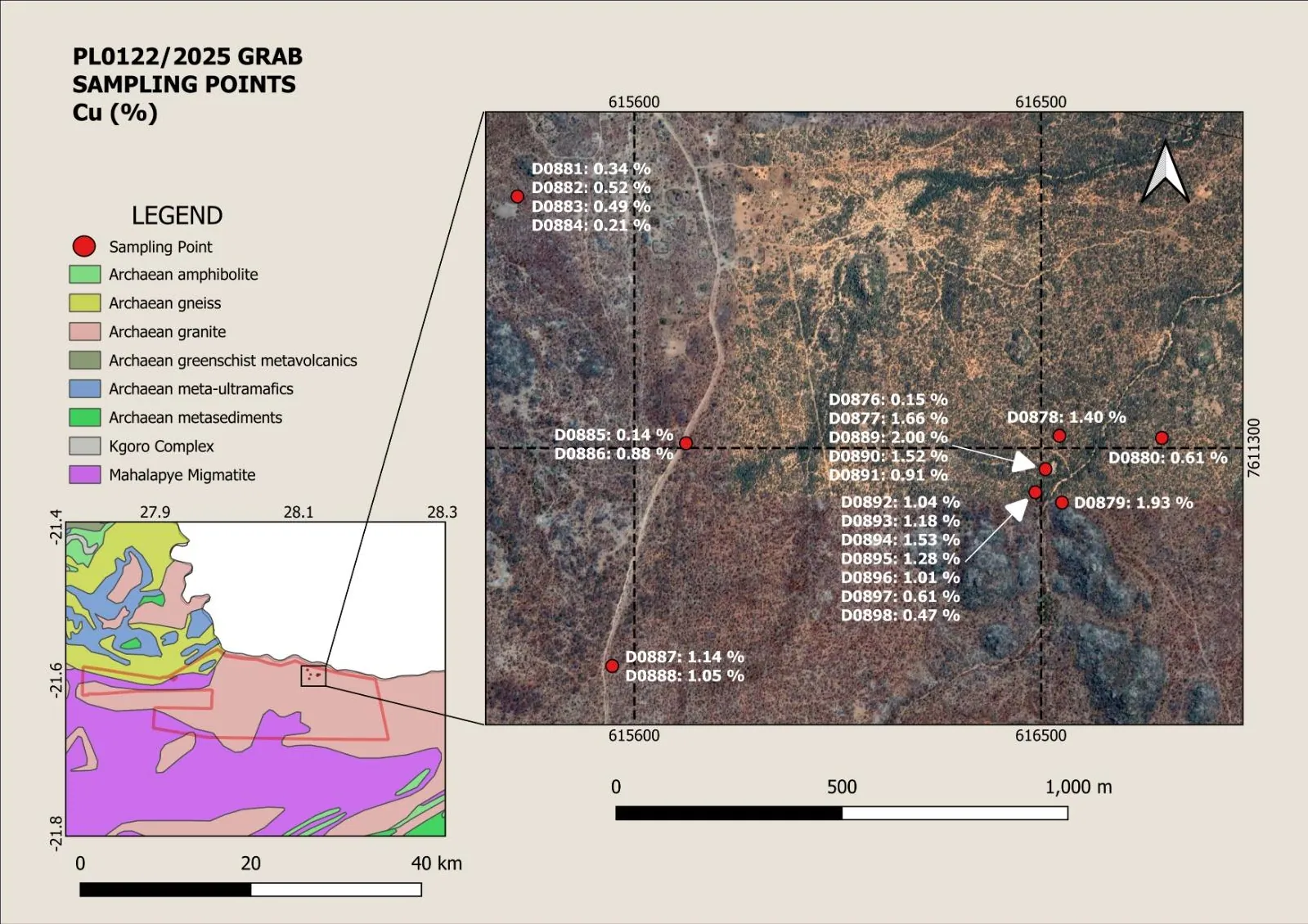
- Rock-chip assays reached 2.00% copper at the Tlou trend
- 12 of 23 samples returned more than 1% copper
- Copper was identified across six historical pits
- Silver assays ranged from 1.6 to 18.8 g/t
- Maiden drilling is targeted for December 2026 to February 2027
 Add us as a preferred source on Google
Tlou emerges as Motloutse’s lead copper target
Jacaranda Natural Resources Limited (ASX:JRL) has found its most compelling target yet at the 228 km² Motloutse Project in eastern Botswana, where selective rock-chip sampling returned up to 2.00% copper. The strongest results came from Tlou, a previously unexplored trend traced for about 50 metres along a near north-south structure.
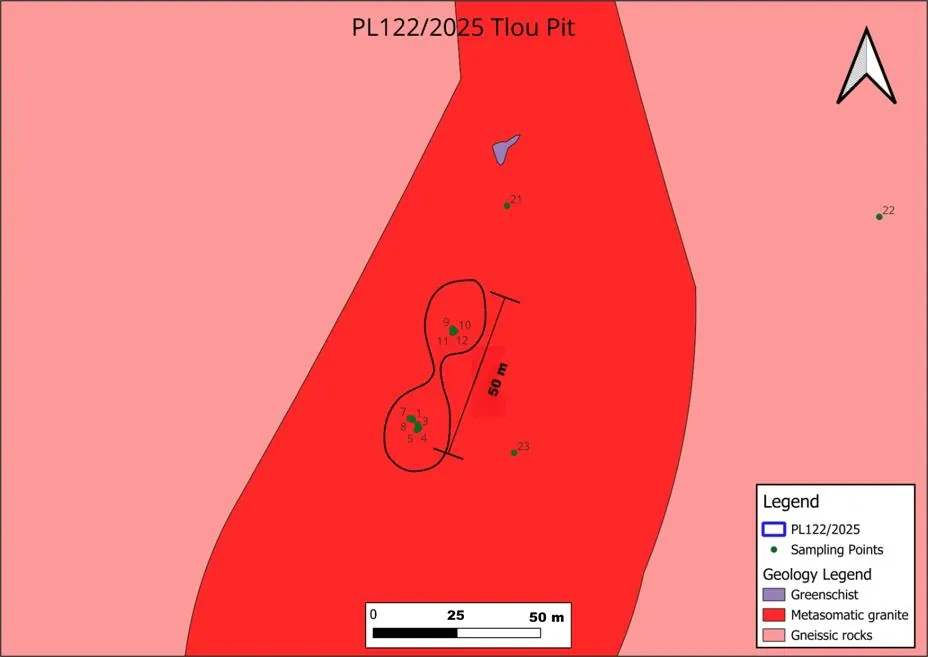
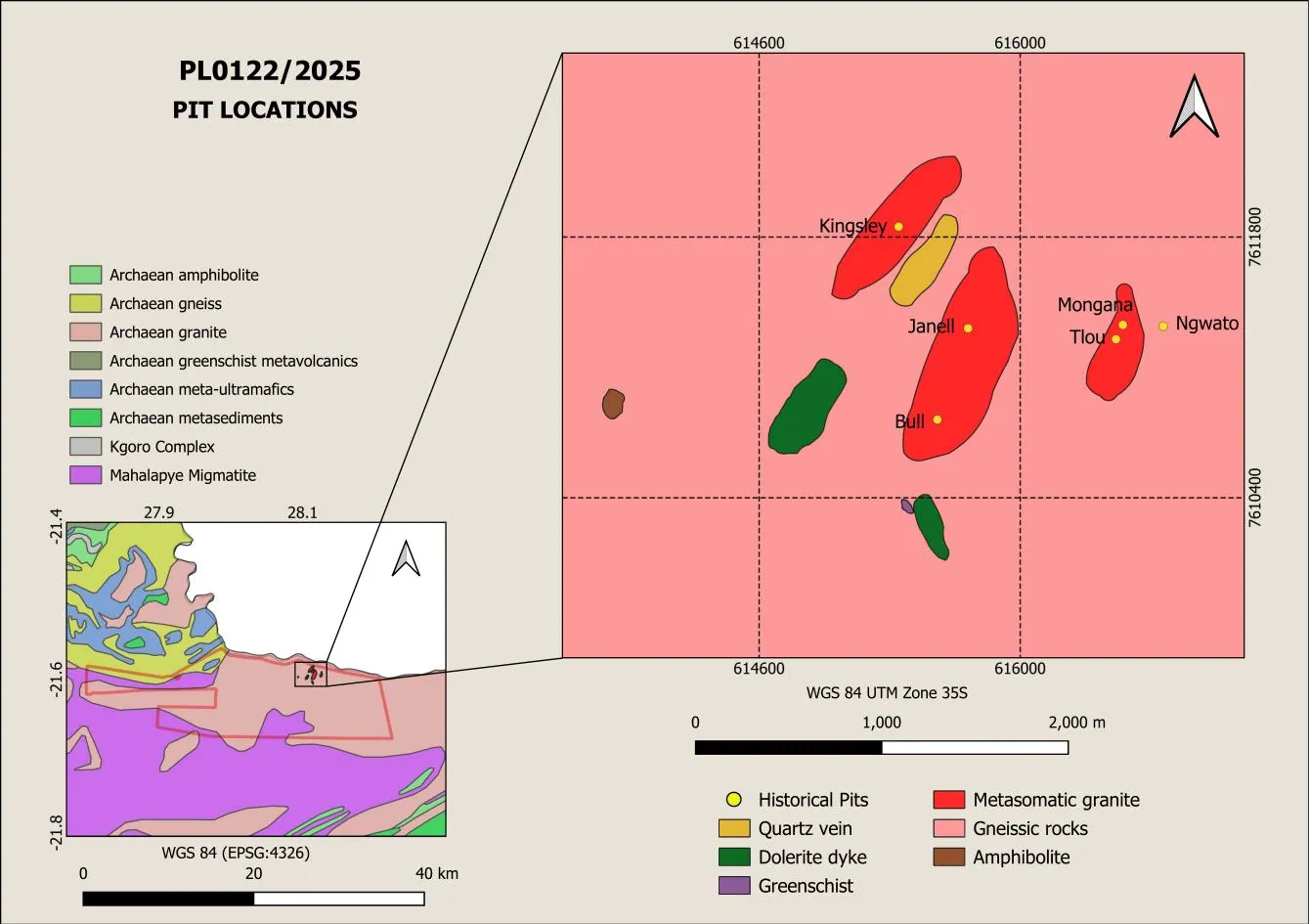
Eight of 12 Tlou samples exceeded 1% copper, with individual results ranging from 0.15% to 2.00%. A laboratory repeat of the peak sample returned 2.09% copper. The company also found copper at five historical pits, taking the mapped surface footprint of mineralisation across the broader area to about 1.4 km by 1.0 km, although the separate occurrences are not yet shown to be continuous.
Assays broaden the project’s exploration model
Across all 23 samples, the median copper result was 1.01%, while the lowest assay was 0.14%. Silver ranged from 1.6 to 18.8 g/t and was reported alongside low nickel and cobalt values. Gold remained at background levels of no more than 0.03 g/t.
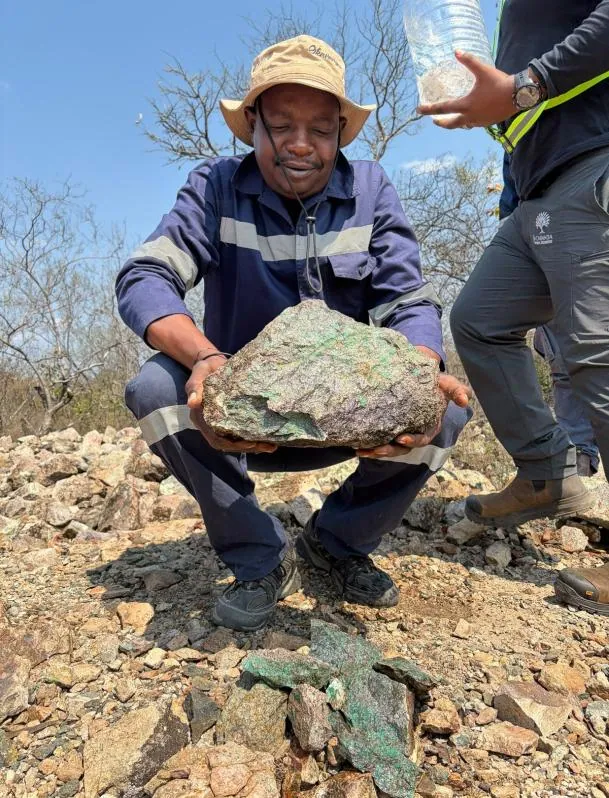
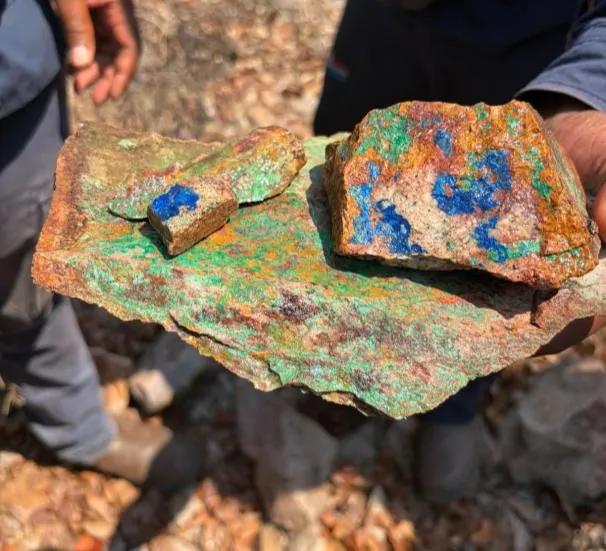
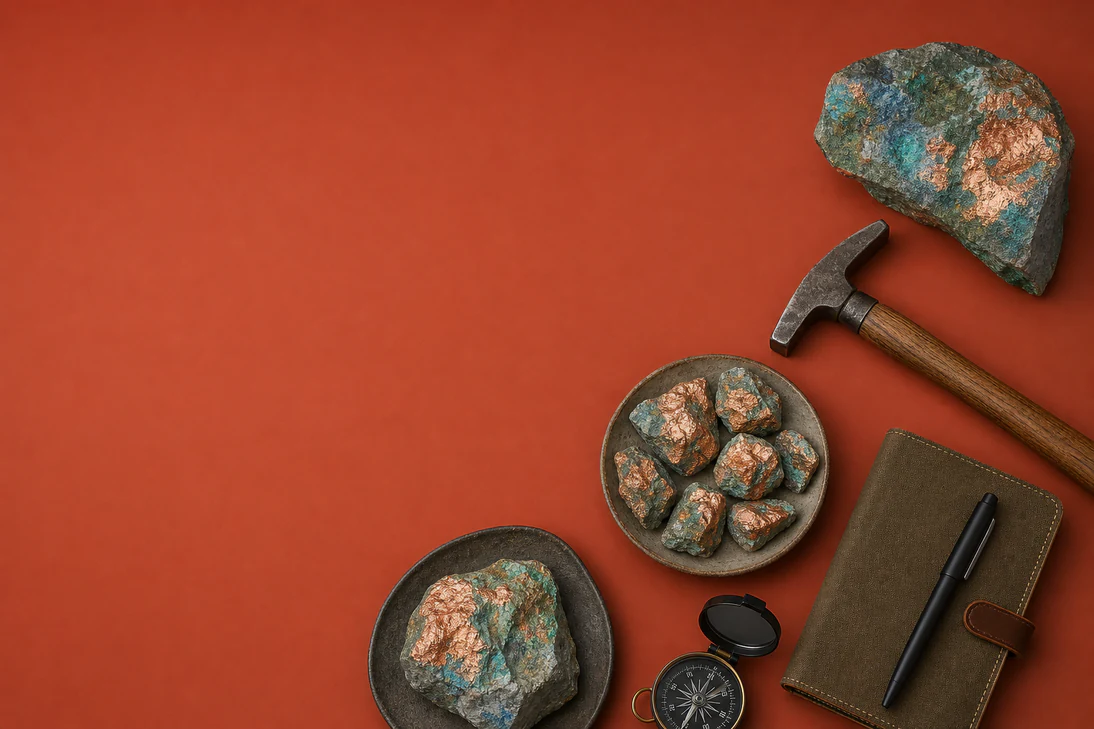
The combination of copper and silver, together with the low nickel and cobalt readings, has led Jacaranda to consider a structurally controlled hydrothermal copper-silver system in addition to Motloutse’s existing copper-nickel sulphide exploration model. At Tlou, copper occurs as oxide minerals including malachite, azurite and chrysocolla, both disseminated through the granitic host rock and coating fractures. The company has not yet established whether primary sulphides sit beneath the oxide zone.
The results add exploration detail to a Botswana portfolio that was recently included in Jacaranda’s Botswana IPO plan, an ununderwritten offer targeting an $8 million minimum raise. That earlier filing also warned that Botswana approvals remained outstanding and that no JORC mineral resources had been defined across the portfolio.
Drilling depends on approvals and Globe timing
Jacaranda intends to undertake more mapping and sampling around Tlou and the historical pits before refining drill targets. Petrographic work is planned to examine the host rocks and alteration, while induced polarisation or electromagnetic surveys may be considered to help identify anomalies associated with sulphide mineralisation. The scope and timing of any geophysical work remain subject to technical and budgetary review.
The drilling rig is proposed to move to Motloutse after phase one drilling at Globe, with maiden holes aimed at testing for primary copper mineralisation beneath the surface oxide. The company is targeting the December 2026 to February 2027 window, but the programme remains conditional on an Environmental Management Plan and other statutory approvals.
The headline grades are encouraging, but they come from grab samples collected specifically to characterise visible mineralisation. Jacaranda reported no field-certified reference materials, blanks or duplicates, although laboratory quality controls and repeat assays were described as acceptable for reconnaissance work. No drilling has tested grade continuity, true widths or depth extensions, leaving the next campaign to determine whether Tlou is a coherent mineralised body or a collection of high-grade surface exposures.
Get ASX:JRL news the moment it breaks
 iPhone & iPad
 Android
Bottom Line?
The 2% copper result gives Jacaranda a clear drilling target, but Motloutse’s investment case still hinges on approvals, Globe’s schedule and whether surface oxide grades persist at depth.
Questions in the middle?
- Will additional mapping show that the separate Tlou exposures form one continuous mineralised structure?
- Can maiden drilling confirm primary copper sulphides beneath the oxide zone?
- Will environmental approvals and the Globe programme allow drilling to begin within the targeted December 2026 to February 2027 window?