Diatreme’s Northern Silica project clears a bigger economic hurdle

Diatreme’s Northern Silica Project is forecast to deliver a $412.6 million present-value net benefit to Queensland, with $729 million in additional household consumption over its operating life. The assessment strengthens the project’s economic case, but approvals, port access, funding and native title agreements remain unresolved.
- $412.6 million present-value net benefit to Queensland
- 4.1 benefit-cost ratio under the central case
- $2.53 billion projected lift in Queensland GSP
- Up to 214 construction jobs and 128 direct operational roles
- 50% Indigenous employment target over the project’s workforce lifecycle

 Add us as a preferred source on Google
KPMG models a $412.6 million Queensland benefit
Diatreme Resources Limited (ASX:DRX) has put a sizeable economic number behind its Northern Silica Project, with a KPMG assessment estimating a $412.6 million net benefit to Queensland in present-value terms. The central case produces a benefit-cost ratio of 4.1, based on a 7% real discount rate and the proposed 25-year mine life.
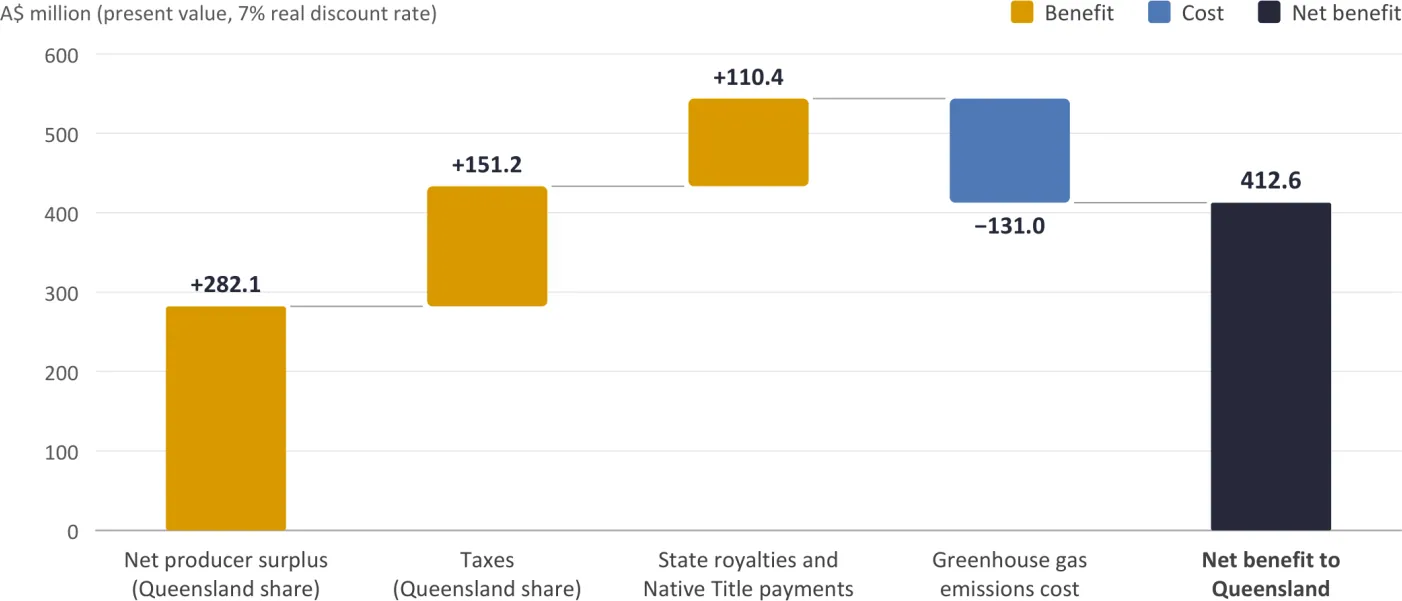
The modelling also forecasts a $2.53 billion increase in Queensland’s real gross state product and $729 million in additional real household consumption during operations. The latter is the more useful measure of the benefit flowing to residents, because production generated in a region does not necessarily accrue entirely to its households. The assessment follows Diatreme’s October PFS case, which projected a pre-tax NPV of up to $2.419 billion for the expanded production scenario.
Cape York gains jobs, training and procurement targets
The project is expected to support up to 214 full-time equivalent roles during construction and 128 direct operational positions across its proposed life. Regional modelling estimates an average of 44 direct and indirect jobs in Cape York during construction, peaking at 96, while the typical operational year is forecast to support 78 ongoing jobs in the region.
Diatreme has set a target of 50% Indigenous employment and says it will prioritise recruitment from Hope Vale, Cooktown and the wider Far North Queensland region. The workforce plan includes pre-employment training, apprenticeships, scholarships and mentoring, alongside procurement opportunities in civil works, transport, logistics, camp services, maintenance and rehabilitation.
Economic impact figures are not shareholder returns
The EIA’s headline figures should not be confused with project-level financial returns. KPMG’s cost-benefit analysis measures the effect on Queensland’s economy, while Diatreme’s separate feasibility study addresses the project’s potential financial performance. The EIA draws on Diatreme’s September 2026 financial model and was prepared as part of the Environmental Impact Statement rather than as an assurance engagement.
On the central assumptions, the project’s undiscounted contributions include about $304.6 million in state royalties and Native Title payments and an estimated $2.1 billion in company income tax. The Native Title component assumes payments equivalent to 2% of net revenue, however no Native Title agreements have yet been finalised.
Price remains the key economic sensitivity
The assessment’s downside case still produces a positive estimated net benefit of $151.5 million and a benefit-cost ratio of 2.0, assuming benefits fall by 20% while costs rise by 20%. But the silica sand price is the most influential individual variable: a 20% price reduction lowers the modelled net benefit to $248.1 million, compared with $577.2 million under a 20% increase.
Approvals and port access set the timetable
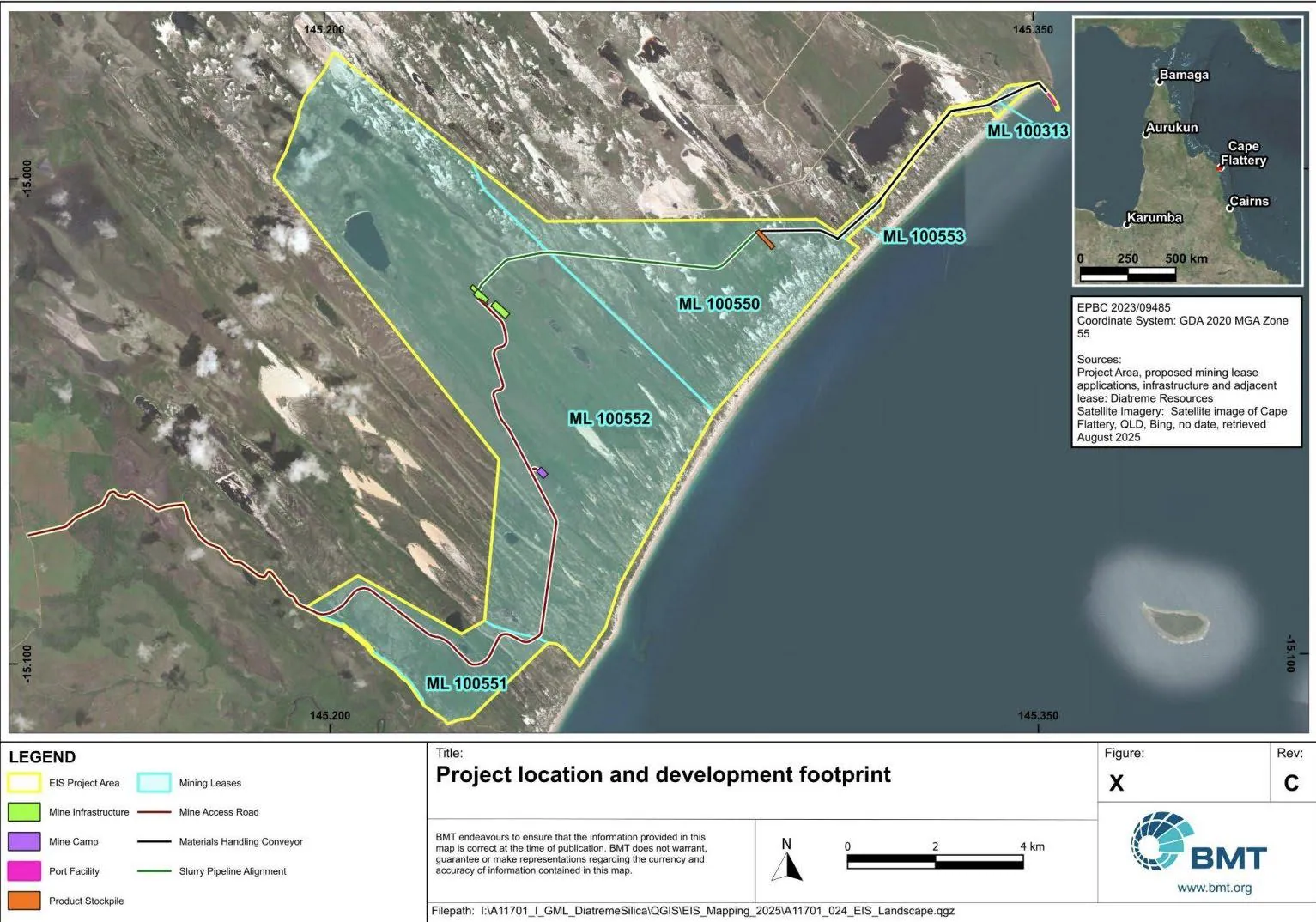
Construction is scheduled to begin in the fourth quarter of 2028, subject to final approvals, with Phase 1 operations targeted for the second quarter of 2030. The project would initially produce 3 million tonnes a year before a potential expansion to 5 million tonnes from 2032, using shared existing wharf and shiploading infrastructure at the Port of Cape Flattery.
That schedule remains contingent on environmental and other approvals, tenure and water licences, Native Title and cultural heritage agreements, access to the port, offtake, financing and a final investment decision. The economic case is now more fully quantified; the next test is whether those practical conditions can be converted into an approved and funded mine.
Get ASX:DRX news the moment it breaks
 iPhone & iPad
 Android
Bottom Line?
The EIA improves the Northern Silica Project’s public-interest case, but the value remains modelled rather than realised until approvals, port arrangements and project funding are secured.
Questions in the middle?
- Can Diatreme secure the port access, offtake and financing arrangements needed before the planned 2028 construction start?
- Will Native Title agreements support the assumed 2% net-revenue payment and the 50% Indigenous employment target?
- How resilient will the project economics prove if silica sand prices or development costs move towards the EIA’s downside cases?
Sources
1-
NSP has potential to deliver huge economic boost for Qld (opens in a new tab)Official market announcement. Diatreme Resources Limited · 4 Nov 2026 · diatreme.com.au