Kuniko uncovers broader Silica Hill extensions ahead of resource update

Kuniko has intersected mineralisation in all five Phase 2 holes at Silica Hill, extending the interpreted gold-silver-base-metal system beyond the historical resource footprint. The results include a 16.3-metre interval grading 1.56 g/t gold equivalent, while new geophysical targets point to further exploration beyond the drilled area.
- Mineralisation intersected in all 11 holes drilled during Kuniko’s 2026 campaigns
- CMKNI011 returned 16.3m at 1.56 g/t AuEq, including higher-grade silver, zinc and lead intervals
- CMKNI007 and CMKNI008 extended the Silica Hill system across roughly 100m up-dip to down-dip
- Geophysics identified a prospective trend extending more than 500m southeast
- Updated Mineral Resource Estimate targeted for December 2026, with regional drilling planned for Q1 2027

 Add us as a preferred source on Google
Five Phase 2 holes extend Silica Hill
Kuniko Limited (ASX:KNI) has added another layer to the Silica Hill story, with all five holes in its Phase 2 diamond drilling program intersecting gold-silver-base-metal mineralisation. The results extend the interpreted system beyond the historical Mineral Resource footprint and give the company more data to feed into an updated estimate targeted for December 2026.
The strongest headline result came from CMKNI011, which returned 16.3 metres at 1.56 g/t AuEq from 75.7 metres, including 11.95 metres at 1.95 g/t AuEq. Within that interval, a 0.65-metre vein graded 6.23 g/t AuEq, including 352 g/t silver, while a separate 1.1-metre interval graded 5.17 g/t AuEq with 1.1 g/t gold, 220 g/t silver, 17% zinc and 0.86% lead. The company reports all intersections as downhole lengths, and true widths have not yet been established.
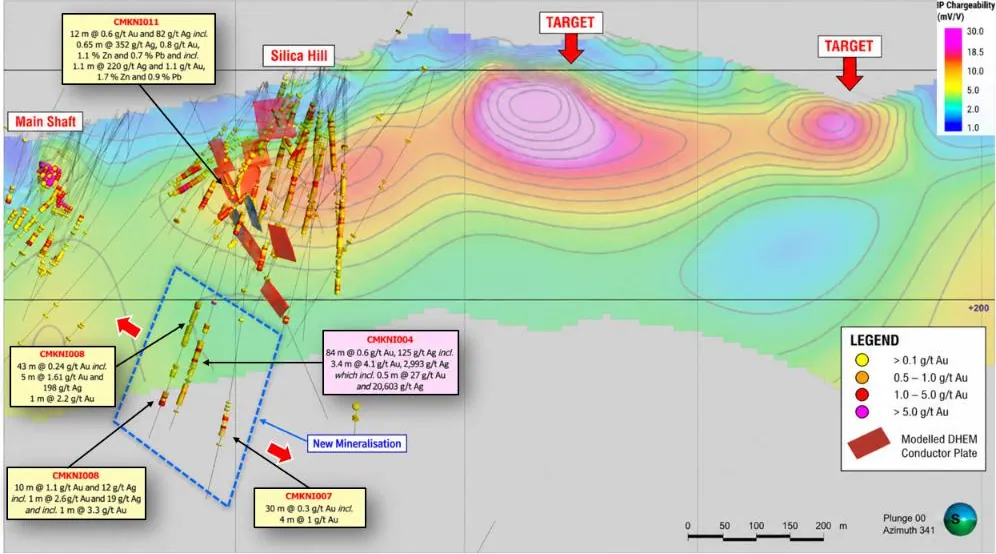
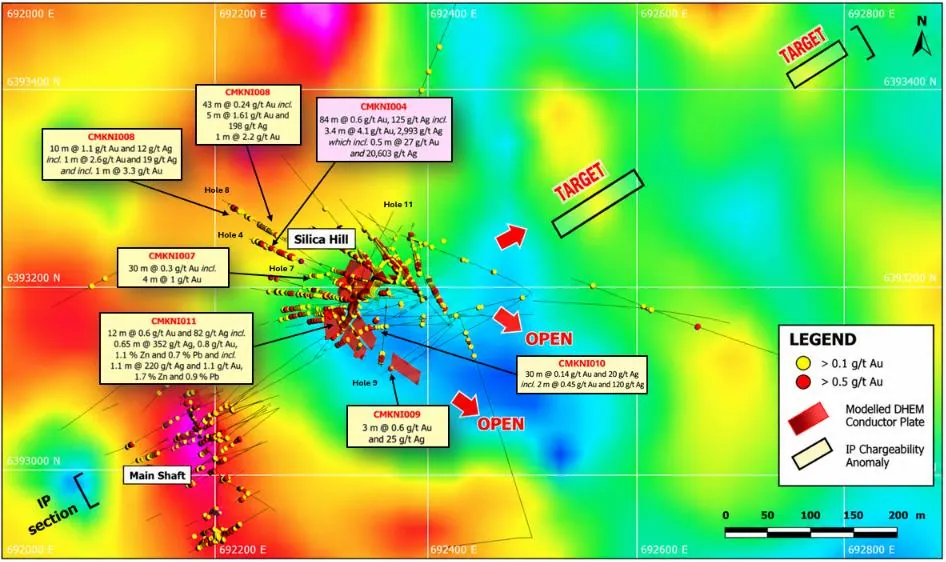
The new assays provide the result that had been pending after the Phase 2 assay campaign, which previously outlined a roughly 100-metre extension but had not yet established the grades. CMKNI007 returned 30 metres at 0.36 g/t AuEq, including four metres at 1.2 g/t AuEq, while CMKNI008 delivered 43 metres at 0.31 g/t AuEq and a separate 10-metre zone at 1.33 g/t AuEq, including five metres at 1.96 g/t AuEq. CMKNI010 added 30 metres at 0.45 g/t AuEq, with a two-metre higher-grade interval at 2.29 g/t AuEq.
Broad zones sit alongside higher-grade veins
CMKNI007 and CMKNI008 were drilled as step-outs around the earlier CMKNI004 discovery, approximately 60 metres down-dip and 40 metres up-dip respectively. Kuniko says the holes demonstrate mineralisation across about 100 metres of up-dip to down-dip extent. The broader intervals are generally lower grade than CMKNI004’s high-grade zones, but the company says they may represent mineralised halos around more discrete precious-metal and sulphide zones.
Across Phase 1 and Phase 2, Kuniko has now completed 11 diamond holes for approximately 2,731 metres. Earlier results included CMKNI004’s 84 metres at 0.6 g/t gold and 123 g/t silver, including a 0.5-metre massive sulphide vein grading 27 g/t gold and 20,603 g/t silver. The combined dataset will be used for geological wireframes, block modelling and the December resource update, although that estimate has not yet been released.
The AuEq figures deserve some qualification. They combine gold, silver, zinc and lead using assumed metal prices and recoveries, while copper is excluded from the Phase 2 calculation. The recovery assumptions were drawn from the Lewis Ponds polymetallic deposit and have not been independently validated through metallurgical testwork specific to Silica Hill, so the equivalent grades may change as the project advances.
Geophysics points beyond the current drilling
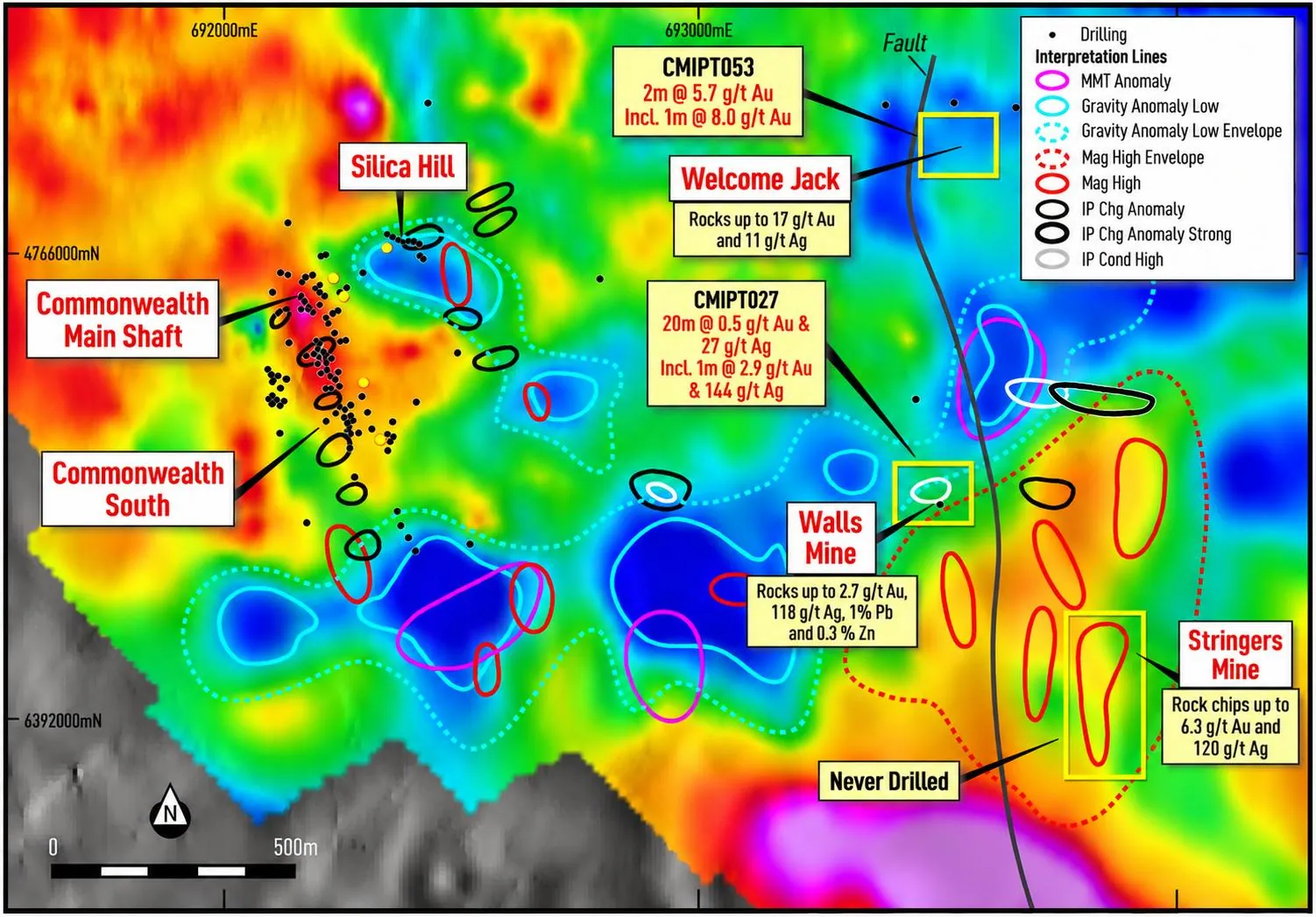
Kuniko’s exploration case now extends beyond the assays. Integrated downhole electromagnetic, induced polarisation and gravity interpretation has identified a prospective geophysical trend stretching more than 500 metres southeast of known Silica Hill mineralisation, while strong IP chargeability anomalies to the northeast remain untested. The interpretation builds on the regional geophysical targets previously identified around Commonwealth-Silica Hill.
A deeper DHEM conductor sits approximately 100 metres from the high-grade massive sulphide intersection in CMKNI004. Kuniko says CMKNI011 may have been drilled subparallel to that conductor, an interpretation that could make the target a candidate for a better-angled follow-up hole. That remains a geological interpretation rather than a discovery of mineralisation, and the nearby IP anomalies are exploration targets rather than resource figures.
Regional drilling planned for Q1 2027
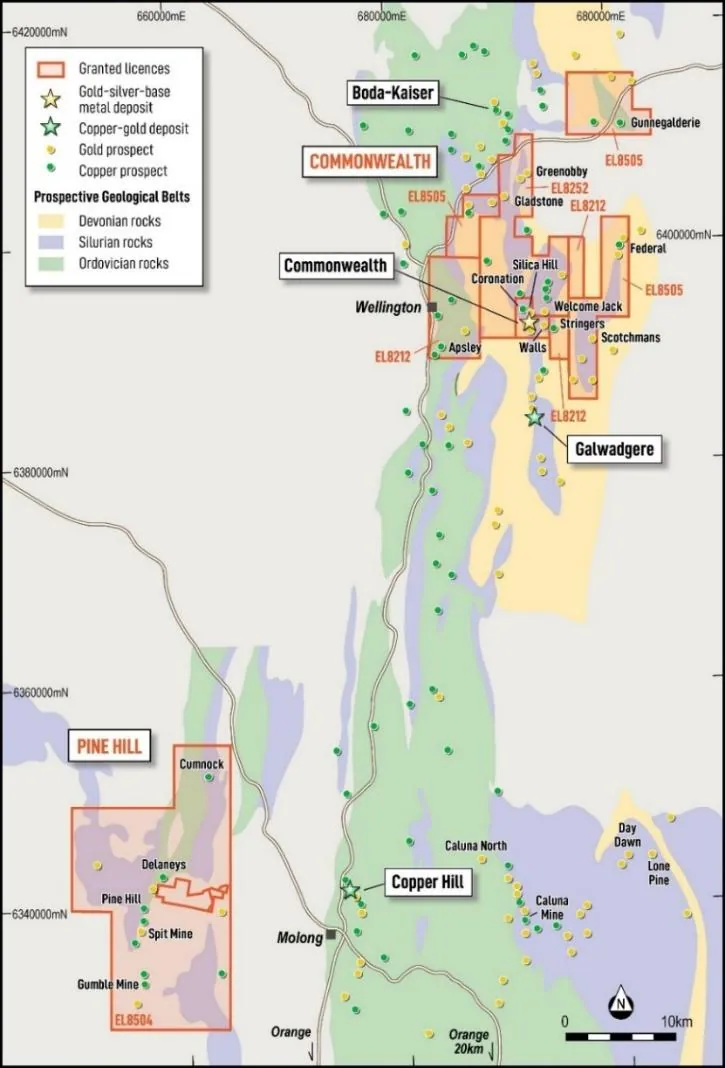
The next phase is intended to widen the search around the existing resource. Kuniko is planning regional drilling at Welcome Jack, Walls and Stringers in the first quarter of 2027, each within about one kilometre of the Commonwealth-Silica Hill resource. Historical drilling and sampling provide the initial rationale, including 20 metres at 0.5 g/t gold and 27 g/t silver at Walls, while Stringers remains untested by drilling.
For shareholders, the immediate test is less the number of geophysical anomalies than whether the December Mineral Resource Estimate converts the new drilling into a larger or better-defined resource. Until then, the project has encouraging continuity, isolated high-grade results and a growing target pipeline, but not yet a new resource statement or metallurgical basis for an economic conclusion.
Get ASX:KNI news the moment it breaks
 iPhone & iPad
 Android
Bottom Line?
The December MRE is the next hard test: it must translate encouraging extensions and high-grade pockets into a materially clearer resource picture.
Questions in the middle?
- How much of the newly drilled mineralisation will be incorporated into the December 2026 MRE, given true widths and continuity remain unresolved?
- Will follow-up drilling intersect the deeper DHEM conductor at a more favourable angle and confirm whether it hosts additional massive sulphide mineralisation?
- Can the planned Q1 2027 regional campaign distinguish economically meaningful satellite deposits from the broader geophysical target field?
Sources
1-
Phase 2 Drilling Extends Mineralisation at Silica Hill (opens in a new tab)Verified source. Kuniko Limited · 5 Nov 2026