James Hardie turns strong growth into faster debt reduction

James Hardie delivered a sharp rebound in second-quarter profitability, with continuing-operations sales up 24% and adjusted EBITDA up 44%. The building products group reaffirmed its FY27 earnings guidance, lifted its free cash flow target above US$650 million and accelerated debt reduction.
- Q2 continuing-operations sales rose 24% to US$1.428 billion
- Adjusted EBITDA increased 44% to US$454.7 million, with margin up 450 basis points
- First-half free cash flow reached US$535.4 million
- FY27 free cash flow target raised to more than US$650 million
- US$111 million of term debt repaid during the quarter
 Add us as a preferred source on Google
Cash generation puts James Hardie ahead of its deleveraging plan
James Hardie Industries plc (ASX:JHX) has turned strong operating growth into a more ambitious cash and debt story. The company generated US$535.4 million of free cash flow in the first half of FY27, up from US$58.4 million a year earlier, and raised its full-year target to more than US$650 million.
The result gives management room to repay debt faster. James Hardie repaid US$111 million of term loan debt during the second quarter and said it remains on track for net leverage below 2.0 times by the end of the second quarter of FY28. That target also assumes proceeds from the planned European divestiture, with about US$600 million expected to be directed towards debt repayment.
The cash upgrade extends the trajectory outlined in the earlier cash flow target, when James Hardie had lifted its FY27 free cash flow target to at least US$600 million and said its US$125 million cost synergy target was expected roughly a year early.
Second-quarter margins expand despite weak housing conditions
Continuing-operations net sales rose 24% to US$1.428 billion in the three months to 30 September, while adjusted EBITDA climbed 44% to US$454.7 million. The adjusted EBITDA margin widened to 31.8%, up 450 basis points year on year.
Reported net income from continuing operations was US$149.8 million, compared with a US$64.3 million loss in the prior corresponding quarter. Diluted earnings per share from continuing operations were US$0.26, while adjusted diluted EPS rose 68% to US$0.42. The comparisons benefit from the absence of last year's US$47.9 million inventory fair-value adjustment linked to the AZEK acquisition, as well as lower acquisition-related costs.
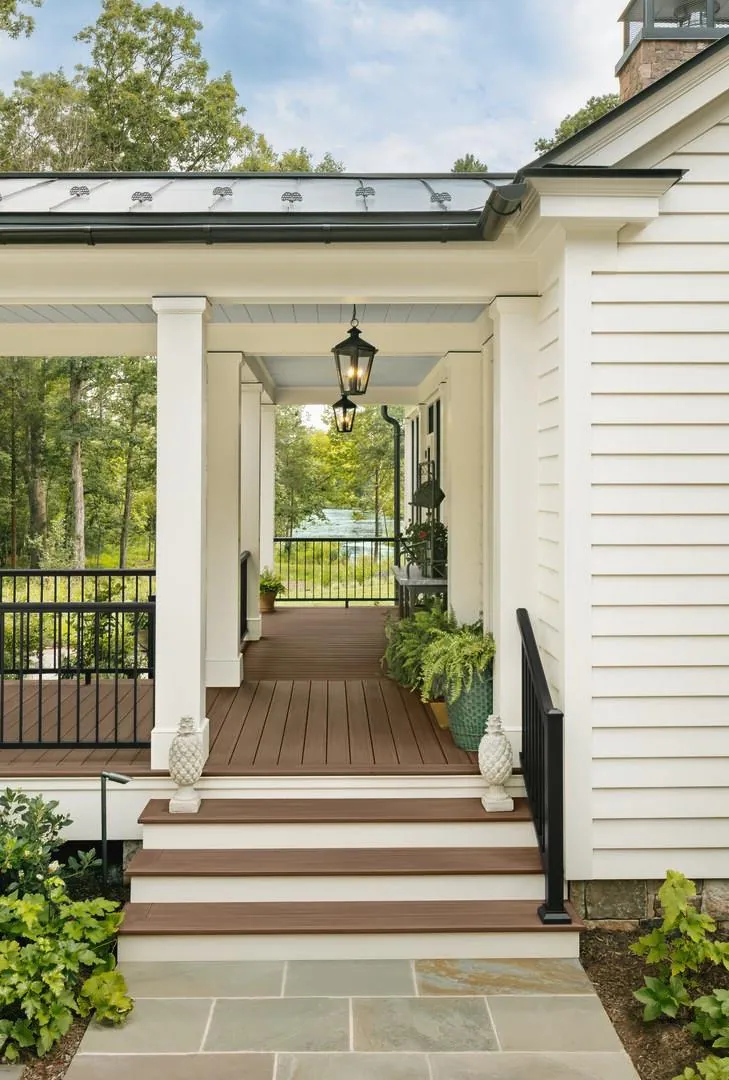
James Hardie said the US housing market remained challenging, particularly in new construction, but maintained that its FY27 plan did not depend on a near-term recovery. Siding and Trim sales increased 15% to US$880.3 million, supported by mid-single-digit fiber cement volume growth, favourable price and mix, and stronger multi-family activity. Deck, Rail and Accessories sales rose 51% to US$387.0 million, helped by strong sell-through, distribution expansion and the initial Boise Cascade load-in.
Australia and New Zealand deliver another strong quarter
The Australia and New Zealand segment added a further source of growth, with sales up 21% in US dollar terms and 12% in Australian dollars. Volume increased 7%, while operating income rose 31% to US$49.9 million and the operating margin expanded to 31.0%.
James Hardie attributed the performance to resilient Australian housing activity, market share gains and conversion from competing materials. It is also positioning the region as a broader building products platform, combining its core fiber cement business with products such as Hardie Gravis and TimberTech decking.
European sale remains a key balance-sheet catalyst
Europe is now treated as a discontinued operation after James Hardie agreed to sell its Fermacell sustainable walling and flooring business for €840 million and announced plans to close its European fiber cement operations. The transaction is expected to close in the first half of calendar 2027, subject to customary conditions and regulatory approvals.
The €840 million Fermacell sale is intended to support accelerated deleveraging, although the final proceeds remain subject to customary net debt and working capital adjustments. James Hardie recorded US$13.1 million of European fiber cement closure costs in the first half and expects total closure-related costs of about US$26 million.
FY27 guidance holds while the next quarter softens
James Hardie reaffirmed its full-year continuing-operations guidance of US$4.990 billion to US$5.133 billion in sales and US$1.446 billion to US$1.534 billion in adjusted EBITDA. For the third quarter, it expects sales of US$1.058 billion to US$1.140 billion and adjusted EBITDA of US$298 million to US$320 million.
Management expects adjusted EBITDA to be lower in the third quarter and second half because of Deck, Rail and Accessories seasonality, higher freight costs and a weaker macroeconomic backdrop. The company has not declared or paid a dividend for the reporting period, while its US$250 million share repurchase authorisation remained unused at 30 September.
The immediate test is therefore not whether James Hardie can produce another headline growth quarter, but whether its cash conversion, AZEK synergies and debt reduction continue when seasonal demand and housing conditions become less forgiving.
Get ASX:JHX news the moment it breaks
 iPhone & iPad
 Android
Bottom Line?
The earnings rebound is substantial, but the next proof point is cash generation through the seasonally softer second half and the successful conversion of the European sale into lower debt.
Questions in the middle?
- Can James Hardie sustain its expanded margins once the benefit from last year's AZEK inventory adjustment falls further into the comparison base?
- Will the Fermacell transaction close on schedule and deliver enough proceeds to materially accelerate the targeted leverage reduction?
- How much of the second-half EBITDA pressure will come from normal DR&A seasonality versus a deeper deterioration in US housing demand?
Sources
1-
Q2 FY27 Results Pack (opens in a new tab)Official market announcement. James Hardie Industries PLC · 6 Nov 2026 · ir.jameshardie.com