Li-S Energy unlocks high-power lithium-sulfur cells for fast drones

Li-S Energy says its new lithium-sulfur Power Cells can deliver up to 50 times the power of traditional lithium-sulfur designs while retaining energy density near 400 Wh/kg. The milestone expands the company’s target market, but commercial adoption, customer orders and revenue remain unconfirmed.
- 11Ah cell rated at 7C continuous and 10C peak discharge
- 10Ah cell rated at 2C continuous and 5C peak
- Power density reaches 1,700 W/kg continuous and 2,400 W/kg peak
- Cells produced on Li-S Energy’s automated Phase 3 line
- Datasheets shared with partners under non-disclosure agreements
 Add us as a preferred source on Google
Two Power Cell designs target high-demand applications
Li-S Energy Limited (ASX:LIS) has completed development and testing of two high-power lithium-sulfur cells designed for applications where fast energy delivery matters as much as low weight. The company says the new range can deliver up to 50 times the power of its traditional lithium-sulfur energy cell, while retaining gravimetric energy density approaching 400 Wh/kg.
The 10Ah design is rated for 2C continuous discharge and 5C peak discharge, with Li-S Energy positioning it for systems that require longer cycle life. The 11Ah version is rated at 7C continuous and 10C peak, targeting single-use or low-cycle-life applications where maximum power is the priority. Li-S Energy says both designs have now been characterised, with datasheets shared with partners under non-disclosure agreements.
The performance claims address a recognised weakness in lithium-sulfur chemistry. Traditional lithium-sulfur cells typically discharge continuously at only 0.1C to 0.2C, according to the company, limiting their use in power-hungry platforms. Li-S Energy’s earlier 2C Power Cell development had already entered a defence testing pipeline, but the latest announcement adds a 7C continuous option and a 10C peak capability.
Power density rises without giving up the weight advantage
Li-S Energy reports continuous power density of 1,700 W/kg and peak power density of 2,400 W/kg for the new Power Cells. The company says the cells retain almost the full weight advantage of its broader lithium-sulfur technology, with energy density close to 400 Wh/kg.
The 11Ah cell can deliver 96% of its stored energy at a 7C continuous rate, while the 10Ah design is described as delivering 100% at 2C. Chief Technology Officer Steve Rowlands said the 11Ah cell can deliver more than 95% of its energy in under nine minutes. Those results are company-reported and relate to the disclosed cell designs; the announcement does not provide independent validation, customer qualification results or detailed cycle-life data.
Commercial opportunity now depends on qualification and orders
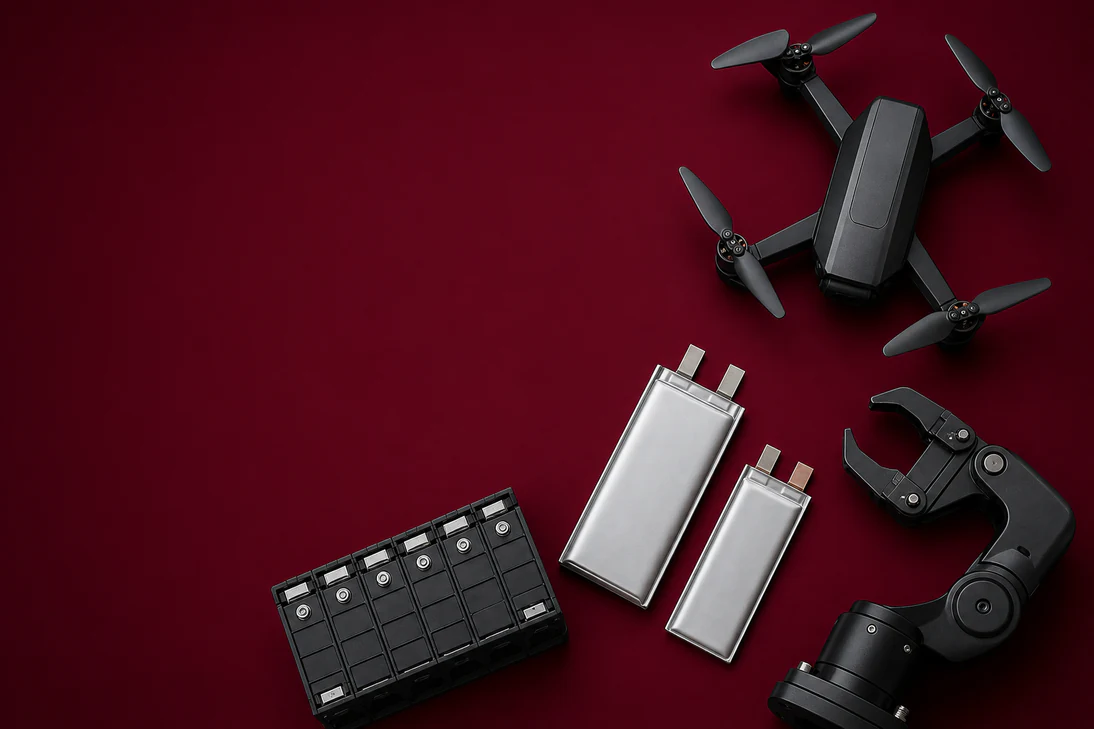
The cells have been produced on Li-S Energy’s automated Phase 3 production line, which the company says demonstrates its ability to move research concepts into commercial-sized cells consistently and in volume. The targeted markets include multi-rotor drones, soldier-carried systems, robotics and communications, alongside the fixed-wing and marine platforms served by its lower-power, high-energy cells.
That broadens the possible application set, but it does not yet establish a commercial revenue stream. Li-S Energy has not announced customer contracts, order volumes, pricing or confirmed sales alongside the Power Cell milestone. The next markers are likely to be partner testing, battery-pack integration, production volumes and evidence that the cells’ power performance can translate into repeatable field use.
Get ASX:LIS news the moment it breaks
 iPhone & iPad
 Android
Bottom Line?
The technical milestone is significant for Li-S Energy’s product range, but the investment case still turns on whether partner evaluations become qualified packs, orders and revenue.
Questions in the middle?
- Will partners move from NDA-stage evaluation to disclosed qualification programs or commercial supply agreements?
- How will the 10Ah and 11Ah cells perform under repeated real-world operating conditions, particularly where cycle life matters?
- Can Li-S Energy scale production and battery-pack integration without requiring additional capital before sales begin?
Sources
1-
LIS finalises new high power cells for fast drones (opens in a new tab)Official market announcement. Li-S Energy Limited · 9 Nov 2026 · lis.energy