DGL's early FY27 recovery faces a proof-of-profit test

4 min read
9:39am on Tuesday 10th of November, 2026 AEDT ~9am, 10th Nov, 26
DGL Group has acknowledged a $40.2 million statutory loss for FY26, as higher input costs, weak battery supply and underused facilities eroded margins. Management says earnings improved materially in the first quarter of FY27, but has provided no figures to show how much of the recovery is sustainable.
- $40.2 million statutory loss after tax in FY26
- Revenue fell 4.8% to $457.9 million
- Underlying NPAT moved to a $5.8 million loss
- First-quarter FY27 EBIT materially improved year on year
- CEO Simon Henry cut annual salary from $700,000 to $150,000

 Add us as a preferred source on Google
Cost pressures turn FY26 into a $40.2 million loss
DGL Group Limited (ASX:DGL) has conceded that FY26 was an unsatisfactory year, with the chemicals manufacturer and logistics operator reporting a statutory loss after tax of $40.2 million. Revenue fell 4.8% to $457.9 million, gross profit dropped 10.3% to $182.7 million and underlying NPAT swung to a $5.8 million loss.
The result reflected a broad squeeze rather than a single operational failure. DGL cited higher fuel and raw material costs, increased international shipping rates, low-cost imports, reduced availability of used lead-acid batteries and driver shortages that forced greater use of subcontractors. Its expanded warehouses and manufacturing sites also carried costs before reaching full utilisation.
The AGM's account largely confirms the August FY26 loss result, but adds a sharper admission from the board that acquisitions made since DGL's 2021 listing, and the execution of those assets, have not delivered the expected performance. The statutory loss also included non-cash write-downs involving assets held for sale, plant and equipment, and goodwill in the Logistics division.
Cost cuts and systems integration become the turnaround test
DGL generated $15.8 million in operating cash flow, with management reporting 100% operating cash conversion on its stated measure. That cash result sits alongside a 64.7% decline in operating cash flow from the prior year and a 20.7% fall in underlying EBITDA to $41.3 million, underscoring the distance between cash generation and a satisfactory earnings outcome.
Management has reduced headcount, overheads and other expenses, consolidated sites and begun integrating group-wide ERP, payroll and logistics systems. The company says more than 30 existing systems are being removed. Its new liquid waste treatment plant is targeted for physical completion in December 2026, with the CEO presentation pointing to full operation in the second half of FY27 and additional licences still being pursued. The project had previously been described as progressing toward commissioning in liquid waste plant rollout.
First-quarter improvement offers an early but unquantified signal
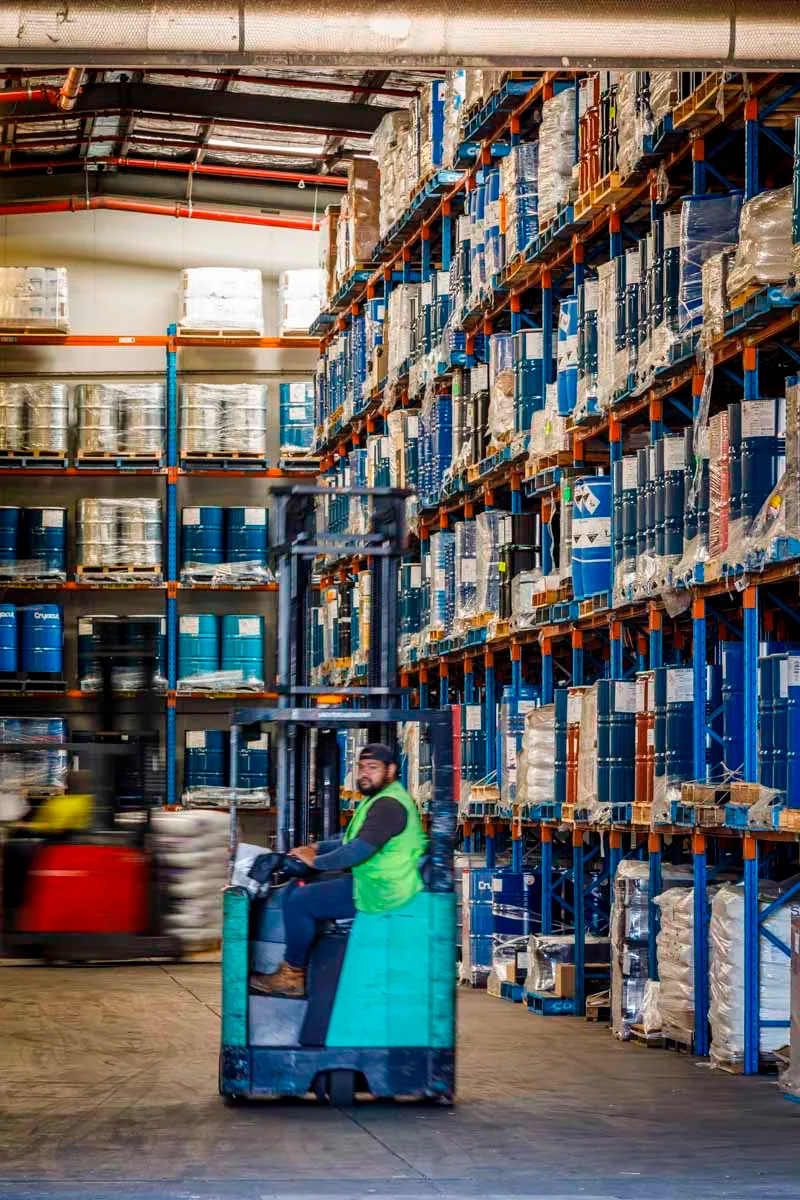
There is one brighter data point: DGL said EBIT in the first three months of FY27 materially improved compared with the same period a year earlier. The company reported better utilisation across its expanded warehousing network, stronger agricultural chemical demand and improved fleet utilisation after bringing bulk and packaged transport operations closer together.
That improvement remains qualitative. DGL supplied no first-quarter EBIT figure, earnings guidance or margin target, while continuing to flag difficult economic and geopolitical conditions. Driver recruitment has improved but remains an ongoing issue, and the environmental division is still dealing with efficiency work at its battery recycling operation and the clean-up of a Melbourne packaged-waste facility after a June fire.
Board turnover adds a governance question
The AGM also marks a reshaping of DGL's board. Independent directors John West and Liz Smith are leaving, while Warren Inwood and Dean Oehlmann have been nominated by founder and CEO Simon Henry, who is the company's majority shareholder. Shareholders also registered a high level of opposition to the remuneration report, which the board attributed in part to frustration with financial performance.
Henry has voluntarily reduced his annual CEO salary from $700,000 to $150,000, saying the change aligns his remuneration with the delivery of improved performance. With the board acknowledging the past year's shortcomings and FY27's early improvement still unsupported by detailed numbers, the next results will need to show whether utilisation and cost savings are translating into durable profit rather than merely relieving pressure at the margin.
Get ASX:DGL news the moment it breaks
 iPhone & iPad
 Android
Bottom Line?
The turnaround now has an early positive signal, but the absence of first-quarter figures leaves DGL's recovery dependent on proof that cost cuts, utilisation gains and new capacity can hold through FY27.
Questions in the middle?
- How large was the first-quarter FY27 EBIT improvement, and did it come from revenue growth, cost reductions or both?
- Can DGL lift utilisation across its expanded facilities quickly enough to offset ongoing input, freight and labour pressures?
- Will the incoming board composition and remuneration vote change the company's approach to oversight, capital allocation and performance accountability?
Sources
2-
AGM - CEO Address to Shareholders (opens in a new tab)Verified source. DGL Group Limited · 10 Nov 2026 · dglinvestors.com
-
AGM - Chair Address to Shareholders (opens in a new tab)Verified source. DGL Group Limited · 10 Nov 2026 · dglinvestors.com