Radius Health lifts dividend as profit growth funds its next expansion phase

Radius Health lifted first-half net profit attributable to shareholders by 27% to NZ$8.0 million and raised its interim dividend by 10% as occupancy remained strong. The aged-care operator also increased its FY27 earnings target, although debt and cash flow provide a counterweight to the upbeat result.
- First-half NPAT attributable to shareholders rises 27% to NZ$8.0m
- Interim dividend increases 10% to 1.1 cents per share
- FY27 underlying EBITDA forecast raised to more than NZ$30m
- Net bank debt increases to NZ$90.5m after acquisition and development spending
- Applefields 100-bed care home becomes first project in 10-home pipeline

 Add us as a preferred source on Google
Profit growth supports higher dividend
Radius Residential Care Limited (NZX:RAD), trading as Radius Health, has raised its interim dividend after delivering a 27% increase in first-half net profit attributable to shareholders. Profit reached NZ$8.0 million for the six months ended 30 September 2026, while earnings per share rose to 2.8 cents from 2.2 cents.
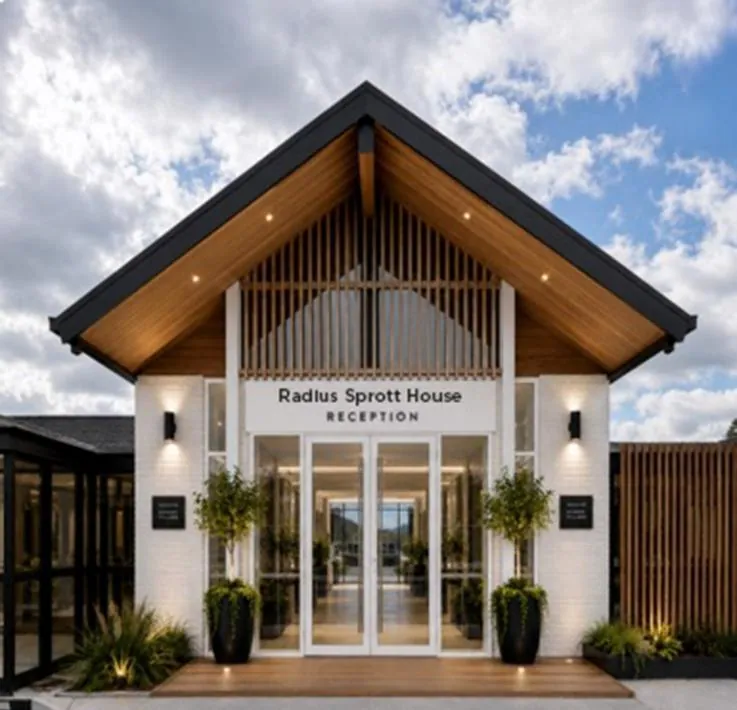
Revenue increased 8.4% to NZ$108.6 million, helped by occupancy, a richer mix of hospital and specialist-care residents, higher accommodation supplements and the contribution from Sprott House in Karori. Profit before tax rose 17% to NZ$10.0 million, although that figure included a NZ$3.5 million gain on the acquisition. The statutory total profit was NZ$8.283 million, including NZ$260,000 attributable to non-controlling interests.
The board declared a fully imputed interim dividend of 1.1 cents per share, up from 1.0 cent a year earlier. The payment represents 44% of Available Funds From Operations, which edged down to NZ$7.1 million from NZ$7.2 million despite the stronger reported profit.
Occupancy and care mix keep operations firm
Average care-bed occupancy was 95.1%, broadly unchanged from 95.0% in the prior corresponding period, while occupancy reached 96.4% on 10 November with 1,923 beds filled. Care-home underlying EBITDAR rose 3% to NZ$27.9 million, supported by the improved resident mix and a 13% increase in accommodation supplement revenue to NZ$6.7 million.
At group level, however, underlying EBITDA slipped 3% to NZ$14.4 million. Radius attributed the decline primarily to lower retirement-village resale gains, with eight existing-unit resales settled during the half compared with 11 a year earlier. Operating cash flow also fell to NZ$6.5 million from NZ$13.3 million, a detail that makes the dividend increase more dependent on the group’s broader capital-management framework than on headline profit alone.
Expansion accelerates as leverage rises
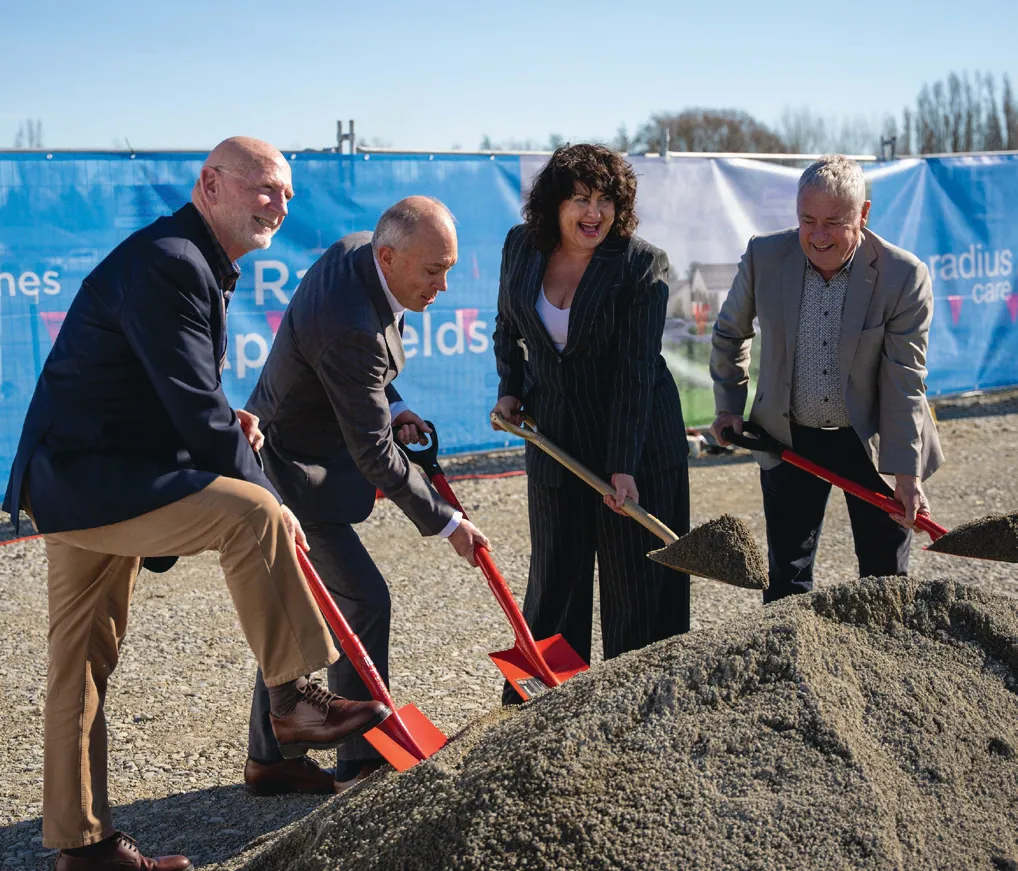
Radius is now building the first of 10 planned new care homes, with subfloor works underway on the 100-bed Applefields facility in Belfast, Christchurch. The project is scheduled for completion in May 2028, while an 80-bed Hokitika home is expected to commence in 2027. The company says its capital-light model, with most new sites expected to be leased, could more than double aged-care capacity over the next decade.
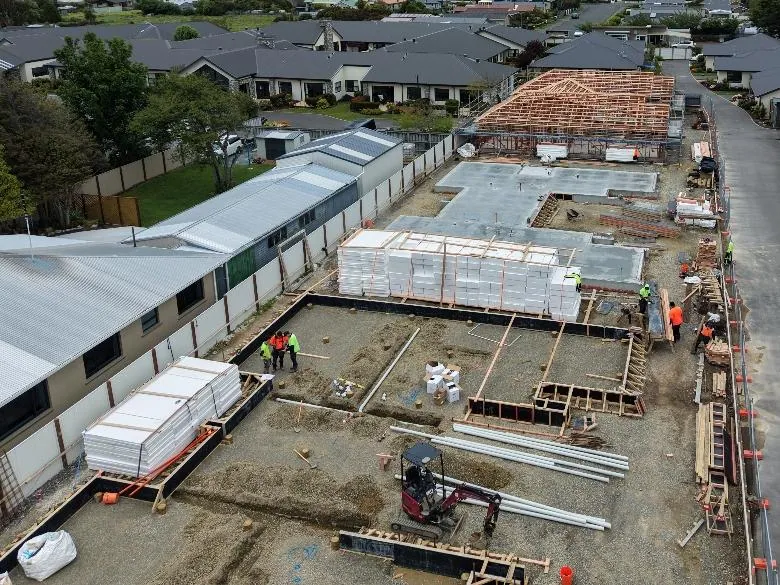
The expansion is not being funded without balance-sheet consequences. Net bank debt rose to NZ$90.5 million at 30 September from NZ$68.7 million at 31 March, following the Sprott House acquisition and spending on Matamata, Clare House and Applefields. The leverage ratio stood at 3.4 times including development debt, above Radius’s medium-term target of below 2.5 times, which management expects to regain over the next three to five years. The company previously secured NZ$30m syndicated debt capacity to support the Karori acquisition and development programme.
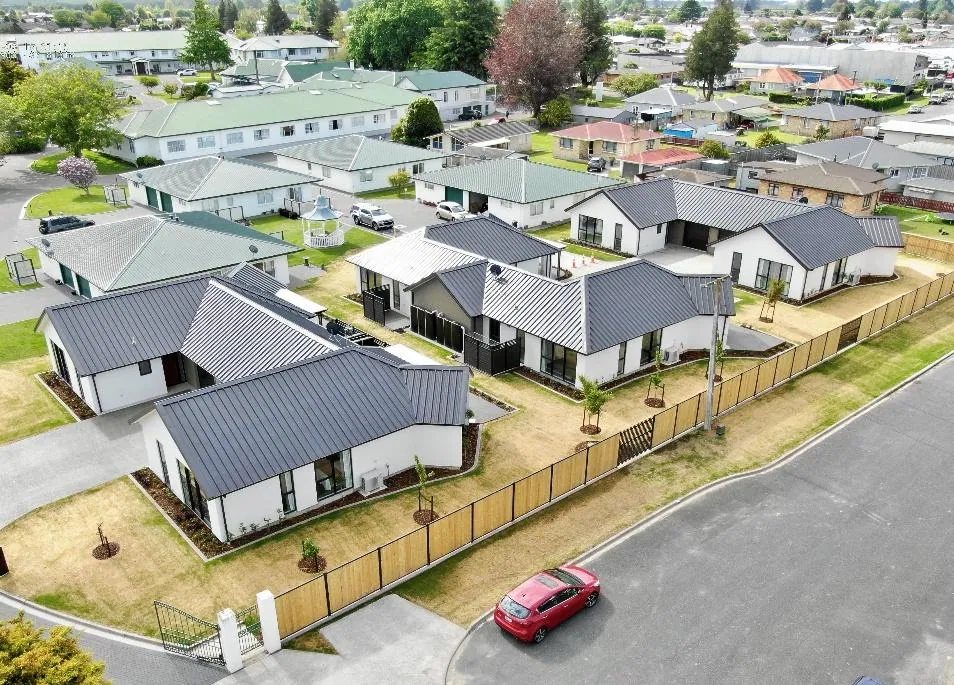
Sprott House contributed NZ$3.1 million of revenue and NZ$45,000 of profit before tax from its 26 May acquisition date to the end of September. Its 90 care beds are now part of the portfolio, while 14 vacant villas are being refurbished for sale from December. Six new Matamata villas have already become available, and six Clare House villas are due for completion in April 2027, creating the prospect of 20 units being available for sale in the second half.
Radius expects underlying EBITDA to exceed NZ$30 million in FY27, compared with NZ$27.4 million in FY26. That target will test whether the added beds and village inventory can translate into cash generation quickly enough to support both the development pipeline and the higher dividend. For now, the earnings direction is favourable; the more consequential question is how comfortably the balance sheet can carry the next stage of growth.
Get NZX:RAD news the moment it breaks
 iPhone & iPad
 Android
Bottom Line?
The earnings upgrade is encouraging, but delivery will depend on converting new beds and village units into cash while bringing leverage back below the group’s target.
Questions in the middle?
- Can Sprott House and the 20 new village units deliver the expected second-half uplift without further weakening operating cash flow?
- How quickly can Radius reduce leverage from 3.4 times towards its below-2.5-times medium-term target?
- Will Applefields and the wider 10-home pipeline remain capital-light as construction and operating commitments expand?
Sources
4-
RAD 1H27 Interim Report (opens in a new tab)Verified source. Radius Residential Care Limited · 11 Nov 2026
-
RAD 1H27 Investor Presentation (opens in a new tab)Verified source. Radius Residential Care Limited · 11 Nov 2026
-
RAD 1H27 Media Release (opens in a new tab)Verified source. Radius Residential Care Limited · 11 Nov 2026
-
RAD 1H27 NZX Results Announcement (opens in a new tab)Official market announcement. Radius Residential Care Limited · 11 Nov 2026 · radiuscare.co.nz