Somerset reveals a broader copper district beyond its Talisker discovery

Somerset Minerals has positioned its 1,677 km² Coppermine project as a multi-target copper-silver exploration district, with mineralisation confirmed across about 2km at Talisker and a 7km trend at Jura. The November presentation points to a larger drilling program, but the project remains at the discovery and funding-sensitive stage.
- Talisker mineralisation confirmed across approximately 2km of strike
- Jura North hosts thick, high-grade copper intersections along a 7km trend
- 21 regional copper targets remain untested across the Coppermine project
- Permits cover up to 100 holes and two exploration camps
- Cash stood at $1.06 million at 30 September 2026
 Add us as a preferred source on Google
Talisker expands from discovery hole to copper corridor
Somerset Minerals Ltd (ASX:SMM) is presenting Coppermine as more than a single copper discovery after drilling extended mineralisation across approximately 2km at Talisker, within a much larger 17km geochemical and geophysical anomaly. The company says only about 11% of the anomaly has been tested, leaving the main demagnetised fault zone and much of the broader corridor undrilled.
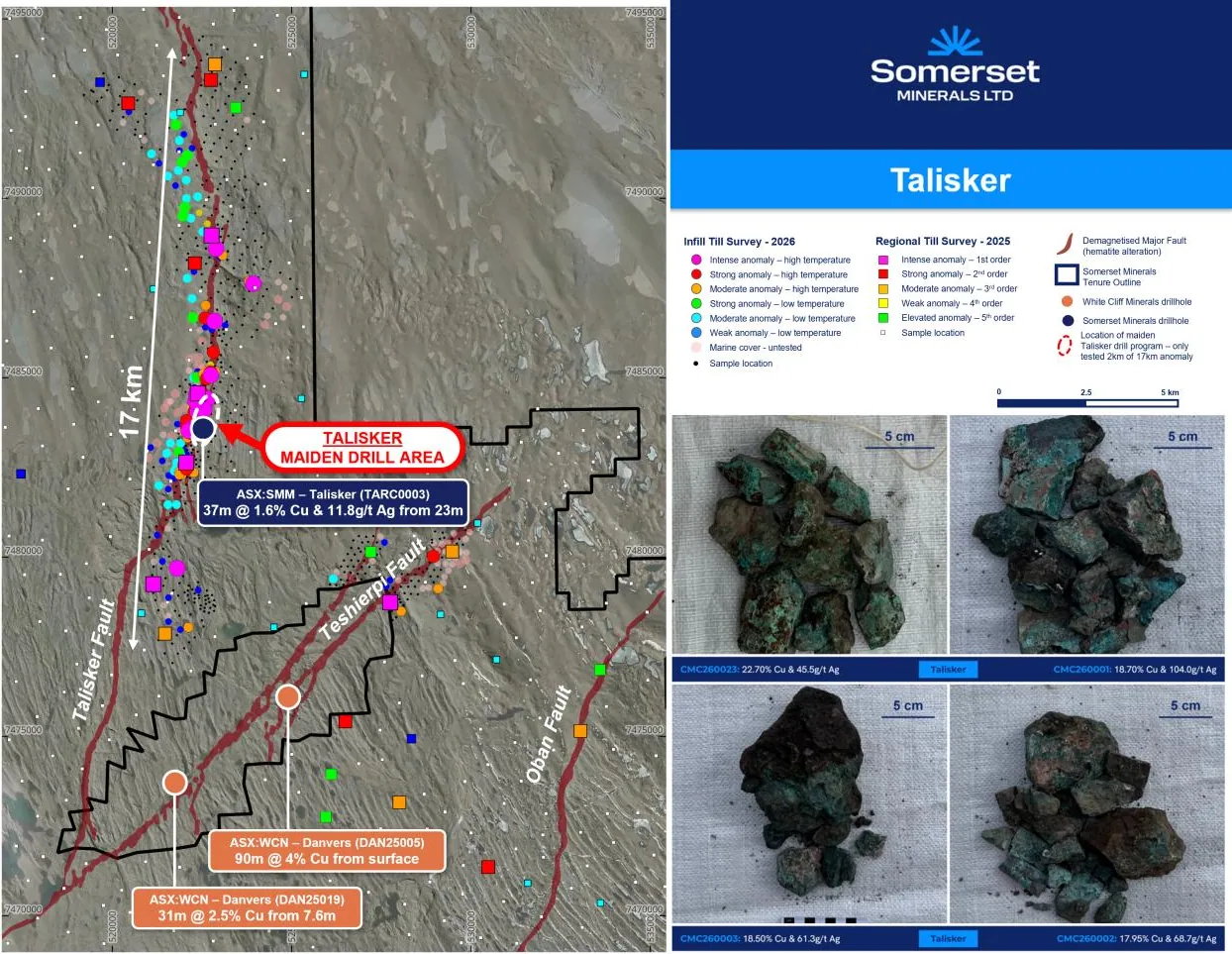
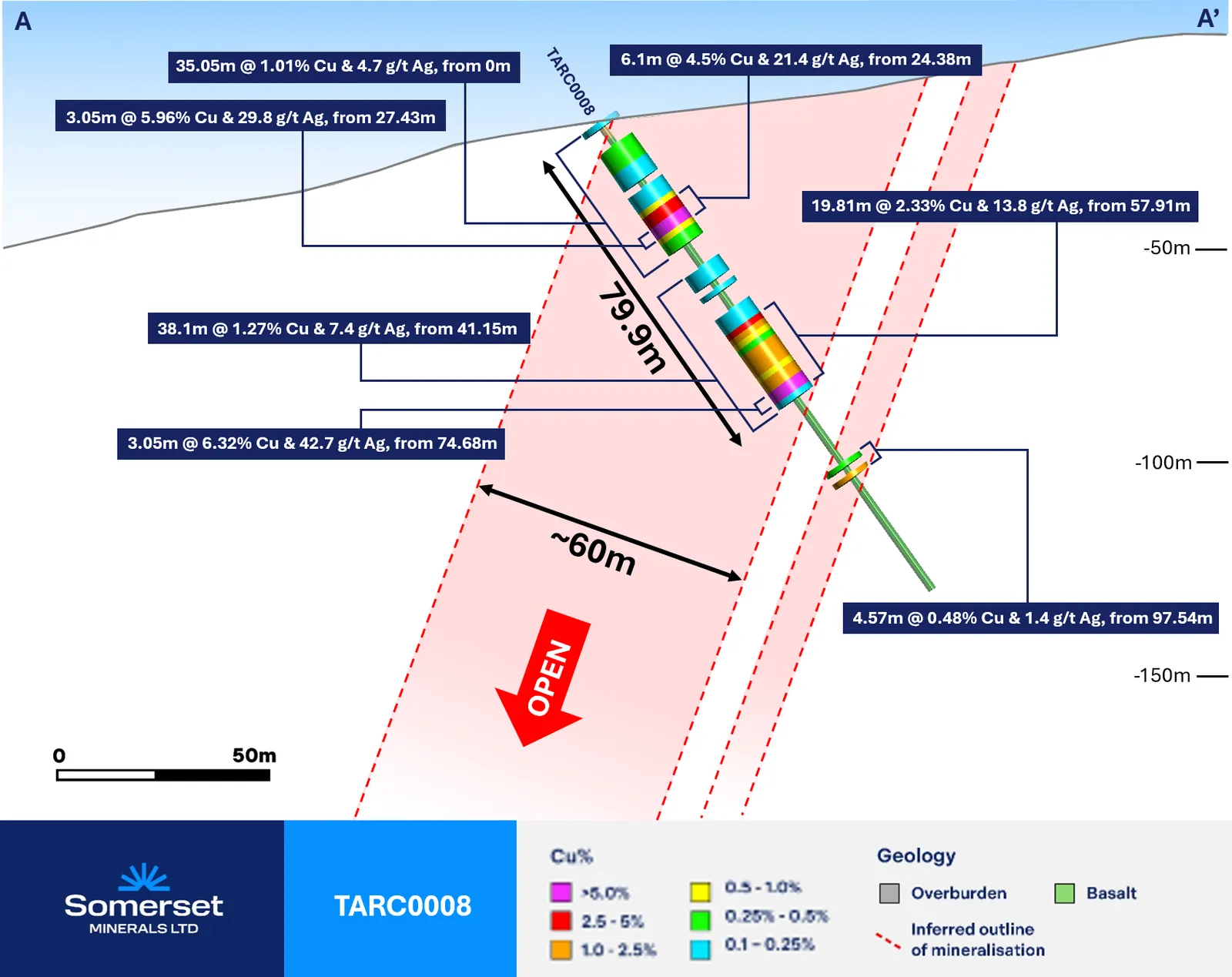
The strongest reported intersections include 36.6 metres at 1.62% copper and 11.8 grams per tonne silver in TARC0003, including 9.1 metres at 4.39% copper, and 38.1 metres at 1.27% copper and 7.4 grams per tonne silver in TARC0008. Subsequent holes extended the system north and south, although grades and widths varied between holes. Somerset describes the mineralisation as structurally controlled and chalcocite-dominant, with silver accompanying copper through the higher-grade zones.
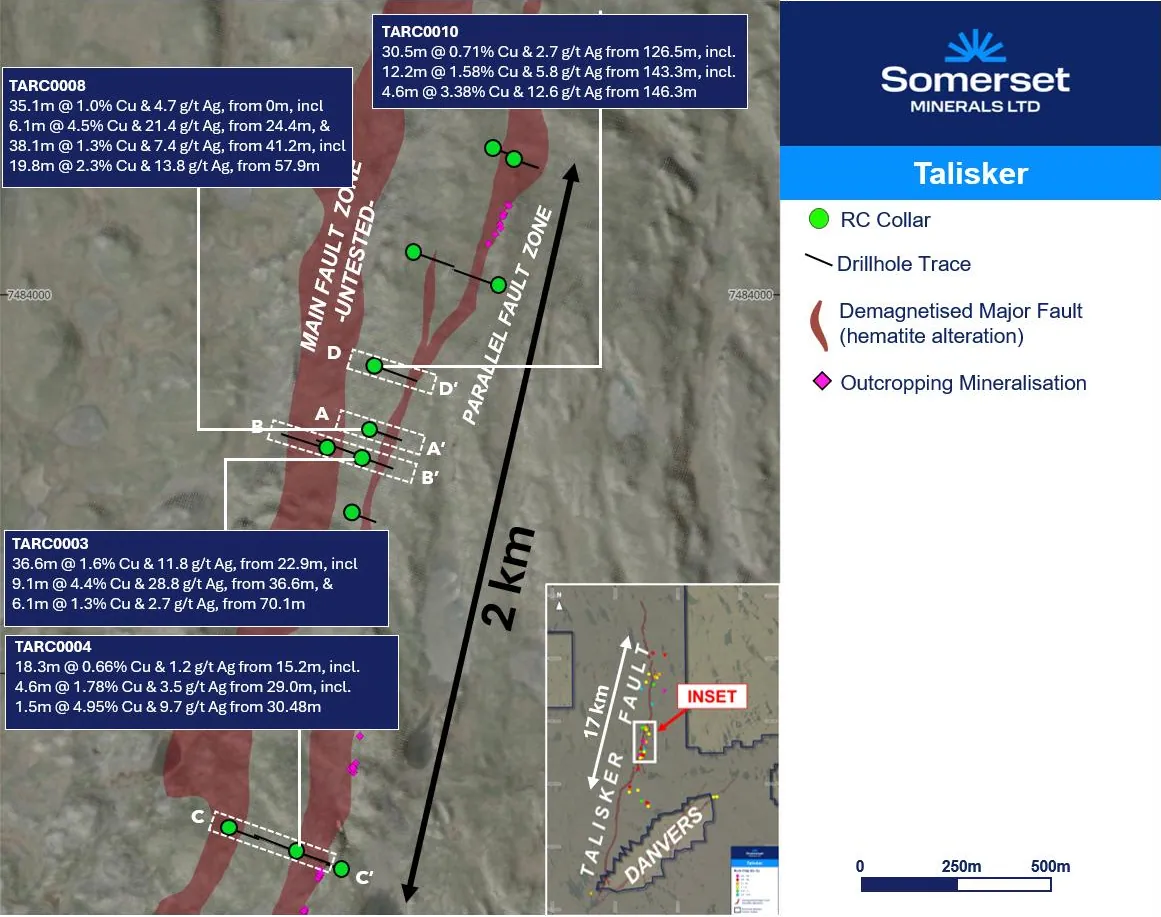
The presentation consolidates the story from the company’s October Talisker drilling campaign and argues that the targeting method has now been validated by a blind discovery beneath glacial cover. The company says it intends to test the larger central fault zone, where the first-pass drilling largely focused on a smaller parallel structure.
Jura adds a second high-grade exploration front
Talisker is only half of Somerset’s current exploration case. At Jura North, maiden drilling returned 42.7 metres at 2.69% copper from 15.2 metres, including 16.8 metres at 3.96% copper, while later holes extended mineralisation to roughly 370 metres down-dip. The company says the mineralisation remains open and sits within an approximately 7km trend containing several untested targets.
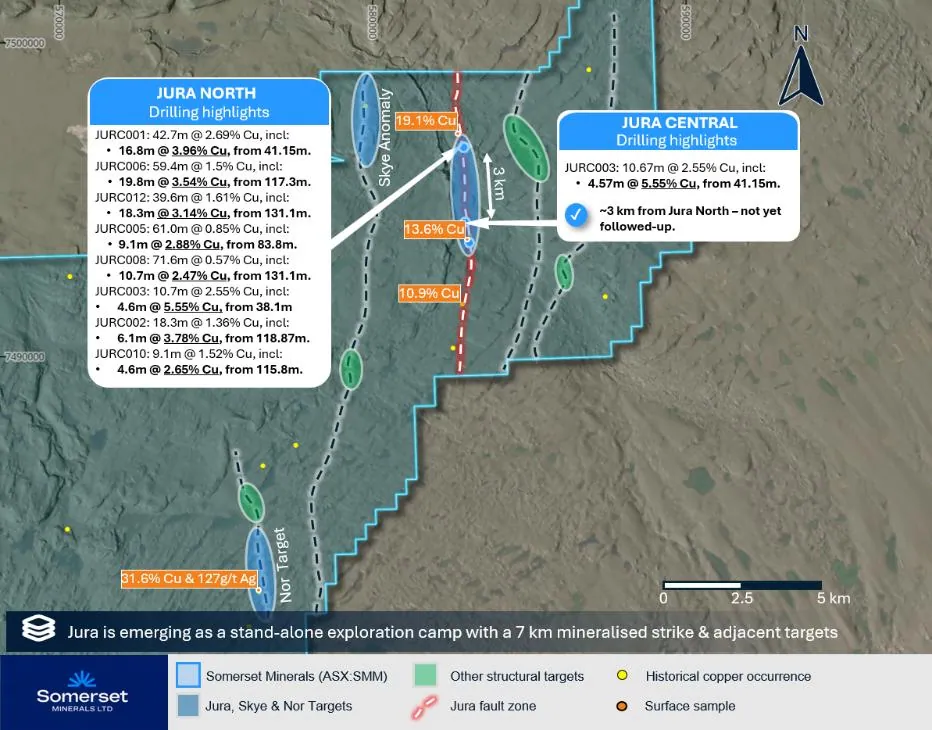
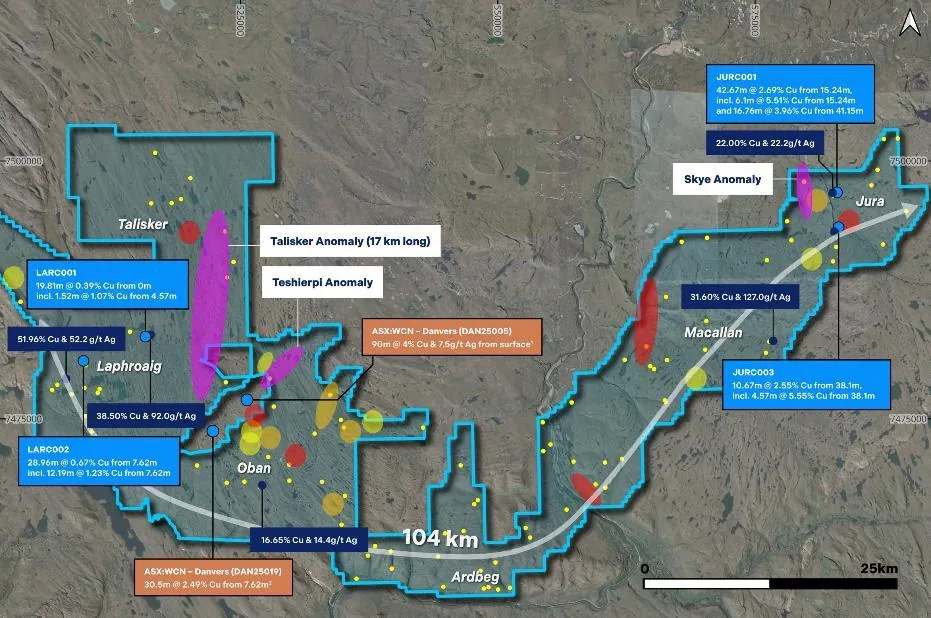
Jura Central, around 3km south, has also returned 10.7 metres at 2.55% copper, including 4.6 metres at 5.55% copper, but has not yet received follow-up drilling. Nearby Skye and Nor offer additional targets, supported by selective surface rock-chip results including 46.3% copper at Skye and 31.6% copper at Nor. Those samples indicate high-grade occurrences at surface, but are not necessarily representative of mineralisation across the project.
21 targets create scale but also a capital challenge
Across the 1,677 km² Coppermine land package, Somerset has identified more than 110 copper occurrences and 21 coincident regional targets. The company’s exploration model combines airborne magnetics, till geochemistry and structural interpretation to narrow a large search area into drill-ready targets. Jons Pit, where historic sampling returned up to 19.9% copper, and a never-drilled anomaly along the Teshierpi fault are among the next areas identified for testing.
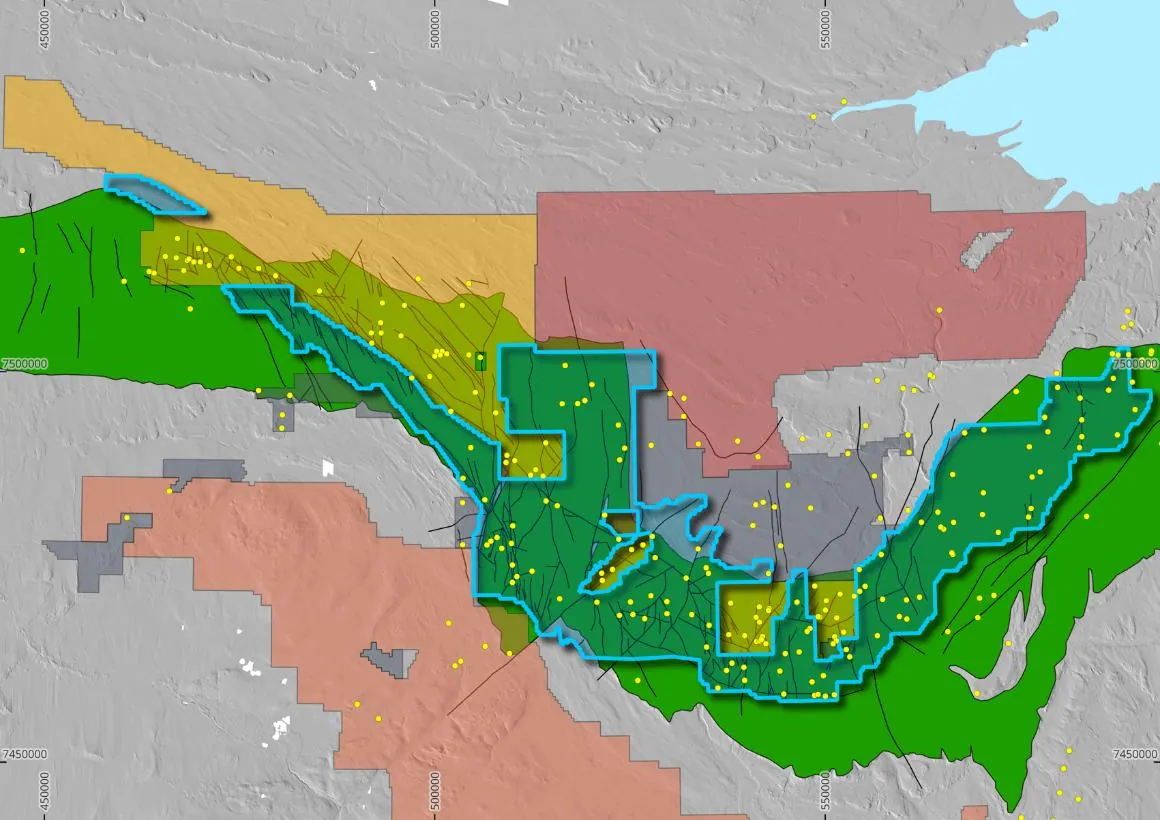
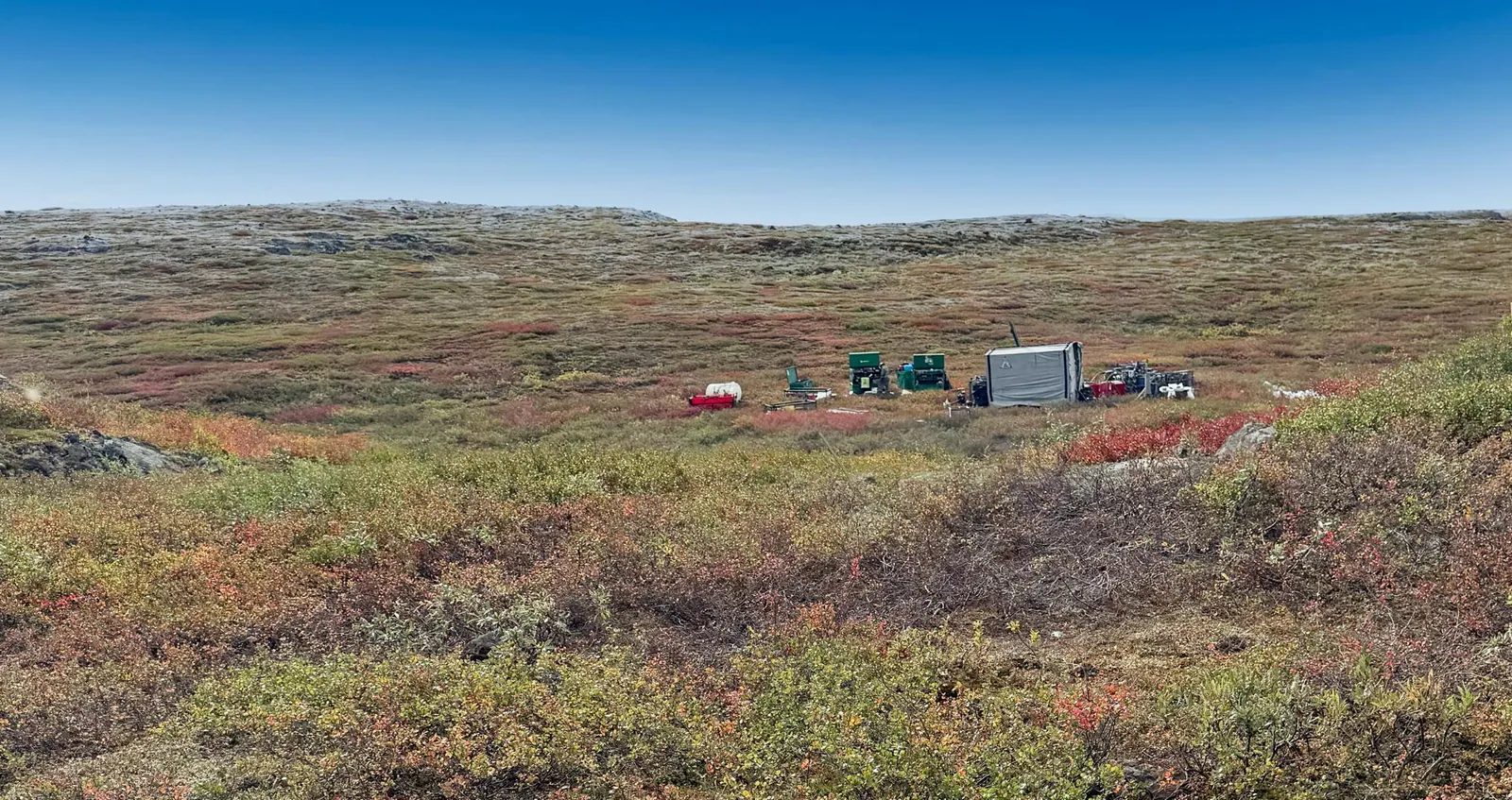
Somerset says permits are in place for up to 100 holes and two exploration camps, providing the operational platform for a larger field program across Talisker, Jura, Skye, Jons Pit and other regional targets. Yet the presentation also records cash of $1.06 million at 30 September 2026, alongside 1.6046 billion shares on issue and 510.2 million options. That makes the scope and funding of the next campaign an important practical question, even as the geological pipeline expands.
Next drilling must convert geological promise into scale
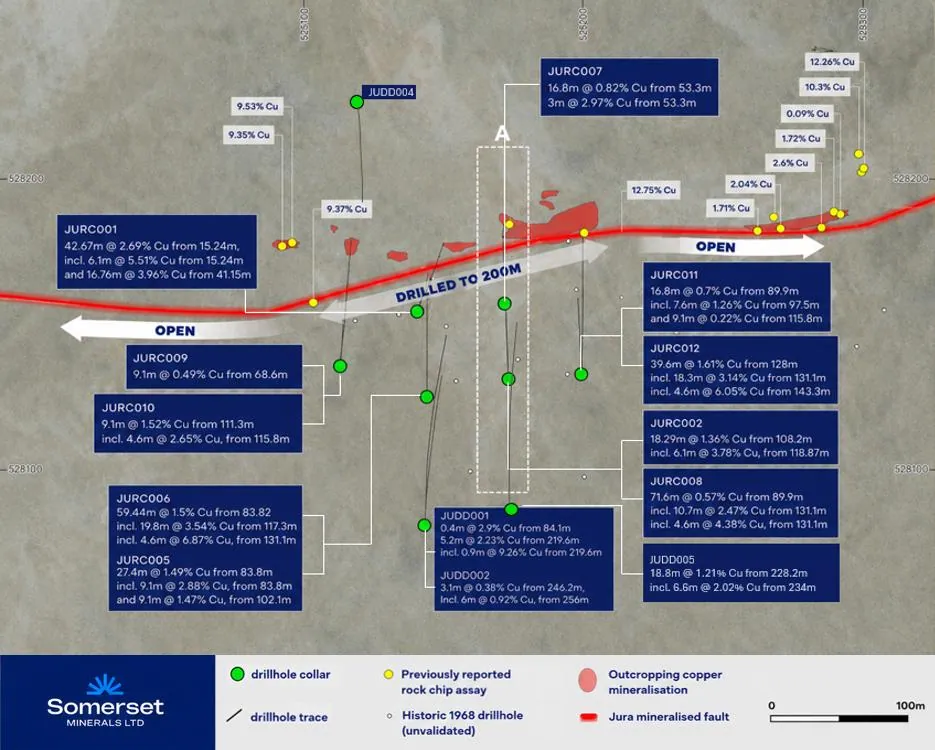
The presentation is largely a strategic restatement of previously reported exploration results rather than a fresh assay release. Drill intersections are downhole widths, with true widths not yet known, and the company’s forward plans remain indicative. The key test now is whether drilling across the main Talisker fault and the wider Jura district can establish continuity, geometry and scale beyond the strongest individual intersections.
Get ASX:SMM news the moment it breaks
 iPhone & iPad
 Android
Bottom Line?
Somerset has assembled an unusually broad copper target pipeline for a junior explorer, but the next value test is disciplined drilling across the priority zones and a clear funding path to sustain it.
Questions in the middle?
- How much of the next drilling program will be directed to Talisker’s largely untested main fault zone?
- Can follow-up drilling demonstrate continuity and scale at Jura, Skye and Jons Pit beyond isolated high-grade results?
- What funding will Somerset require to progress a permitted program of up to 100 holes without slowing exploration?
Sources
1-
Corporate Presentation. High-Grade Copper. (opens in a new tab)Verified source. Somerset Minerals Limited · 11 Nov 2026