AusQuest uncovers broader copper zones at Cangallo ahead of southern drilling

AusQuest has reported its longest copper intersections yet at the Cangallo project in Peru, including 708 metres at 0.21% copper and 618 metres at 0.26% copper. The results also identify several higher-grade zones ahead of a 20-pad southern drilling campaign.
- 708m at 0.21% copper and 0.05g/t gold in CANDD005
- 618m at 0.26% copper and 0.06g/t gold in CANDD006
- Higher-grade zones include 114m at 0.40% copper
- Stage 4 drilling approved across 20 southern drill pads
- Cangallo system remains open in most directions
 Add us as a preferred source on Google
Longest Copper Intercepts Reported at Cangallo
AusQuest Limited (ASX:AQD) has produced its broadest copper results yet from Cangallo, with two diamond holes extending mineralisation from near surface to more than 600 metres down-hole. Hole CANDD005 returned 708 metres at 0.21% copper and 0.05 grams per tonne gold from 4 metres, while CANDD006 delivered 618 metres at 0.26% copper and 0.06 grams per tonne gold from 36 metres.
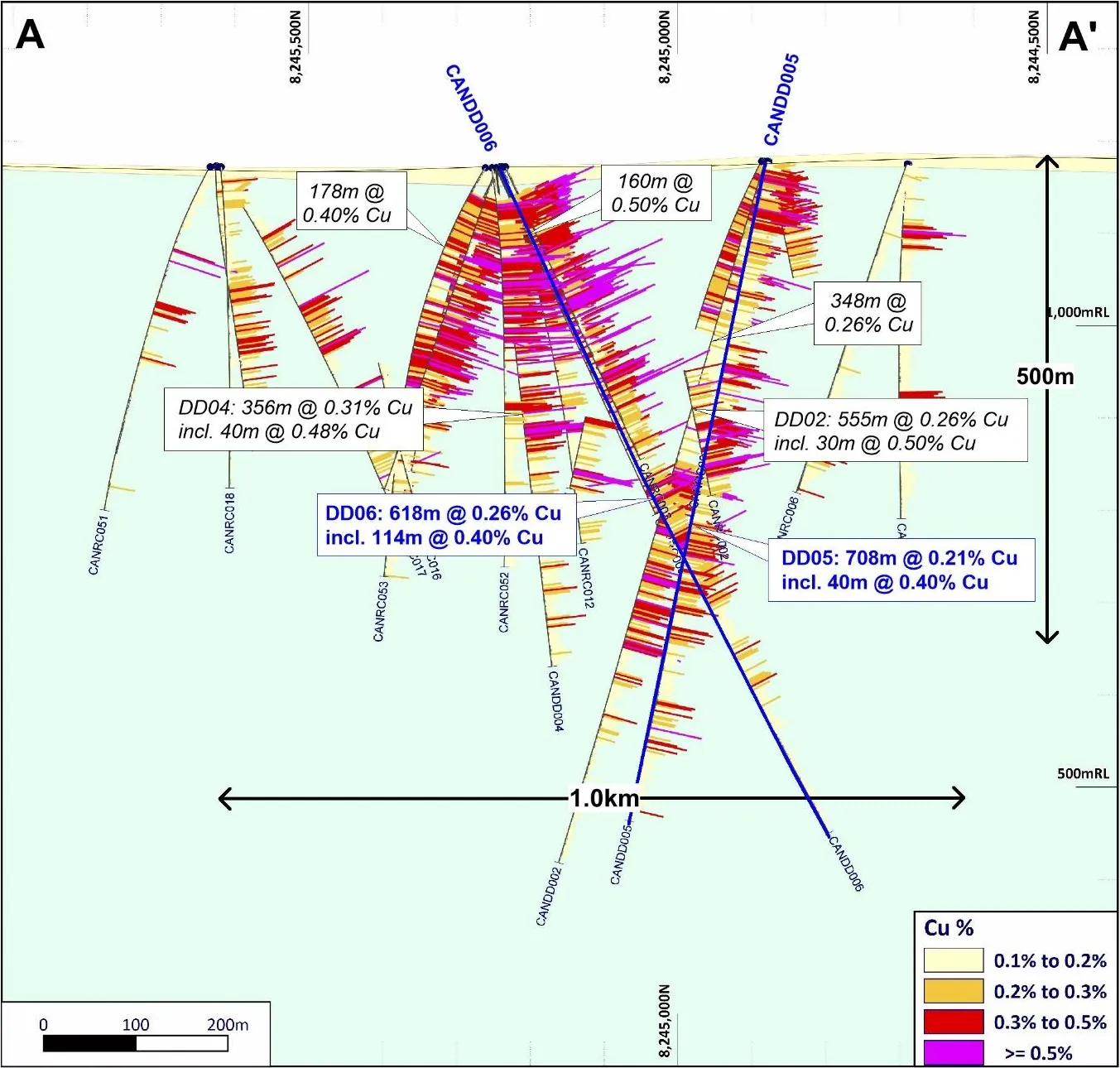
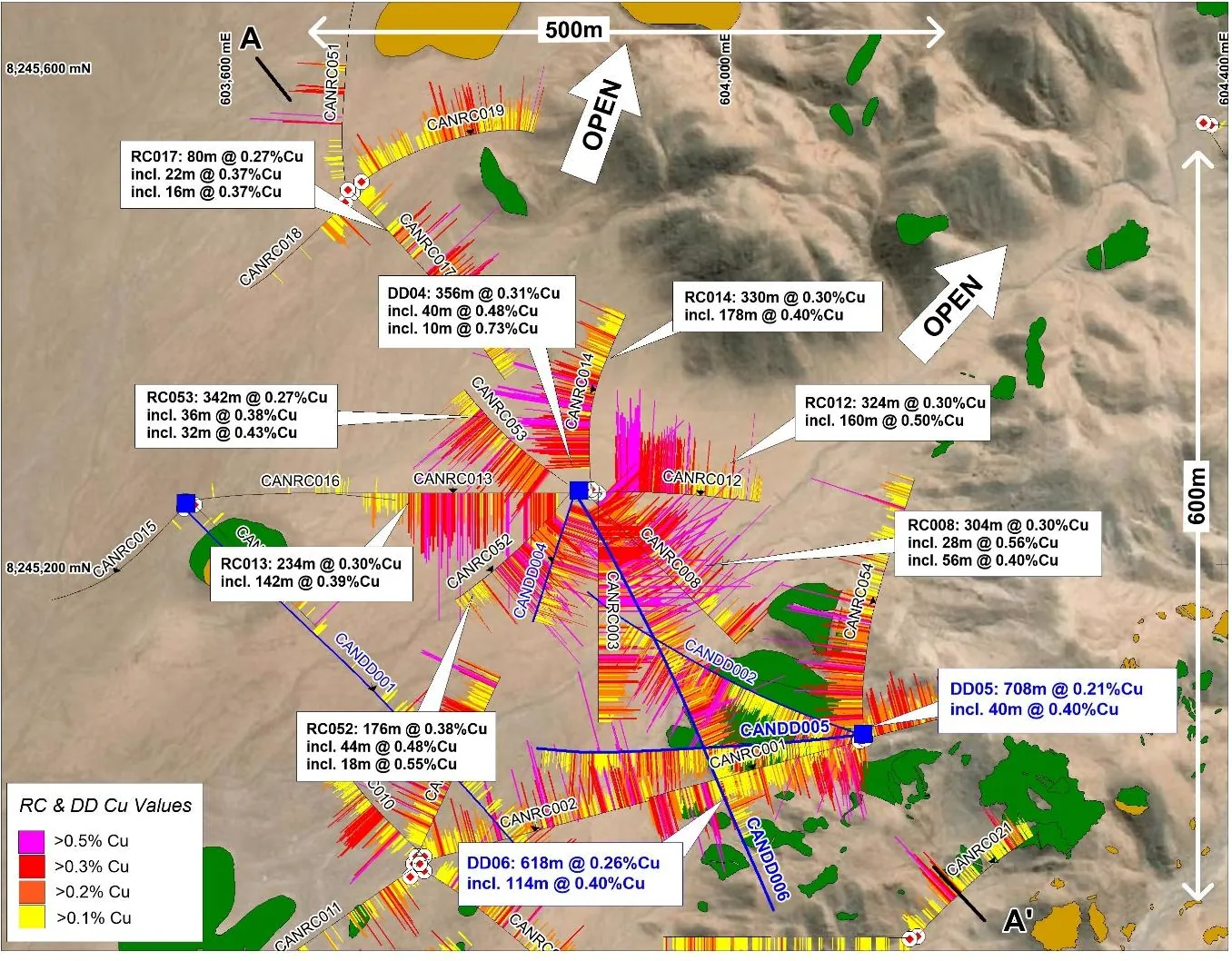
The headline widths are accompanied by more concentrated copper zones. CANDD006 included 114 metres at 0.40% copper and 0.07g/t gold, as well as intervals of 26 metres at 0.41% copper and 30 metres at 0.41% copper. CANDD005 returned a 40-metre zone at 0.40% copper and 0.11g/t gold, alongside several shorter intervals above 0.33% copper.
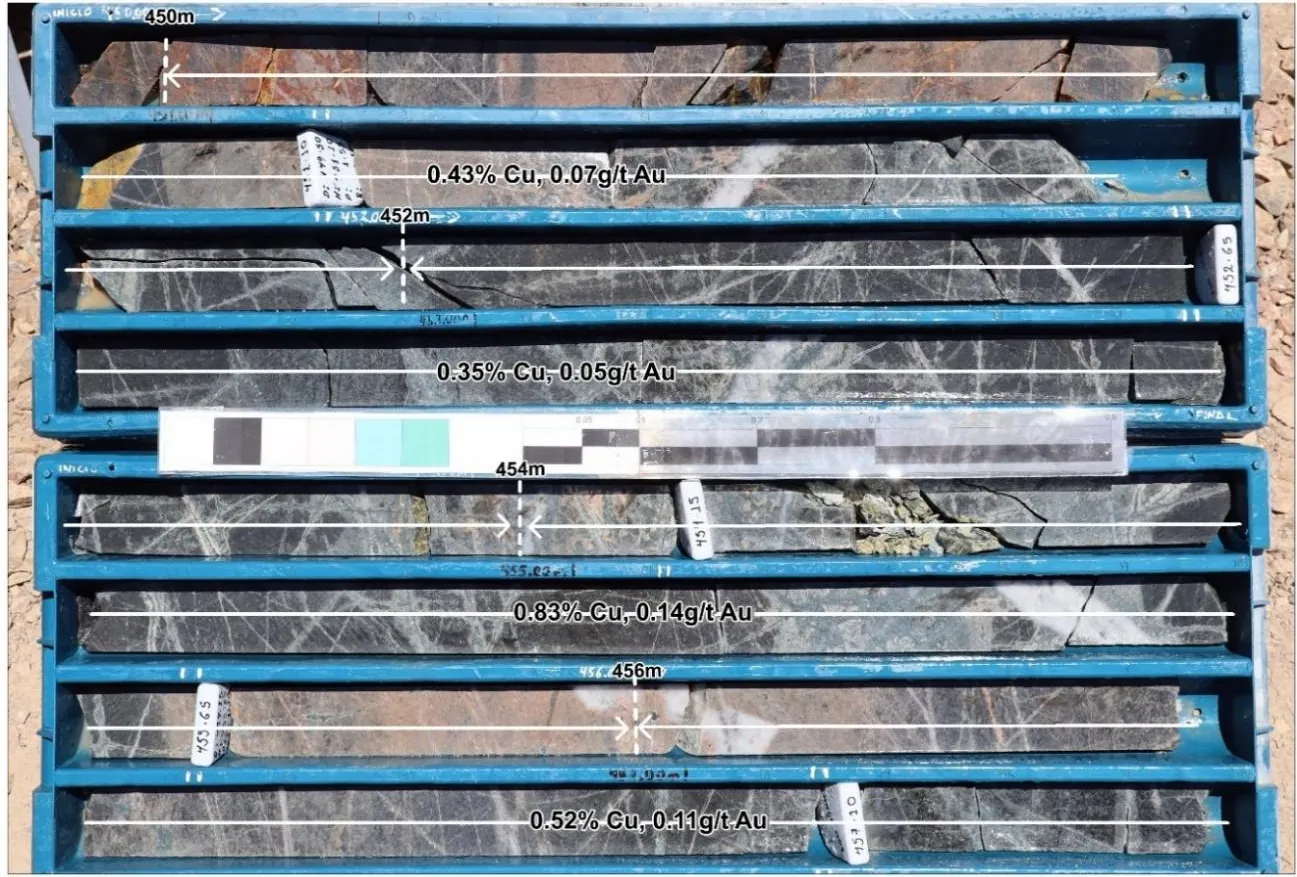
All reported intervals are down-hole lengths, and their true widths are not yet known. The company says the results point to higher-grade mineralisation in shallow oxide zones and in deeper primary sulphide-bearing veins, but the project remains at an early exploration stage without a mineral resource, economic study or maiden Exploration Target.
Deep Veining Extends the Northern System
AusQuest said CANDD005 and CANDD006 were drilled to test the depth and distribution of mineralised vein sets in the northern part of the prospect. CANDD005 encountered oxide copper to about 250 metres down-hole, with deeper hypogene mineralisation associated with chalcopyrite, chalcocite and occasional bornite.
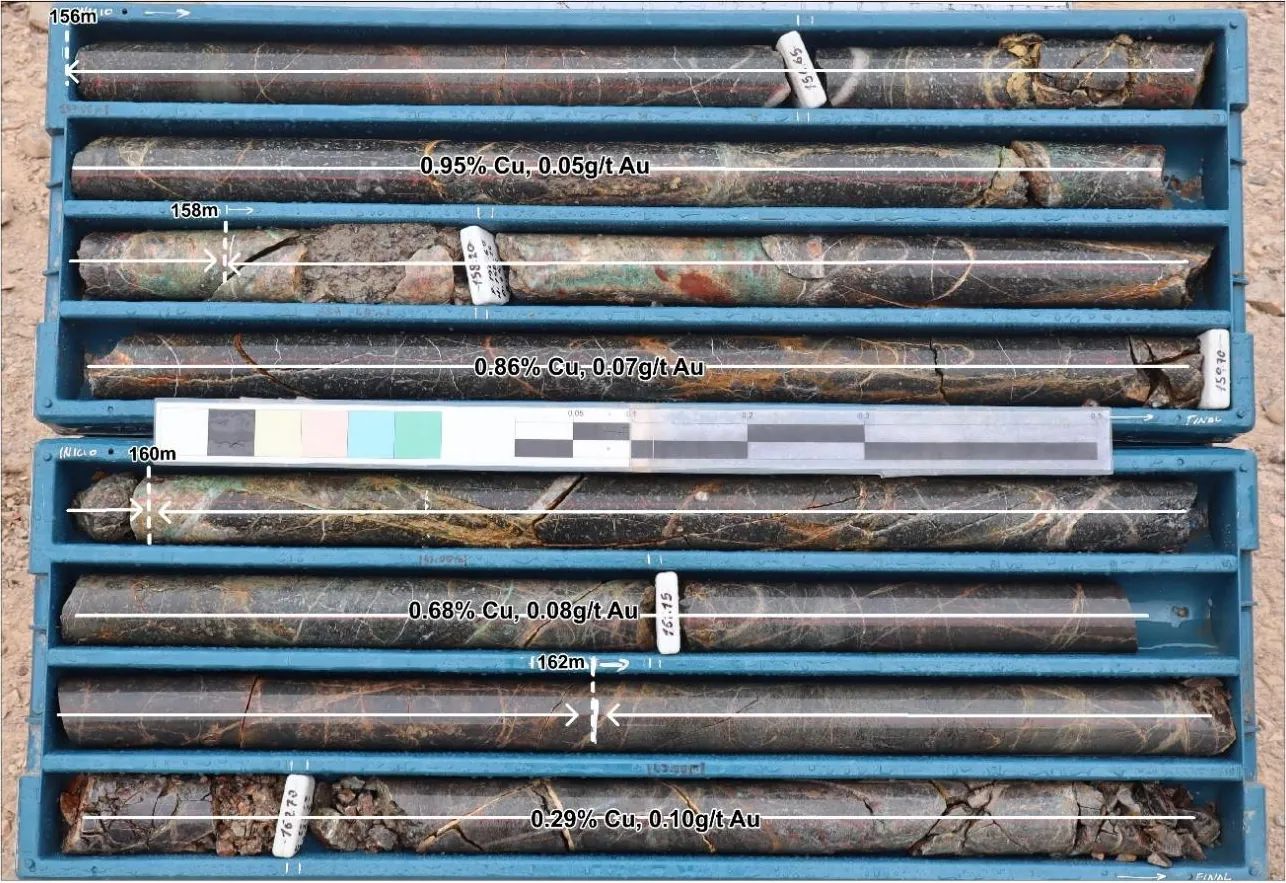
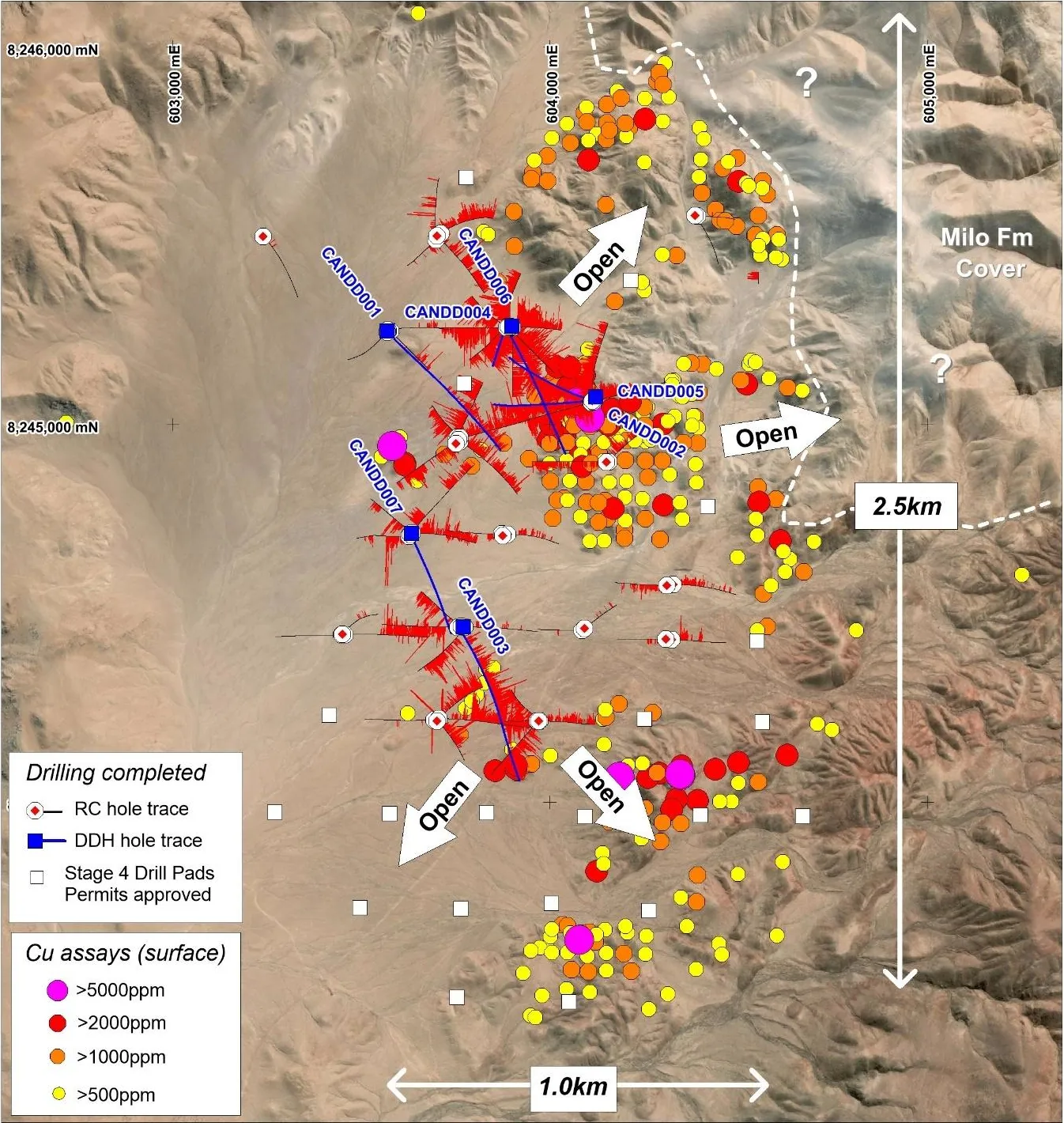
In CANDD006, stockwork veining continued from near surface to roughly 600 metres. The company linked stronger grades to denser veining and fluid breccias in volcanic host rocks, a geological interpretation that will guide the placement of future holes. The broader system has a defined stockwork strike of at least 1.5 kilometres, while associated intrusive dykes and stocks extend over at least 2.5 kilometres, leaving substantial ground untested. This builds on the earlier 2.5km Cangallo footprint outlined by a CSAMT survey, which identified additional untested targets but did not confirm them by drilling.
Stage 4 Drilling Moves South
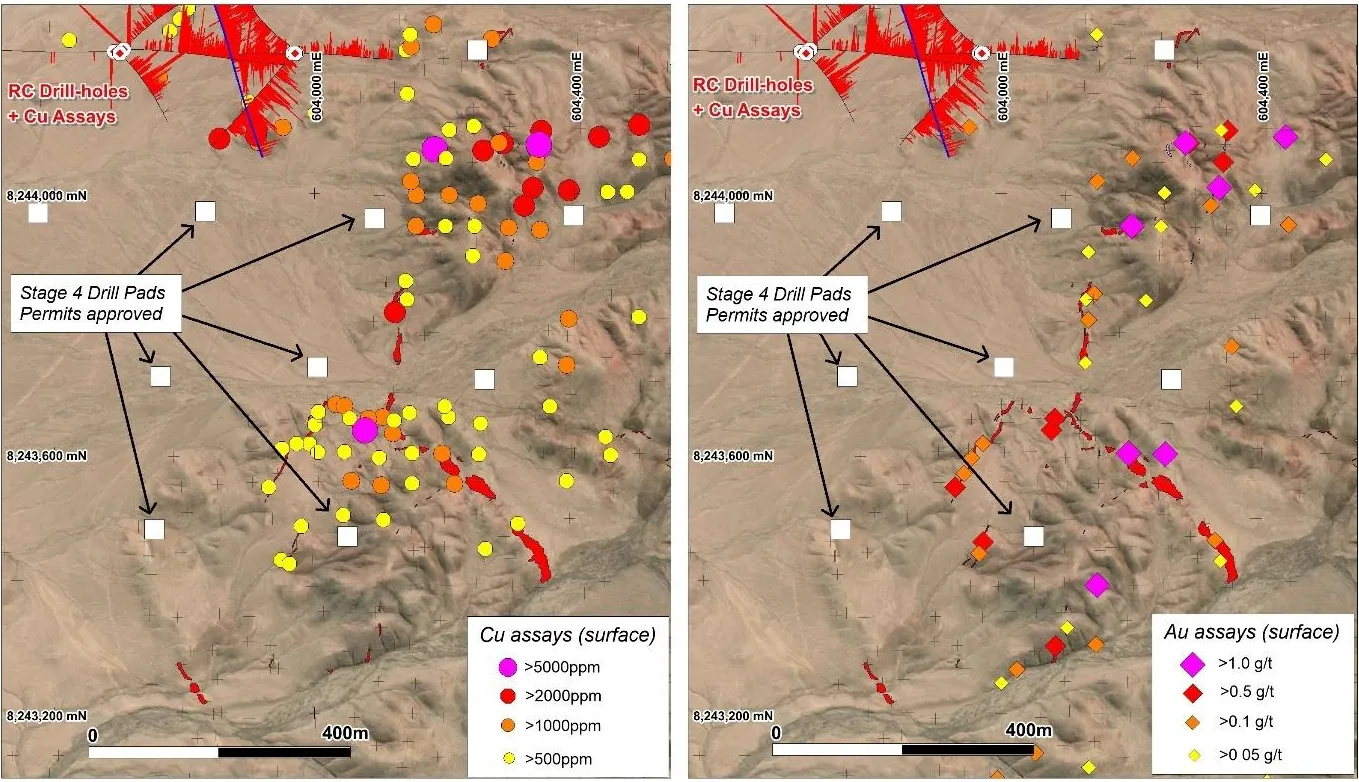
The next material test will come from the southern extension of Cangallo. AusQuest has received permits for 20 new drill pads and plans to begin access preparations, with RC drilling targeted for later this year subject to rig and crew availability. Earlier surface sampling in the area returned copper values of up to 1.0%, molybdenum up to 68 parts per million and some gold results above 1g/t.
The permits follow the Peruvian Government’s declaration of Cangallo as a Project of National Interest, while AusQuest is also seeking further approvals to expand exploration north and east. The company said it is continuing to compile diamond and RC results as it works towards a maiden Exploration Target, but that milestone still depends on additional drilling and geological interpretation.
Get ASX:AQD news the moment it breaks
 iPhone & iPad
 Android
Bottom Line?
The drilling has strengthened the scale case, but the next step is converting long down-hole intersections into a defensible estimate of true width, continuity and eventual resource potential.
Questions in the middle?
- Will Stage 4 drilling confirm that the southern surface anomalies connect with the main Cangallo system?
- How closely do the higher-grade zones continue between drill holes once true widths and structural controls are established?
- Can AusQuest advance toward a maiden Exploration Target before further drilling and funding requirements become material?
Sources
1-
Higher Copper Grades and Growing Scale at Cangallo (opens in a new tab)Verified company source. Ausquest Limited · 12 Nov 2026 · investorhub.ausquest.com.au