Bayan’s yttrium technology delivers its strongest purity result yet

Bayan Mining and Minerals has completed nine University of Queensland ion-exchange runs, recording an 11.2-fold peak increase in yttrium purity. The result strengthens the technical case for its licensed processing technology, but commercial feeds, recovery, costs and pilot performance remain untested.
- 11.2x peak yttrium purity upgrade in Phase 1 testing
- Nine ion-exchange column runs completed at UQ
- Two separation routes identified across concentrated and dilute feeds
- Technology tested on clay-hosted and bastnaesite-style feed simulations
- Next phase to assess commercial feeds, resin cycling and pilot economics
 Add us as a preferred source on Google
Peak 11.2x Yttrium Upgrade Recorded
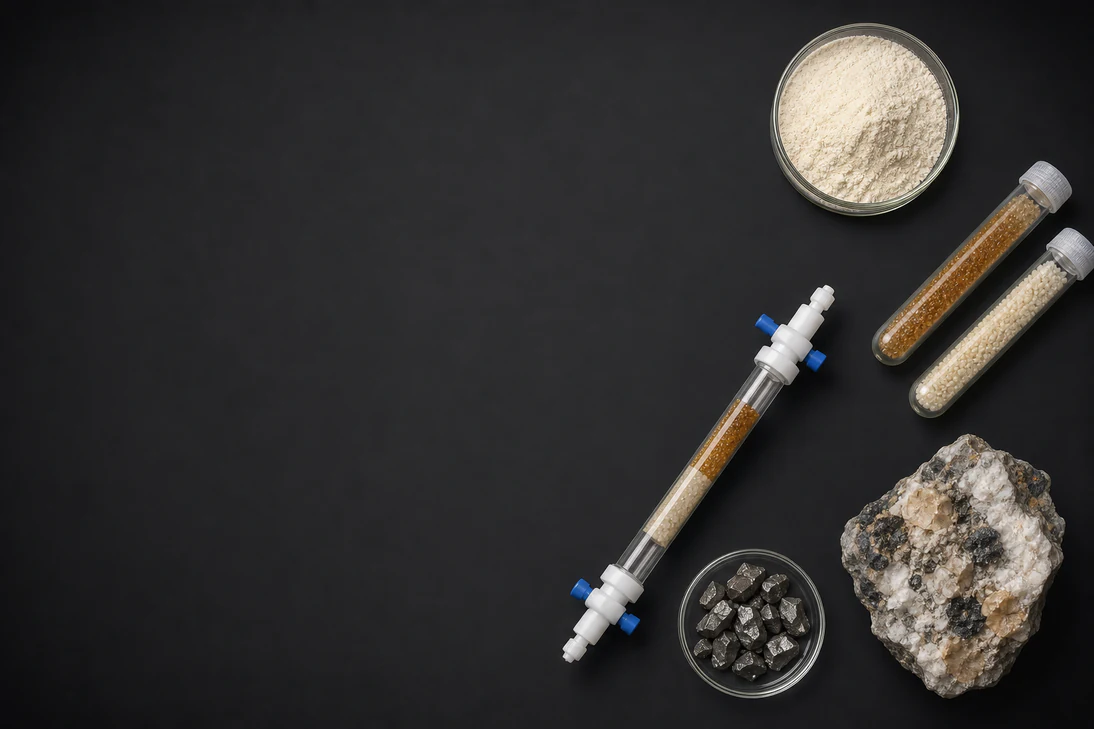
Bayan Mining and Minerals Ltd (ASX:BMM) has completed a nine-run University of Queensland research program with its strongest reported yttrium purity result to date: an 11.2-fold upgrade in laboratory column testing. The peak result came from Run 9, using a Lewatit TP208 ion-exchange resin and a synthetic high-samarium feed designed to replicate the feed described in the Colorado School of Mines patent licensed by Bayan.
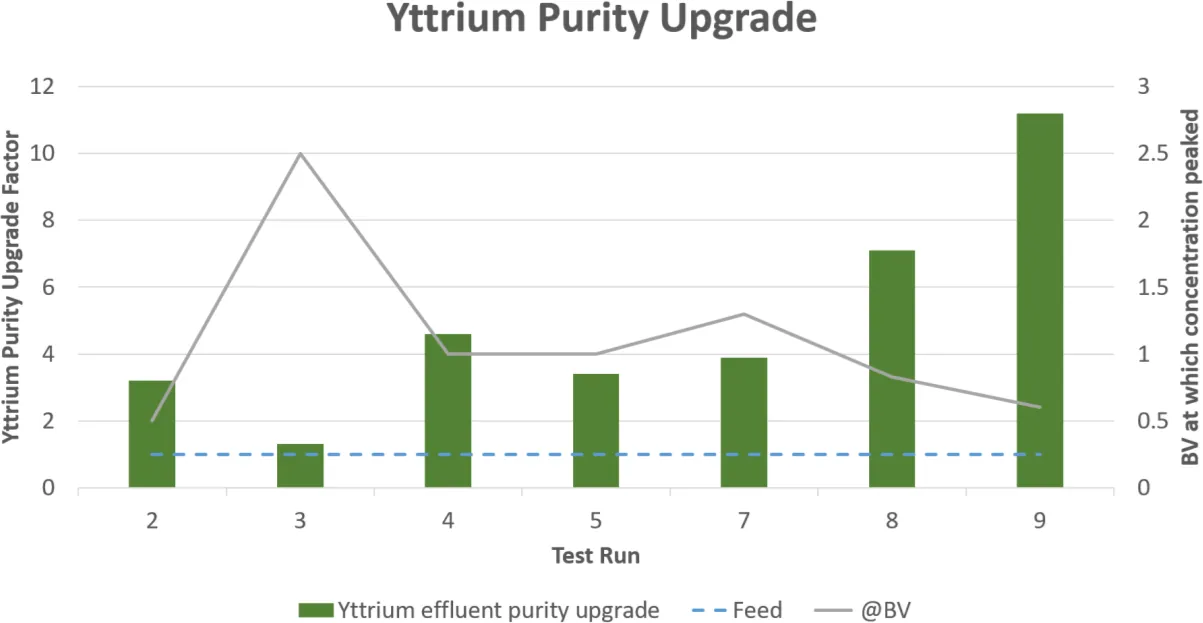
The result is a marked improvement on the company’s earlier reported two-fold purity upgrade, although the metrics are still bench-scale outcomes rather than evidence of commercial production. Bayan’s broader technology program had previously reported a 14x concentration increase in separate University of Queensland testing, while the current announcement focuses on yttrium purity within the rare earth stream.
Two Separation Routes Identified
The UQ Hydrometallurgy Research Group, led by Professor James Vaughan, identified two ways to enrich yttrium. Selective exclusion during loading delivered the 11.2x result from a concentrated synthetic heavy rare earth solution, while selective stripping with weak acid produced a 2.0x upgrade in Run 6 using a dilute heavy rare earth solution.
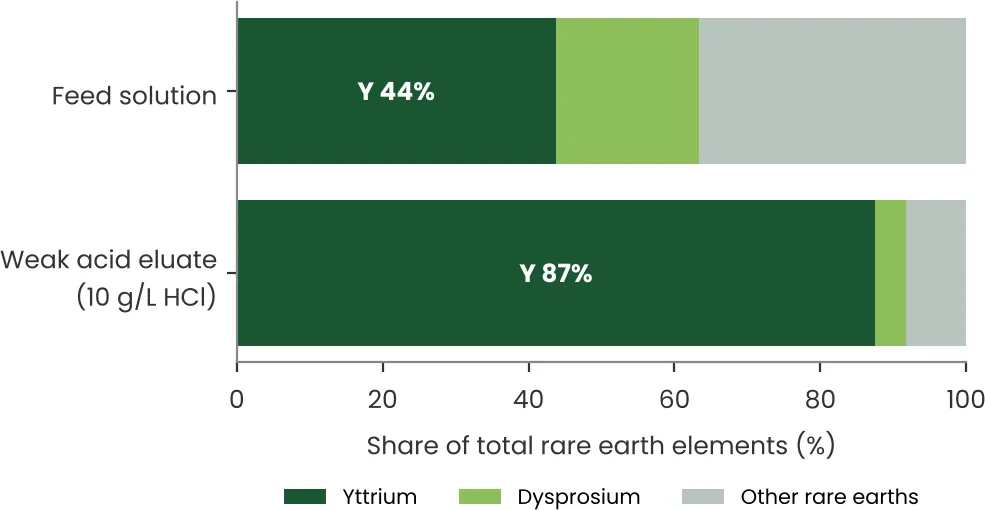
In Run 6, yttrium rose from 43.7% of total rare earths in the feed to 87% of the rare earth content in the weak-acid eluate. The loading-based results varied considerably across the program: the other reported peak upgrades ranged from 1.3x to 7.1x, while the company also disclosed outcomes below 1.0x in some test conditions. That spread makes operating conditions, rather than the headline maximum alone, central to the next stage of work.
Technology Scope Extends Across Feed Types
Bayan says the patented separation mechanism worked on concentrated and dilute feed systems, with two commercially available resins. The company also says the testing supports applicability to both clay-hosted and bastnaesite-style mineralisation, although several feeds were synthetic, doped or otherwise prepared laboratory solutions rather than commercial process streams.
The proposed advantage is process integration. Bayan says the technology could be placed within an existing rare earth separation circuit to recover or upgrade yttrium before solvent extraction, potentially reducing the material load moving through downstream separation stages. Those potential capital and operating benefits remain claims to be tested: the announcement does not provide a completed mass balance, recovery figures, operating cost model or pilot-scale results.
Commercial Feed Testing Comes Next
The next phase is intended to move beyond prepared laboratory solutions. Bayan plans to source mixed rare earth carbonate and heavy rare earth concentrate feeds from Australian and international developers, test resin performance through at least 10 loading and stripping cycles, and examine fouling and resin capacity.
The company and UQ will also refine feed concentration, flow rate, pH and acid conditions before building a process flowsheet, mass balance and operating cost model. Series deployment of the technology is being considered as a way to seek higher yttrium purity, with the results to inform the scope of a Phase 2 program and any commercial-column or pilot-scale work.
Get ASX:BMM news the moment it breaks
 iPhone & iPad
 Android
Bottom Line?
The 11.2x result is a meaningful laboratory milestone, but the investment case now turns on repeatability, yttrium recovery, resin durability and economics using real commercial feeds.
Questions in the middle?
- Can the 11.2x purity upgrade be reproduced across multiple cycles without significant resin fouling or performance loss?
- What yttrium recovery, throughput and operating costs will emerge when the technology is tested on commercial concentrates?
- Will Bayan proceed to pilot-scale testing, and how will it fund that next stage given the company’s previously reported limited funding runway?
Sources
1-
11.2x Yttrium Purity Upgrade Achieved in UQ Research Program (opens in a new tab)Verified company source. Bayan Mining and Minerals Limited · 12 Nov 2026 · investors.bayanminerals.com.au