New Hope’s coal prices buy time as New Acland ramps up

New Hope kept its FY27 production targets intact after a lower-production quarter, with stronger coal prices helping hold underlying EBITDA broadly steady. The company also advanced its proposed all-scrip takeover of Malabar Resources, while New Acland moves towards a major production increase.
- Quarterly ROM coal production fell 9.8% to 4.3Mt
- Realised pricing rose 6.0% to A$165.2/t
- Underlying EBITDA was broadly flat at A$168.1m
- FY27 saleable coal guidance remains 11.5Mt to 13.0Mt
- Malabar scheme remains subject to shareholder, court and regulatory approvals

 Add us as a preferred source on Google
Higher coal prices offset lower quarterly production
New Hope Corporation Limited (ASX:NHC) has held its FY27 production guidance after a quarter in which lower output was largely offset by stronger coal prices. Group ROM coal production fell 9.8% from the previous quarter to 4.3Mt, while coal sales declined 3.2% to 2.9Mt. The average realised price rose 6.0% to A$165.2 a tonne, helping underlying EBITDA remain broadly stable at A$168.1 million, compared with A$169.3 million in the previous quarter.
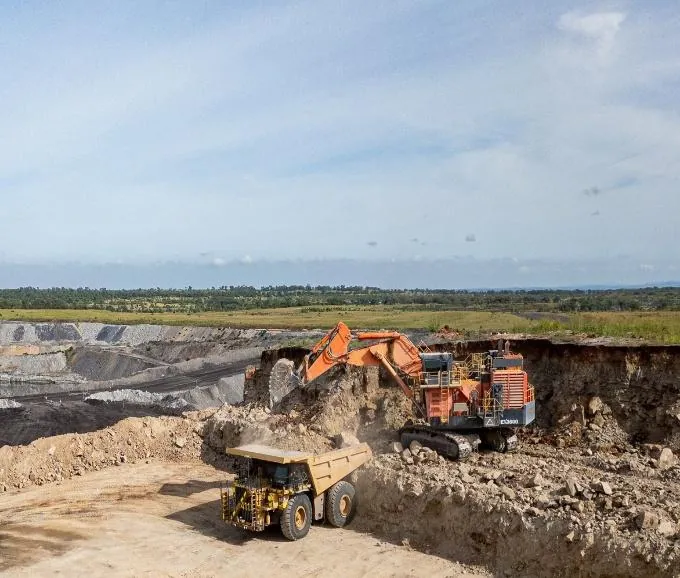
The result came despite Bengalla Mine entering a planned phase of heavier prime waste movement. Overburden movement at the New South Wales mine increased 6.3% to 12.8 million bank cubic metres, while ROM coal production fell 25.9% to 2.2Mt on an 80% interest basis. New Hope said the work should support a lower strip ratio and higher ROM production rate in the second quarter of FY27, although the quarter also exposed the group to intermittent rail, port and infrastructure disruptions.
New Acland becomes the main FY27 growth engine
Queensland operations moved in the opposite direction. New Acland increased ROM production 18.8% to 2.0Mt and saleable production 23.1% to 1.0Mt, helped by higher waste movement, a lower strip ratio and the timing of a planned processing-plant shutdown. Sales still slipped 3.3% to 0.9Mt as rail performance was constrained by network outages, Cross River Rail possessions and service-provider cancellations.
New Hope is targeting 3.7Mt to 4.3Mt of saleable coal from New Acland in FY27, a midpoint increase of about 20% on FY26 actual production. First coal from the Manning Vale West area is expected in the third quarter of FY27, with the required public-road realignment described as on track and within its A$65 million to A$75 million budget. Group saleable production guidance remains 11.5Mt to 13.0Mt, while Bengalla is expected to contribute 7.8Mt to 8.7Mt.
The guidance is underpinned by the company’s latest resources and reserves statement, which was recently associated with a reported increase in total coal resources to 2.96 billion tonnes. New Hope says its assumptions remain unchanged, but the production ranges still depend on planned mine sequencing and reliable weather, rail and port performance.
Malabar combination adds strategic scale and approval risk
The quarter also brought the proposed next step in New Hope’s ownership of Malabar Resources. Under the binding scheme implementation deed, New Hope would acquire the roughly 74% of Malabar it does not already own, bringing the Maxwell Mine fully into the group if the scheme proceeds. The transaction was previously described as an all-scrip deal targeting full ownership of the ramping underground operation, and is now subject to Malabar shareholder approval, court approval, Japan Fair Trade Commission clearance and other conditions.
Malabar’s own operations continued to ramp up during the quarter ended 30 September, with longwall production rising 10% to 0.55Mt and bord-and-pillar ROM production increasing 9% to 0.14Mt. Panel 1 was completed in early November, with production from Panel 2 expected to begin in January 2027. The scheme’s proposed all-scrip structure is intended to preserve New Hope’s balance sheet, but it would also leave the company managing Malabar’s inherited financing arrangements if the combination is completed.
Cash remains substantial after dividend payment
New Hope paid its 30-cent fully franked final dividend during the quarter, distributing A$253.1 million including amounts settled through the dividend reinvestment plan. Available cash stood at A$588.4 million at 31 October, comprising A$295.6 million of cash and cash equivalents plus A$292.8 million in fixed-income investments. The company’s A$100 million on-market buy-back remained active, although no shares were repurchased during the quarter.
For shareholders, the next test is less about whether New Hope can maintain a production target on paper than whether the moving parts arrive in sequence: Bengalla’s post-waste-movement recovery, Manning Vale West’s first coal, dependable rail access and the approvals needed to absorb Malabar. Coal prices provided useful cover in this quarter; the operating plan will need to carry more of the burden if that support fades.
Get ASX:NHC news the moment it breaks
 iPhone & iPad
 Android
Bottom Line?
New Hope enters FY27 with firm production targets, but delivery now hinges on New Acland’s ramp-up, transport reliability and the approvals required for full Malabar ownership.
Questions in the middle?
- Can Bengalla lift ROM production as planned after its heavy prime-waste quarter?
- Will Manning Vale West deliver first coal in the third quarter of FY27 without disrupting New Acland’s ramp-up?
- How will the Malabar scheme’s approvals and inherited financing arrangements affect New Hope’s capital returns?
Sources
1-
Quarterly Activities Report (opens in a new tab)Official market announcement. New Hope Corporation Limited · 16 Nov 2026 · newhopegroup.com.au