Vulcan moves Lionheart into civil construction ahead of lithium production

4 min read
8:18am on Monday 16th of November, 2026 AEDT ~8am, 16th Nov, 26
Vulcan Energy has begun civil construction at its commercial Lithium Extraction Plant in Germany, marking the company’s latest major Lionheart milestone. The project remains targeted for first production in the second half of 2028, although the announcement provides no updated capital or funding figures.
- Civil construction begins at Lionheart’s commercial Lithium Extraction Plant
- Foundations, concrete structures, roads and drainage now moving ahead
- Project remains targeted to produce 24,000 tonnes of lithium hydroxide annually
- Vulcan says construction is on schedule and within budget
- No revised capital, funding or production timetable disclosed
 Add us as a preferred source on Google
Civil works begin at Lionheart’s extraction plant
Vulcan Energy Resources Limited (ASX:VUL) has moved Project Lionheart into its next physical construction phase, starting civil works at the commercial Lithium Extraction Plant in Germany. The company says the work follows early bulk earthworks and covers foundations, concrete structures, site roads and drainage for the plant, utilities, process equipment and tank farm.
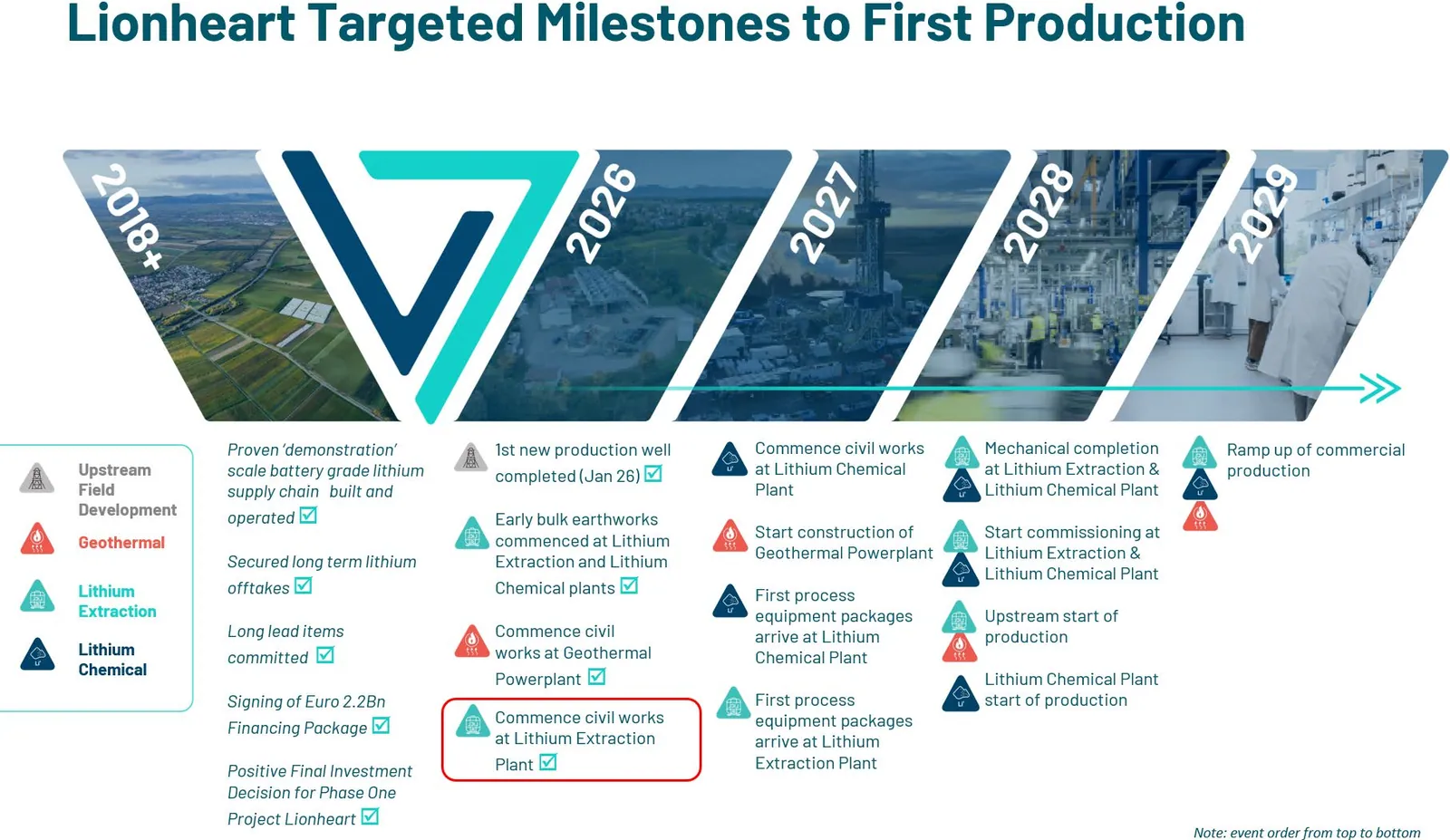
The milestone matters because it takes the project beyond site preparation and towards the buildings and equipment installation stage. Vulcan says the plant’s civil construction is progressing on schedule and within budget, while chief executive Cris Moreno described the start as the final major execution milestone set for 2026.
Lionheart retains its 2028 production target
Lionheart’s first phase remains designed to produce 24,000 tonnes a year of lithium hydroxide monohydrate, alongside 275 gigawatt-hours of renewable power and 560 gigawatt-hours of heat annually over an estimated 30-year project life. Vulcan is targeting first production in the second half of 2028 and says the project has take-or-pay lithium offtake contracts with European-focused buyers.
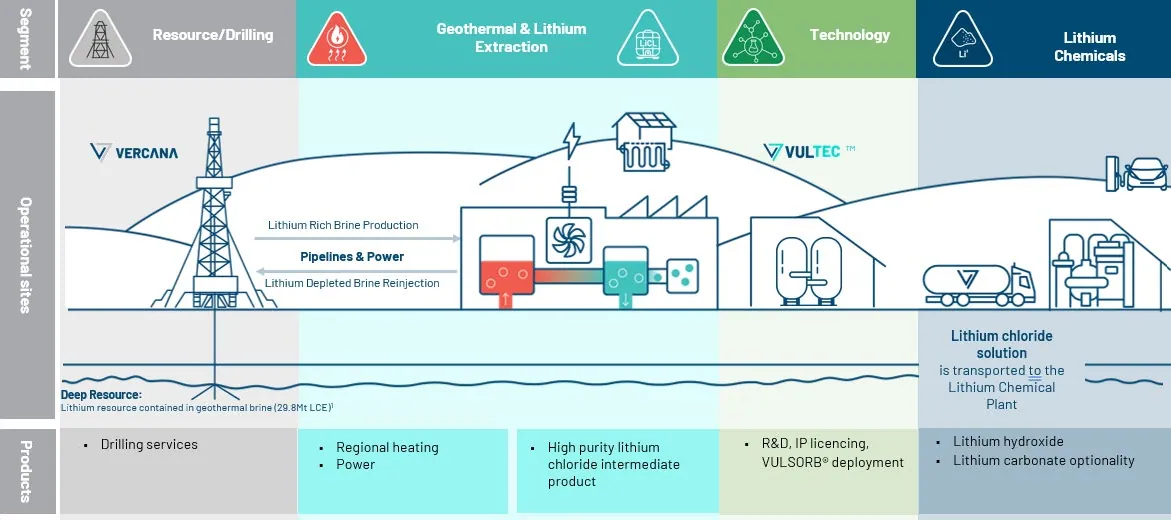
The construction push comes after Vulcan’s second drilling rig mobilisation, which the company said was intended to support parallel development across Lionheart’s well program. The two activities address different parts of the integrated project: wells supply the geothermal brine, while the extraction plant is intended to recover lithium chloride from it.
Geothermal brine links lithium and energy output
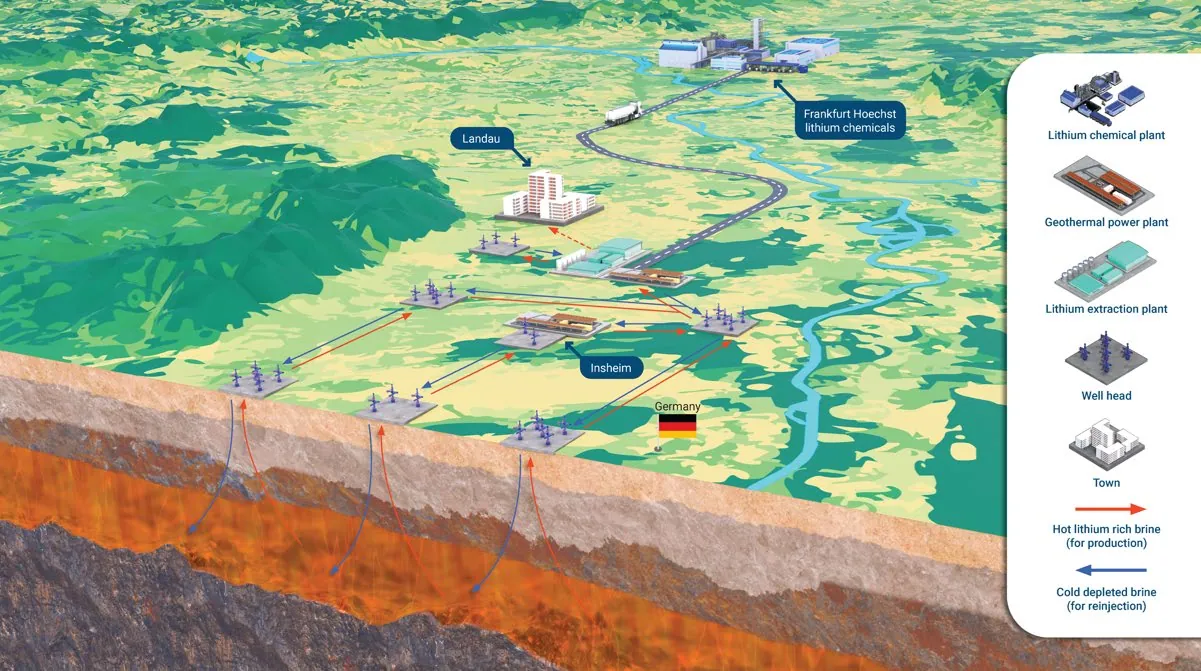
Vulcan plans to use its proprietary VULSORBTM technology in a direct lithium extraction process, producing a high-purity lithium chloride intermediate from geothermal brine. Geothermal energy generated from that same brine is intended to power operations, before the lithium chloride is converted into battery-grade lithium hydroxide at Vulcan’s downstream chemical plant in Frankfurt-Hoechst.
The company has recently begun commercial-scale production of VULSORB adsorbent material for first-fill volumes at Lionheart’s extraction columns. That earlier step does not remove the execution risk attached to building and commissioning the full integrated chain, but it gives the latest civil milestone a more tangible place in Vulcan’s planned process flow.
Next phase shifts attention to equipment and funding
The announcement does not disclose construction expenditure, remaining capital requirements, financing movements or any change to the production schedule. The next visible tests will be the erection of plant buildings, delivery and assembly of process equipment, continued well development and eventual commissioning of the connected lithium and geothermal systems.
For now, Vulcan has provided a construction milestone rather than a new economic update. The project’s stated timetable will need to survive the less photogenic stages ahead: equipment integration, commissioning and the conversion of a functioning construction site into a reliable commercial operation.
Get ASX:VUL news the moment it breaks
 iPhone & iPad
 Android
Bottom Line?
Civil works make Lionheart’s 2028 target more concrete, but the next milestones will test delivery, funding and commissioning discipline.
Questions in the middle?
- Will Vulcan disclose updated capital requirements as the plant moves from civil works into equipment installation?
- Can well development and extraction-plant construction progress in parallel without altering the second-half 2028 production target?
- When will commissioning evidence show that the lithium, geothermal power and downstream chemical stages operate as one commercial system?
Sources
1-
Commencement of civil construction works at LEP site (opens in a new tab)Verified source. Vulcan Energy Resources Limited · 16 Nov 2026