Aldoro’s first Phase 3 hole reveals a richer niobium zone at Kameelburg

Aldoro Resources has reported its strongest preliminary niobium intersection at Kameelburg, with the first Phase 3 hole returning 34 metres at 1.01% Nb₂O₅ on portable XRF readings. Laboratory assays, true widths and further drilling will determine whether the result can support higher-grade early feed planning.
- 34.0m at 1.01% preliminary Nb₂O₅ from hole DD003D
- 21.0m high-reading core at 1.52% Nb₂O₅
- Peak 1.0m pXRF reading of 5.13% Nb₂O₅
- Assays pending and true widths unknown
- Phase 3 drilling and hole deepening continue

 Add us as a preferred source on Google
First Phase 3 hole cuts Kameelburg’s strongest niobium zone
Aldoro Resources Limited (ASX:ARN) has started Phase 3 diamond drilling at its Kameelburg rare earths, strontium and niobium project in Namibia with an unusually strong early readout: the first hole has produced the project’s best preliminary niobium intersection across 39 earlier Phase 1 and Phase 2 holes.
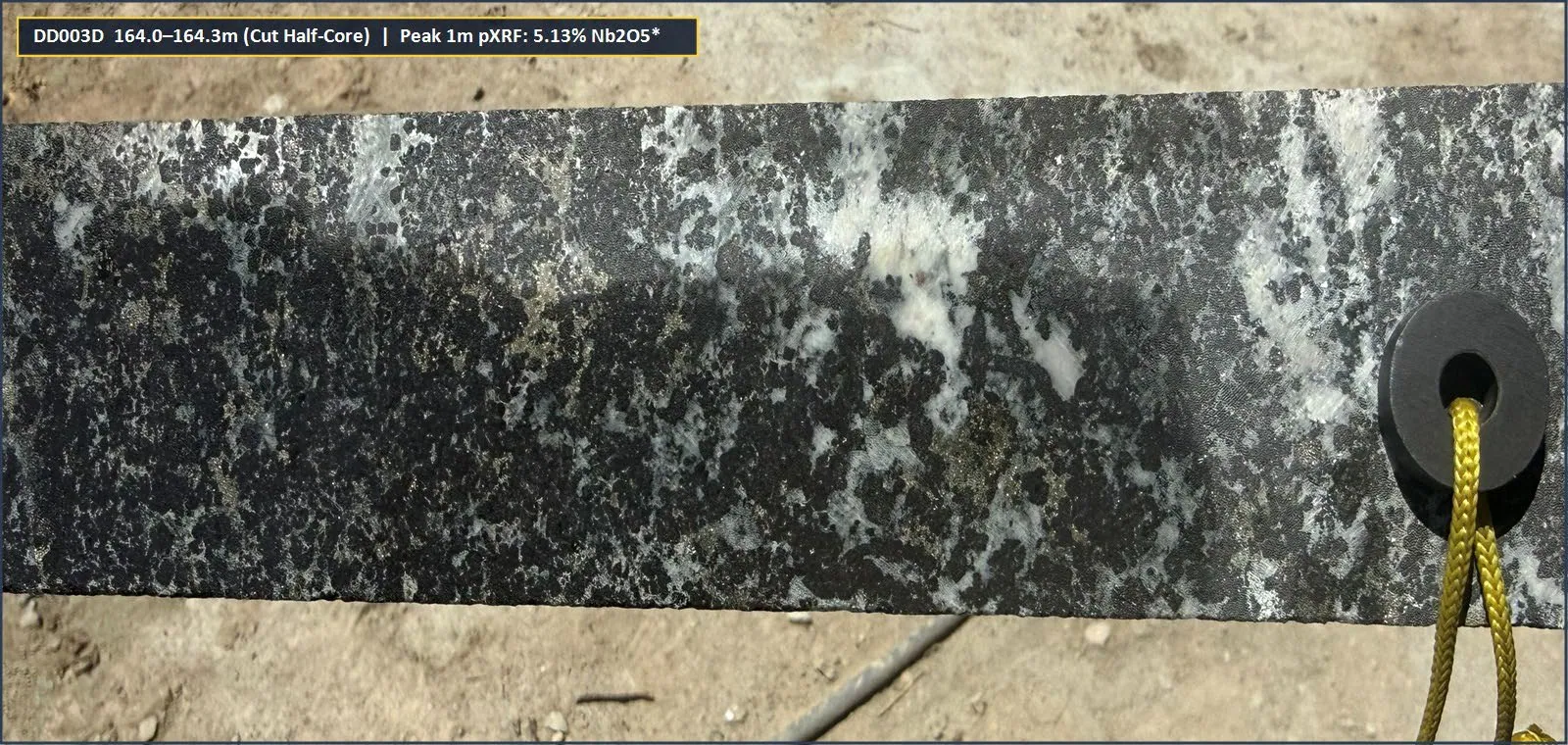
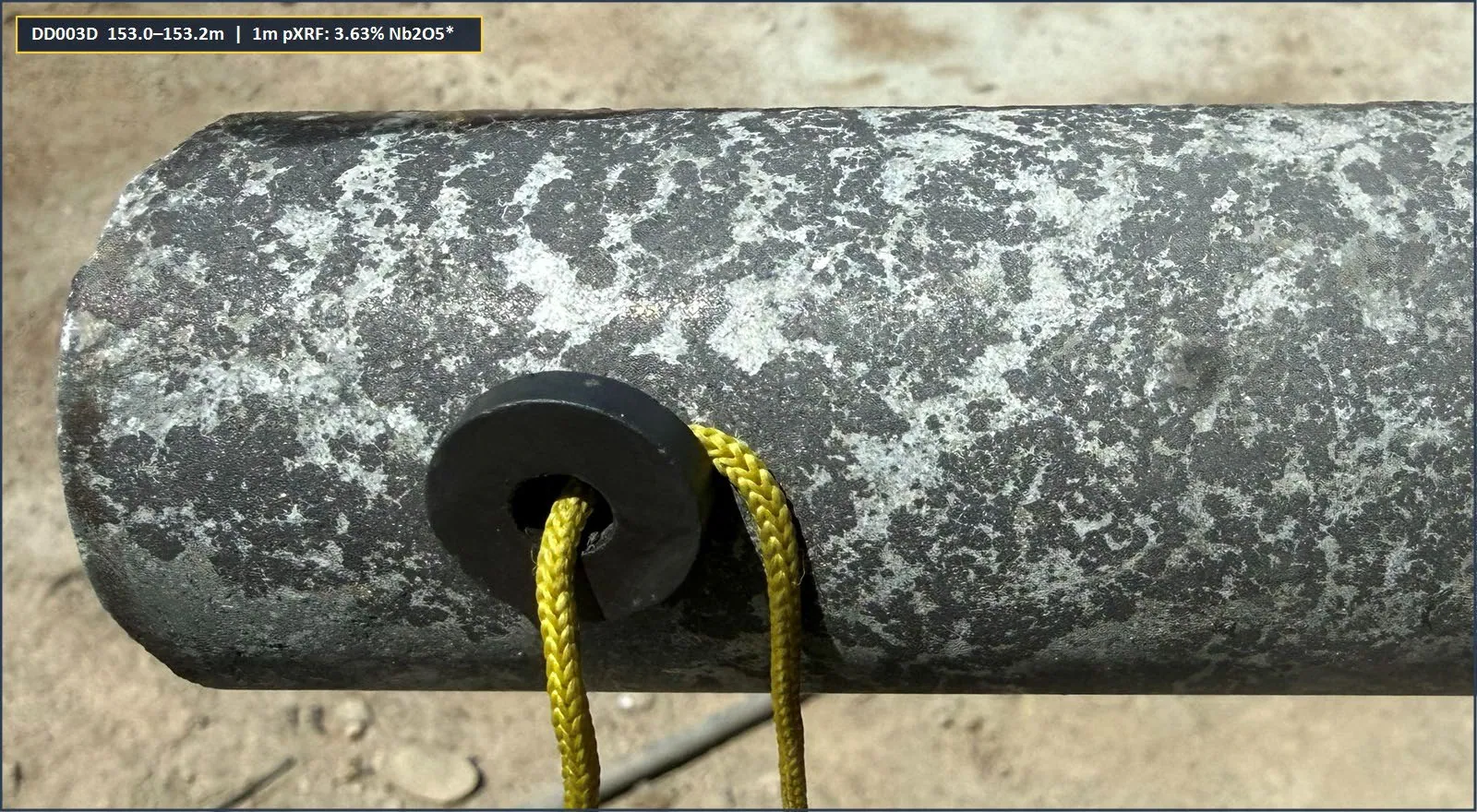
Hole DD003D returned a continuous 34.0-metre interval averaging 1.01% Nb₂O₅ from 134.0 metres to the current hole depth of 168.0 metres, based on portable XRF screening. Inside that zone, a 21.0-metre interval averaged 1.52% Nb₂O₅, with a peak one-metre reading of 5.13% Nb₂O₅.
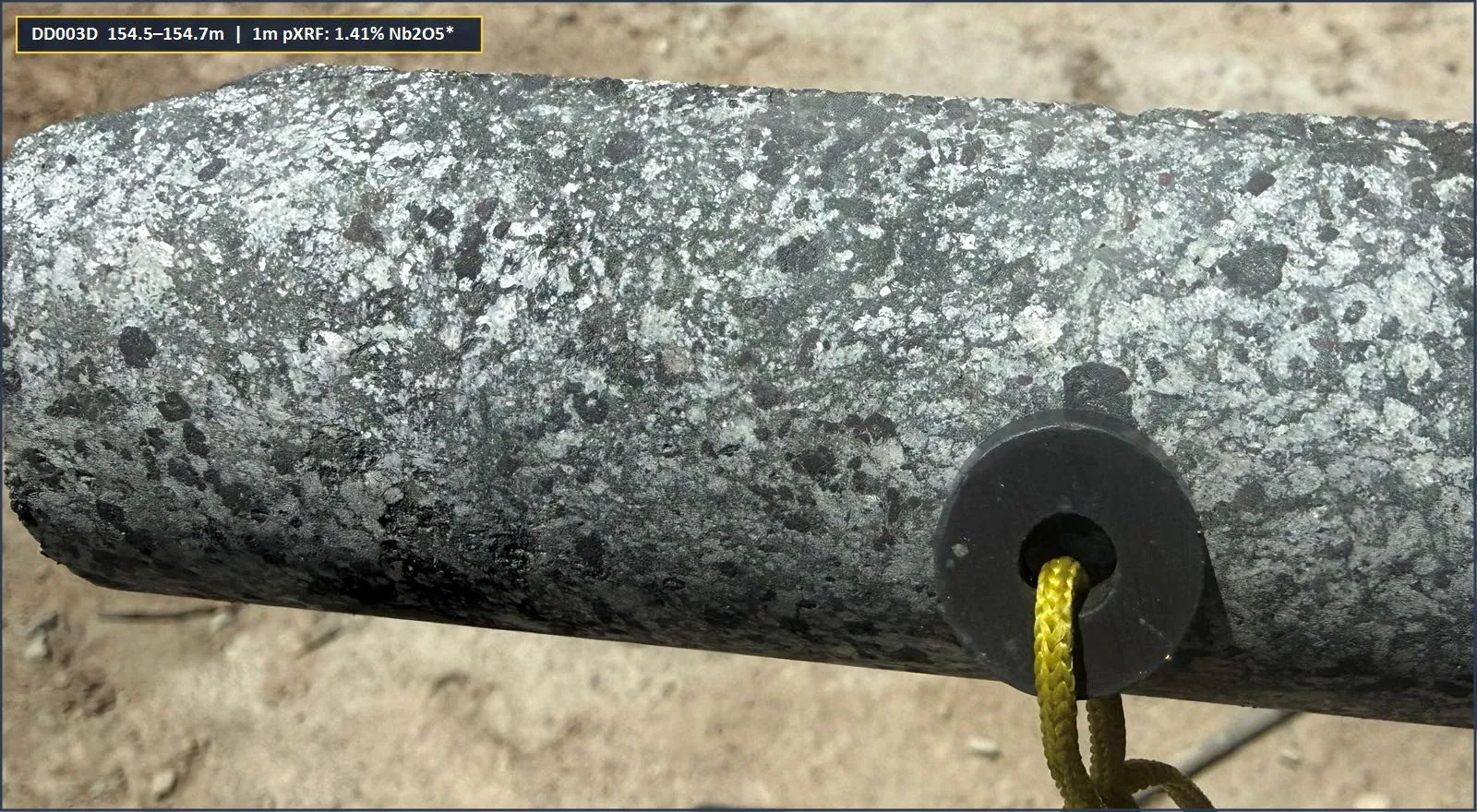
The hole was drilled beneath a modelled ground magnetic peak on Kameelburg’s northern flank. Aldoro said the result supports its interpretation that magnetic anomalies can help locate niobium-rich, magnetite-bearing zones, although the intersection is reported as downhole length and its true width has not yet been established.
Preliminary readings point to a higher-grade core
The company’s existing Kameelburg resource contains 804.5 million tonnes at an average 0.19% Nb₂O₅, or approximately 1.53 million tonnes of contained niobium pentoxide. The significance of DD003D is therefore less about expanding the headline resource immediately and more about whether discrete, higher-grade zones can be defined within it for possible priority mining sequences and early plant feed.
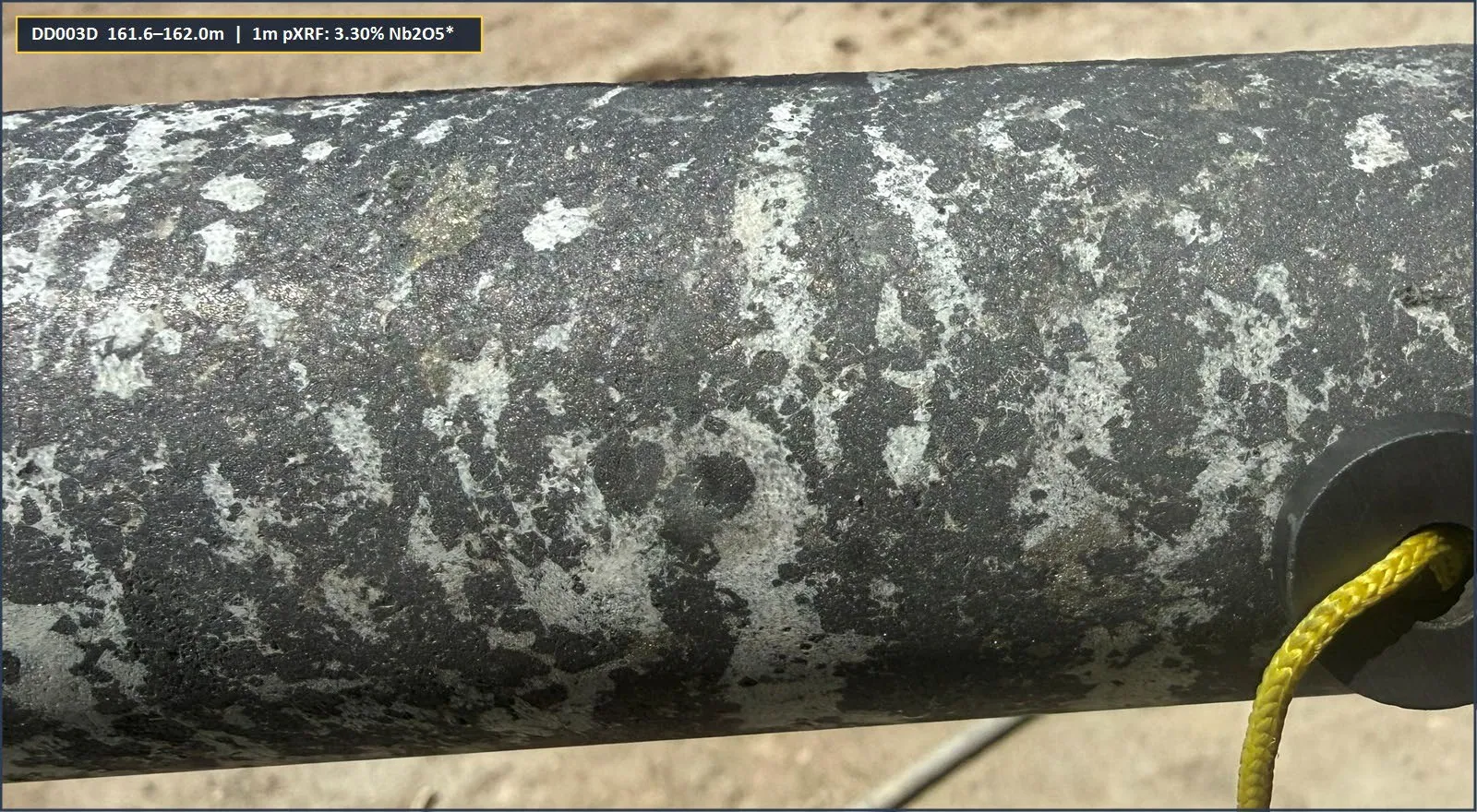
That proposition remains untested. Portable XRF is a semi-quantitative field screening technique, and Aldoro’s comparison of the same instrument against 15 previously assayed samples found a strong correlation but also an average positive bias of about 22%, with laboratory niobium averaging roughly 78% of the raw pXRF readings across the tested range. Coarse pyrochlore-magnetite grain sizes and surface measurement effects add further limits.
Laboratory assays and metallurgical work become the next tests
Half-core samples from the mineralised section have been cut and dispatched to an independent accredited laboratory in Australia for formal multi-element analysis. Those results will be needed before the company can assess the grade profile with the level of confidence required for resource, mining or economic studies.
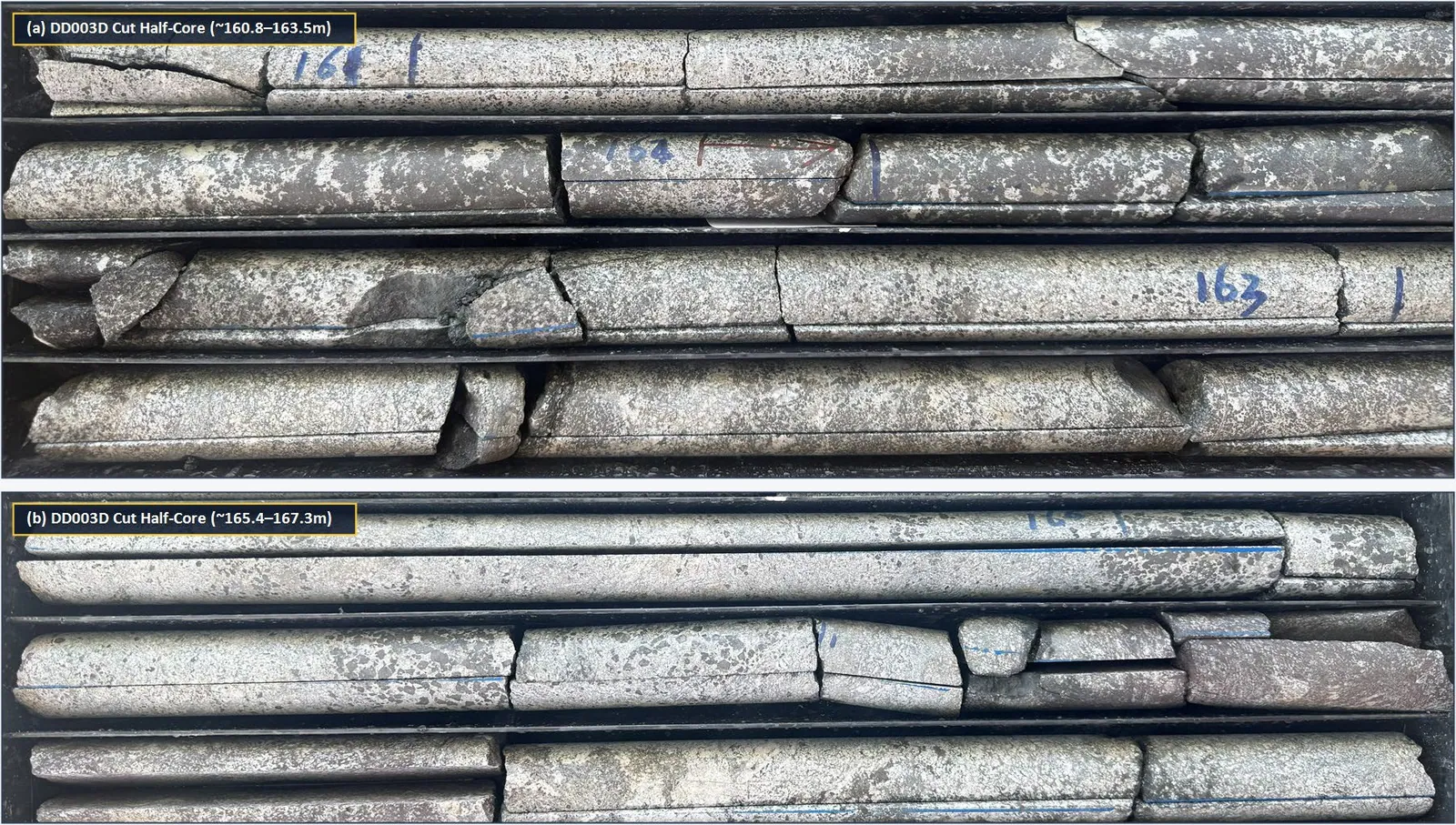
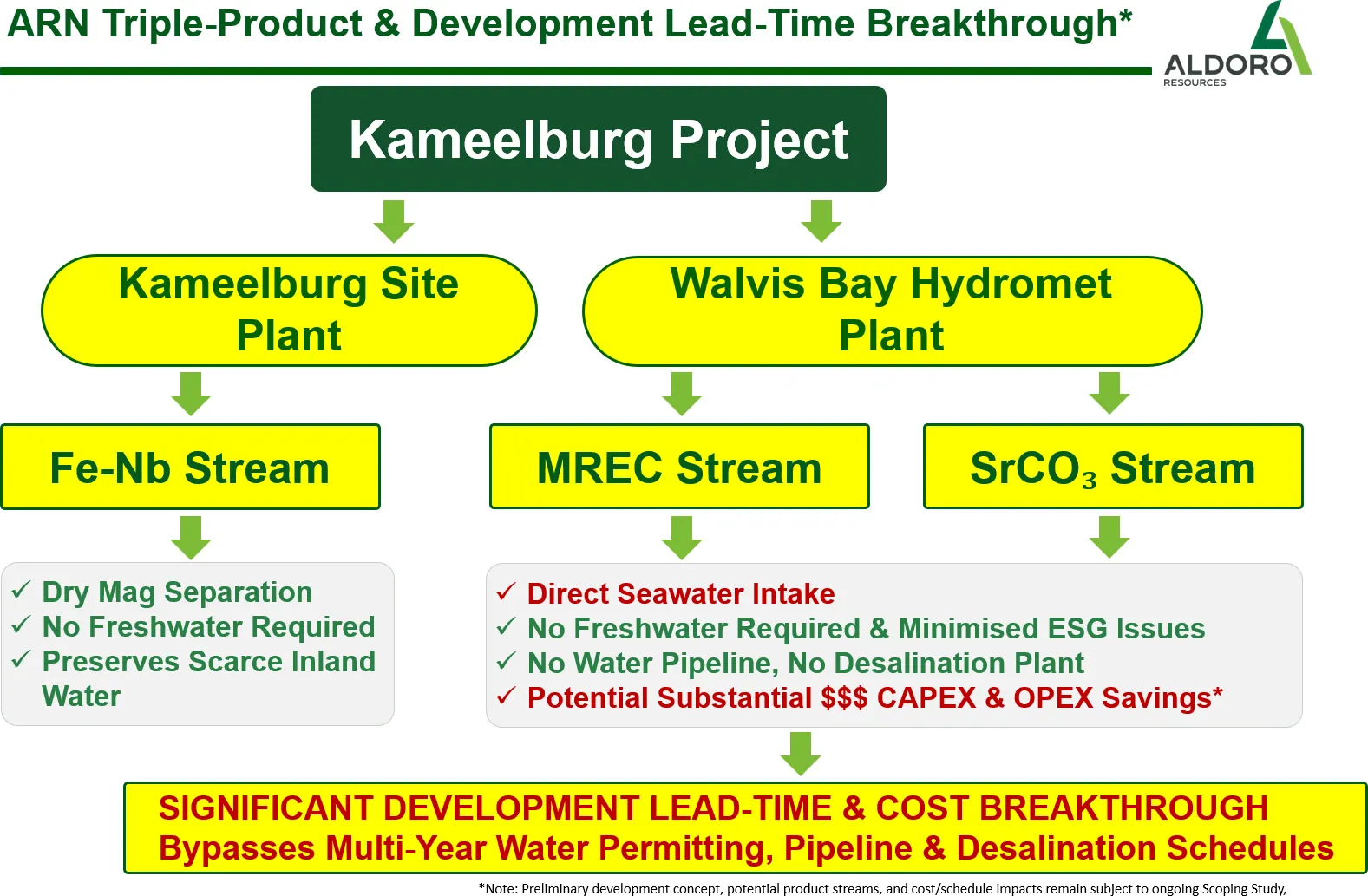
The mineralisation is closely associated with coarse to semi-massive magnetite. Aldoro says that relationship could support further assessment of magnetic pre-concentration and a waterless mine-site front end within its dual-site development concept. The work sits alongside the project’s existing processing program, including the Kameelburg flowsheet validation, which previously produced rare earth and strontium carbonate samples.
Aldoro has also begun engaging niobium specialists for additional metallurgical testwork focused on concentrate grade, impurity control and potential industrial customer specifications. The company previously reported 62.4% niobium recovery, but the new work is aimed at the quality of the final concentrate rather than recovery alone.
Drilling will test depth and continuity
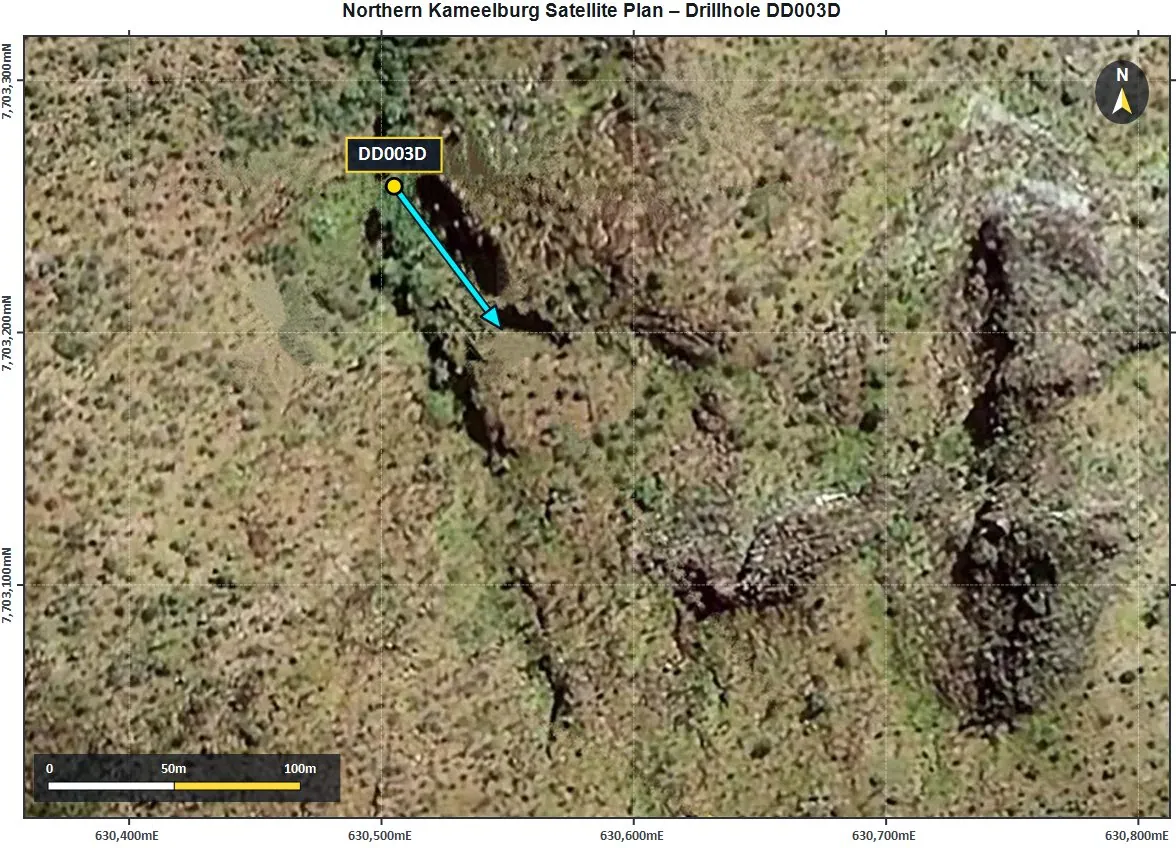
DD003D is planned to deepen beyond 168 metres to test the full extent of the mineralised beforsite horizon. Follow-up Phase 3 holes are also planned across the northern magnetic corridor, with the stated aim of defining a coherent higher-grade inventory for the scoping study and mining licence preparations.
For shareholders, the immediate question is whether the striking pXRF profile survives laboratory testing and repeats across enough holes to influence mine sequencing. Until then, the result is an encouraging exploration signal rather than a confirmed economic interval.
Get ASX:ARN news the moment it breaks
 iPhone & iPad
 Android
Bottom Line?
The result improves Kameelburg’s geological case, but laboratory assays, true widths and repeat drilling will decide whether the higher-grade concept is mine-planning material.
Questions in the middle?
- How closely will the formal laboratory assays match DD003D’s preliminary pXRF readings?
- Will follow-up drilling show that the 21-metre higher-grade core has meaningful lateral and depth continuity?
- Can future metallurgical work produce a saleable niobium concentrate that meets industrial customer specifications?
Sources
1-
Kameelburg Phase 3 First Hole Hits High-Grade Niobium (opens in a new tab)Official market announcement. Aldoro Resources Limited · 18 Nov 2026 · aldororesources.com