Ballard’s Kestrel drilling opens a wider path for Mt Ida

Ballard Mining has reported broad, shallow gold intersections at Kestrel and additional mineralisation within Baldock’s optimised open-pit shell. The results support the company’s resource-growth strategy, but will not change the 1.84Moz estimate until a new geological model and MRE are completed.
- 32m at 2.4 g/t gold at Kestrel
- Mineralisation identified outside Baldock’s current resource
- Kestrel and Golden Vale infill programs complete
- West Knell drilling due for completion in January 2027
- Updated Mt Ida MRE anticipated in H1 2027

 Add us as a preferred source on Google
Kestrel delivers broad shallow intersections
Ballard Mining (ASX:BM1) has produced some of its strongest recent drilling results at Kestrel, where infill holes returned 32 metres at 2.4 g/t gold from 59 metres and 27 metres at 1.3 g/t from 60 metres. Other results included 3 metres at 11.2 g/t from 15 metres, 12 metres at 1.7 g/t from 20 metres and 5 metres at 3.5 g/t from 4 metres.
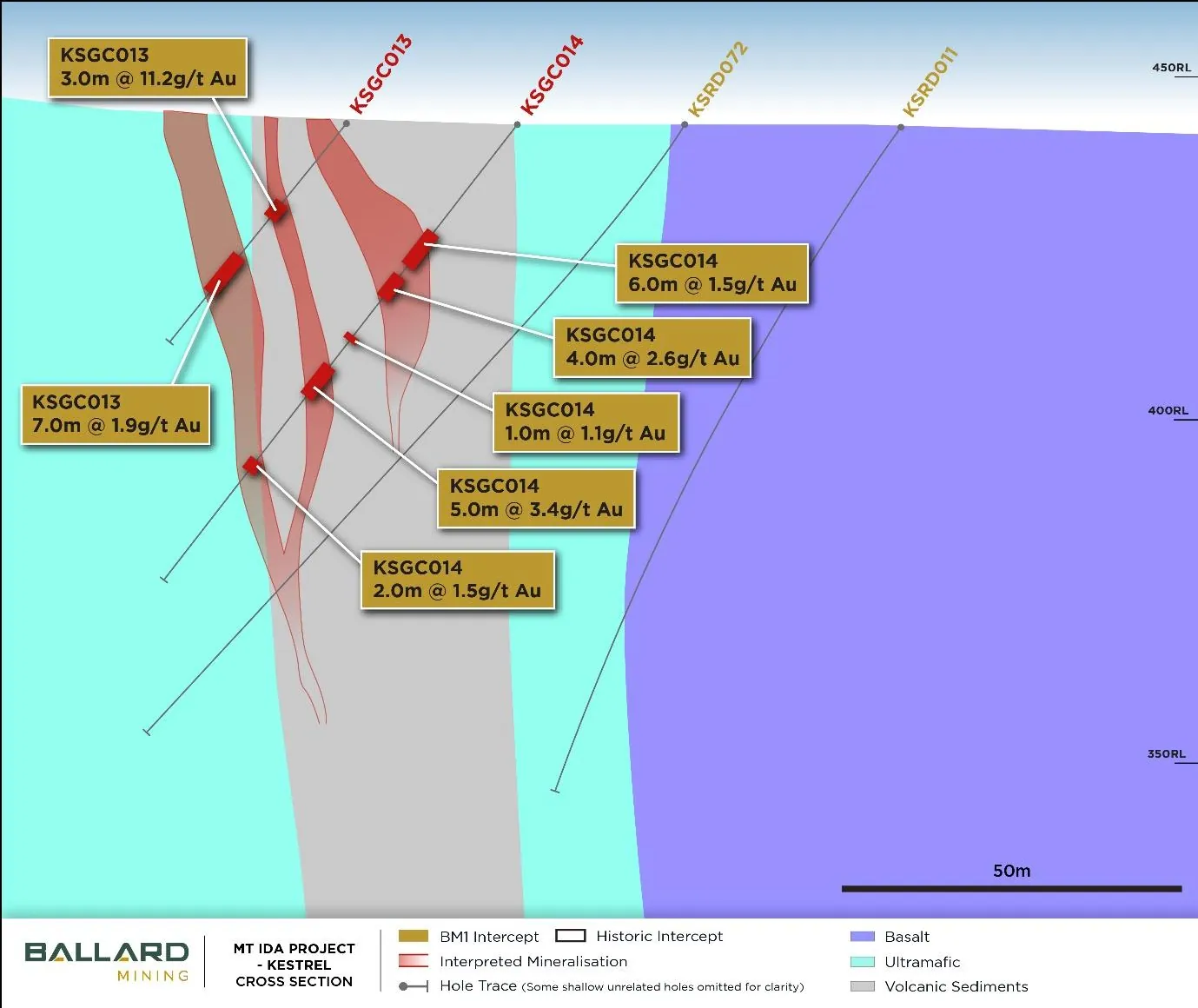
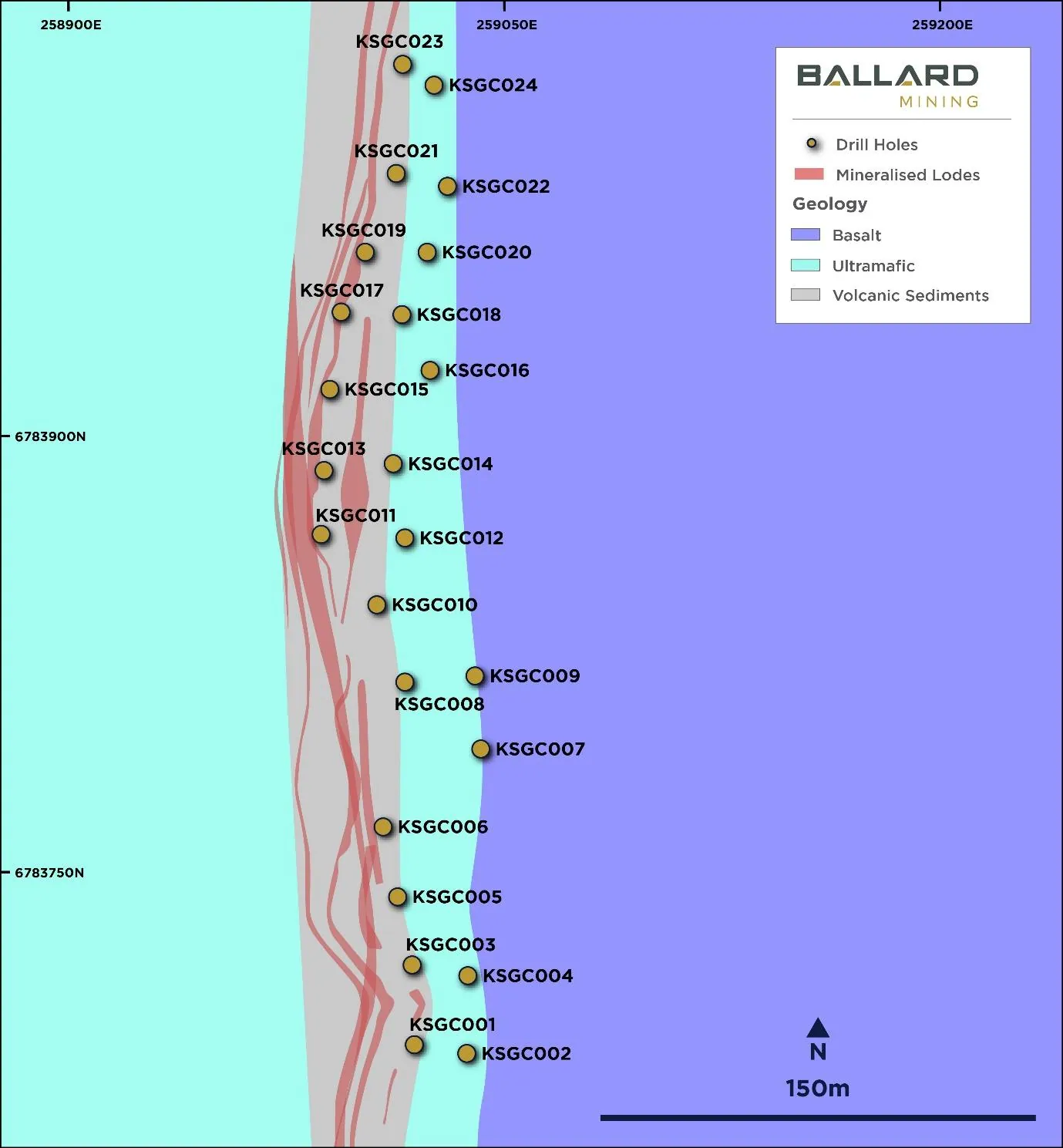
The Kestrel deposit currently contains an entirely Inferred resource of 1.02 million tonnes at 1.6 g/t for 53,000 ounces. The deposit stretches across about 1,500 metres along the Ballard Shear, with mineralisation remaining open at depth, although drilling to date has generally tested only the first 150 metres. The current infill program is complete, with final assays still to come before Ballard finalises its geological model.
Baldock drilling expands the mine-planning picture
At the cornerstone Baldock deposit, drilling intersected mineralisation outside the current resource but within the existing open-pit optimisation shell. Results included 7 metres at 2.5 g/t gold from 77 metres, 5 metres at 3.2 g/t from 21 metres, 3 metres at 4.6 g/t from 155 metres and 3 metres at 3.8 g/t from 290 metres.
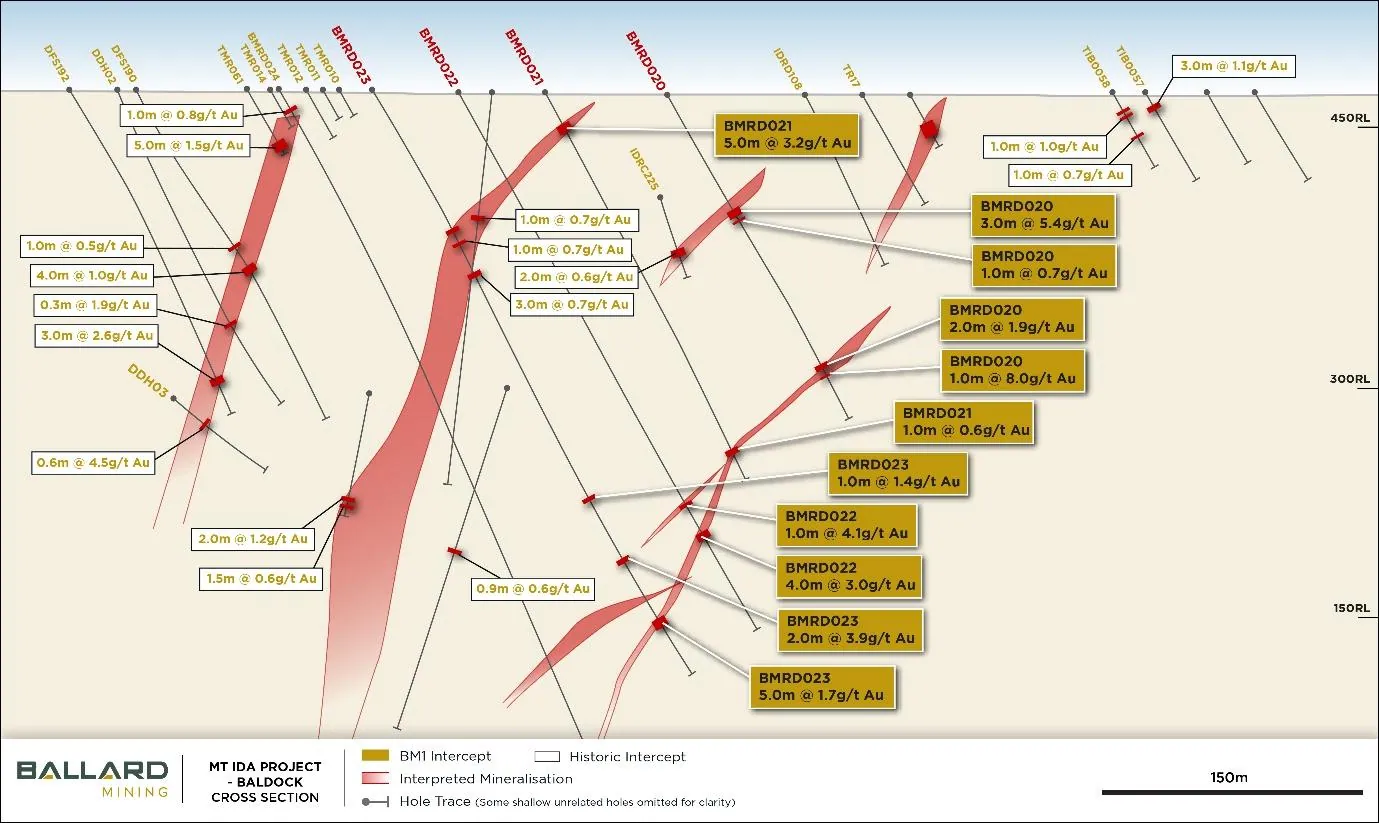
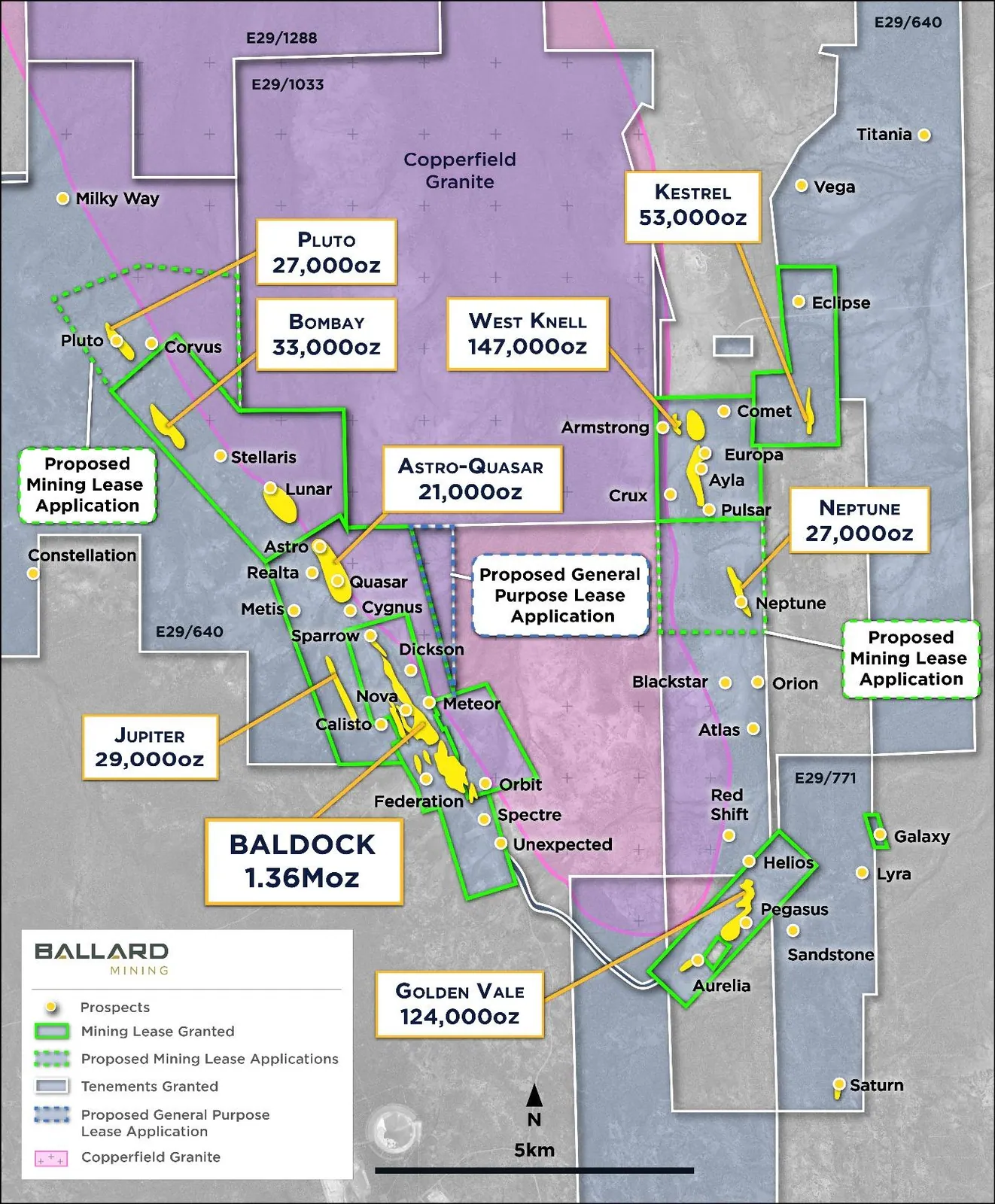
Those intersections add to the company’s recent work around Baldock, which has a current MRE of 12.2 million tonnes at 3.5 g/t for 1.36 million ounces, including 437,000 ounces classified as Indicated open-pit resources. The results arrive after the September resource upgrade lifted Mt Ida’s global MRE by 56% to 1.84 million ounces. Ballard said the new Baldock drilling, together with the previously identified Vortex lode, will be incorporated into the next geological interpretation and resource estimation process.
Resource conversion remains the next test
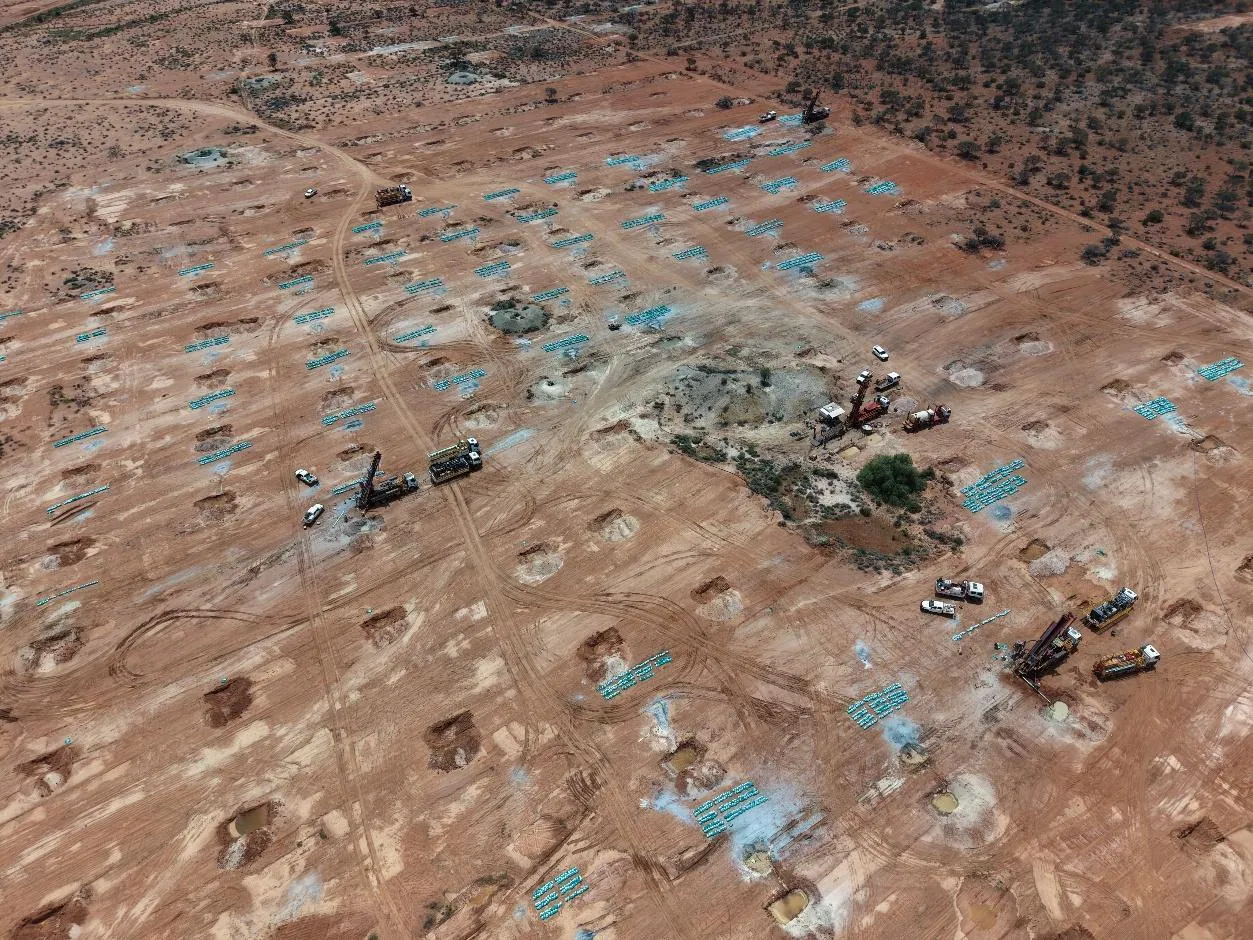
Ballard is using the drilling to improve confidence in the continuity of geology and grades, with the potential to assess Inferred material for conversion to the Indicated category. Phase 1 infill drilling has been completed at Golden Vale, which hosts 124,000 ounces at 1.6 g/t, while three RC rigs and one diamond rig continue a planned 40,000-metre program at West Knell, where the existing Inferred resource stands at 147,000 ounces at 2.6 g/t.
The company anticipates an updated Mt Ida MRE in the first half of 2027, incorporating drilling completed since the 30 June 2026 cut-off. A further Baldock infill program is scheduled for February 2027, targeting an area inside the optimised pit shell that has not yet been drilled because of historical plant infrastructure.
Ballard’s announcement is positive exploration news, but it is not itself a resource upgrade. The reported intervals are downhole lengths, true widths are not currently known, and any change to tonnes, grade, contained ounces or resource classification depends on the formal estimation process. The immediate measure of progress will be whether the final assays and tighter drilling support the Indicated resource base needed for mine planning, an Ore Reserve and feasibility work.
Get ASX:BM1 news the moment it breaks
 iPhone & iPad
 Android
Bottom Line?
The drilling has strengthened the geological case at Mt Ida, but the investment-relevant conversion from promising intersections to higher-confidence resources remains ahead of the H1 2027 MRE.
Questions in the middle?
- How much of Kestrel’s 53,000-ounce Inferred resource can be supported by the completed infill drilling?
- Will the Baldock extensions inside the pit shell alter the next pit optimisation or eventual Ore Reserve?
- Can Golden Vale and West Knell deliver enough Indicated material to support the planned feasibility work?
Sources
1-
Drill results continue to build confidence in 1.84 Moz MRE (opens in a new tab)Verified company source. Ballard Mining Limited · 18 Nov 2026 · ballardmining.com.au