Kingston finds broad high-grade Upper A Lode zones ahead of 2027 updates

Kingston Resources has reported broad, high-grade polymetallic mineralisation at Mineral Hill’s Southern Ore Zone, led by an 18.50-metre intersection grading 7.63% copper equivalent. The results strengthen the geological model ahead of planned resource and reserve updates, but do not yet establish a restart decision.
- 18.50m at 7.63% CuEq in KSNDDH088
- Two broad massive sulphide zones in the Upper A Lode
- 10.20m at 5.15g/t gold in KSNDDH119
- 6,575m surface drilling now targeting Upper A Lode extensions
- SOZ Mineral Resource update targeted for March quarter 2027

 Add us as a preferred source on Google
Upper A Lode delivers the standout intersections
Kingston Resources Limited (ASX:KSN) has produced its strongest result from the latest Southern Ore Zone drilling at Mineral Hill, with hole KSNDDH088 returning 18.50 metres at 7.63% CuEq from 150.5 metres, including copper, gold, lead, zinc and silver. The estimated true width was 14 metres. The same hole also intersected a separate 17-metre zone grading 2.86% CuEq at an estimated true width of 15 metres.
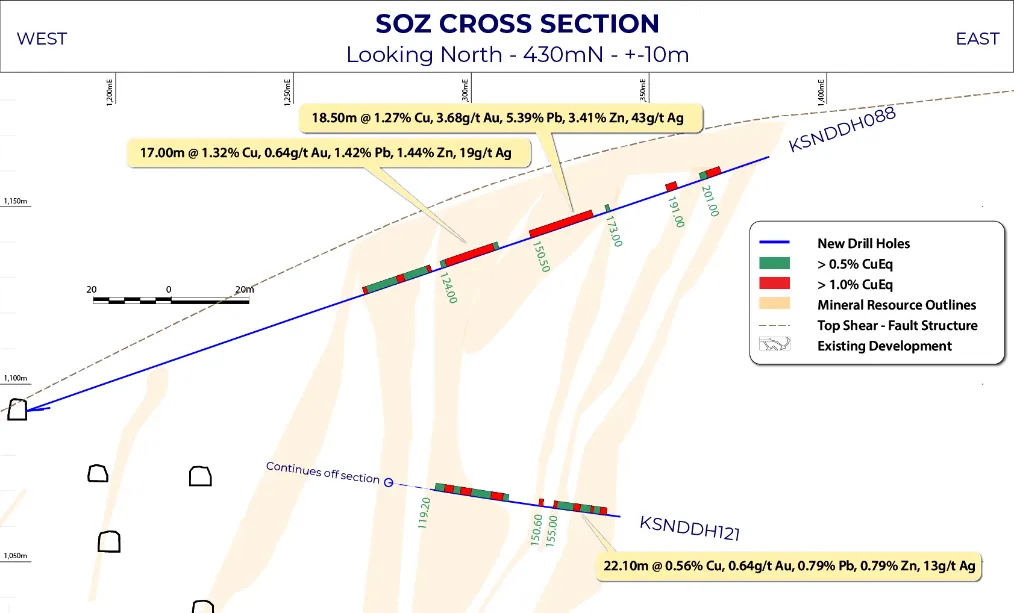
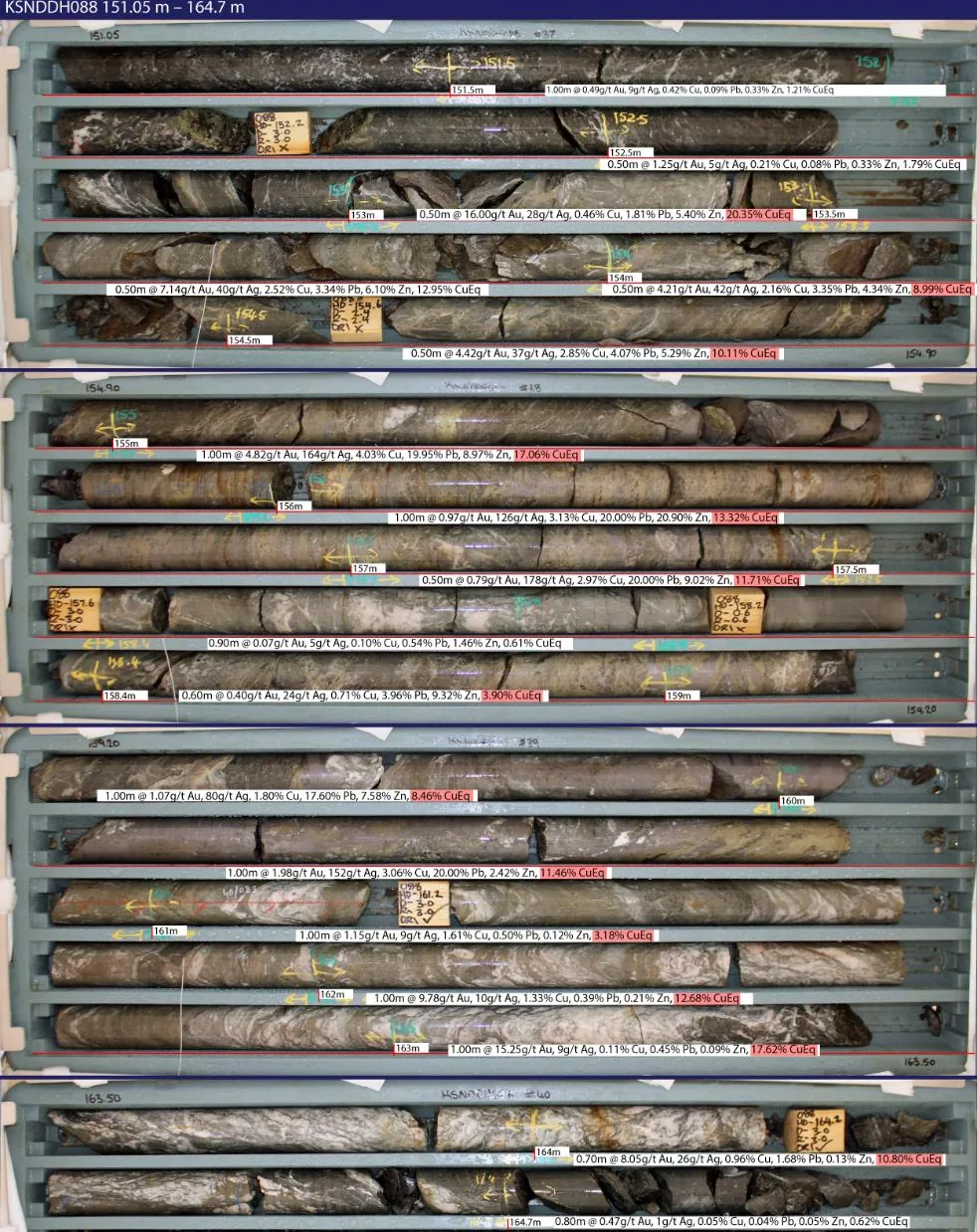
The result is notable for its width as much as its grade. Kingston describes the intervals as broad massive sulphide mineralisation containing chalcopyrite, galena and sphalerite. The hole sits 70 metres north of KSNDDH085, which previously returned a 22.10-metre high-grade interval within a wider 77.10-metre intersection. Together, the holes support the company’s interpretation of a broad, high-grade zone within the Upper A Lode. Earlier drilling had also confirmed Upper A Lode extensions to the east and south.
Infill drilling supports the existing geological model
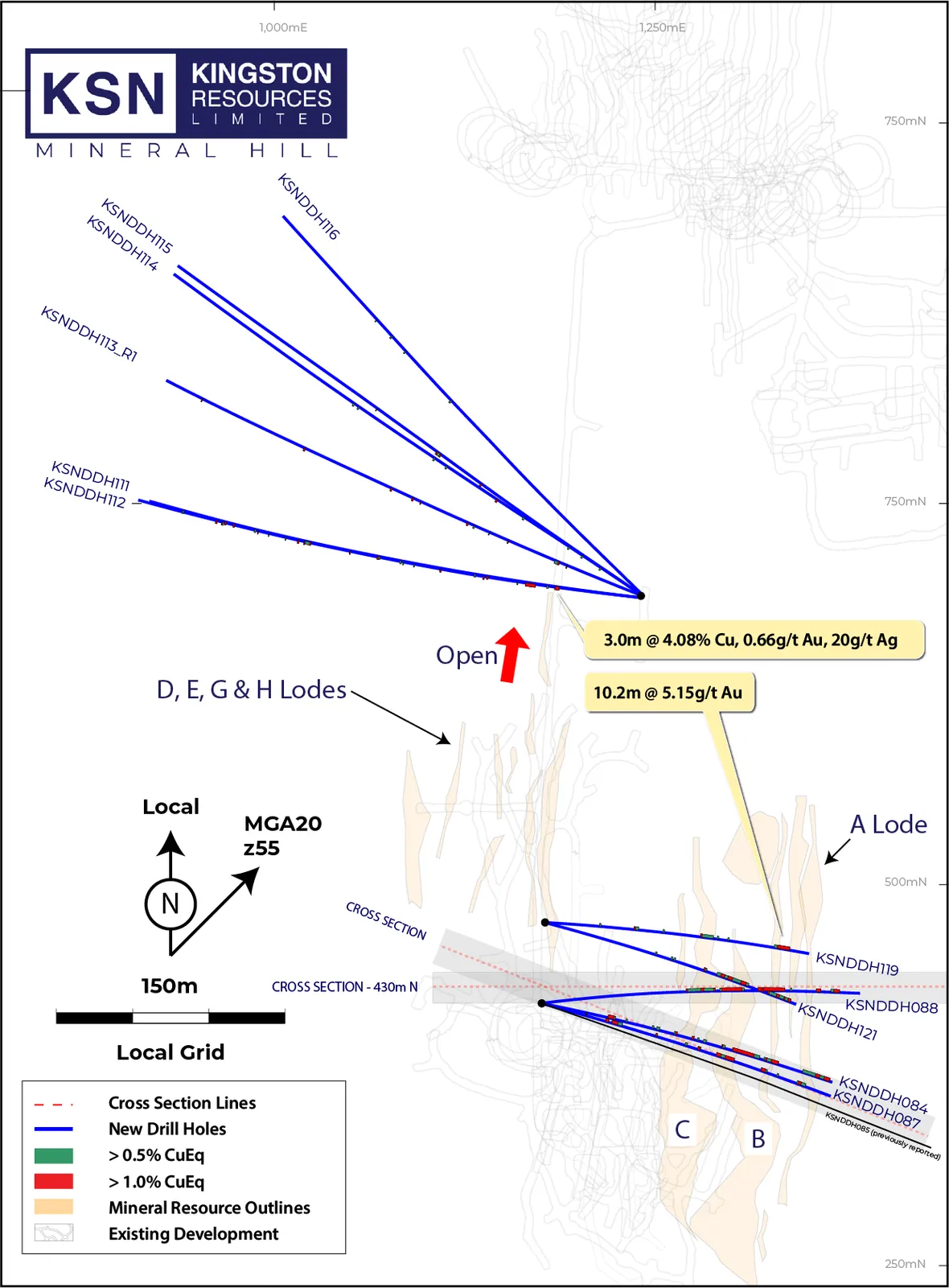
The latest program was not simply a hunt for new tonnes. Kingston said the eastern infill holes intersected the A, B and C Lodes in positions, widths and grade ranges predicted by its geological model. That matters because the drilling is aimed at increasing confidence in areas considered relevant to potential future underground mining, rather than necessarily expanding the resource footprint.
KSNDDH119 added a strong gold-led result, with 10.20 metres at 5.15 grams per tonne gold, equivalent to 6.11% CuEq, including 8.20 metres at 6.31g/t gold. KSNDDH121 intersected 22.10 metres at 1.78% CuEq with an estimated true width of 20 metres, which Kingston said may indicate a wider mineralised section in that zone.
Northern drilling leaves a deeper question
The northern holes continued to intersect D Lode mineralisation, including 3 metres at 5.20% CuEq in KSNDDH111 and 8.20 metres at 2.01% CuEq in KSNDDH112. But the picture was less uniformly strong: holes KSNDDH114 to KSNDDH116 intersected the host structure farther north while returning declining grades at the tested elevation.
Kingston believes mineralisation could continue below those holes, consistent with a northerly plunge observed elsewhere at Mineral Hill. That possibility remains untested, so the northern results offer a target for follow-up drilling rather than a settled extension of the high-grade zone.
Surface drilling moves to the Upper A Lode
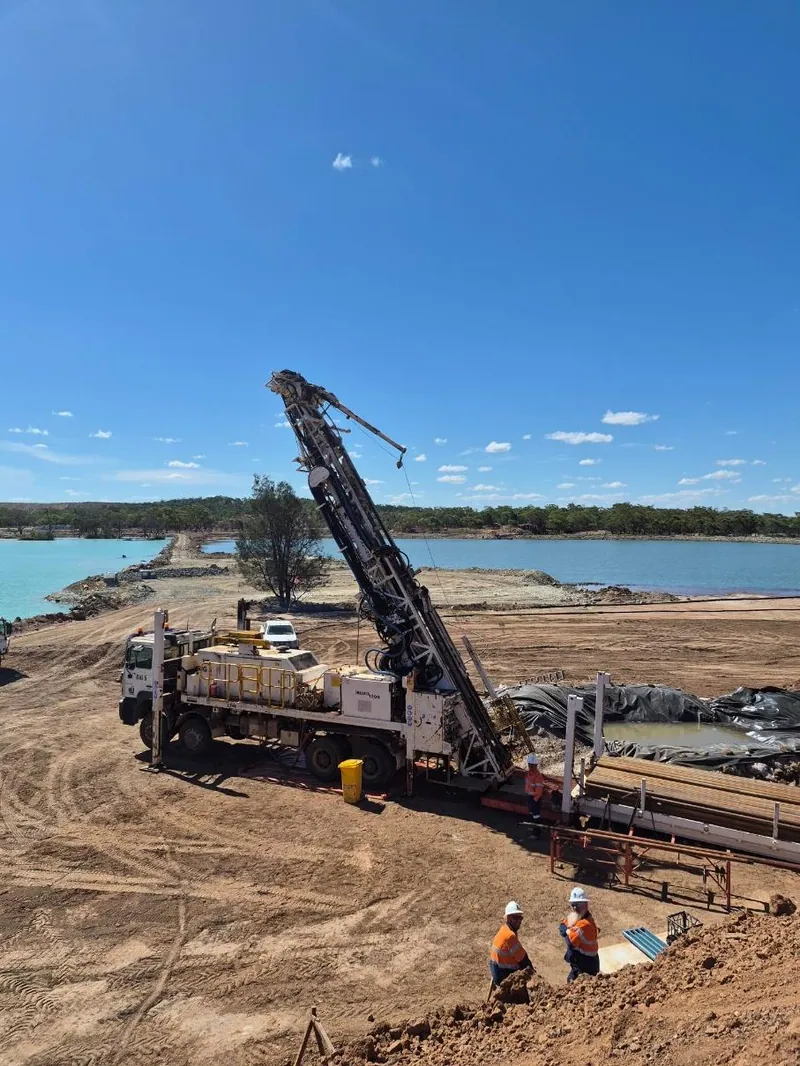
A surface rig has arrived at site and is collaring its first hole into the Upper A Lode. The planned surface program covers 6,575 metres of diamond and reverse-circulation drilling across the Upper A Lode, Jack’s Hut Deeps, Parker’s Hill East, Iodide Extensions and Southern Ore Zone footwall lodes. The underground rig remains active, with assays pending from the southern footwall lodes. The work forms part of Kingston’s broader FY27 drilling campaign, which was described as the company’s largest annual campaign at Mineral Hill since 1999.
Resource and reserve updates are the next tests
Kingston plans to incorporate the results into a Southern Ore Zone Mineral Resource update targeted for the March quarter of 2027, followed by an Ore Reserve update targeted by June. Those studies are intended to inform mine planning and the assessment of a potential underground restart at Mineral Hill, which is currently on care and maintenance.
The numbers should nevertheless be read as exploration results, not as a production forecast. The reported CuEq figures use Kingston’s stated metal prices and recovery assumptions and exclude smelting, refining, penalties and payability effects. The critical next step is whether the new drilling can translate geological confidence into an economic mine plan, including a defined production scale, mine life and capital requirement.
Get ASX:KSN news the moment it breaks
 iPhone & iPad
 Android
Bottom Line?
The Upper A Lode has become Kingston’s clearest near-term geological catalyst, but the investment case still turns on the 2027 resource, reserve and restart studies rather than on isolated drill intersections.
Questions in the middle?
- Will surface drilling confirm that the broad Upper A Lode mineralisation continues along strike and to the east?
- How much of the new drilling will improve resource confidence, and how much could add new tonnes?
- Can the updated Ore Reserve support an underground restart once production scale and capital requirements are defined?
Sources
1-
High-Grade Gold and Copper Drill Results (opens in a new tab)Verified company source. Kingston Resources Limited · 18 Nov 2026 · kingstonresources.com.au