AACo lifts Operating Profit 63% to $64.8 million as beef sales rise

Australian Agricultural Company has posted a 63% jump in first-half Operating Profit to $64.8 million as premium beef pricing and sales volumes strengthened. Statutory net profit fell 26%, however, after a smaller herd valuation gain and higher production costs weighed on the result.
- Operating Profit rises 63% to a record $64.8 million
- Beef sales revenue increases 18% to $178.6 million
- Statutory net profit falls 26% to $60.8 million
- Net operating cash flow improves to $25.7 million
- Gearing eases to 21.8% with $212 million undrawn capacity

 Add us as a preferred source on Google
Premium beef drives record operating result
Australian Agricultural Company Limited (ASX:AAC) has produced its strongest first-half Operating Profit on record, with premium beef demand pushing the adjusted measure 63% higher to $64.8 million for the six months ended 30 September 2026. Revenue rose 8% to $251.0 million, but the headline operating performance did not flow through to statutory profit.
Beef sales revenue climbed 18% to $178.6 million, helped by a 10% increase in average selling prices to $20.39 per kilogram and a 5% lift in volumes. AACo said strategic market allocations, stronger brand equity and demand for premium product supported margins, although geopolitical disruption raised processing, logistics and other input costs.

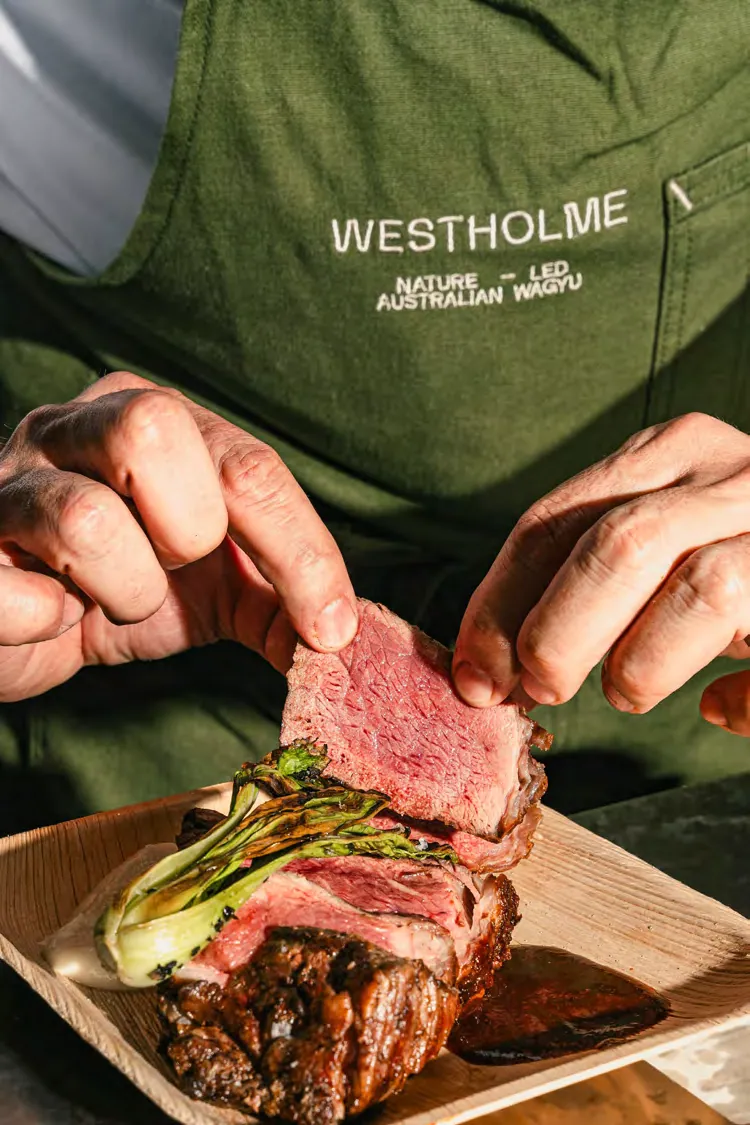
The United States became AACo’s largest sales market, with beef revenue there rising 57% to $47.5 million. In Asia, Westholme expanded into premium foodservice, Darling Downs achieved 14% price growth in Korea and the company launched a MasterChef Asia partnership in September. Those gains came despite earlier-than-usual quota triggers in Korea and China and higher distribution costs into the Middle East.
Statutory profit falls as herd gain narrows
Statutory net profit after tax dropped 26% to $60.8 million, compared with $82.2 million a year earlier. The difference reflects the nature of AACo’s accounting and management measures: the result included a $70.5 million unrealised herd mark-to-market gain, down from $94.7 million, while higher costs reduced the benefit of livestock values in the statutory accounts.
Production economics also became more demanding. Cost of production rose 24% to $3.04 per liveweight kilogram, while cattle sales revenue fell 11% to $72.4 million as AACo deliberately reduced volumes to support herd development. Pricing for those cattle increased 35%, partly offsetting the lower volumes. The result extends the company’s emphasis on branded beef, but it also leaves the conversion of premium pricing into cash as an important test.
Cash flow improves while investment continues
Net operating cash flow increased to $25.7 million from $2.2 million, driven by stronger beef receipts and lower spending on the Better Beef program than in the prior corresponding period. Free cash flow improved by $11.3 million, although Core Free Cash Flow was a $3.0 million outflow after investment in existing assets.
AACo continued work on the Aronui feedlot expansion and added flood refuge infrastructure after the North Queensland flood losses affected three properties and 55,000 cattle. The company said information to date indicated no further flood-related losses needed to be recorded. Post balance date, it also acquired Adelong in Central Queensland, moving an important backgrounding and cropping property from leasehold to ownership.
The balance sheet remains positioned to fund that investment, with gearing easing to 21.8% from 22.3% at 31 March 2026, net tangible assets rising 4% to $3.04 a share and $212 million of undrawn debt capacity available under its facility. The company’s previous HY26 record profit was also built around premium beef and cattle pricing, but the latest figures show a different mix: stronger underlying operating earnings alongside lower statutory profit and a cash flow profile still absorbing growth expenditure.
AACo says constrained global red meat supply and demand for premium beef remain supportive, while El Niño, variable rainfall, fuel, interest and other input costs could complicate the second half. Management’s stated focus is to turn Wagyu demand into improved margins and cash flow. The key question is whether higher prices can continue to outrun the rising cost of producing and moving the product.
Get ASX:AAC news the moment it breaks
 iPhone & iPad
 Android
Bottom Line?
AACo’s operating momentum is clear, but the next test is whether premium pricing can produce sustained cash generation as production costs and climate risks rise.
Questions in the middle?
- Can AACo maintain its $20.39 per kilogram beef pricing as trade quotas and geopolitical disruption reshape market access?
- When will the Aronui expansion and Adelong acquisition translate into additional branded beef volumes and cash flow?
- How will El Niño, variable rainfall and the 24% rise in production costs affect second-half margins?
Sources
3-
FY27 Half Year Results Presentation (opens in a new tab)Official market announcement. Australian Agricultural Company Limited · 19 Nov 2026 · aaco.com.au
-
FY27 Half Year Media Release (opens in a new tab)Official market announcement. Australian Agricultural Company Limited · 19 Nov 2026 · aaco.com.au
-
FY27 Half Year Results - Appendix 4D (opens in a new tab)Official market announcement. Australian Agricultural Company Limited · 19 Nov 2026 · aaco.com.au