Walmart lifts FY27 targets as digital growth powers stronger retail results

Walmart has lifted its fiscal 2027 targets after revenue rose 5.2% and adjusted operating income grew 5.5% in constant currency. Strong eCommerce, advertising and membership growth offset weaker free cash flow, higher inventory and a fall in GAAP earnings.
- FY27 net sales growth guidance raised to 4.9% to 5.2% in constant currency
- Third-quarter revenue reached US$188.8 billion, up 5.2%
- Global eCommerce sales climbed 17%, with US eCommerce up 23%
- GAAP diluted EPS fell to US$0.62, while adjusted EPS rose to US$0.65
- Free cash flow declined US$2.0 billion as capital expenditure increased

 Add us as a preferred source on Google
Walmart Inc. (NASDAQ:WMT) raised its fiscal 2027 outlook after a quarter in which revenue reached US$188.8 billion and operating income rose 16%. The retailer’s underlying performance was less dramatic than the headline profit growth suggests, but stronger eCommerce, advertising and membership income gave management enough confidence to lift its full-year targets.
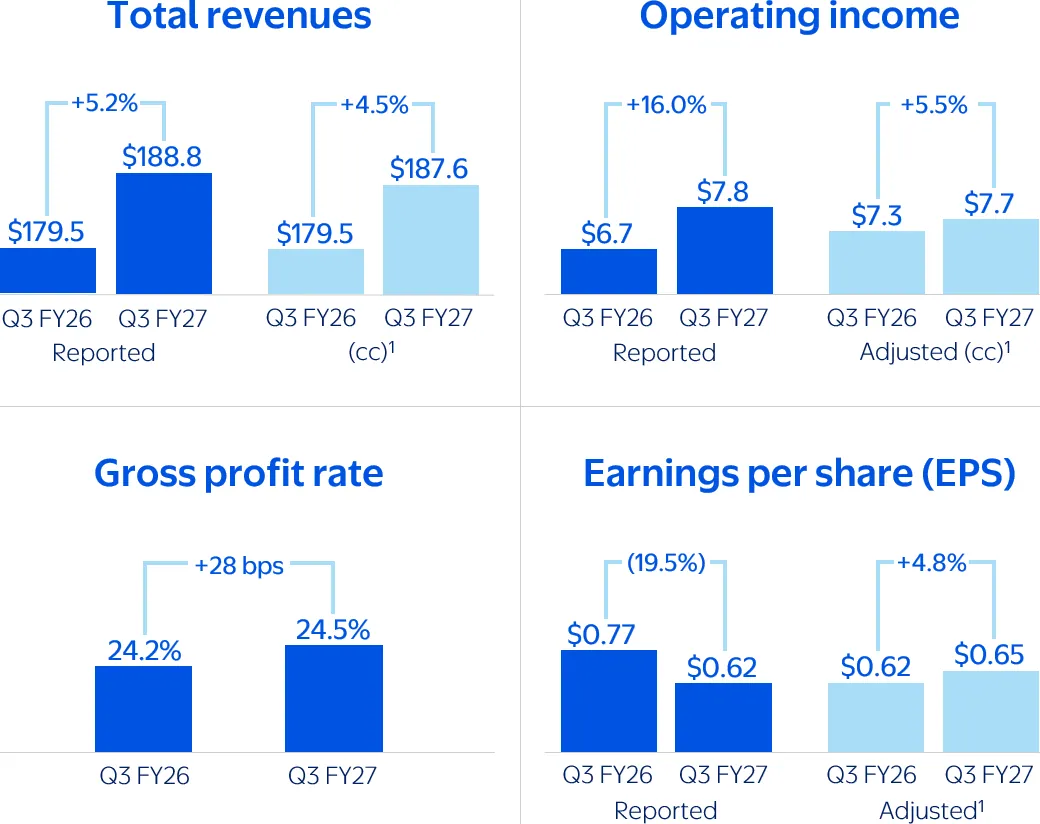
The revised guidance calls for fiscal 2027 net sales growth of 4.9% to 5.2% in constant currency, up from the previous 4.0% to 5.0% range. Adjusted operating income growth is now expected at 8.0% to 8.6%, compared with 7.0% to 8.5% previously, while adjusted EPS guidance moves to US$2.84 to US$2.89 from US$2.80 to US$2.87.
eCommerce and advertising drive the quarter
Global eCommerce sales increased 17%, led by store-fulfilled pickup and delivery, while Walmart US eCommerce grew 23%. Advertising added another source of momentum, rising 25% globally and 37% in the US. Membership fee revenue grew 17% globally, helped by Walmart’s new US bundle combining Walmart+ and Sam’s Club Plus for US$120 a year.

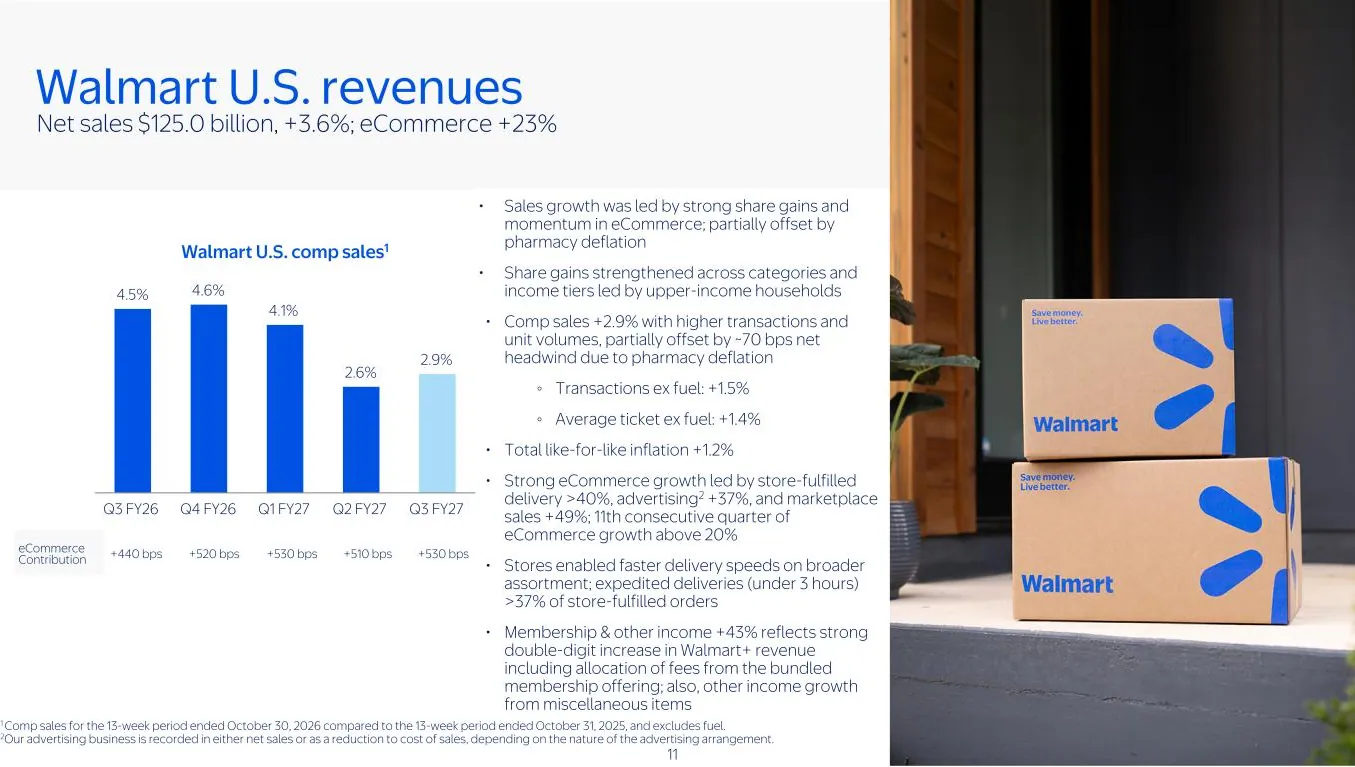
Walmart US delivered 3.6% net sales growth to US$125.0 billion and a 9.0% increase in operating income. Comparable sales excluding fuel rose 2.9%, with transactions up 1.5% and average ticket up 1.4%. Pharmacy deflation linked to maximum fair price regulation reduced the segment’s comparable-sales growth by about 70 basis points, according to the company.
International timing flatters the next quarter
Walmart International’s reported operating income more than doubled to US$1.6 billion, although the comparison benefited from the absence of a US$0.7 billion PhonePe share-based compensation charge recorded a year earlier. Adjusted operating income in constant currency rose 7.0% to US$1.5 billion.
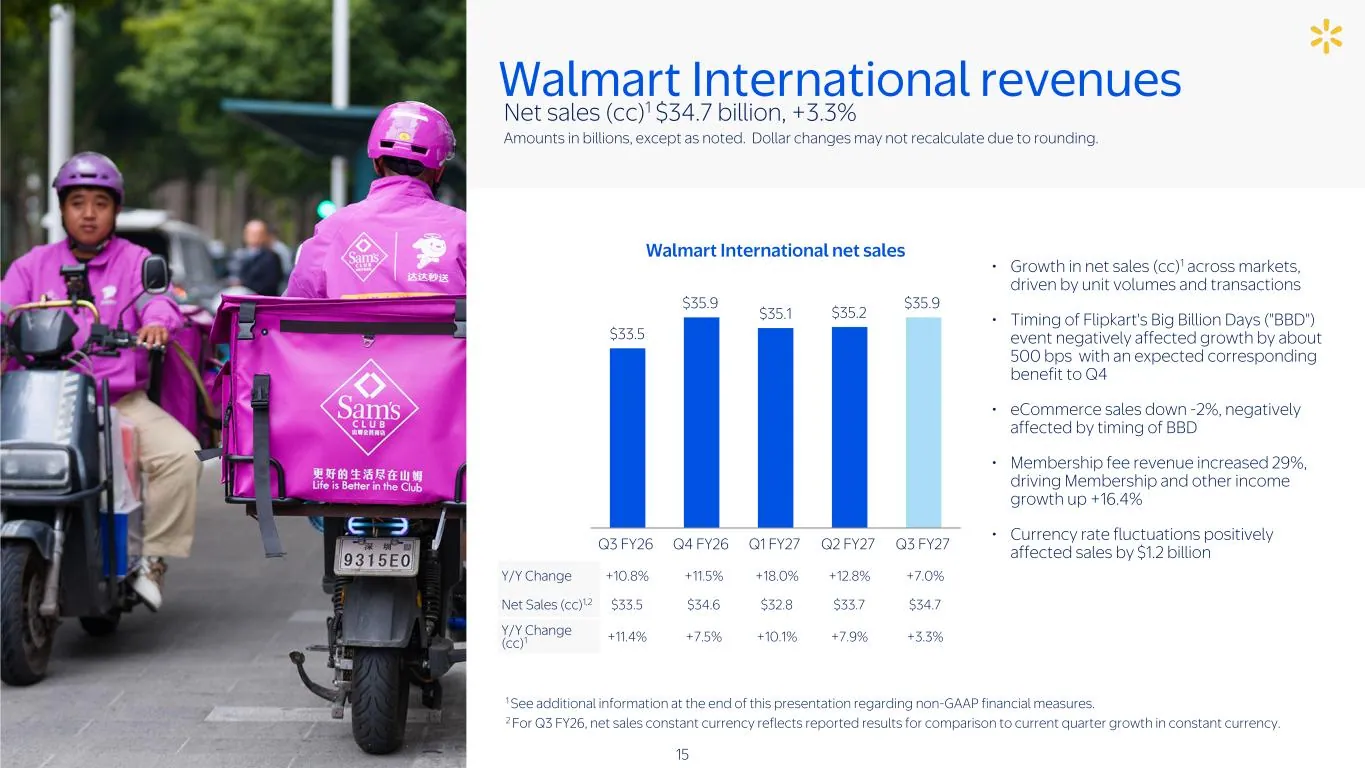
The timing of Flipkart’s Big Billion Days event cut International net sales growth by about 500 basis points and pushed eCommerce sales down 2% in the quarter. Walmart expects a corresponding benefit in the fourth quarter, making the next result an important test of whether the reported weakness was primarily calendar-related rather than a change in demand.
GAAP earnings fell while investment spending climbed
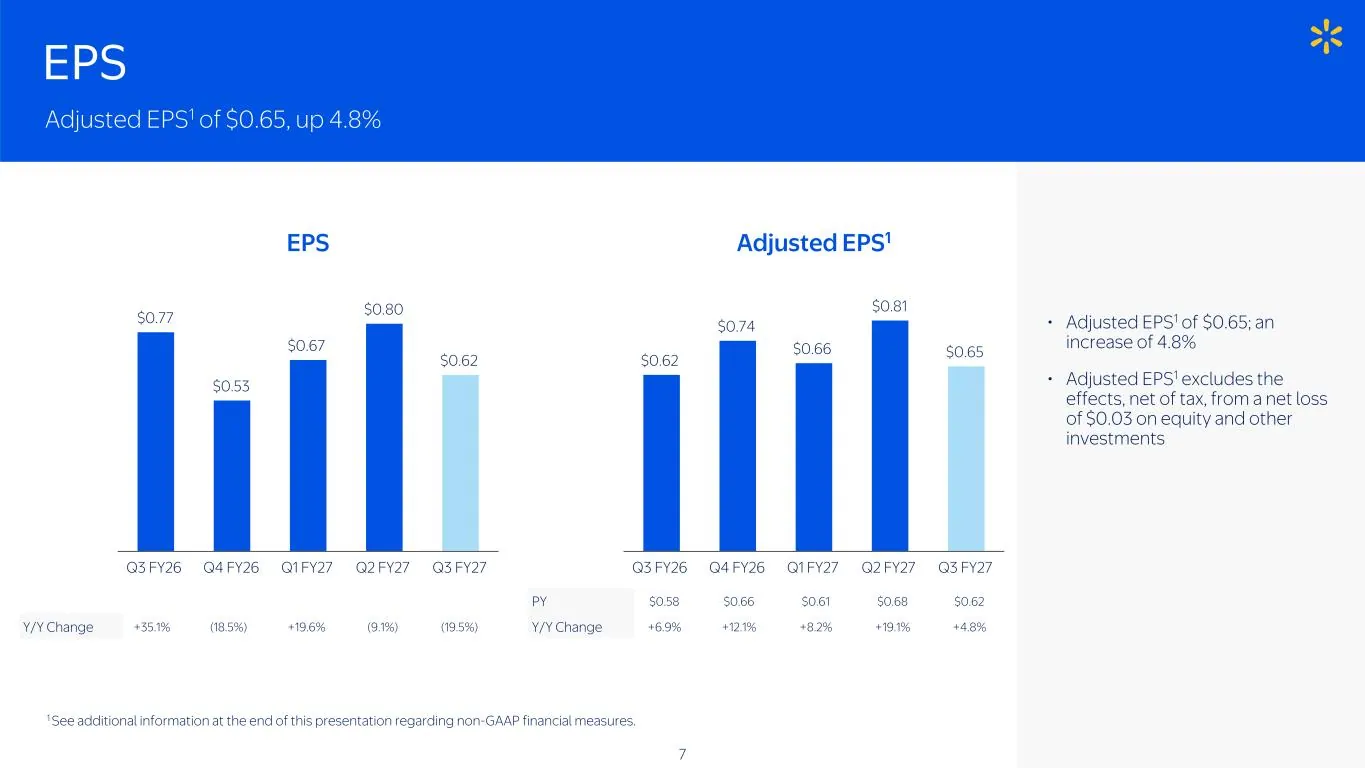
GAAP diluted EPS declined 19.5% to US$0.62, while adjusted EPS rose 4.8% to US$0.65 after excluding a US$0.03 after-tax loss on equity and other investments. Consolidated net income attributable to Walmart fell 19.5% to US$4.9 billion, reflecting investment valuation effects despite stronger operating income.
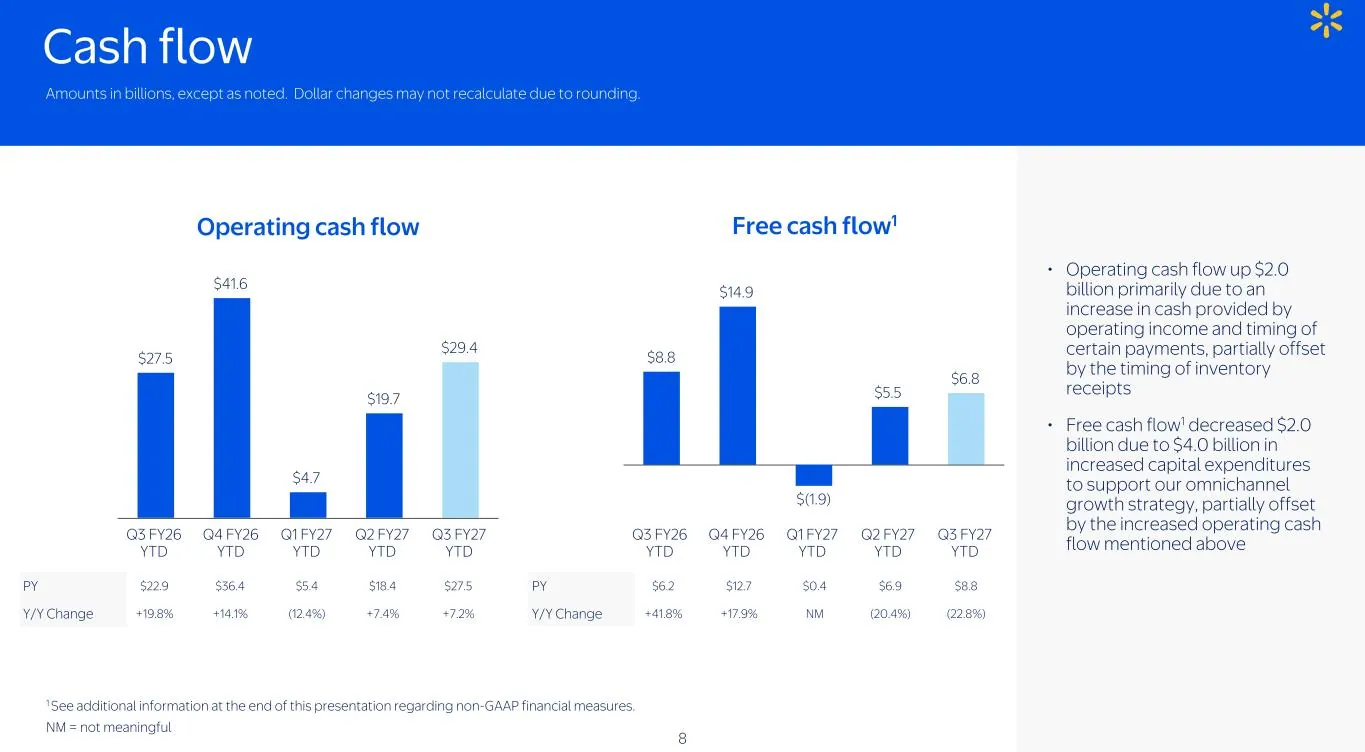
Cash generation also became less generous. Operating cash flow for the nine months rose to US$29.4 billion, but free cash flow, a non-GAAP measure, fell to US$6.8 billion from US$8.8 billion as capital expenditure increased by US$4.0 billion to support the omnichannel strategy. Inventory rose 8.1% to US$70.6 billion, while Walmart issued US$6.5 billion of long-term debt and had US$64.3 billion of total debt at quarter-end.
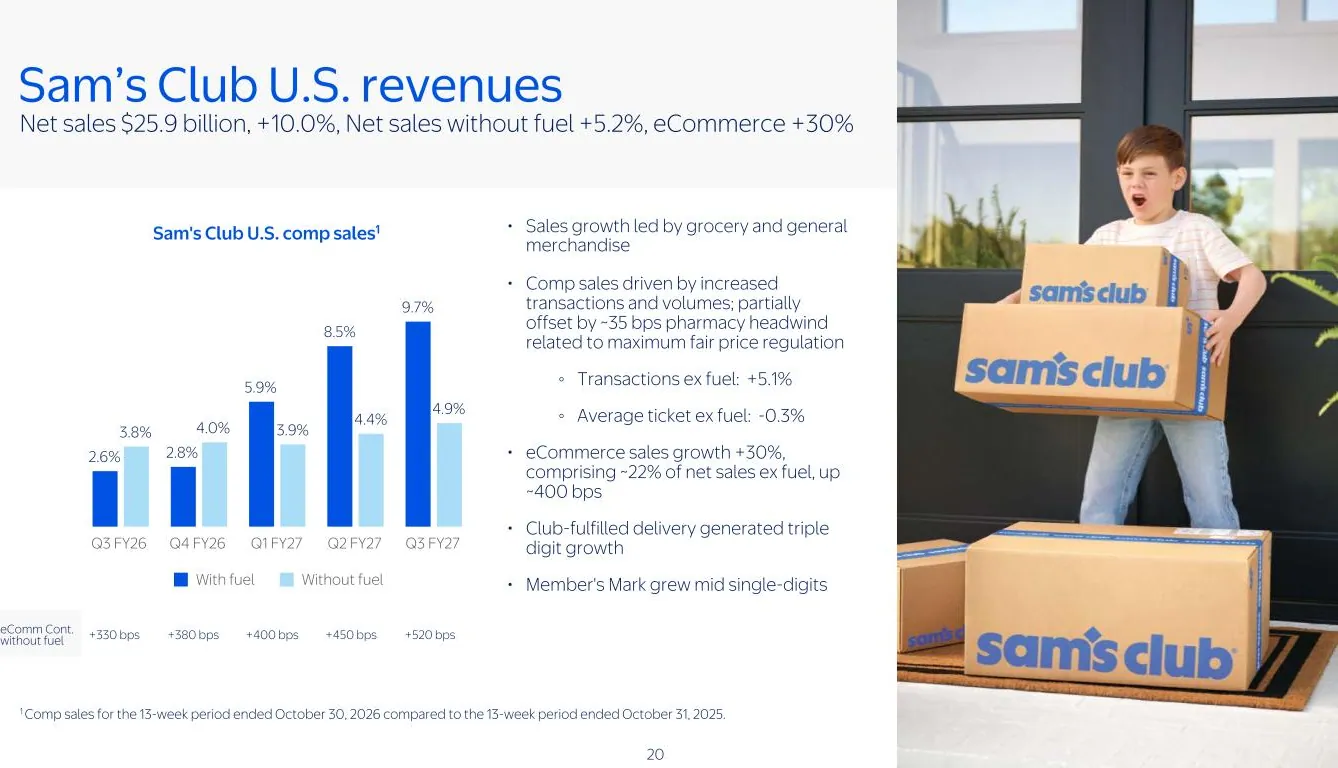
Sam’s Club remains a mixed piece of the picture: sales rose 10.0%, excluding fuel sales increased 5.2% and eCommerce grew 30%, but operating income fell 15.8% to US$547 million. The company said the bundled membership allocation, an inflation-related LIFO charge and the comparison with prior-year unredeemed rewards income will weigh on operating-income growth until the third quarter of fiscal 2028.
Get NASDAQ:WMT news the moment it breaks
 iPhone & iPad
 Android
Bottom Line?
The raised targets strengthen Walmart’s growth case, but the next quarter must show that Flipkart timing normalises without inventory and capital spending eroding cash returns.
Questions in the middle?
- Will the expected Flipkart Big Billion Days benefit produce the anticipated fourth-quarter recovery in International eCommerce and advertising?
- Can Walmart sustain double-digit eCommerce, advertising and membership growth while operating expenses continue to rise?
- How quickly will free cash flow recover as omnichannel investment and the new debt load work through the accounts?
Sources
1-
Results of Operations and Financial Condition (opens in a new tab)Official market announcement. SEC filing · Walmart Inc. · 19 Nov 2026 · sec.gov