Dart Mining sees deeper cassiterite at Walwa

5 min read
8:30am on Tuesday 24th of November, 2026 AEDT ~8am, 24th Nov, 26
Popular on LinkedIn
Dart Mining’s first deep hole at the Walwa Tin-Tantalum Project has intersected a 29.4-metre pegmatite interval containing visible cassiterite, including coarse crystals. The result is encouraging but remains an exploration observation until laboratory assays establish tin grades and true widths.
- 29.4m down-hole pegmatite interval from 333.4m to 362.8m
- Visible cassiterite logged at depth and in shallower dyke intervals
- Deep intercept sits about 150m below the deepest historical drilling
- Assays for tin, tungsten, tantalum and related elements expected before 24 December
- Drilling continues towards WDD001’s planned 600m depth
 Add us as a preferred source on Google
Deep Walwa hole intersects visible cassiterite
Dart Mining NL (ASX:DTM) has found visible cassiterite in the first deep diamond hole at its 100%-owned Walwa Tin-Tantalum Project in northeast Victoria, with the most substantial interval spanning 29.4 metres from 333.4m to 362.8m down hole. The interval includes 27m of pegmatite, 0.95m of metasedimentary rock and a further 1.45m of pegmatite, and sits roughly 150m vertically below the deepest historical drilling at Walwa.
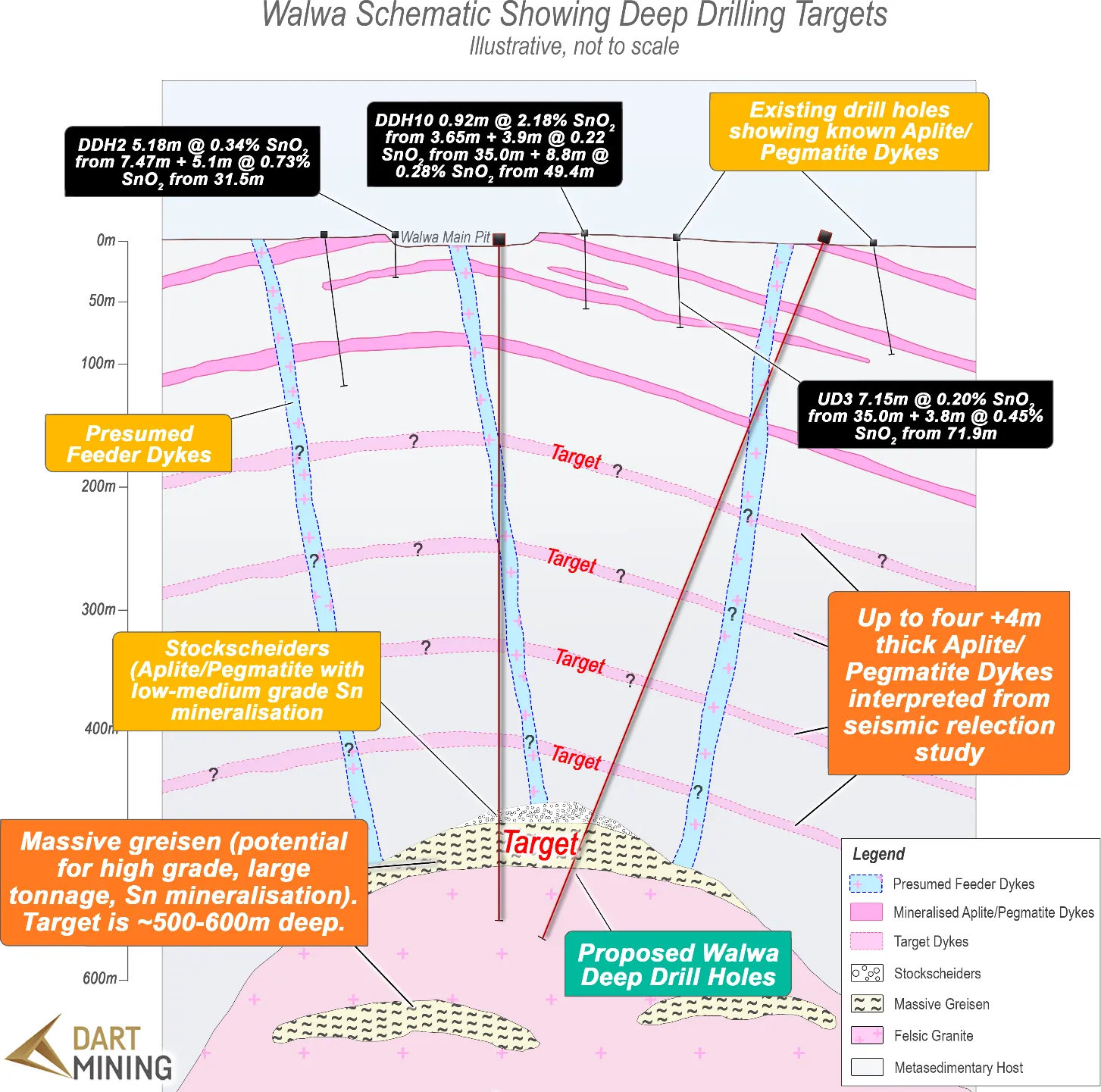
The result extends the project’s geological story into previously untested depth. Dart’s October Walwa drilling campaign began on 16 October as part of a planned 1,500m diamond program, with WDD001 designed to test deeper tin-tantalum targets beneath the historic workings.
Cassiterite appears across several dyke intervals
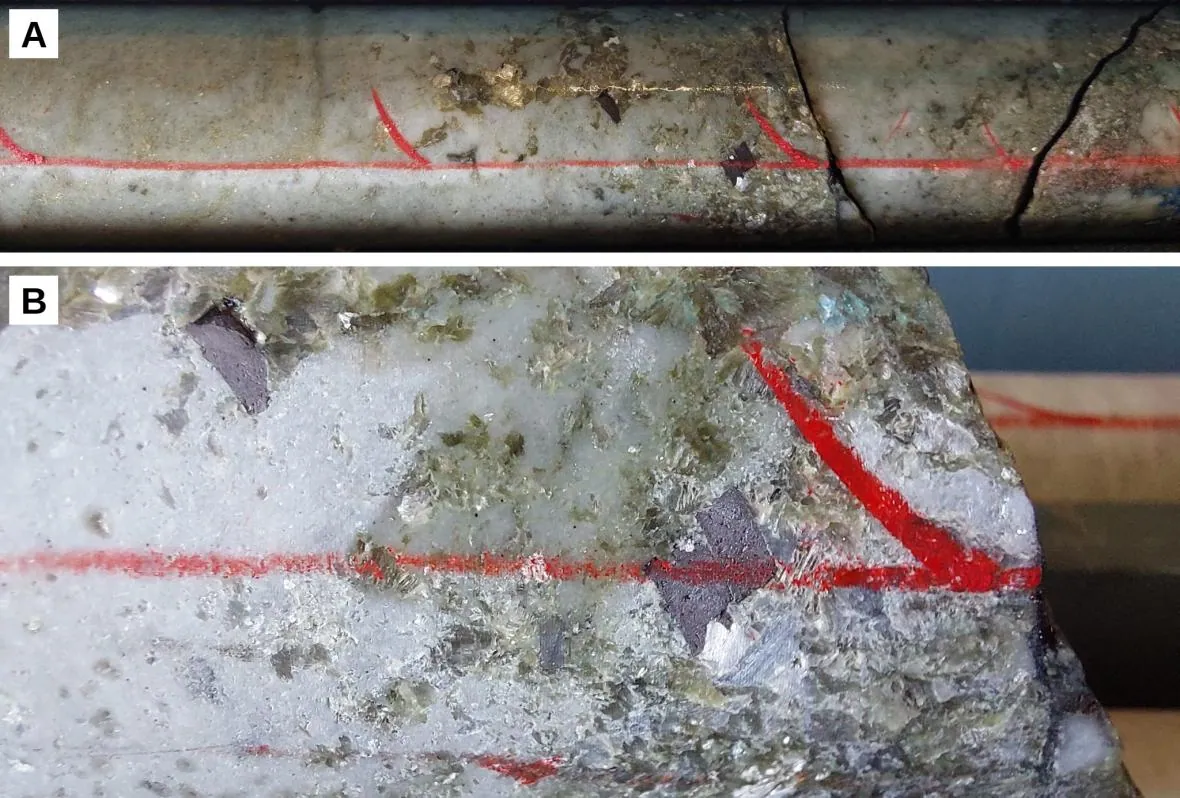
Visible cassiterite was also recorded closer to surface. The hole intersected interpreted cassiterite in aplite-pegmatite between 30.65m and 38.4m, 62.1m and 66m, 78.5m and 79.1m, and 129.8m and 133.3m. The most conspicuous shallow crystals were interpreted as cassiterite, including specimens up to 50mm long in the 62.1m to 66m interval and crystals up to 20mm across in the deeper shallow interval.
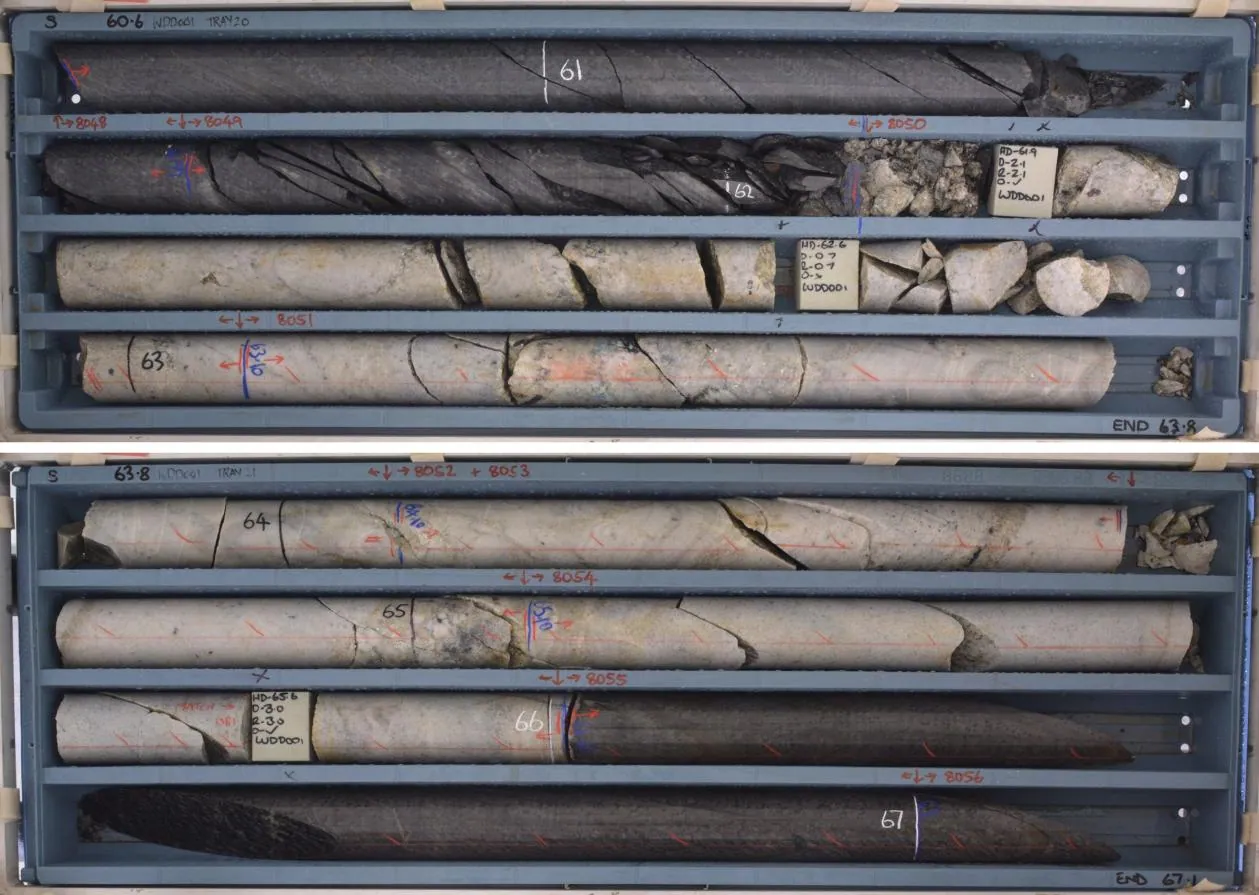
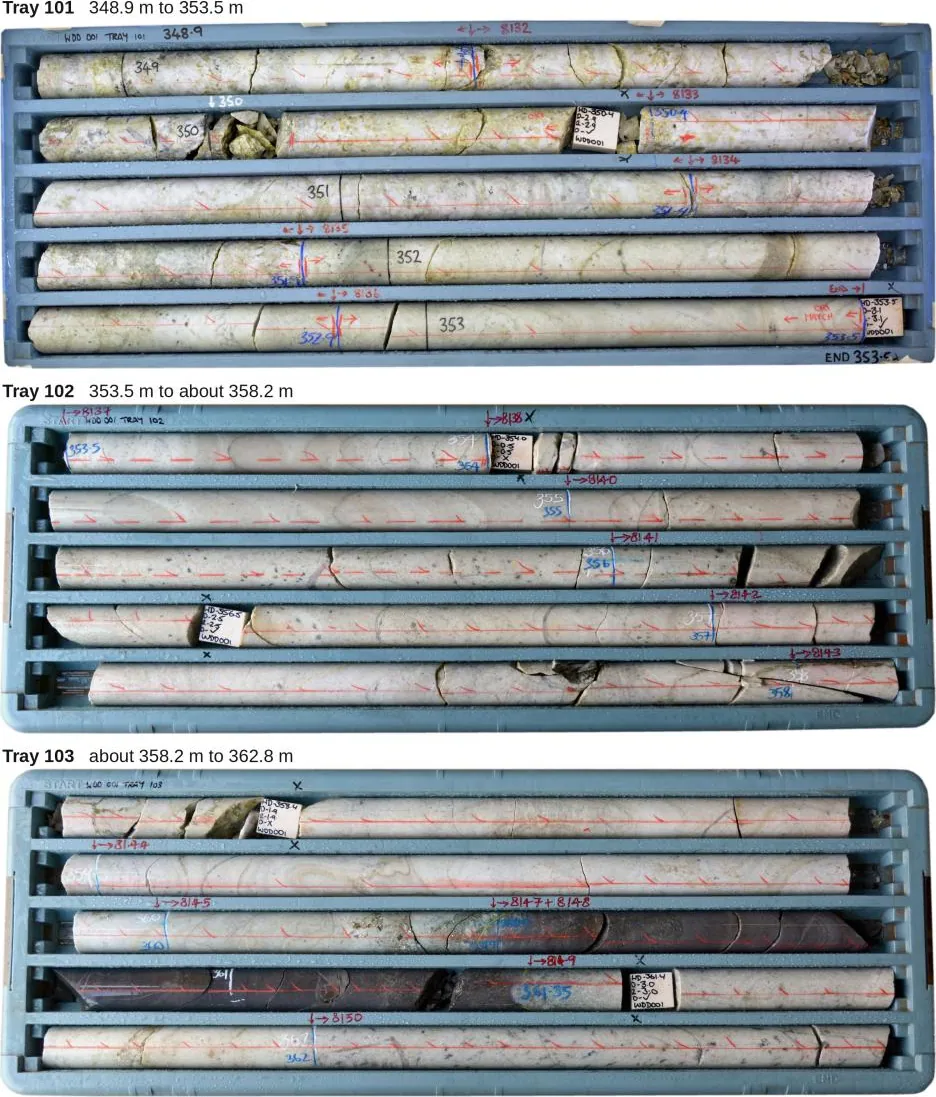
In the 29.4m interval, coarse cassiterite was logged at 346.4m and from 360.25m to 360.4m, while finer specks appeared sporadically and were more common through the lower seven metres of the upper pegmatite. However, an unidentified blue-black, strontium-rich mineral was more common than the interpreted cassiterite across much of the interval. Dart said that mineral is not interpreted to be a tin mineral and will be investigated alongside the assay work.
Assays remain the decisive test
The geological observations are not grades. Dart has stressed that visual estimates cannot substitute for laboratory analysis, and the selected photographs of coarse crystals are not representative of the intervals as a whole. All reported lengths are down-hole measurements; the true width of the deep pegmatite is not yet known and is expected to be less than the 29.4m down-hole length.
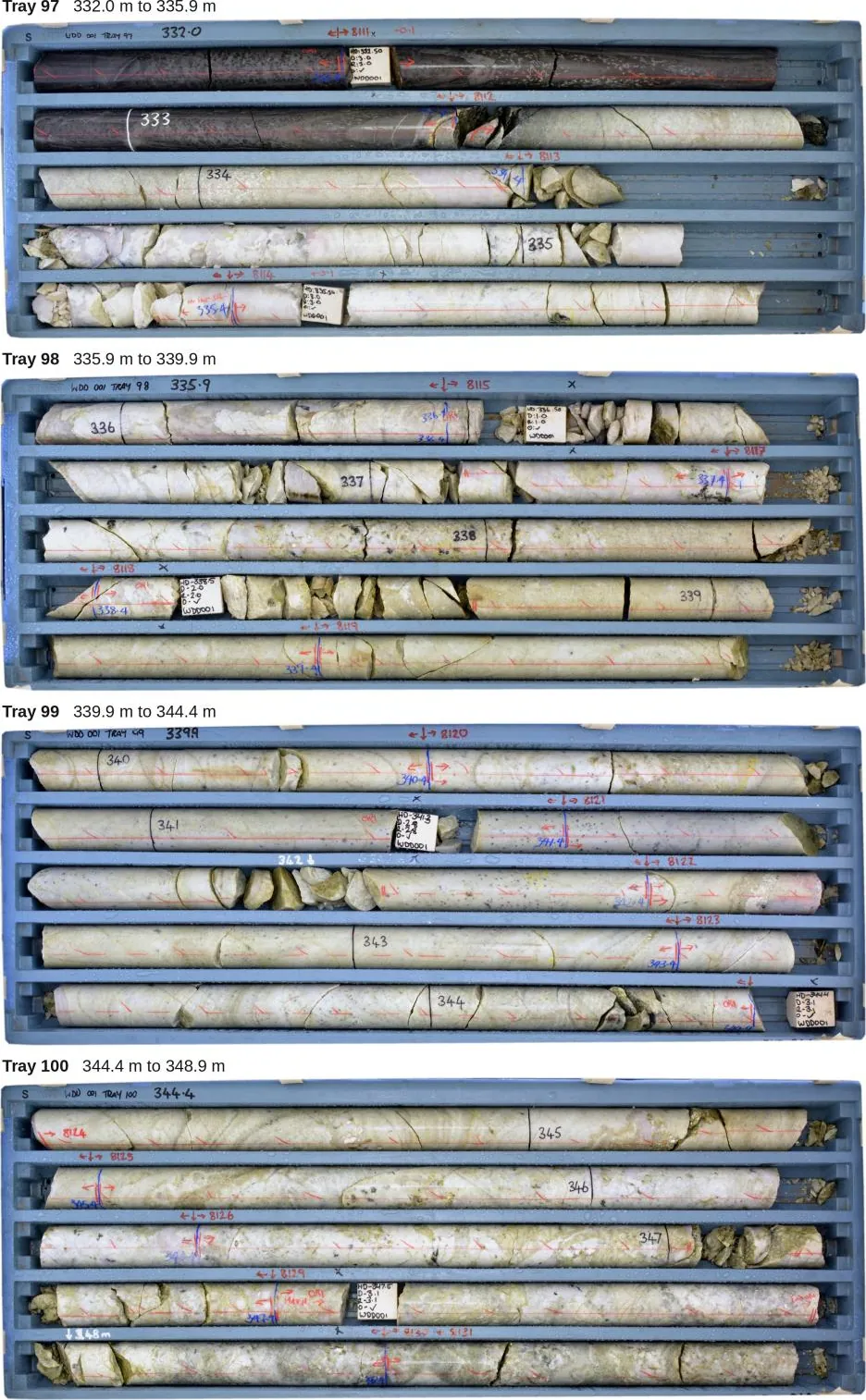
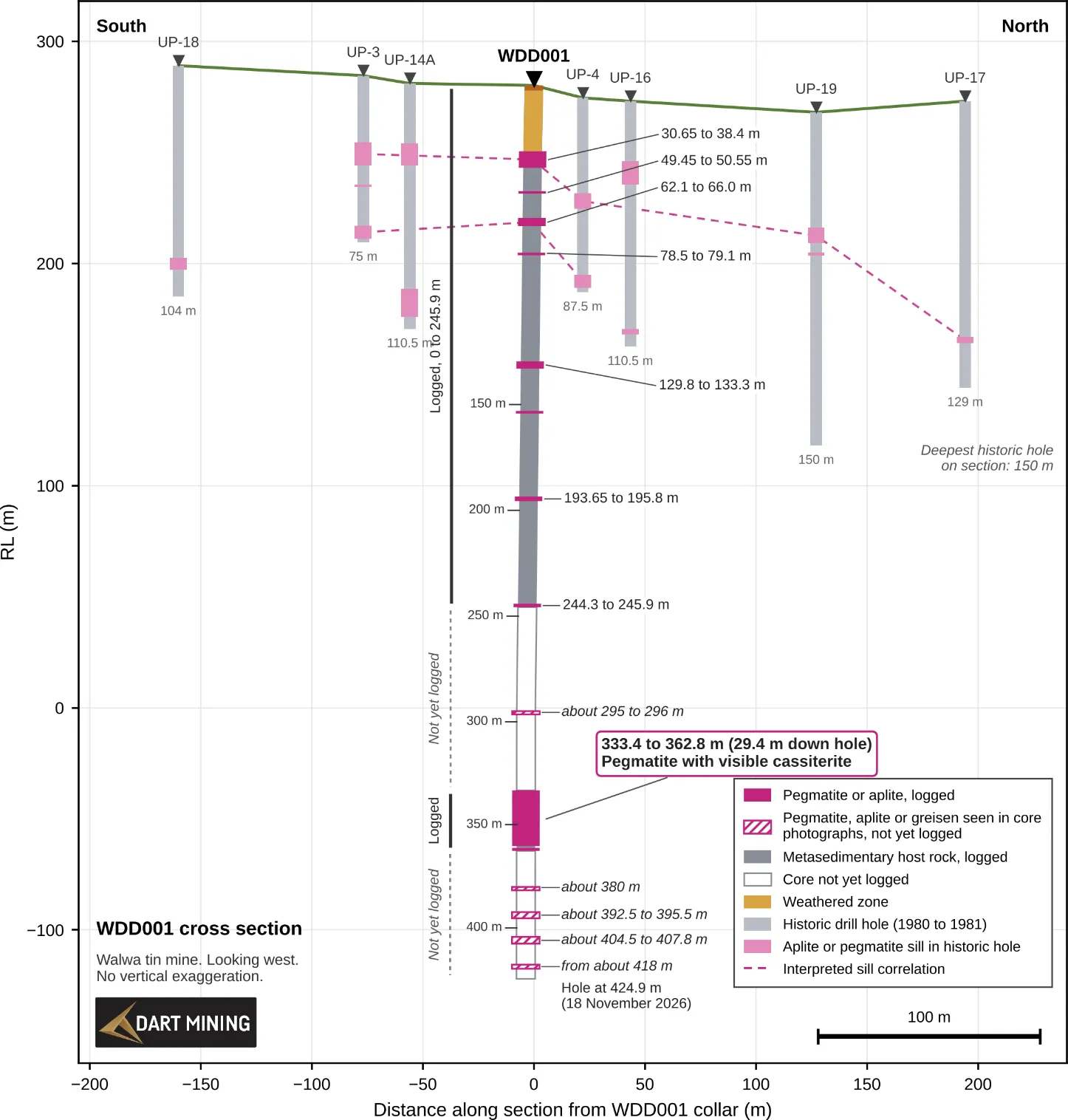
Forty-two samples covering the deep interval and surrounding host rock have been cut and sent to Intertek Genalysis in Adelaide. The planned analyses cover tin and tungsten, as well as tantalum, niobium, lithium, rubidium and caesium, with results expected before 24 December 2026. WDD001 was at 424.9m on 18 November and is continuing towards a target depth of 600m, while substantial sections of the recovered core remain to be logged and sampled.
Get ASX:DTM news the moment it breaks
 iPhone & iPad
 Android
Bottom Line?
The deep pegmatite and visible cassiterite improve the exploration case at Walwa, but the assay results must establish whether the visual mineralisation translates into meaningful tin grades and mineable widths.
Questions in the middle?
- What tin and tantalum grades will the 333.4m to 362.8m interval return once coarse-grain sampling is completed?
- How much of the deep pegmatite proves continuous across additional holes in the 1,500m program?
- Will the unidentified blue-black mineral affect the interpretation, processing characteristics or economic value of the interval?
Sources
1-
Walwa Project Update (opens in a new tab)Verified company source. Dart Mining NL · 24 Nov 2026 · dartmining.com.au