Eclipse maps a clearer processing route for Grønnedal NdPr

Eclipse Metals has moved Grønnedal into the next phase of beneficiation after preliminary flotation work demonstrated an REE response, but only a modest 1.3 times upgrade factor. The company will now target a smaller, higher-grade NdPr concentrate by combining magnetic separation, cleaner flotation and further mineralogical testing.
- 1.3 times preliminary REE upgrade with about 30% of feed mass reporting to concentrate
- 60% to 71% of REE fluorocarbonates found in particles larger than 38 micrometres
- 87.5% to 94.3% of contained NdPr hosted in identified REE mineral groups
- Next tests will target lower iron, silica and carbonate gangue
- Potential first shipment target set for 2030, subject to approvals, funding and technical success
 Add us as a preferred source on Google
Preliminary flotation establishes a processing response
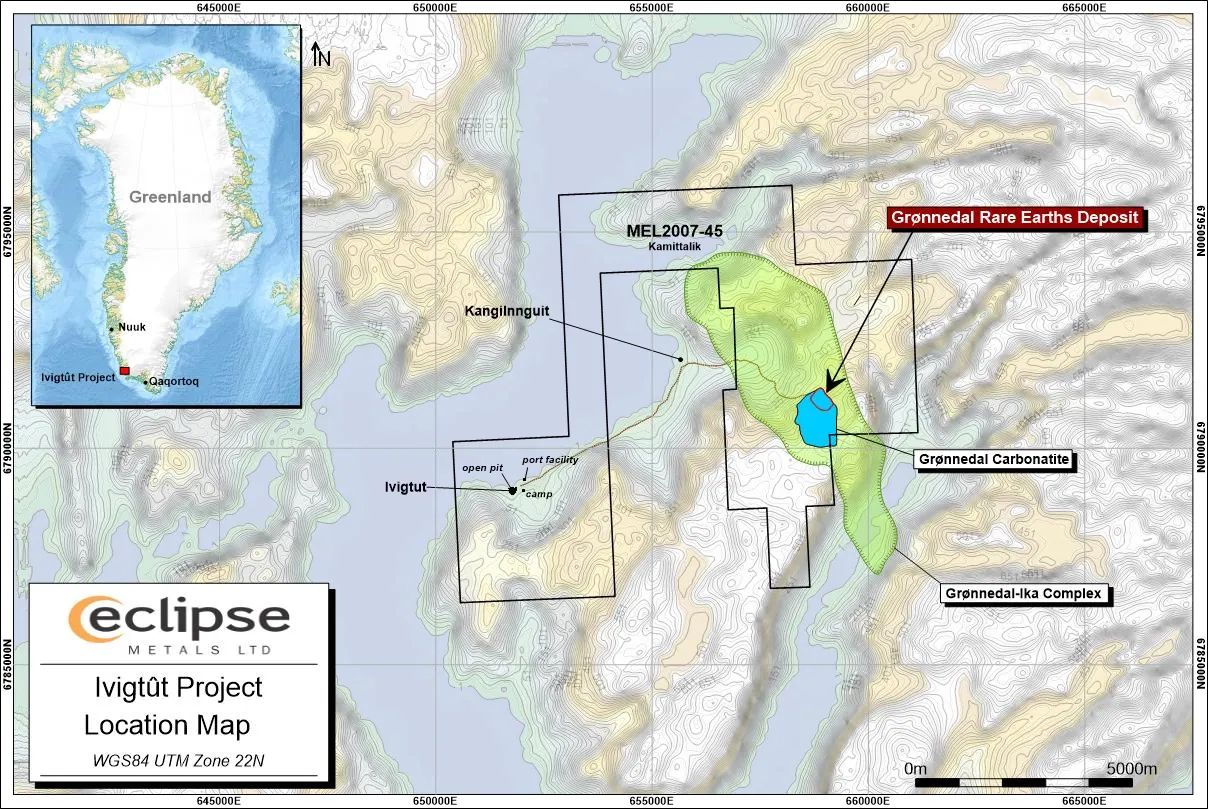
Eclipse Metals Limited (ASX:EPM) has identified a possible beneficiation pathway for its 208 million tonne Grønnedal rare earths project in southwest Greenland, but the latest results also show why more process work is needed. Hydroxamate rougher flotation produced a preliminary REE concentration factor of about 1.3, with roughly 30% of the feed mass reporting to concentrate. That is evidence of a flotation response, not yet a finished concentrate product.
The work builds on the September beneficiation testwork, which found that up to 94.3% of NdPr was hosted in identifiable REE minerals. In the latest testing, 87.5% to 94.3% of contained NdPr was associated with identified REE-bearing mineral groups, while 77.2% to 92.6% sat within the principal REE fluorocarbonate and carbonate groups.
Mineralogy supports size and separation testing
Particle imaging found NdPr-bearing minerals across coarse and intermediate size fractions. Between 60% and 71% of the REE fluorocarbonates occurred in particles larger than 38 micrometres, and the principal REE minerals showed favourable surface exposure with relatively little material fully locked inside other minerals in the minus-75 micrometre fraction.
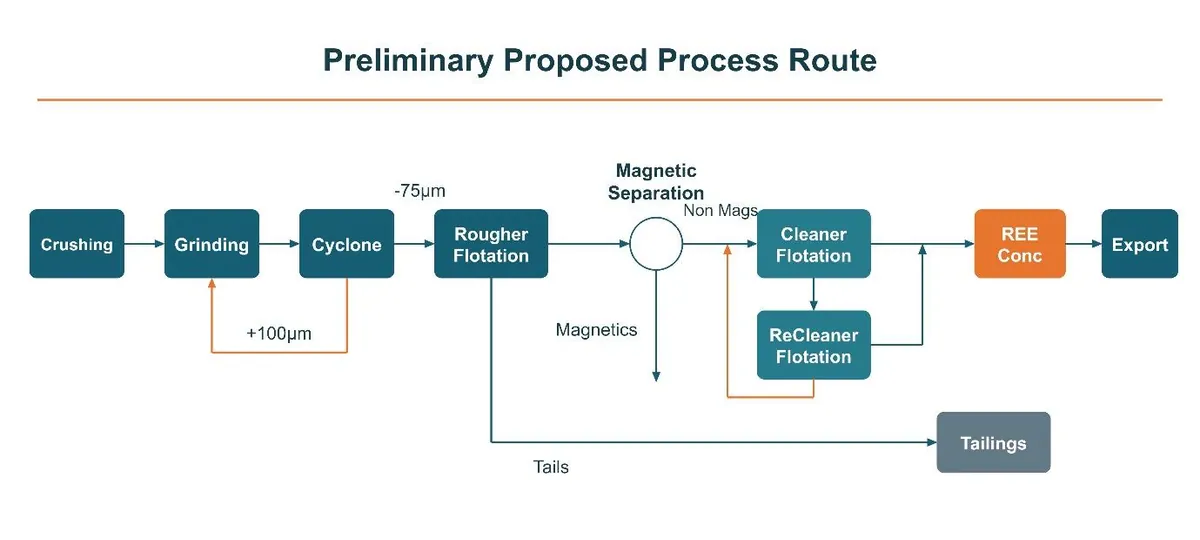
Those characteristics support Eclipse's proposed next-stage circuit, which would crush and grind feed to a P80 of 75 micrometres before rougher flotation. The rougher concentrate would then move through magnetic separation to remove paramagnetic gangue, followed by cleaner flotation. Selective regrinding would be considered only where mineralogical locking limits separation performance.
Iron rejection remains the central technical hurdle
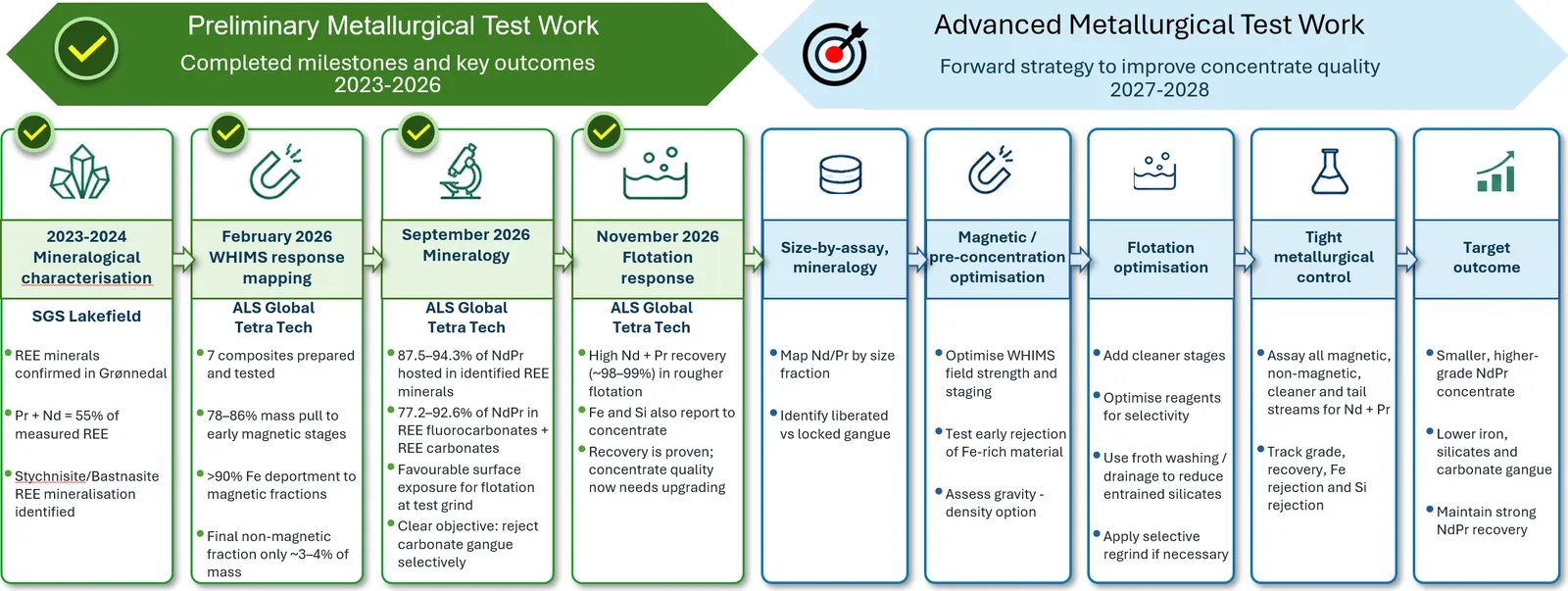
Earlier magnetic testing found that more than 90% of iron reported to magnetic fractions, although the associated high mass pull showed a separation mechanism rather than a proven selective process. Eclipse now plans staged low-intensity and wet high-intensity magnetic separation to test whether iron-bearing material can be rejected without sacrificing too much REE, or whether a lower-mass mixed REE-iron concentrate could be suitable for off-site chemical processing.
The next program will use core from the 2026 Greenland drilling campaign, alongside cleaner flotation, reagent optimisation, variability testing and possible leaching trials. Results from those tests should provide the first clearer indication of concentrate grade, gangue rejection and the consistency of the proposed route across different geological and grade domains.
2030 shipment target remains conditional
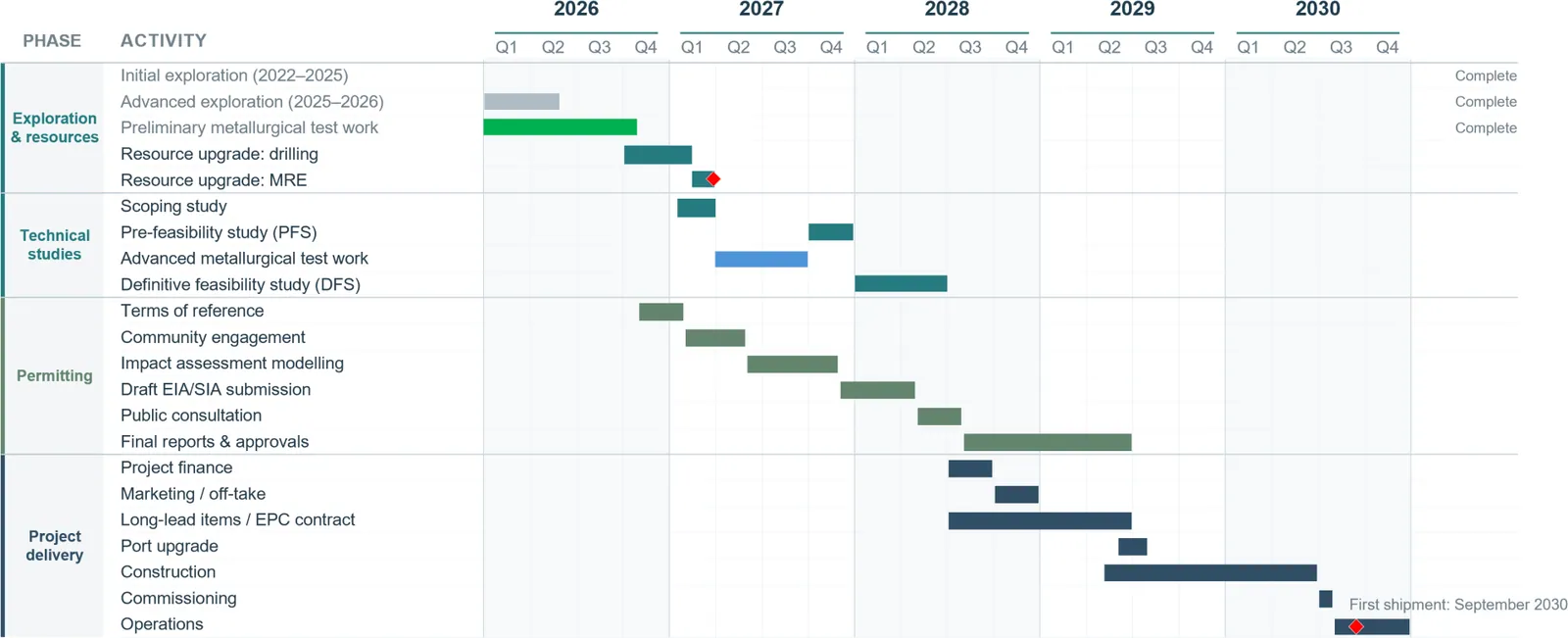
Grønnedal's current resource stands at 208 million tonnes grading 0.72% TREO, including about 456,000 tonnes of combined neodymium and praseodymium oxides. Eclipse has outlined a potential first shipment in 2030, but expressly describes that date as an accelerated planning target rather than a production forecast or commitment. It remains dependent on resource drilling, metallurgical results, technical and economic studies, approvals, financing and commercial arrangements.
Get ASX:EPM news the moment it breaks
 iPhone & iPad
 Android
Bottom Line?
The next decisive test is whether Eclipse can turn a broad, low-selectivity flotation response into a saleable concentrate with acceptable grade, recovery and gangue levels.
Questions in the middle?
- Can magnetic separation reject enough iron, silica and carbonate without materially reducing NdPr recovery?
- What concentrate grade and recovery will emerge once cleaner flotation and variability testing are completed?
- Can the 2030 planning target survive the remaining resource, permitting, financing and commercial milestones?
Sources
1-
Gronnedal Metallurgy Advances NdPr Concentrate Development (opens in a new tab)Verified source. Eclipse Metals Limited · 24 Nov 2026