Estrella uncovers manganese at Laleno as first Timor-Leste shipment nears

Estrella Resources has intersected visually identified manganese-bearing rock in maiden drilling at Laleno Dome while moving almost 30,000 tonnes of ore towards its first seaborne export. The results remain preliminary, with assays due in January and the export shipment still ahead.
- 19m downhole manganese-bearing interval at Laleno Dome, with assays pending
- Eight holes completed across 827m of maiden drilling
- Priority porphyry-style copper targets next in the drilling queue
- 29,905 tonnes of Ira Miri ore hauled to the Tenu export facility
- 27,263 tonnes allocated to a seaborne shipment at an estimated 29.69% manganese
 Add us as a preferred source on Google
Laleno drilling reveals manganese beneath conductivity anomaly
Estrella Resources Limited (ASX:ESR) has found what it describes as a 19-metre downhole interval of visually identified manganese-bearing rock at the Laleno Dome copper-gold prospect in Timor-Leste. The intersection in hole LDR005, from 98 metres to 117 metres, is interpreted as the source of a shallow-dipping conductivity anomaly identified by an airborne MTd survey.
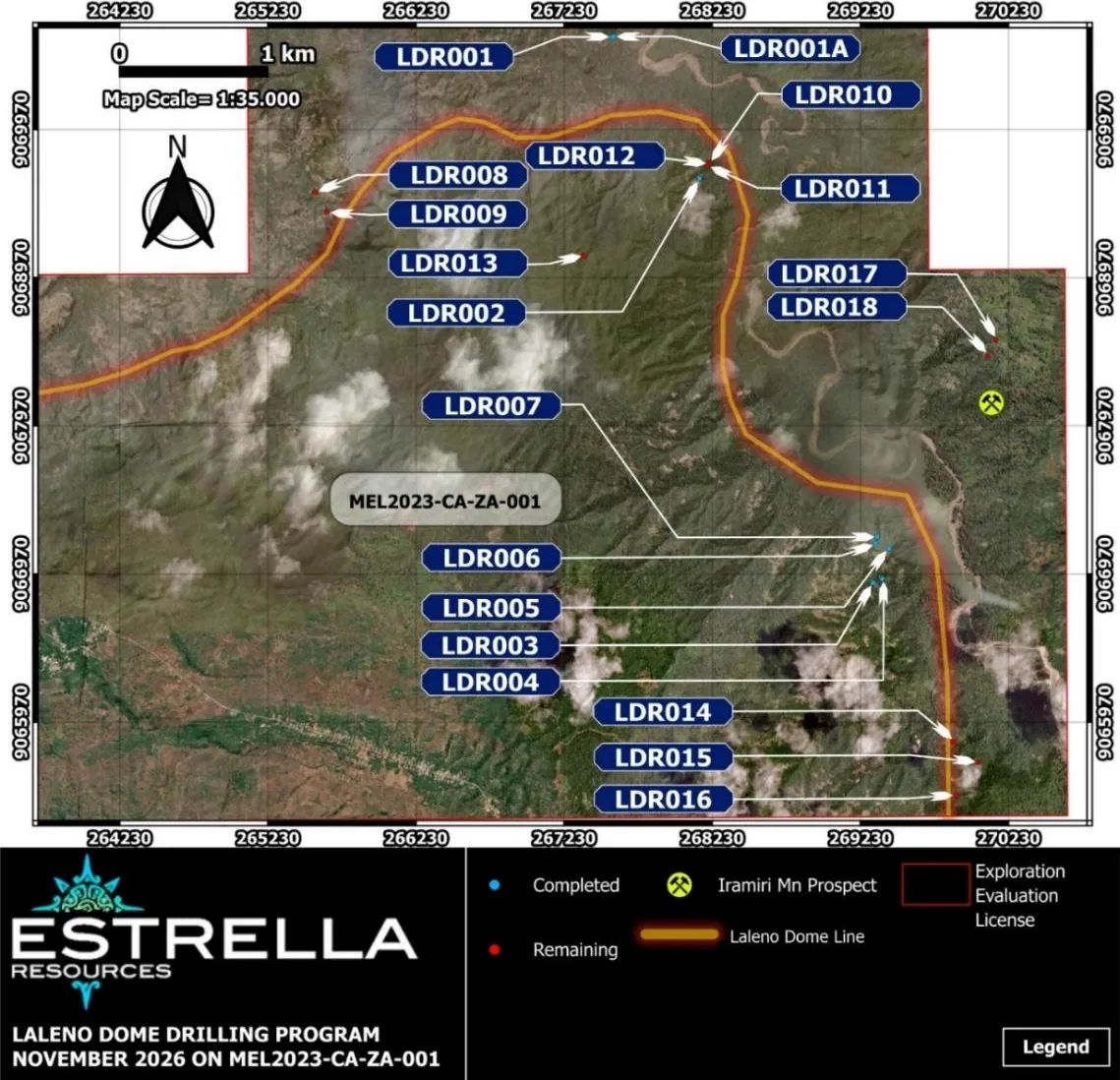
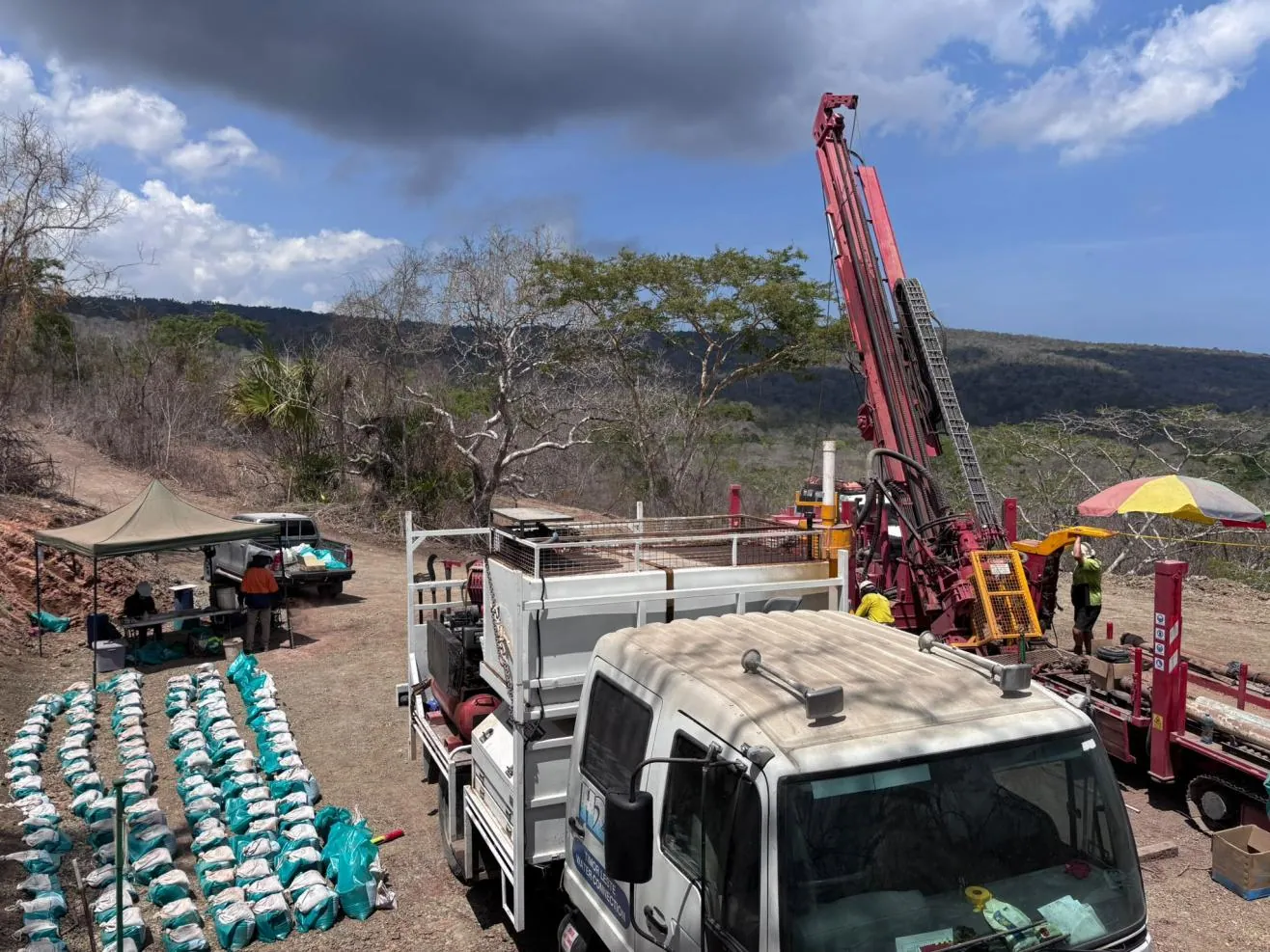
The result comes from the company's first drilling campaign at Laleno, where eight holes have now been completed for 827 metres, including a replacement hole after LDR001 was abandoned. LDR007 also encountered manganese-bearing rock over five metres, while other holes recorded traces of malachite, alteration or no significant mineralisation. The campaign follows maiden Laleno drilling that had been approved after surface copper-gold results supported a porphyry interpretation.
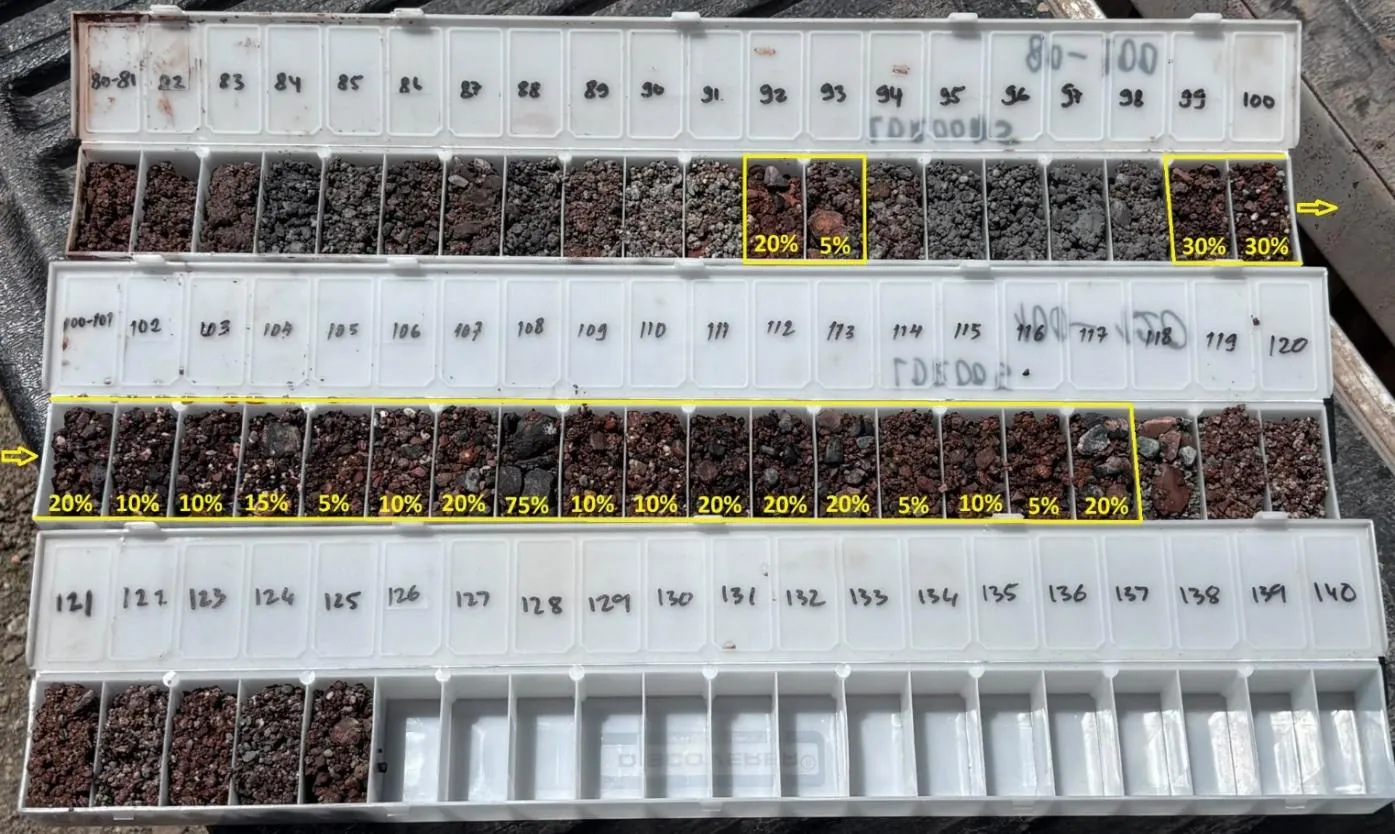
There is an important qualification to the headline number. The manganese observations are visual estimates of oxide abundance, ranging from 5% to 75% in one-metre intervals, rather than laboratory grades. The reported length is downhole and true thickness has not been established. Samples are being sent to PT Geoservices in Jakarta, with initial assays expected in the first week of January 2027.
Copper targets move ahead as manganese assays wait
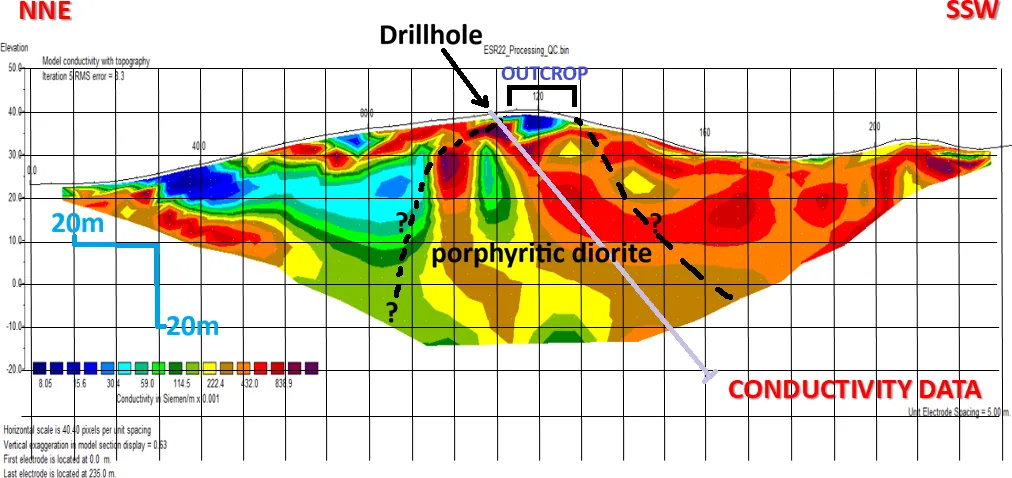
Estrella plans to move next into its highest-priority copper targets, including porphyritic diorite previously sampled by the company and two strong conductors in the Sica area. Planned holes LDR008, LDR009 and LDR010 are designed to test chargeability, conductivity and alteration features, including traces of malachite and azurite exposed near the proposed LDR008 collar.
Those targets remain exploration concepts rather than a defined copper resource. The company says the relationship between the anomalies and geological bedding may influence their shape, while the early-stage drilling has variable spacing and orientation. The pending assays will therefore do more than attach grades to the manganese intervals: they will help determine whether the observed mineralisation is significant enough to justify follow-up work.
Tenu facility nears first seaborne manganese shipment
On the export side, 29,905 tonnes of manganese ore has been hauled about 17 kilometres from Ira Miri Stage 1 to the Tenu Barge Transhipment Facility. Of that stockpile, approximately 27,263 tonnes has been allocated to the planned seaborne shipment at an estimated average grade of 29.69% manganese. The company previously secured 27,000-tonne export approval for the Ira Miri market appraisal parcel.
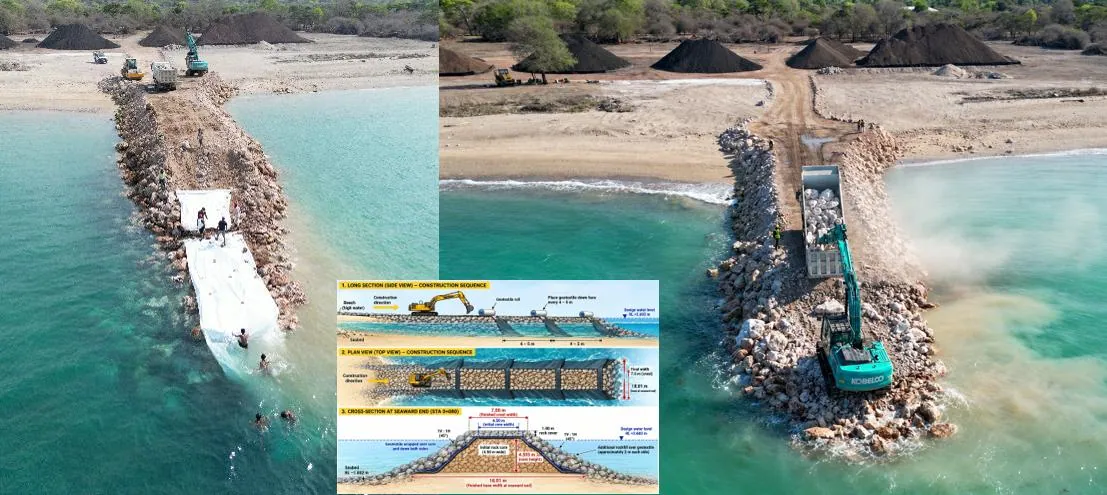
Construction of the Tenu facility, including its limestone marine-loading causeway, is expected to be completed within three days. Ministerial approval was granted on 18 November, while a separate 108-tonne parcel of high-grade material is already travelling by truck to West Timor in Indonesia under completed export documentation.
The first shipment is intended to provide commercial and operational information for evaluating future manganese exports from Ira Miri and other Timor-Leste deposits. It is not yet evidence of recurring production or disclosed revenue: the seaborne cargo has not been reported as shipped, pricing is not provided in this announcement, and the company still needs to demonstrate how the appraisal parcel performs through the export and customer-testing process.
Get ASX:ESR news the moment it breaks
 iPhone & iPad
 Android
Bottom Line?
January assays and the first seaborne shipment are the next proof points: one will test the exploration story, the other the practical export model.
Questions in the middle?
- Will laboratory assays confirm that the visually identified manganese intervals carry meaningful grades and continuity?
- Can the next Laleno holes convert the copper conductors and alteration into a coherent mineralised system?
- When will the Tenu facility complete its first seaborne shipment, and what commercial information will the bulk sample generate?
Sources
1-
Drilling Encounters Manganese and Export Update (opens in a new tab)Verified company source. Estrella Resources Limited · 24 Nov 2026 · investorhub.estrellaresources.com.au