CurveBeam AI gets room to expand HiRise partnerships across US orthopaedics

3 min read
8:25am on Thursday 26th of November, 2026 AEDT ~8am, 26th Nov, 26
CurveBeam AI will regain the freedom to sell its HiRise imaging system directly in the US after Stryker’s Foot & Ankle Division ends its distribution agreement on 1 January 2027. The company says the change should not materially reduce placements and could unlock partnerships in knee and hip replacement, alongside a new subscription-style service model.
- Stryker US Foot & Ankle distribution agreement ends on 1 January 2027
- CurveBeam expects no material reduction in HiRise placements
- Direct sales and new orthopaedic partnerships become possible
- Knee and hip replacement identified as priority growth areas
- Imaging as a Service removes the upfront equipment purchase
 Add us as a preferred source on Google
Stryker exclusivity ends in January
CurveBeam AI Limited (ASX:CVB) is about to lose an exclusive US distribution route, but is presenting the change as a chance to widen its market. Stryker’s Foot & Ankle Division has formally notified CurveBeam that its US distribution agreement for HiRise™ will end on 1 January 2027.
The agreement was focused on Stryker’s foot and ankle surgical-planning workflows and generated fewer placements than CurveBeam expected, according to the announcement. Its end removes restrictions that had limited CurveBeam’s ability to build joint or bundled programs with other orthopaedic companies. The separate referral agreement covering Australia and New Zealand is unaffected.
Knee and hip imaging broaden the sales case
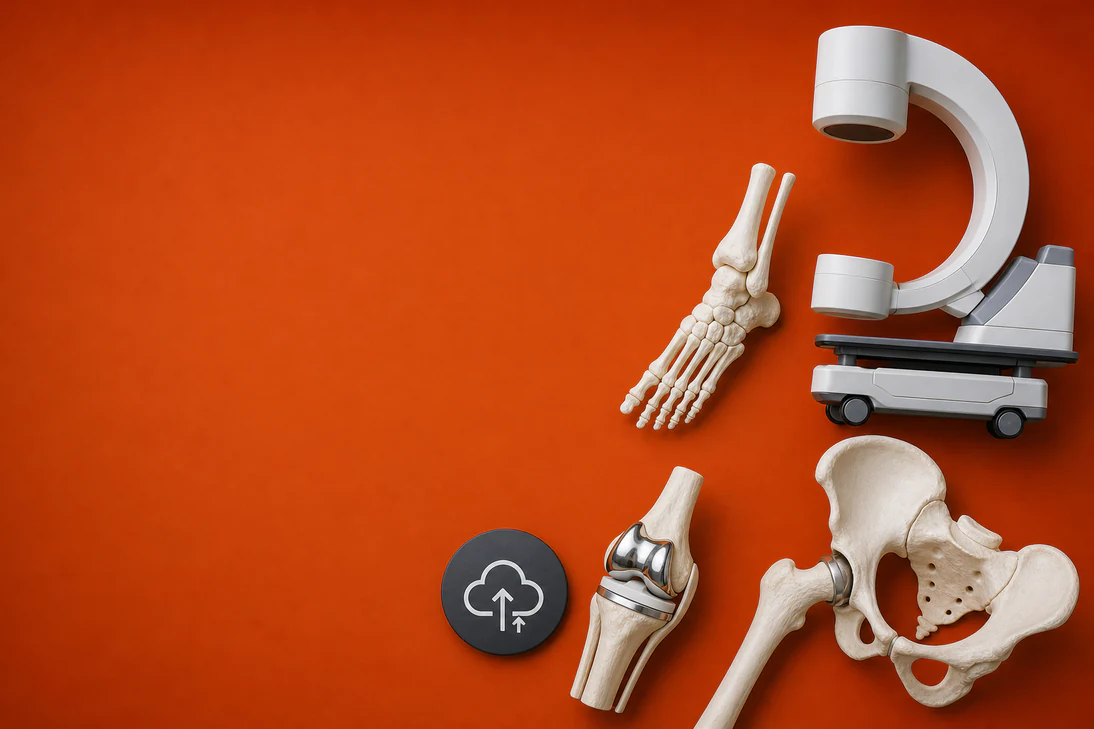
CurveBeam now intends to sell HiRise directly in the US while pursuing new partnerships, with knee and hip replacement identified as priority opportunities. The company cites 5,892 potential weight-bearing CT installation sites at US orthopaedic practices outside hospitals, based on a 2023 Frost & Sullivan report, alongside 1.74 million knee and hip replacements performed in the US that year.
The commercial argument is straightforward: a scanner used only for foot and ankle imaging may be harder for a practice to justify, while knee, hip and foot-and-ankle surgeons could share the same system. CurveBeam says HiRise supports imaging and planning for non-robotic procedures as well as work connected with robotic platforms. It is continuing to evaluate the technology for Stryker’s Mako platform and other robotic systems, but the broader sales approach is designed to allow placements based on current imaging needs rather than waiting for validation on any single platform.
Recurring service model targets upfront cost barrier
CurveBeam is also introducing an Imaging as a Service model, allowing practices to access HiRise for a recurring service fee instead of buying the equipment upfront. Depending on procurement arrangements, practices may be able to fund the service through operating budgets, potentially addressing the capital-approval hurdle that can slow equipment purchases.
Management says it is continuing to work through a US pipeline described in the announcement as both more than 100 prospects and several hundred prospects, a discrepancy that leaves the precise size unclear. It expects no material reduction in placements after the Stryker arrangement ends, but provides no placement target, revenue forecast or quantified financial impact. The practical test will be whether direct selling, broader orthopaedic partnerships and the service model convert that pipeline into placements after January without increasing the company’s commercial burden.
Get ASX:CVB news the moment it breaks
 iPhone & iPad
 Android
Bottom Line?
The strategic rationale is clear, but the next evidence will need to come from US placements, conversion rates and adoption of the Imaging as a Service model after 1 January.
Questions in the middle?
- How many US HiRise placements can CurveBeam convert once it begins selling outside the Stryker arrangement?
- Will knee and hip applications produce enough additional scan volume to improve the economics of individual practice installations?
- Can Imaging as a Service shorten procurement cycles without creating heavier recurring cash requirements for CurveBeam?
Sources
1-
Broadens US market access with removal of dist'n exclusivity (opens in a new tab)Verified source. Curvebeam AI Limited · 26 Nov 2026