TACTI-004 failure leaves efti facing a manufacturing test

5 min read
8:21am on Friday 27th of November, 2026 AEDT ~8am, 27th Nov, 26
Immutep says its root cause review found measurable differences between efti made at 2,000L and the 200L batches used in earlier studies, after TACTI-004 failed for futility. The biotech is now targeting two replacement trials from the second half of 2027 while elevating autoimmune candidate IMP761.
- Manufacturing and pharmacokinetic differences identified after TACTI-004 failure
- Efti development narrowed to head and neck cancer and soft tissue sarcoma
- New 200L batch planned before potential H2 2027 trial starts
- IMP761 Phase I data showed safety and immune-response suppression
- A$48.5 million held at 30 September, with runway forecast into H1 2028

 Add us as a preferred source on Google
Immutep Limited (ASX:IMM; NASDAQ:IMMP) has put a manufacturing explanation at the centre of its failed TACTI-004 trial, saying efti made at 2,000L scale differed from material used in earlier studies. The company has not established that those differences caused the failure, but its review found a combination of altered product characteristics, lower drug exposure and unexpected immune-cell declines in the efti arm.
TACTI-004 review points to altered efti exposure
TACTI-004, a Phase III trial testing efti plus standard of care against placebo plus standard of care in first-line non-small cell lung cancer, was stopped in March after a planned futility analysis. Immutep said the control arm, baseline characteristics, trial conduct, assessment timing and safety profile did not explain the result. The efficacy gap remained at final analysis, with the efti arm recording a 42.9% unconfirmed response rate against 55.1% for placebo.
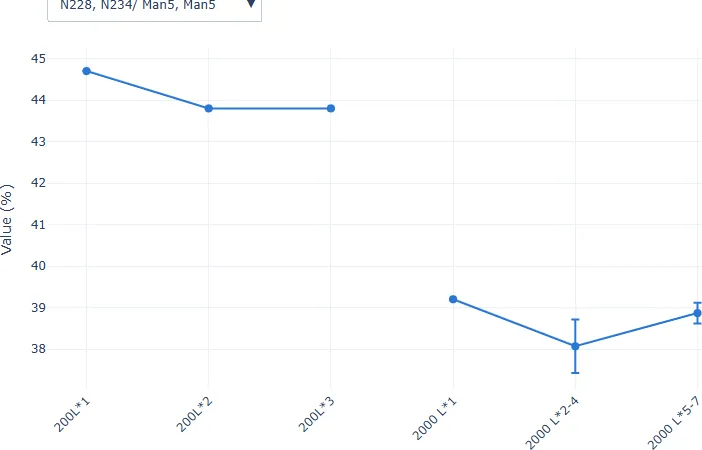
The review instead found differences in pharmacokinetics and manufacturing. Around 20% of sampled patients, or 44 of 221, had no measurable efti in blood tests, while exposure over the first 48 hours was 40% below expectations after those patients were excluded. Lymphocyte and monocyte counts also fell unexpectedly in efti-treated patients, a pattern that differed from earlier studies. Immutep said batches produced at 2,000L showed differences in post-translational modifications, including N- and O-linked glycans, following changes to a media component, pH control and production scale.
The reset builds on the new 200L manufacturing plan already disclosed by Immutep, with raw materials now subject to extended qualification and additional assays planned for every future batch. The next 200L run is intended to recreate the process and scale used in earlier studies, but comparability remains a test rather than an assumption: the company says a direct causal relationship between the manufacturing differences and TACTI-004’s futility has not been established.
Efti narrowed to two registration-directed programs
Immutep is concentrating efti’s potential registration pathway on first-line head and neck cancer with little or no PD-L1 expression, and neoadjuvant soft tissue sarcoma. It is considering a non-randomised Phase II study of about 80 patients in head and neck cancer, focused on response rate, duration of response and safety. In sarcoma, the company is considering an adaptive Phase II/III design that could use tumour hyalinisation and fibrosis as an early decision point before expanding into event-free survival testing.
The plans draw on different pieces of prior evidence rather than a new confirmatory result. The EFTISARC-NEO investigator-initiated Phase II study met its primary endpoint, according to the company, and efti has FDA Fast Track status in the head and neck setting and Orphan Drug Designation in soft tissue sarcoma. Immutep is targeting trial starts in the second half of calendar 2027, subject to final study designs, regulatory feedback, manufacturing timelines, partnering and available resources.
IMP761 becomes the second clinical value driver
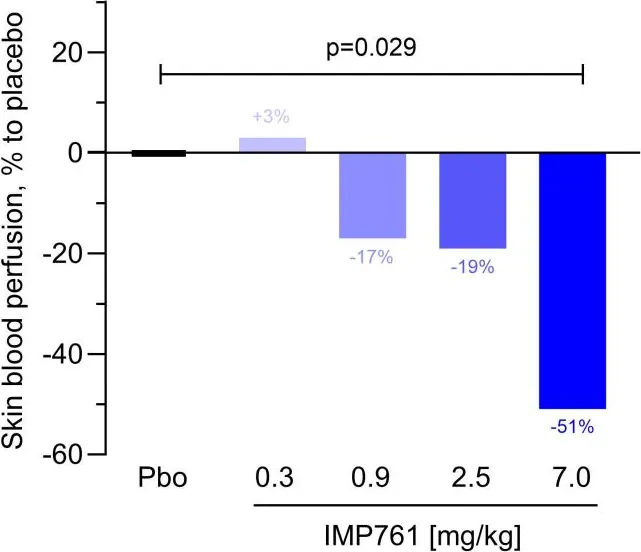
As efti undergoes its manufacturing reset, IMP761 has become a co-priority. In a Phase I study of 60 healthy volunteers, the LAG-3 agonist met its safety objective, with no severe or serious adverse events reported across seven dose levels. At 7.0 mg/kg, Immutep reported a 51% reduction in skin blood perfusion and a 53% reduction in antigen-specific T-cell counts after a controlled immune challenge, although these remain early pharmacodynamic findings in healthy volunteers rather than evidence of efficacy in patients.
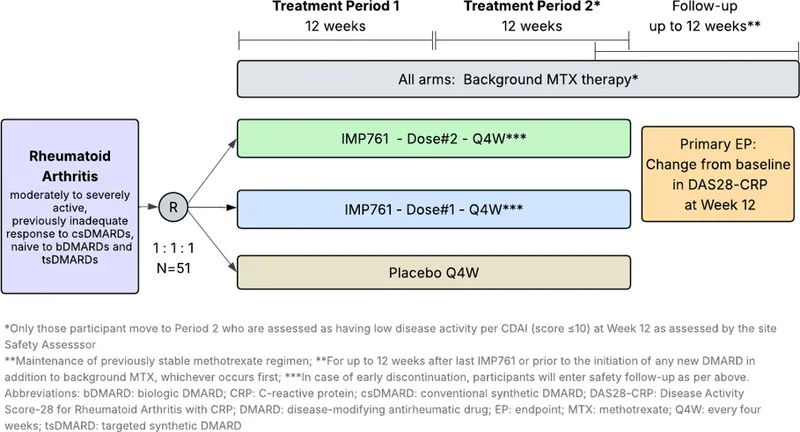
The company is preparing a potential Phase II rheumatoid arthritis study, with a target start in the second half of 2027. The proposed design remains preliminary, and the next important steps are multiple-ascending-dose data, dose selection and regulatory discussions.
Cash preservation buys time but not certainty
Immutep ended FY26 with A$68.9 million in cash, cash equivalents and term deposits, but held about A$48.5 million at 30 September 2026. FY26 revenue and other income rose to A$24.2 million, helped by the Dr Reddy’s Laboratories upfront payment, while research and development and intellectual property costs increased to A$91.9 million and the net loss widened to A$79.3 million. Cost reductions, including headcount cuts, and government research incentives are expected to extend the cash runway into the first half of calendar 2028 under current assumptions.
That runway gives Immutep time to manufacture a replacement batch and prepare two efti programs alongside IMP761. It does not remove the central risk: before any 2027 trial can begin, the company must show that the new material behaves as intended and secure the regulatory, operational and financial support needed to put the revised strategy into patients.
Get ASX:IMM news the moment it breaks
 iPhone & iPad
 Android
Bottom Line?
The next decisive milestone is not a new market opportunity but proof that the 200L efti batch is comparable, clinically usable and ready to support the proposed 2027 trials.
Questions in the middle?
- Will the new 200L efti batch reproduce the product characteristics and exposure seen in earlier studies?
- What regulatory design will Immutep ultimately secure for the head and neck cancer and sarcoma programs?
- Can IMP761 produce meaningful clinical activity in rheumatoid arthritis before the cash runway becomes binding?
Sources
2-
Immutep AGM 2026 - CEO & CSO Presentation (opens in a new tab)Official market announcement. Immutep Limited · 27 Nov 2026 · immutep.com
-
Immutep AGM 2026 - Chairman's Address (opens in a new tab)Official market announcement. Immutep Limited · 27 Nov 2026 · immutep.com