Ionic Rare Earths Validates UK Circular Supply Chain for EV Magnets

4 min read
9:07am on Monday 11th of May, 2026 AEST ~9am, 11th May, 26
Popular on LinkedIn
Ionic Rare Earths’ subsidiary Ionic Technologies has led a pioneering UK project demonstrating a fully circular supply chain for electric vehicle magnets using 100% recycled rare earth oxides, achieving performance parity with primary materials and advancing UK critical minerals goals.
- First Western circular supply chain for EV motor magnets
- Recycled rare earth oxides exceed 99.5% purity
- Magnets made from recycled materials pass Ford durability tests
- UK government-backed CLIMATES project supports circular economy
- £12 million grant secured for Belfast commercial recycling plant
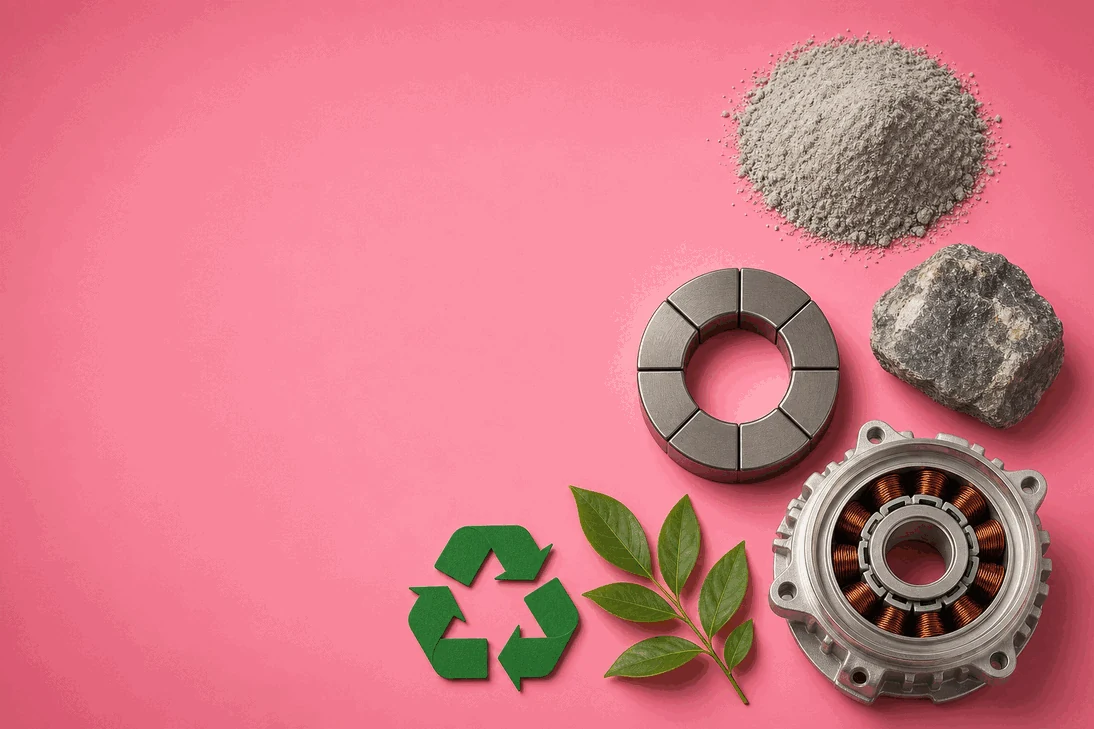

Breakthrough in Recycled Rare Earth Magnets
Ionic Rare Earths Limited (ASX:IXR) has taken a major stride towards establishing a sovereign and sustainable rare earth supply chain in the UK. Its wholly owned subsidiary, Ionic Technologies, led a landmark collaboration with Less Common Metals (LCM), GKN, and Ford UK to demonstrate the first Western circular supply chain for electric motor magnets made entirely from recycled rare earth oxides (REOs).
This project, supported by the UK Government’s CLIMATES initiative, successfully produced Neodymium Oxide (Nd2O3), Dysprosium Oxide (Dy2O3), and Terbium Oxide (Tb4O7) at purities exceeding 99.5%, which were then converted into metals and strip-cast alloys by LCM. GKN manufactured magnets to Ford’s specifications, and the magnets were tested in rotors at Ford’s Dunton R&D facility, passing durability tests with performance equivalent to magnets made from mined materials.
Validating a Circular Supply Chain for UK Industry
The project’s success is a tangible step forward in the UK Government’s Critical Minerals Strategy, which aims to increase domestic mineral production to 10% and recycling to 20% of the nation’s critical mineral needs by 2035. Currently, domestic production accounts for only 6% of these needs. The demonstration proves that Ionic Technologies’ long-loop recycling process can underpin a secure and sustainable supply chain for rare earth permanent magnets (REPMs) vital to electric vehicles and clean energy technologies.
Tim Harrison, IonicRE’s Managing Director, described the achievement as a “technological breakthrough for Western REE supply chains,” highlighting the strategic importance of reducing reliance on foreign imports amid recent global supply shocks. The project also received praise from Ford’s UK Innovation team, with Dennis Witt confirming that the recycled magnets met Ford’s rigorous commercial standards on the first attempt.
From Recycled Oxides to Tested Rotors
The collaboration required precise coordination: Ionic Technologies produced high-purity REOs from recycled magnets and scrap alloys, exceeding typical quality standards; LCM converted these oxides into magnet-specification alloys; GKN manufactured finished NdFeB magnets; and Ford integrated these magnets into rotors at its Halewood plant. One rotor underwent dyno testing at Dunton, passing durability cycles equivalent to those with primary magnets.
This demonstration confirms that recycled materials can seamlessly replace mined feedstock in high-performance automotive magnets, a crucial validation for scaling circular supply chains in the UK and Europe. The project’s success builds on IonicRE’s ongoing efforts to secure funding and partnerships for a commercial-scale magnet recycling plant in Belfast, supported by a £12 million capital grant from the UK government’s DRIVE35 program. This facility aims to process 400 metric tonnes per annum of magnet REOs, positioning Belfast as a strategic hub for rare earth recycling.
Scaling Up and Future Prospects
Following the CLIMATES project, Ionic Technologies is leading the CirculaREEconomy Project to further develop the supply chain, backed by the Advanced Propulsion Centre UK. The company is actively engaging with industry partners and potential strategic investors to secure the remaining equity capital required for the £85 million commercial plant.
Executive Chairman Brett Lynch emphasised the potential for a vertically integrated Western rare earth supply chain driven by magnet recycling, underscoring the availability of raw materials and the readiness of Ionic Technologies’ process to unlock their value without dependence on mining or imports. This aligns with broader industry trends towards sustainable sourcing and circular economies in critical minerals.
The demonstration also complements IonicRE’s recent progress on multiple fronts, including its Brazilian joint venture refining facility and heavy rare earth projects in Uganda, as well as its US market expansion efforts. These initiatives collectively position IonicRE as a key player in reshaping global rare earth supply chains away from China dominance and towards more secure, environmentally responsible models.
With the validation of recycled REOs meeting stringent OEM standards and government backing for commercialisation, the next challenges lie in scaling production, securing investment, and integrating circular supply chains into mainstream manufacturing. The UK’s clean energy and automotive sectors stand to benefit significantly if these efforts translate into reliable, large-scale supply of recycled rare earth magnets.
The company’s recent £12 million UK government capital grant offer and ongoing strategic investor discussions underscore the momentum behind this transition from demonstration to commercial reality.
Bottom Line?
Ionic Rare Earths has proven recycled rare earth magnets can meet OEM standards, but commercial scale-up and investment remain pivotal hurdles ahead.
Questions in the middle?
- Will Ionic Technologies secure full funding to reach final investment decision for the Belfast plant?
- How quickly can the circular supply chain scale to meet growing EV and clean energy demand?
- What impact will this UK-based supply chain have on global rare earth market dynamics and import reliance?