PMET Resources Advances On-Site Battery-Grade Lithium Refining Concept at Shaakichiuwaanaan

PMET Resources has identified a promising pathway to refine spodumene concentrate into battery-grade lithium carbonate directly at its Shaakichiuwaanaan site in Quebec, using Primero’s ALi® atmospheric leach process. Bench-scale tests produced 99.8% pure lithium carbonate, suggesting potential logistics and carbon footprint advantages.
- Concept study favours Primero’s ALi® atmospheric leach process for on-site lithium refining
- Bench-scale testwork produced 99.8% pure battery-grade lithium carbonate
- On-site refining could reduce transport costs and carbon emissions leveraging Quebec hydro power
- Value-added processing aligns with Canadian and Quebec critical minerals strategies
- Next steps include advancing to a Preliminary Economic Assessment with further testwork
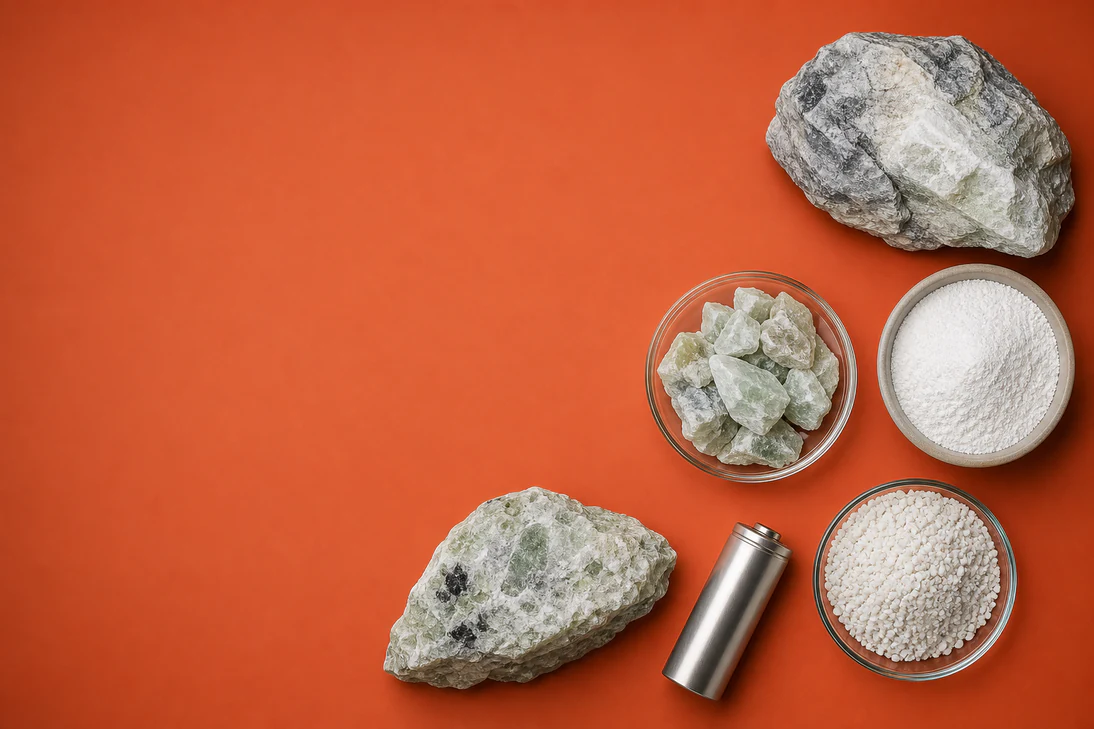
On-Site Refining Emerges as Strategic Growth Opportunity
PMET Resources Inc. (ASX:PMT) is exploring a game-changing shift in lithium supply chains by investigating the on-site conversion of spodumene concentrate into battery-grade lithium carbonate at its Shaakichiuwaanaan Project in Quebec. A recently completed Concept Study highlights Primero Group’s proprietary ALi® atmospheric leach process as the preferred pathway, combining technical feasibility with promising economic and environmental benefits.
The bench-scale testwork, conducted in Perth on Shaakichiuwaanaan spodumene samples, produced lithium carbonate with a purity of 99.8% Li₂CO₃, meeting stringent 2023 Chinese standards. This achievement underpins PMET’s ambition to capture additional value beyond its existing spodumene concentrate production outlined in the 2025 Feasibility Study.
ALi® Process Offers Lower Costs and Carbon Footprint
Unlike conventional high-temperature sulfuric acid roasting, the ALi® process employs a low-pressure, atmospheric leach with alkaline chemistry, reducing reagent consumption and energy intensity. Importantly, it generates cleaner residue streams and eliminates the need for concentrated acids, potentially simplifying environmental management.
By situating this refining step at the mine gate, PMET aims to leverage Quebec’s abundant, low-cost renewable hydroelectric power to power electric calcination, further lowering operational costs and carbon emissions. The Concept Study indicates that this approach could significantly reduce logistics costs by cutting the volume and weight of material transported, addressing a major supply chain inefficiency where spodumene concentrate is typically shipped long distances for processing.
Strategic Alignment with Regional Critical Minerals Goals
This initiative aligns closely with Canadian and Quebec government objectives to develop domestic value-added processing of critical minerals, supporting regional economic sovereignty and sustainable supply chains. PMET’s President and CEO Ken Brinsden emphasised the potential industry step-change, noting the opportunity to redefine the lithium supply chain by refining battery-grade lithium at the mine site within a stable, Western, low-carbon framework.
Frederic Mercier-Langevin, Chief Operations/Development Officer, described the Concept Study as identifying a credible pathway to capture additional value, with logistics savings that could be material. He cautioned that further testwork and scale demonstration are needed to validate this staged growth opportunity.
Next Steps Focus on Preliminary Economic Assessment
Following the Concept Study, PMET plans to advance the ALi® process towards a Preliminary Economic Assessment (PEA) over the next year. This work will include additional metallurgical testwork, flowsheet development with a focus on battery-grade lithium carbonate production, detailed logistics studies, and environmental residue characterization.
The PEA will also investigate the integration of electric calcination technology to fully harness Quebec’s renewable energy, further reducing the project’s carbon footprint. While the Acid Roast process remains a technically feasible alternative, it was ranked lower due to higher costs, complexity, and logistics burdens.
Importantly, this on-site refining strategy is a longer-term growth option and is not required for the current base spodumene concentrate project development. The staged approach allows PMET to build on its Tier-1 asset status from the 2025 Feasibility Study while exploring avenues to enhance project value and sustainability.
Shaakichiuwaanaan’s Strategic Position in North American Lithium
Located in the Eeyou Istchee James Bay region, the Shaakichiuwaanaan Project benefits from significant lithium resources, proximity to low-cost hydroelectric power, and accessibility by all-season road. The project hosts a substantial Mineral Reserve and Resource base, ranking among the top ten lithium pegmatites globally by size.
PMET continues to advance mine authorizations and community consultations, while simultaneously progressing exploration and metallurgical programs. This on-site refining concept, if realised, could position Shaakichiuwaanaan as a critical node in a more efficient, lower-carbon North American lithium supply chain.
Bottom Line?
PMET’s on-site refining concept could reshape lithium supply economics and sustainability, but its commercial viability hinges on upcoming PEA outcomes and pilot-scale validation.
Questions in the middle?
- Will the PEA confirm the economic advantages of the ALi® process over conventional refining?
- How soon could pilot-scale demonstrations translate into commercial-scale operations?
- What regulatory and permitting challenges might arise from introducing chemical refining at the mine site?