Trek Metals Intersects Multiple Manganese Zones at Kuro with Drilling Expansion

Trek Metals has intersected visual manganese mineralisation in all 15 reverse circulation holes at its Kuro discovery, with significant semi-massive and massive zones, while geophysical surveys reveal further high-priority targets.
- Visual manganese found in every drill hole to date
- Up to 17 metres of semi-massive manganese intersected
- Induced Polarisation survey identifies new chargeability anomalies
- Drilling program about 20% complete with 77 drill pads prepared
- Laboratory assays expected within 4-6 weeks

Consistent Visual Manganese Across Initial Drilling
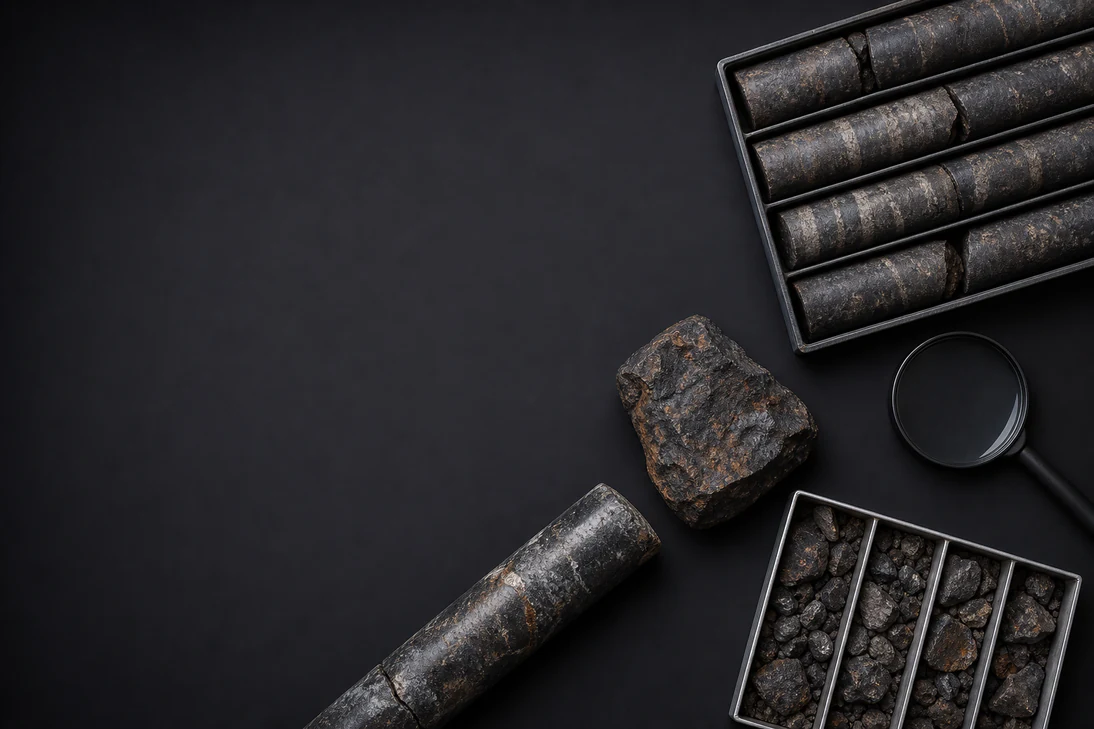
Trek Metals Limited (ASX:TKM) has reported that its maiden Reverse Circulation (RC) drilling program at the Kuro manganese discovery continues to deliver encouraging visual results. In 15 holes completed so far, visual manganese mineralisation has been observed in every hole, including standout intercepts such as 17 metres of semi-massive manganese from 9 metres down-hole in drill hole 26XCRC014. Other notable zones include 9 metres of massive manganese from 24 metres in 26XCRC015 and 6 metres of massive manganese starting at surface in 26XCRC006.
While these visual estimates provide an early indication of mineral presence, the company cautions that they are not a substitute for laboratory assays, which are pending. Samples have been dispatched to ALS laboratories with results expected in 4-6 weeks, a critical step to confirm grades and assess economic potential.
Geophysical Surveys Guide Further Targeting
The drilling has been informed by recent Induced Polarisation (IP) surveys conducted by Moombarriga Geoscience, which identified several discrete chargeability anomalies correlating with manganese mineralisation. The successful testing of one such anomaly with hole 26XCRC014, intersecting 17 metres of semi-massive manganese, validates the IP survey as an effective targeting tool. This has led to the identification of multiple new high-priority drill targets, with additional earthworks completed to prepare pads for upcoming holes.
The geological interpretation has evolved to suggest the manganese is hosted within younger Neoproterozoic basin rocks overlying Paleoproterozoic basement highs, consistent with a hydrothermal “Woodie Woodie-style” mineralisation system. This style is known for occurring in multiple discrete pods across extensive areas, which aligns with the multiple mineralised zones encountered so far.
Drilling Program Progress and Next Steps
To date, about 20% of the planned drilling program has been completed, with 77 drill pads prepared across the Christmas Creek Project. The company plans to systematically test the remaining IP anomalies as a priority, aiming to delineate the extent of the manganese mineralisation. CEO Derek Marshall highlighted the early success of combining geophysical data with drilling, expressing confidence in the scale of the exploration opportunity.
The upcoming assay results will be crucial in refining the exploration model and guiding future drilling decisions. Beyond manganese, Trek Metals also intends to continue exploration for gold and copper-gold targets within the broader project area, leveraging complementary geophysical techniques.
Bottom Line?
Trek Metals’ expanding drilling and geophysical targeting at Kuro sets the stage for critical assay results that will clarify the manganese discovery’s potential scale and grade.
Questions in the middle?
- Will laboratory assays confirm the high visual manganese grades observed?
- How extensive are the additional chargeability anomalies identified by the IP survey?
- What impact will the evolving geological model have on future drilling strategies?