Cadoux Completes Maiden WMS Drilling and Advances Rare Earth Processing Plans

Cadoux has wrapped up its first drilling program at the Wimmera Mineral Sands project in Victoria, setting the stage for downstream rare earth processing with Minhub’s Darwin plant feasibility study progressing.
- Maiden drilling completed with 101 aircore holes over 2,864m
- 1,066 samples collected, assay results expected September 2026
- Danube bulk sample prepared for metallurgical testwork
- Feasibility study advancing for Darwin Mineral Separation Plant
- Plans to integrate finer-grained WIM-style mineralisation flotation circuit

Maiden Drilling Program Completes Key Exploration Phase
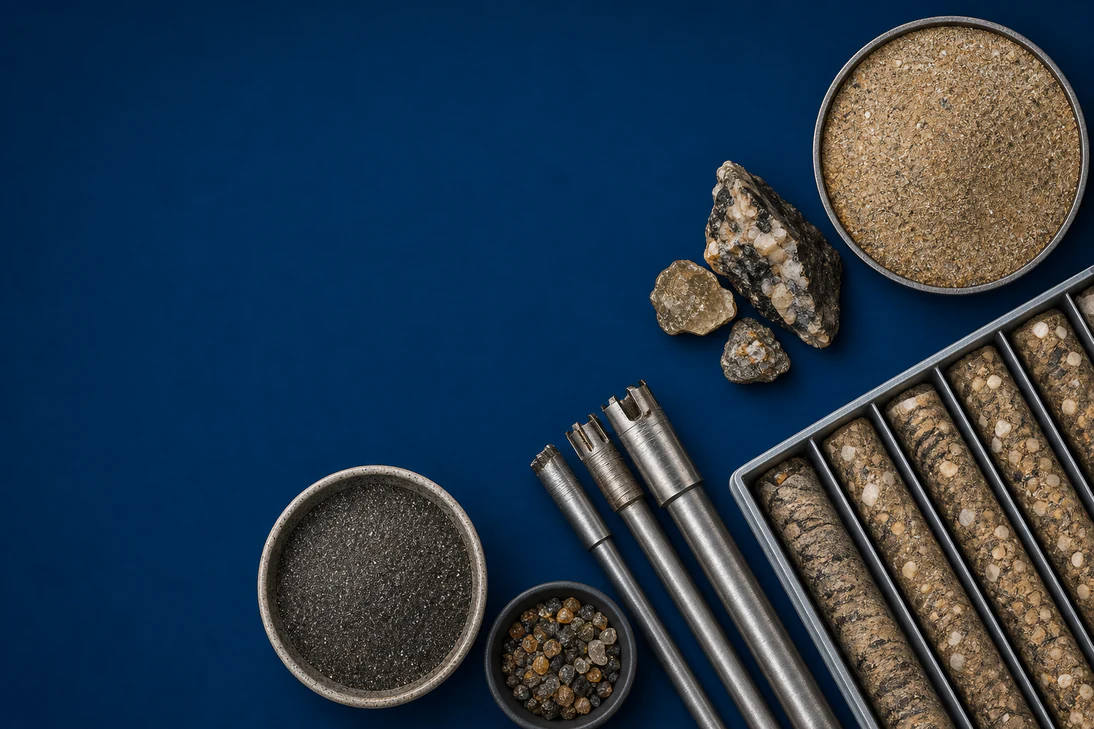
Cadoux Ltd (ASX:CCM) has completed its maiden drilling campaign at the Wimmera Mineral Sands (WMS) project in Victoria, marking a significant step in unlocking the rare earth and mineral sands potential of the region. The program, conducted between May and June 2026, delivered 101 aircore drill holes totalling 2,864 metres, targeting shallow mineralisation averaging less than 30 metres depth. Over 1,000 samples were collected for laboratory analysis, with assay results anticipated in September 2026.
The WMS project is strategically located adjacent to globally significant deposits like Iluka Resources’ WIM 100 and LB Group’s WIM 150, positioning Cadoux well within a prolific mineral sands province. Despite weather-related interruptions halting drilling early, multiple targets have emerged for follow-up, with further drilling planned for the December quarter.
Danube Bulk Sample Supports Metallurgical Testwork
Cadoux is preparing a composite bulk sample from drill residues at the Danube deposit, the first WMS deposit under assessment. This sample will underpin metallurgical testwork aimed at producing a heavy mineral concentrate (HMC) for downstream processing. Initial gravity separation will be followed by rare earth flotation and conventional mineral separation techniques to isolate rare earth, zircon, and titanium products.
The metallurgical program will inform the feasibility and engineering design of processing circuits, particularly for finer-grained WIM-style mineralisation, which differs metallurgically from coarser deposits elsewhere. The testwork is also expected to generate a xenotime-rich stream, feeding into Cadoux’s Minhub4000 project concept to produce an intermediate heavy rare earth-rich carbonate (HREC).
Advancing Downstream Processing with Minhub
Cadoux holds a 50% stake in Minhub Operations Pty Ltd, which is developing the Darwin Mineral Separation Plant (DMP), a proposed 500,000 tonnes per annum mineral separation facility. The DMP feasibility study is progressing, with plans to incorporate a 250,000 tpa flotation circuit tailored to process finer-grained WIM-style mineral sands like those from the Danube deposit.
This integration aims to create a mid-stream processing hub supporting multiple rare earths projects, positioning Minhub as a collaborative processor of third-party heavy mineral concentrate feedstock. The DMP is designed to produce a suite of products, including heavy rare earth-rich xenotime containing critical elements such as dysprosium and terbium, NdPr-rich monazite, premium zircon, and titanium minerals.
Strategic Importance of WMS and Minhub Projects
Cadoux’s WMS and Minhub projects align with Australia’s critical minerals policy by fostering new supply chains for rare earths essential to electrification and decarbonisation technologies. The company’s focus on high-value rare earth elements like neodymium-praseodymium (NdPr), terbium, and dysprosium reflects the growing demand for these materials in electric vehicles and advanced electronics.
While the DMP feasibility study initially targeted coarser mineral sands from the Gippsland Basin, the planned inclusion of flotation circuits for finer-grained WIM-style mineralisation broadens its scope. Minhub is actively engaging with multiple project proponents to establish a collaborative processing model that could underpin a sovereign rare earths supply chain in the Northern Territory.
Next Steps and Market Implications
Cadoux is focused on completing assay analyses from the maiden drilling program and historic samples by September 2026, which will guide the next drilling phase. Concurrently, metallurgical testwork on the Danube bulk sample will inform engineering studies to expand the DMP, including the flotation circuit design.
Additionally, the Minhub4000 xenotime processing concept remains under evaluation, contingent on metallurgical results, engineering progress, regulatory approvals, and commercial viability. These developments collectively position Cadoux to play a pivotal role in Australia’s emerging rare earths sector, complementing its established high purity alumina (HPA) business.
Bottom Line?
Cadoux’s maiden drilling and downstream processing plans lay foundational work for a rare earths supply chain, but assay results and metallurgical outcomes in the coming months will be critical to validating project scale and economics.
Questions in the middle?
- Will assay results confirm the scale and grade needed to justify expanded drilling and processing investment?
- How will integration of finer-grained WIM-style mineral sands impact the design and economics of the Darwin Mineral Separation Plant?
- Can Minhub’s mid-stream processing model attract sufficient third-party feedstock to achieve scale and commercial viability?