Hawk Resources Hits Up to 66.6% Copper in Utah Drilling

3 min read
9:53am on Tuesday 11th of August, 2026 AEST ~9am, 11th Aug, 26
Popular on LinkedIn
Hawk Resources has intersected strong near surface copper mineralisation with spot pXRF assays reaching 66.6% copper in the Comet zone of the Cactus Corridor, Utah. The drilling also reveals promising gold indicators through associated silver, arsenic and antimony anomalies.
- Five of seven holes show visible copper mineralisation
- Spot pXRF assays up to 66.6% copper confirm high-grade zones
- Strong gold potential indicated by anomalous silver, arsenic, antimony
- Drilling progressing from Comet zone into Cactus zone
- Lab assays expected in September and October 2026
High-Grade Copper Intersections in Comet Zone
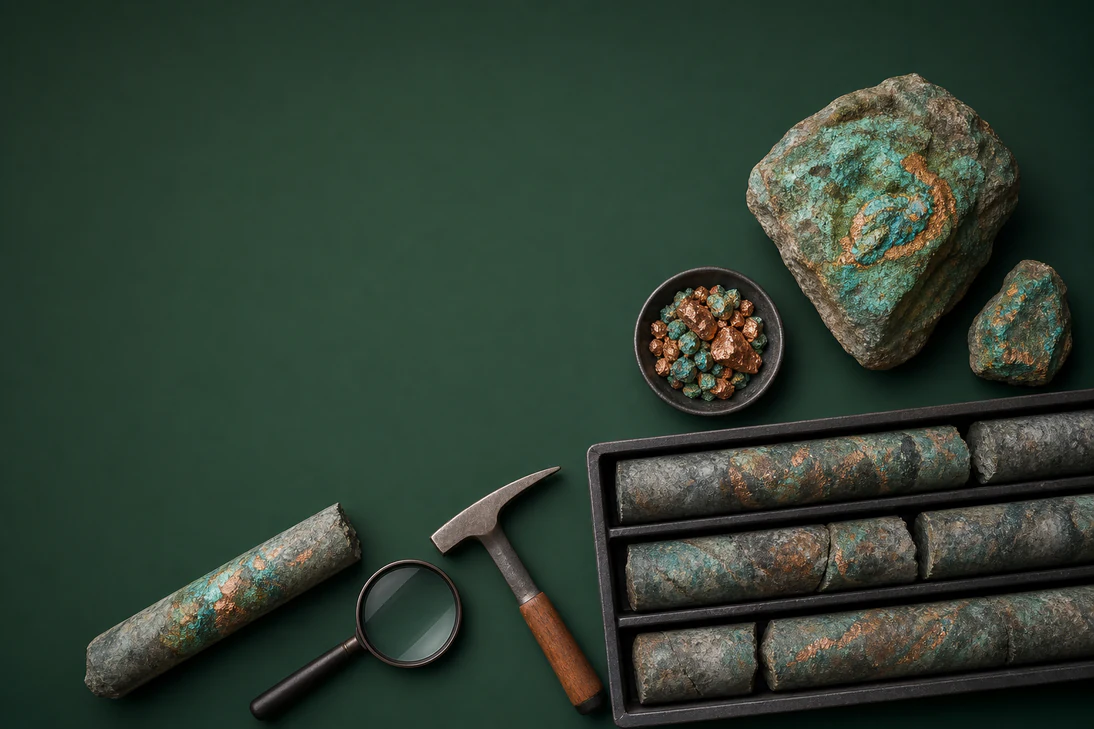
Hawk Resources Limited (ASX:HWK) has reported compelling early-stage drilling results from its Cactus copper-gold project in Utah, USA, with visible copper mineralisation logged in five of seven drill holes completed to date along the Cactus Corridor. Spot portable XRF (pXRF) readings on drill core have revealed copper grades ranging from 1.0% to an eye-catching 66.6%, primarily within the Comet zone. The mineralisation manifests as veinlets, veins, fractures, coarse blebs and disseminations hosted mainly in tourmaline breccia and altered quartz monzonite intrusive rocks.
The standout intercept includes an 18-metre zone of well-mineralised tourmaline breccia in hole DD26CT008, featuring chalcopyrite and potential chalcocite mineralisation, with spot pXRF copper grades reaching up to 35% and 66% respectively. This high-grade copper occurs in coarse blebs and fractures, underscoring the prospectivity of the near surface mineralisation.
Gold Potential Highlighted by Pathfinders
Beyond copper, the drilling has flagged strong gold potential. Holes DD26CT008, CT010 and CT011 returned highly anomalous spot pXRF assays for silver, arsenic and antimony, elements known to correlate strongly with gold mineralisation in Hawk’s soil sampling campaigns, which have recorded gold grades up to 5.0g/t in the Comet zone. Historical drilling in the same area supports this, with previous intersections including 25.9 metres at 1.53g/t gold from surface.
Managing Director Scott Caithness emphasised that these pathfinder elements reinforce the prospectivity for gold alongside copper, saying the anomalous silver, arsenic and antimony grades “highlight the potential for gold mineralisation” in the corridor.
Drilling Advances into Cactus Zone
The current drilling program is designed to test near surface mineralisation within 50 metres of surface along the approximately 1-kilometre-long Cactus Corridor, which trends northwest from the historical Comet deposit through the Cactus mine to the New Years prospect. Seven holes (DD26CT006-012) have been completed, with drilling now pushing northwest into the Cactus zone. Four additional holes remain in the program, with ongoing logging, sampling and multi-element laboratory analyses underway.
The drilling strategy involves angled holes spaced roughly 50 metres apart, targeting the steeply northeast-dipping mineralised breccias to establish the true thickness and continuity of mineralisation. Preliminary logging of hole DD26CT012 suggests mineralisation extends beyond tourmaline breccia into adjacent altered quartz monzonite, potentially expanding the footprint of mineralisation.
Historical Context and Next Steps
The Cactus Corridor hosts multiple historical copper-gold deposits, with the Cactus mine having produced 1.3 million tonnes of ore grading 2.07% copper, 0.33g/t gold, and 7.36g/t silver between 1905 and 1920. Past drilling, including vertical holes from the 1960s and early 2000s, indicated significant near surface copper and gold mineralisation but lacked detailed geological data. Hawk’s ongoing drilling is the first shallow angled program in decades, aiming to fill these knowledge gaps.
Lab assays for the current drilling campaign are expected in September and October 2026, which will provide definitive grades and mineralisation widths. Following assay receipt, Hawk plans a review to guide further drilling in the fourth quarter of 2026. The company is also progressing exploration at other US and Australian projects, supported by recent capital raises.
Bottom Line?
While pXRF results hint at robust copper and gold potential in Utah’s Cactus Corridor, definitive assay data later this year will be critical to confirm the scale and economics of the mineralisation.
Questions in the middle?
- Will laboratory assays validate the exceptionally high pXRF copper readings and define true mineralisation widths?
- How extensive is the gold mineralisation suggested by pathfinder elements, and could it materially enhance project value?
- What will the upcoming drilling in the Cactus zone reveal about continuity and grade along the corridor?