GreenTech uncovers a deeper high-grade copper zone at Ayshia

GreenTech Metals has returned its strongest multi-metre copper result to date at the Ayshia deposit, with gold, silver and zinc credits included. The intersection sits approximately 65 metres beyond the existing resource envelope, although its true width remains unconfirmed.
- 4.76m at 7.13% copper from 367m
- Included 3.44m at 9.43% copper
- Mineralisation extends about 65m beyond the resource envelope
- Ayshia system remains open down plunge
- Yannery and Austin assays expected in October

High-grade copper emerges beyond Ayshia resource
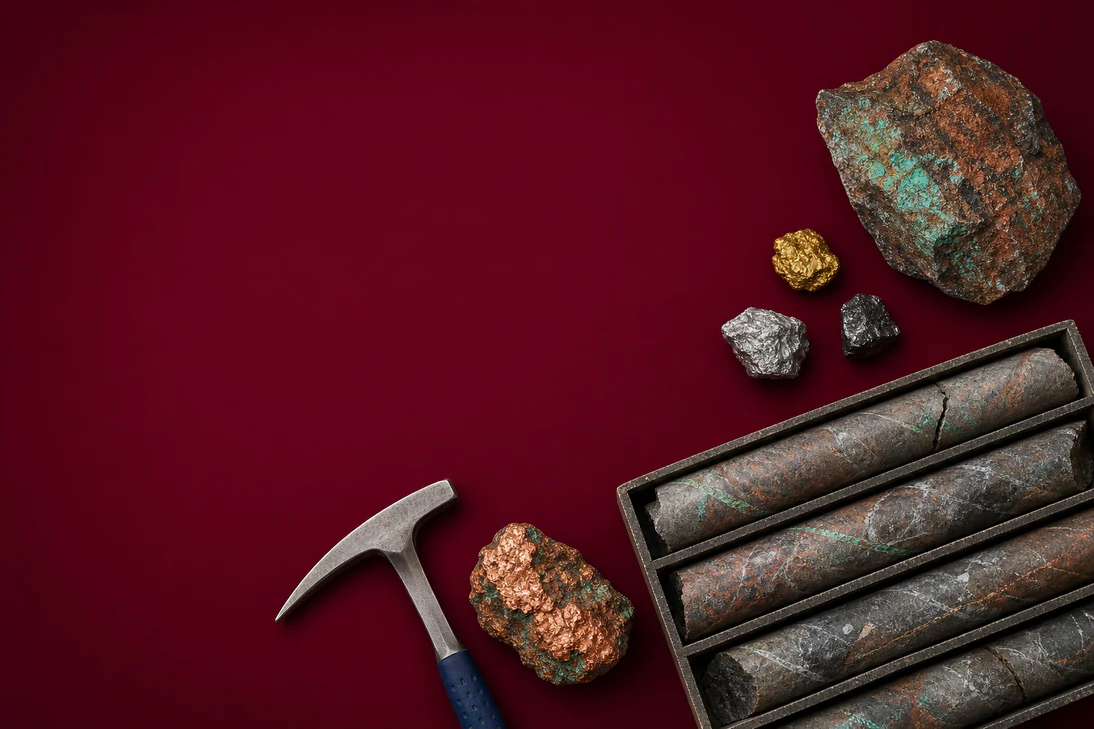
GreenTech Metals Limited (ASX:GRE) has hit one of the strongest copper intersections reported across its Whundo Project, with diamond hole 26GTDD016 returning 4.76 metres at 7.13% copper, 1.20% zinc, 0.88 grams per tonne gold and 29.6 grams per tonne silver from 367 metres. The interval includes 3.44 metres at 9.43% copper, 1.59% zinc, 1.20 grams per tonne gold and 39.7 grams per tonne silver.
The result is notable less for its depth than for its position: GreenTech says the intersection extends the tested Ayshia mineralised trend approximately 65 metres down plunge beyond the deposit’s existing Mineral Resource envelope. It also lies about 40 metres beyond drill hole 24GTRC004 and roughly 95 metres beyond historical hole 12AYDD109, subject to final survey and three-dimensional model verification.
A chalcopyrite-rich sulphide zone
The assay interval sits within 6.85 metres of visually logged massive to semi-massive sulphides between 366.07 metres and 372.92 metres. The mineralisation contains abundant chalcopyrite alongside pyrite, pyrrhotite and minor sphalerite, consistent with Ayshia’s volcanogenic massive sulphide setting.
GreenTech says the 4.76-metre intersection is the highest-average-grade multi-metre copper result identified at Ayshia so far and ranks among the highest-grade copper intersections recorded across the wider Whundo Project. Historical drilling has also indicated rising copper tenor down plunge, including 23.7 metres at 3.19% copper and 13.97 metres at 3.4% copper in earlier Ayshia holes.
Resource growth remains a drilling question
The Ayshia Mineral Resource stands at 0.9 million tonnes grading 1.3% copper and 2.3% zinc, within Whundo’s broader JORC 2012 resource of 6.2 million tonnes at 1.12% copper and 1.04% zinc. GreenTech is targeting an updated Mineral Resource estimate in the fourth quarter of 2026, with the new result to be assessed alongside geological, structural and historical drilling data.
That assessment will require more than a single encouraging step-out hole. The reported lengths are downhole measurements, not true widths, and the company says 26GTDD016 alone is not intended to establish or modify a resource classification. A downhole electromagnetic survey is planned to help target the continuation of the Ayshia shoot, while follow-up drilling is being considered because the mineralised system remains open at depth.
More Whundo assays are pending
Drilling has also been completed at Yannery and Austin, with laboratory results expected in October 2026. Those assays may help determine whether the Ayshia result is an isolated high-grade position or part of a broader pattern across Whundo, but the immediate test is more local: whether additional drilling can establish the geometry and continuity of the mineralisation beyond the current resource model.
Bottom Line?
The intercept materially improves the case for testing Ayshia at depth, but resource significance will depend on true widths, continuity and follow-up drilling rather than the headline grade alone.
Questions in the middle?
- Can follow-up drilling confirm continuity and economic widths beyond the Ayshia resource envelope?
- What will the planned DHEM survey reveal about the down-plunge sulphide shoot?
- Will pending Yannery and Austin assays add further support to Whundo’s broader resource-growth case?