American West reveals a wider mineral system at West Desert

American West Metals has reported thick visual copper, zinc and molybdenum mineralisation in three new holes at its West Desert Project in Utah. The strongest result came from WD26-07, but laboratory assays are still needed to establish grades and economic significance.
- About 140m of visual copper-zinc CRD-style mineralisation in WD26-07
- 219m of visual molybdenite-bearing porphyry and endo-skarn mineralisation
- Mineralisation extended 350m west of the West Desert Deposit
- WD26-06 intersected 11m of visual copper oxides on a northern contact
- Assays expected in four to six weeks while drilling continues

WD26-07 extends mineralisation west of the deposit
American West Metals Limited (ASX:AW1) has pushed the western boundary of its West Desert mineral system by 350 metres, with drill hole WD26-07 intersecting about 140 metres of visual copper-zinc carbonate replacement deposit-style mineralisation and a further 219 metres of visual molybdenite-bearing porphyry and endo-skarn mineralisation. The hole was drilled to 830 metres into a magnetic anomaly west of the known West Desert Deposit.
Copper, zinc and molybdenum appear across multiple zones
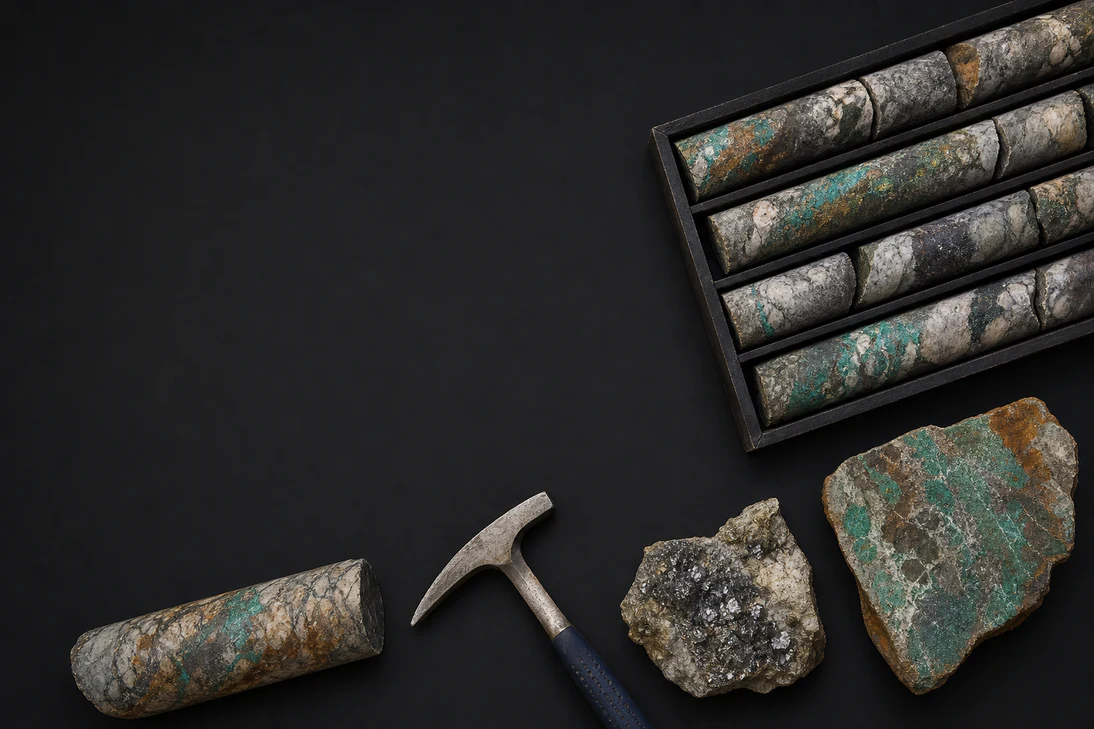
The visual observations include chalcopyrite, bornite, chalcocite and sphalerite within five main exo-skarn zones, alongside molybdenite, bornite and chalcopyrite disseminations and veining in altered quartz-monzonite porphyry. American West said the mineralisation is hosted across exo-skarn, endo-skarn and altered porphyry, with some semi-massive sulphide intervals logged in the core.
The company linked the western hole to historical drilling nearby. Hole WD22-19, about 350 metres away, previously intersected grades of up to 20% zinc, 1.4% copper and 470 grams per tonne indium. Those are historical results, not new assays from WD26-07, but the comparison gives the latest visual observations a potentially important geological reference point.
Northern and eastern drilling broaden the target area
WD26-06, drilled roughly 1 kilometre north of the deposit along an untested contact, intersected 11 metres of visual malachite copper oxide in altered porphyry and quartzite breccia. The hole also encountered magnetite skarn along the porphyry-sediment contact, although a separate magnetic feature could not be tested because of drill-pad constraints.
To the east, WD26-05 intersected 24.3 metres of minor sphalerite veinlets and molybdenite veins at depth, while also helping define the prospective contact. American West said zinc-copper-indium-gold and porphyry-hosted molybdenum mineralisation can now be traced across almost 2 kilometres along the east-west magnetic feature and porphyry-sediment contact.
Assays will determine whether thickness becomes value
The headline numbers remain geological observations rather than grade results. American West cautioned that visual estimates cannot substitute for laboratory analysis, and the reported intervals are downhole lengths rather than confirmed true widths. Assays for the three holes are being expedited and are expected in four to six weeks, subject to laboratory turnaround times.
Follow-up drilling is already under way
The diamond program is continuing around the clock, with the eighth exploration hole, WD26-08, under way. Further drilling is intended to test the untested northern magnetic feature, infill recent discovery areas and extend the broader 4-kilometre magnetic trend. Permitting for additional drill pads is also in progress, while the company continues discussions with US government agencies and other parties about critical-metals partnerships, supply and production.
Bottom Line?
The geological footprint is expanding, but the next four to six weeks will determine whether the impressive visual thicknesses carry the grades needed to change West Desert’s resource picture.
Questions in the middle?
- Will laboratory assays confirm meaningful copper, zinc, molybdenum and indium grades across WD26-07?
- How much of the reported downhole mineralisation represents economic true widths?
- Can follow-up drilling connect the western, northern and eastern zones into a coherent expansion of the resource?